Why Despite Repeated Violations, Legal Enforcement Against Mamaearth Remains Limited?
The Mamaearth Playbook- How "Toxin-Free" Marketing Outran Toxin-Free Proof: An editorial on why India's biggest D2C beauty brand keeps getting flagged for misleading advertising, and keeps growing anyway


There is a useful legal definition buried in the Consumer Protection Act, 2019, that almost nobody outside a courtroom thinks about while scrolling Instagram. A “misleading advertisement” is one that gives a false description, a false guarantee, misleads consumers about a product’s nature or substance, or deliberately conceals important information. By that definition, India’s advertising watchdog has spent three consecutive years building a documentary record against one company more than any other in the beauty and personal-care space: Honasa Consumer Limited, the parent of Mamaearth. The interesting part isn’t that the violations happened. It’s that they kept happening, year after year, in the same category, with no real consequence, and the company kept growing through it.
Mamaearth- A Brand Built to Sound Scientific, Not to Be Scientific
Mamaearth’s core pitch, since its 2016 launch, has been deceptively simple: “natural, toxin-free, and dermatologically tested.” That phrase does enormous work. It tells an anxious new parent the baby shampoo is safe. It tells a skincare-conscious millennial the face wash won’t harm them long-term. It does all this without ever specifying which toxins, tested by whom, or to what clinical standard, and that vagueness is not an accident, it is the entire mechanism.
Consider how the claims are actually built, ingredient by ingredient. Mamaearth’s Onion Hair Oil, marketed heavily as a hair-regrowth solution, lists its primary contents as sesame oil, castor oil, and coconut oil, which do offer real, if modest, breakage-reduction benefits.
Onion extract, the ingredient the entire product is named and marketed around, appears further down the ingredients list, with no disclosed concentration. This is a recognizable industry technique called “hero ingredient” marketing: put a trendy, search-friendly ingredient on the bottle and in the ad copy, while the actual formulation leans on cheaper, unglamorous base oils to do most of the real work. It isn’t illegal. It is, however, designed to make a consumer believe they’re paying a premium for something the product barely contains.

The pattern repeats across the catalogue. Advertisements have promised results like “Reduces Acne in 3 Days,” “Eliminates Tan,” and “Baby Soft Skin”, claims that are clinically unverifiable, vary wildly by individual skin type, and are typically presented with no disclaimer at all.
Terms like “Dermatologically Tested” sound like a clinical guarantee; in practice, in cosmetic regulation, it typically means a product underwent minimal patch testing, not a controlled trial, not a guarantee of universal safety, and certainly not an endorsement of the marketing claims sitting next to it. None of this is unique to Mamaearth as an industry practice. What is unique is how completely the company’s entire ₹13,500-crore valuation has been built on the premise that its claims are different — more honest, more “natural”, than the cosmetic industry norm it is, in practice, operating well within.
The Visual Grammar of False Authority
Beyond the words, the imagery does its own quiet persuading. Mamaearth’s advertising leans heavily on lab coats, plants, green packaging, and tender mother-and-baby visuals, a visual grammar that signals “clinically validated” and “scientifically safe” without a single clinical claim being made on screen. This is greenwashing in its most literal sense: borrowing the aesthetic credibility of science and nature without the substantiation that would normally have to accompany it. Crucially, this imagery also functions as a complaint suppressant.
A consumer who sees a lab coat and a leaf in the same five-second shot is statistically less likely to scrutinise the actual claim being made; they extend trust based on visual cues rather than verified fact, which is precisely why this style of advertising is so durable and so difficult to regulate through a single-claim-by-claim complaint process.
Then there’s the disclosure problem, which is where Mamaearth’s violations are most heavily concentrated. ASCI’s code requires that paid influencer content carry a clear, prominently placed label — #Ad, #Sponsored, #Collab, or #PaidPartnership — visible in the first viewable portion of a post, not buried in a caption or hidden in a pinned comment. Mamaearth’s influencer collaborations have repeatedly failed this test: buried disclosures, missing thumbnail tags, omitted story labels. A viewer watching an influencer rave about Onion Hair Oil with no visible disclosure has no way of knowing they are watching a paid advertisement rather than a genuine recommendation — and that distinction is exactly what the law is designed to protect.
The Certification That Wasn’t There
Perhaps the single most concrete, checkable example of the gap between Mamaearth’s claims and their evidentiary backing involves its “Made Safe” certification claim. Mamaearth’s own website states it is “Asia’s first brand with Made Safe™ certified products”, a claim built to suggest third-party validation of its toxin-free positioning, listing 23 products as certified. The check is simple: visit Made Safe’s own public registry of certified companies.
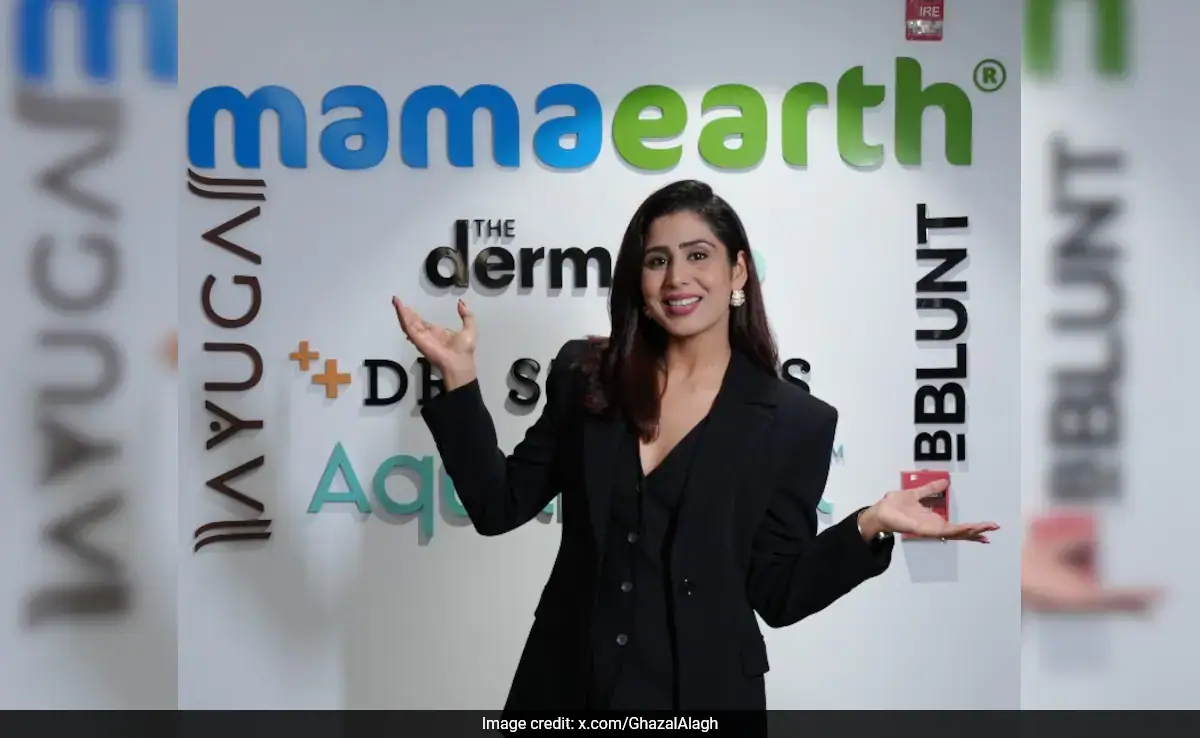
Mamaearth does not appear on it. The company’s website also references “QACS Lab testing” and “FDA approval”, claims that, on inspection, are unsupported by any publicly accessible documentation. This is not an interpretive dispute about marketing language. It is a factual, verifiable claim of third-party certification that does not appear to be corroborated by the certifying body itself.
The Legal Case Already Exists — It’s the Enforcement That’s Missing
In Dabur India Ltd. v. Colortek Meghalaya Pvt. Ltd., the courts reinforced that unverified health claims, including claims to treat conditions like acne, constitute deceptive advertising under ASCI’s own standards. In Indian Medical Association v. Union of India, the apex court went further, affirming that “natural” claims specifically must be substantiated with evidence, not simply asserted. The legal scaffolding to challenge “100% toxin-free” as more than harmless puffery already exists and has already been tested in Indian courts.
What doesn’t exist is a body with the teeth to apply that scaffolding at scale. ASCI examined over 10,000 complaints and investigated more than 8,000 advertisements in FY24 alone, and in that single year, named Honasa Consumer the single largest advertising violator in the country, across every sector, with 187 flagged ads, ahead of offshore betting operators.
The violations were not limited to one brand inside the Honasa portfolio: Dr. Sheth’s, Aqualogica, and Ayuga all appeared on the same list. The company’s public response was to call this an “evolving” influencer landscape and promise tighter internal protocols. The following year, FY25, produced 29 more flagged ads, 22 again for influencer-disclosure failures. FY26 produced 24 more influencer-related violations and a fresh round of citations for unsubstantiated “natural” and “Ayurvedic” claims across Mamaearth and sister brands. Three annual cycles. The same violation category, every time.
The reason this keeps happening is structural, not accidental. ASCI is a self-regulatory body, funded by the advertising industry itself. It can require an ad to be modified or pulled, it cannot levy a fine, suspend a company’s right to advertise, or claw back a single rupee of revenue generated while the ad was live and uncorrected.
The Consumer Protection Act theoretically empowers the Central Consumer Protection Authority (CCPA) to act against misleading advertising with real penalties, but enforcement against high-volume D2C beauty brands at this scale has, in practice, been minimal. The arithmetic this creates is brutally simple: if a hundred undisclosed or exaggerated influencer posts generate a meaningful sales lift over the weeks they’re live, and the only consequence is a takedown notice issued after the fact, the rational business decision is to keep running the playbook and treat violations as a cost of doing business — not a deterrent.
Why the Market Keeps Rewarding This
Vague claims survive precisely because they’re hard to litigate. “Toxin-free” and “natural” have no statutory definition in Indian law, which means a regulator or court has to argue impression and impact rather than point to a violated numeric standard. “Clinically tested” is nearly impossible for an ordinary consumer to contest, because the underlying clinical data, if it exists at all, sits with the company, inaccessible to the public. And the sheer decentralization of influencer marketing — hundreds of micro-influencers, each posting individually, across Instagram, YouTube Shorts, and other platforms — makes systemic surveillance and enforcement exhausting for a regulator that already has limited fining power even when it succeeds.
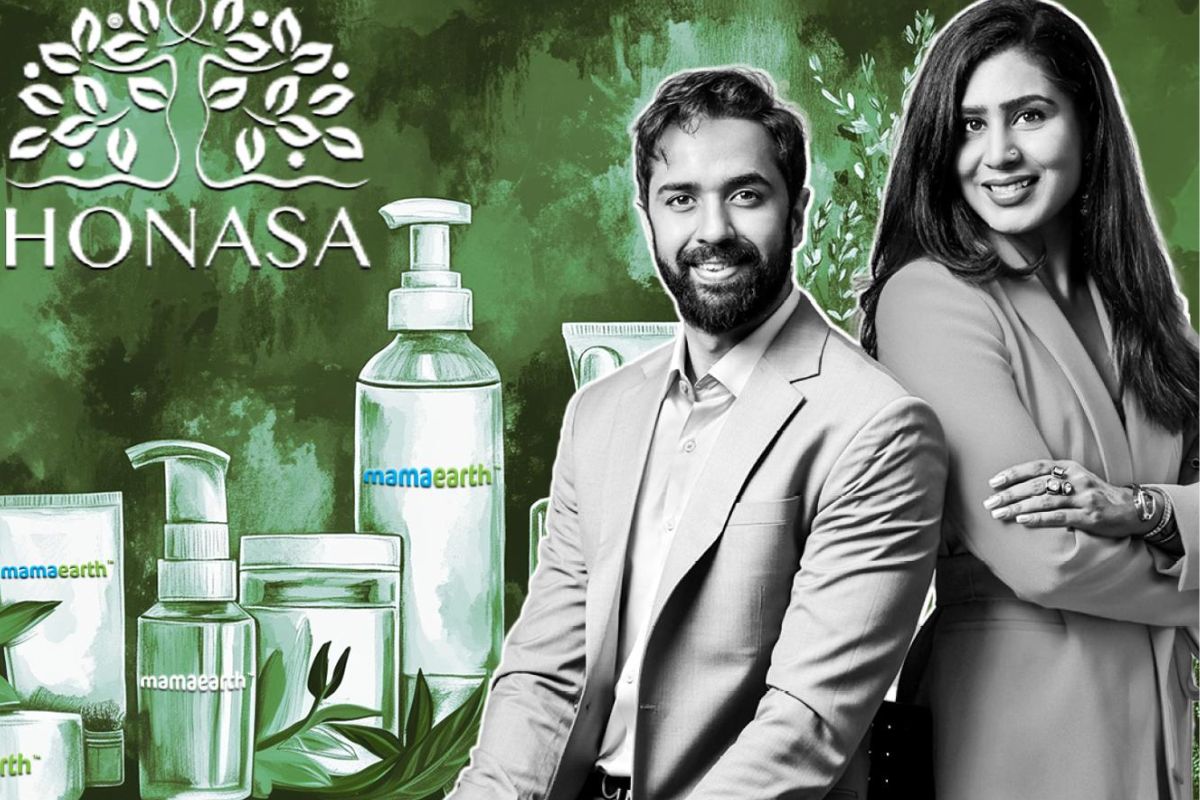
The result is a brand that has been named India’s biggest advertising violator three years running, while continuing to post strong revenue growth and command a multi-thousand-crore market valuation.
That is not a contradiction. It is the system working exactly as its incentive structure currently allows it to. Closing this gap requires more than another ASCI report: it needs statutory teeth behind self-regulation, platform-level mandatory verification of disclosure labels with algorithmic demotion for non-compliant content, legally defined thresholds for terms like “toxin-free” and “natural,” and — the slowest fix, but the only durable one — consumers treating influencer beauty content as advertising first, recommendation second. Until then, the Mamaearth playbook will keep working, precisely because being caught costs less than the campaign that got caught.