Ghaziabad’s Pink Police Booth Death Raises A Bigger Question – How Did Everyone Fail? Who Is Responsible When Everyone Is Watching?
The death of 22-year-old Rajkumar outside a Pink Police Booth in Ghaziabad has triggered questions about police response, public duty and the fragility of emergency care. But beyond the investigation lies a question that no inquiry alone can answer: if you had been there that afternoon, would you have stopped to help?

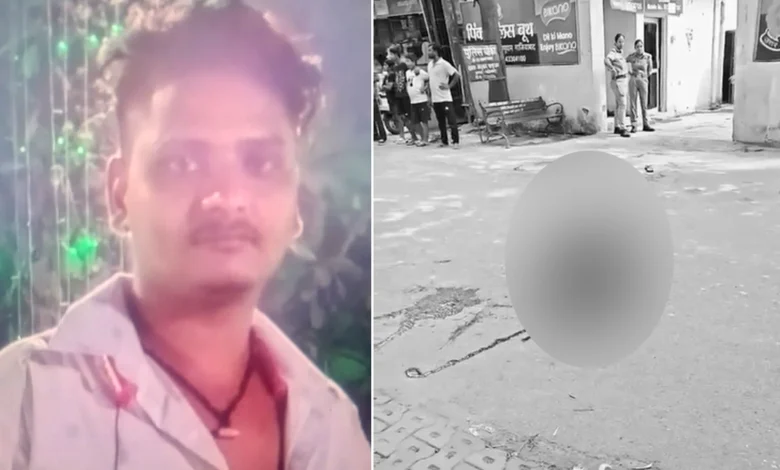
A 22-year-old mechanic died after suffering severe blood loss outside a Pink Police Booth in Ghaziabad, Uttar Pradesh, on July 12. According to police, Rajkumar had consumed alcohol before getting into an argument with an e-rickshaw driver over the fare. The dispute eventually reached a Pink Police Booth, where two women constables were on duty.
Police say the constables asked those involved to proceed to the nearby police station. A short while later, Rajkumar allegedly returned to the booth and repeatedly struck its glass door, shattering it in the process. A deep cut to his hand caused heavy bleeding. He was later taken to hospital, where doctors declared him dead. The post-mortem attributed the death to excessive blood loss, while viscera has been preserved for forensic examination.
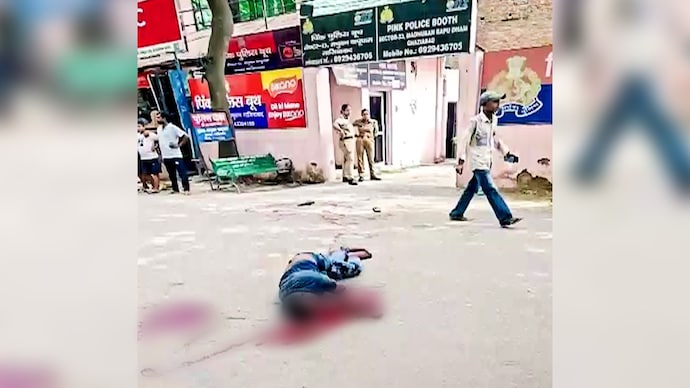
However, Rajkumar’s family has challenged the official account, alleging that he remained injured outside the police booth for nearly 40 minutes while repeatedly pleading for help. They have also accused the e-rickshaw driver of assaulting him before the fatal injury. The police maintain that CCTV footage presents a different timeline and have initiated an inquiry into the actions of the personnel on duty, while also questioning the e-rickshaw driver.
As investigations continue, many of the facts surrounding Rajkumar’s final moments remain under scrutiny. The inquiry will determine whether protocols were followed, whether there was any delay in providing medical assistance, and whether anyone bears criminal or departmental responsibility.
But beyond the legal investigation lies a far more disturbing question – one that extends beyond the walls of a police station and into society itself.
Every tragedy has a sequence of events. Some have a chain of failures. Rajkumar’s death appears to sit at the intersection of both. Whether the investigation ultimately points towards negligence, unfortunate circumstance or a combination of the two, the incident raises uncomfortable questions about responsibility in public spaces.
When someone collapses in full public view, outside a police booth, surrounded by people, where does responsibility begin – and where does it end?

The Incident We Know And The Questions We Still Don’t
At the heart of the controversy are two competing versions of the same incident.
The police maintain that Rajkumar’s fatal injury was self-inflicted after he repeatedly punched and shattered the glass door of the Pink Police Booth. According to their account, emergency services were contacted after he sustained the injury, and both a police patrol and an ambulance responded before he was shifted to hospital.
Rajkumar’s family, however, paints a different picture. They allege he lay bleeding outside the booth for an extended period, repeatedly asking for help while those around him failed to intervene in time. They also dispute the events leading up to the injury, claiming he had been assaulted during the altercation with the e-rickshaw driver.
Somewhere between these two accounts lies the truth, and it is the job of investigators (not public opinion) to establish it. Yet there are questions that remain relevant regardless of which version eventually stands.
- Did everyone present recognise the severity of the injury?
- Did anyone immediately realise that blood loss from a deep wound can become fatal within minutes?
- Was there a breakdown in communication, urgency or judgment? And perhaps most importantly, once Rajkumar was visibly injured, whose responsibility was it to ensure he survived?
Those questions are no longer just about reconstructing a timeline. They are about understanding how a medical emergency unfolded in a public place without producing a life-saving response quickly enough.
When Does The State Become Responsible For Saving A Life?
For all the debate surrounding what exactly happened outside the Pink Police Booth, one question sits at the centre of the controversy: when does the State’s responsibility begin?
Police officers wear many hats. They enforce the law, prevent crime, maintain public order and investigate offences. But they are also often the first responders to emergencies, particularly in public spaces where citizens instinctively look towards the uniform for help. The expectation is simple – not that officers will always have the answers, but that they will act when a life appears to be in danger.
This is why the focus of the ongoing inquiry is not merely whether Rajkumar caused his own injury. Even if the wound resulted from his own actions, that alone does not settle the larger question. Once a person is visibly bleeding and in obvious medical distress, the issue shifts from how the injury occurred to what was done afterwards.
Could more have been done? Should medical assistance have been sought sooner? Was the seriousness of the injury immediately recognised? Did those present underestimate how quickly a seemingly isolated wound could become life-threatening? These are questions that only the investigation can answer, but they are also the questions that matter most.
Indian courts have, over the years, consistently emphasised that preserving human life must take precedence over procedural formalities. Whether it is a road accident, a violent assault or any other medical emergency, the underlying principle has remained the same: the first priority is to save the person in distress. The law itself has increasingly evolved to encourage prompt assistance rather than hesitation.
Yet emergencies rarely unfold in ideal conditions. Decisions are made in seconds, often with incomplete information. A person who appears conscious and able to speak may, in reality, be losing blood at a dangerous rate. That is precisely why first response matters. The window between a survivable injury and a fatal one can sometimes be measured not in hours, but in minutes.
If the investigation concludes that every possible step was taken without delay, that finding should be accepted. But if it finds that critical minutes were lost despite clear signs of a medical emergency, then this case will inevitably raise uncomfortable questions about whether our first responders are sufficiently trained, equipped and empowered to treat the preservation of life as the immediate priority.
Because ultimately, this case is no longer just about Rajkumar’s actions. It is about what society expects from those entrusted with public safety when a human life hangs in the balance.
The Passersby Who Never Became Part Of The Story
Much of the public debate has centred on the conduct of the police. That is understandable. They were the authority on the scene, and the investigation will determine whether they acted appropriately.
But there is another group whose role has received remarkably little attention – the ordinary people who were there.
It is difficult to believe that a busy public road, in the middle of the afternoon, was completely deserted. Vehicles would have passed. Pedestrians would have walked by. Shopkeepers, commuters and local residents may have witnessed parts of what unfolded. Yet, outside of the police and Rajkumar’s family, they are almost absent from the conversation.
That silence raises its own questions.
Did anyone stop to assess the severity of his injuries? Did someone call for another ambulance instead of assuming help was already on its way? Did anyone try to stem the bleeding by applying pressure to the wound with a cloth or towel? Did anyone insist on taking him to the nearest hospital if they believed precious minutes were slipping away?
Perhaps someone did. Perhaps those details will emerge as the investigation progresses. But if they did not, then this tragedy forces us to confront a difficult reality about how we respond to emergencies in public spaces.
Modern society has become increasingly comfortable with outsourcing responsibility. We see an accident and expect the police to arrive. We see a medical emergency and wait for an ambulance. We witness a crisis and instinctively assume that someone more qualified, more authorised or simply more responsible will step in.
In many situations, that assumption is reasonable. But emergencies are rarely patient enough to wait for perfect systems to take over.
The first few moments after a serious injury often belong not to doctors, paramedics or police officers, but to whoever happens to be standing nearby. A phone call made immediately, pressure applied to a wound, or a decision to rush someone to medical care can sometimes mean the difference between survival and tragedy.
That is what makes Rajkumar’s death so unsettling. If the allegations of delay prove to be true, then the questions cannot stop at the doors of the Pink Police Booth. They must also extend to everyone who saw a young man in distress and walked away believing someone else would take care of it.
When Authority Creates A False Sense Of Security
Psychologists have long studied what they call the “bystander effect” – the tendency for people to be less likely to intervene during an emergency when others are present. Responsibility becomes diffused. Each person assumes someone else will step forward, and in the end, no one does.
But the Ghaziabad incident may point to something even more complex.
This was not simply a crowd gathered around an injured man. According to the accounts available, there was also a police booth at the scene. That changes the psychology of the situation.
Imagine walking past and seeing a bleeding man outside a police booth. Your first instinct may not be to intervene because you believe the authorities are already handling the situation. The presence of the uniform creates a sense of reassurance. It tells the mind that responsibility has already found its rightful owner.
The danger, however, is that assumptions are not the same as action.
If police officers are occupied, unaware of the severity of an injury or waiting for medical assistance, every passing minute still matters. Yet those standing nearby may continue believing there is no need for them to step in because “the police are here.”
In that sense, responsibility does not merely become shared – it is transferred.
That distinction matters because it exposes a blind spot in how society responds to emergencies. We often equate the presence of authority with the presence of help. Most of the time, that assumption is justified. But when it is wrong, the consequences can be devastating.
None of this is to suggest that ordinary citizens should replace trained first responders or place themselves in unnecessary danger. Nor does it diminish the responsibility that public authorities carry in responding swiftly to emergencies. Rather, it illustrates an uncomfortable truth: the arrival – or even the perceived presence – of authority should never become a reason for everyone else to stop caring.
Perhaps the most troubling question raised by Rajkumar’s death is not whether one institution failed. It is whether everyone present believed that responsibility belonged to someone else.
Because when responsibility is quietly passed from one person to another without anyone confirming that help is actually being given, a medical emergency can become a fatal one long before anyone realises that no one was truly in charge.
The Last Bit, When Responsibility Belongs To Everyone, Does It Belong To Anyone?
Every few months, another incident shocks the nation. A road accident where motorists drive past an injured victim. A person suffers a cardiac arrest in a crowded railway station while onlookers freeze, unsure of what to do. A violent assault unfolds in public as mobile phones are raised to record rather than to intervene. Each tragedy is different, yet they all leave behind the same uncomfortable question: when did we become spectators to one another’s suffering?
To be fair, hesitation is not always born of indifference. People worry about legal complications, police questioning or becoming entangled in lengthy investigations. Others fear making the situation worse because they lack medical training. These concerns are real, even if India’s Good Samaritan protections were introduced precisely to reassure citizens that helping an injured stranger should not come at a personal cost.
But perhaps the greatest obstacle is neither fear nor apathy. It is assumption.
—The assumption that someone else has already called for help.
—The assumption that an ambulance is on its way.
—The assumption that the police know what they are doing.
—The assumption that another bystander is more qualified to act.
Sometimes those assumptions are correct. Sometimes they save lives because trained professionals are already in control. But when they are wrong, every passing minute quietly slips away while responsibility moves from one person to the next, until no one is left holding it.
The investigation into Rajkumar’s death will eventually determine whether there was negligence, whether protocols were followed and whether anyone should be held accountable. Those answers are important, and they deserve to emerge through evidence rather than speculation.
Yet there is another verdict that cannot be delivered by a court or an inquiry. It belongs to each of us.
If you had walked past that Pink Police Booth that afternoon and seen a young man bleeding on the pavement, would you have stopped? Or would you, like so many of us perhaps would, have glanced towards the uniform nearby, assumed the situation was under control and continued on your way?
Because perhaps the most unsettling lesson from Ghaziabad is not that one young man lost his life outside a police booth. It is that when responsibility quietly passes from one person to another, it can eventually disappear altogether.