The Man Who Thought He Was Too Big to Run: Why Vikas Garg Stayed in India While Hari Shankar Tibrewal and Others Allegedly Fled to Dubai — And How His Fatal Hubris Led Straight to ED Custody

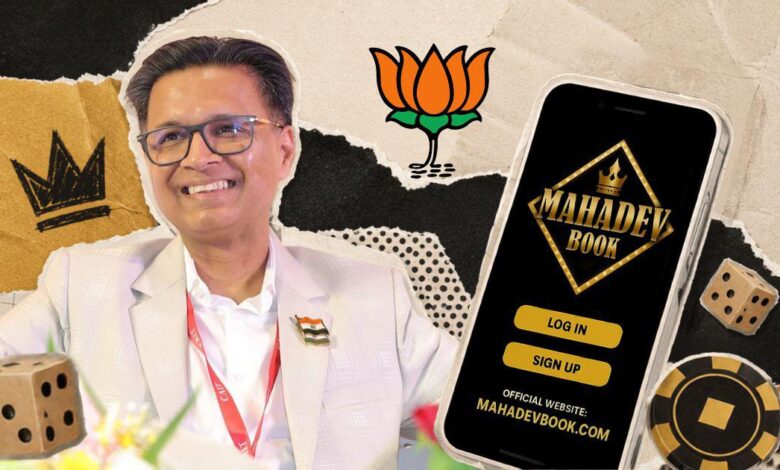
On 14 July 2026, when Enforcement Directorate officers arrived at his Delhi residence and placed Vikas Garg under arrest in the Mahadev Online Book/Skyexchange money laundering case, one question immediately stood out: Why didn’t he run?
Others allegedly connected to the same syndicate — including his key associate Hari Shankar Tibrewal (HST) — had reportedly shifted operations or sought shelter in Dubai, the well-known safe haven for those entangled in India’s illegal betting and hawala networks. Yet Vikas Garg, the man investigative documents accuse of actually owning SkyExchange and masterminding the alleged laundering of its proceeds into listed Indian companies, remained in India until the very end. He did not board a flight. He did not activate any emergency exit. He stayed — and continued his alleged attempts to sanitize his image from within the very system he was accused of exploiting.
This was not caution. This was hubris. This was the fatal miscalculation of a man who reportedly believed his political connections, his corporate empire, and his carefully constructed aura of invincibility would shield him from the consequences that had already forced others to flee.
The Alleged SkyExchange Empire He Reportedly Built — And Refused to Abandon
According to a detailed 22-page evidentiary note drawn from ED complaints (ECIR/RPZO/10/2022), statements under Section 50 PMLA, bank records, and corporate filings, Vikas Garg allegedly owns and controls SkyExchange, the Dubai-linked betting platform intertwined with the Mahadev syndicate. While day-to-day operations were reportedly handled by figures like Saurabh Chandrakar and Ravi Uppal, Garg is accused of being the ultimate beneficiary who needed a professional vehicle to park and legitimize the massive illicit cash flows.
That vehicle was allegedly Hari Shankar Tibrewal. The note claims HST — a person with deep stock market expertise — was specifically engaged by Garg to invest the SkyExchange-generated money into Indian listed companies. The destination list is precise: Vikas Lifecare Ltd, Vikas Ecotech Ltd, GG Engineering Ltd (GGEL), Advik Capital Ltd, Integra Essentia Ltd, and Teamo Productions HQ Ltd.
Nowhere is the alleged scheme more visible than in GG Engineering Ltd. The note claims GGEL was firmly under Garg’s control. Shares were allegedly acquired during critical windows by entities linked to both his group and HST’s network. When his name began surfacing in the Mahadev investigation, Garg and his family allegedly sold their entire stake in a panic — not to flee the country, but to create distance while remaining in India. They then allegedly installed proxy directors: Atul Sharma as Managing Director (described as a “stooge” used to issue threatening notices), along with Swati Gupta and Deepak Kumar Gupta, who held multiple directorships across the alleged Vikas Group ecosystem.
Most revealingly, the note alleges Garg filed a petition before the NCLT for the merger of GGEL with Integra Essentia Ltd — a move explicitly described as an attempt to make GGEL “lose its identity” so that “all documents will be destroyed.” This was not the action of a man preparing to flee to Dubai. This was the action of a man who believed he could erase the evidence from inside India and continue operating.
Why Vikas Garg Didn’t Run to Dubai: The Fatal Arrogance of Believing He Was Untouchable
This is the central analytical question the documents and circumstances force us to confront: Why did Vikas Garg stay when others allegedly ran?
In my opinion, the answer lies in a toxic combination of overconfidence, deep corporate entanglement, and misplaced faith in his political and institutional armour.
Unlike pure betting operators who could disappear into Dubai’s shadows with suitcases of cash, Vikas Garg had allegedly built a public corporate empire in India. He was the promoter of listed companies — Vikas Ecotech, Vikas Lifecare, Eraaya Lifespaces, GGEL, Advik Capital. He was chairman of Ebix Group. He had real estate, investments, and a carefully cultivated public profile. Fleeing would have meant abandoning control over these assets, triggering immediate regulatory scrutiny, stock exchange investigations, and the collapse of the very structures he allegedly used to launder money.
More importantly, Garg reportedly believed he didn’t need to run. The evidentiary note repeatedly highlights his alleged attempts to distance himself from within the system rather than escape it:
- Selling shares in GGEL after his name surfaced.
- Appointing “stooge” directors to create a buffer.
- Planning an NCLT merger to destroy documents.
- Continuing business operations as if nothing had changed.
This was the behaviour of a man who thought he could game the Indian system — manipulate disclosures, influence directors, use legal processes like NCLT to his advantage, and rely on political connections to delay or dilute any investigation. He reportedly viewed Dubai as a destination for lesser players. He saw himself as too big, too connected, and too deeply embedded in India’s corporate and political landscape to be touched.
That belief was his undoing.
While HST and others allegedly shifted focus to Dubai operations, Garg stayed in Delhi, continued his alleged corporate engineering, and reportedly kept trying to sanitize his image through share sales and proxy appointments. He underestimated the determination of the Enforcement Directorate. He overestimated the protective power of his political proximity (he has been described as a BJP Delhi economic cell convenor). And he fatally misjudged how quickly the alleged money trail — direct bank credits from accused entities into his accounts, witness statements naming “Vikas Eco” and “Vikas Life,” and balance sheet discrepancies — would catch up with him.
The Broader Pattern of Alleged Criminality That Made Flight Pointless
This alleged SkyExchange operation did not exist in isolation. The second comprehensive document on Vikas Garg reveals a consistent pattern across multiple agencies: DRI cases accusing him of being the “principal mastermind” of customs duty evasion schemes, CBI FIRs for forged export invoices, multiple police cases alleging threats and extortion, SEBI penalties for disclosure violations, and GST notices.
A man facing this level of multi-agency exposure across customs fraud, market manipulation, and now money laundering from illegal betting had two choices: flee like others, or double down on his belief that his Indian corporate-political fortress would hold. Garg chose the latter. He reportedly calculated that staying and manipulating the narrative from inside India was safer than becoming a fugitive.
He was wrong.
The Reckoning: Arrest, Attachment, and the Collapse of the “Untouchable” Myth
On 14 July 2026, that myth collapsed. The ED not only arrested him but had already attached ₹940.77 crore in assets through PAO No. 14/2026 — properties, equity shares, and securities allegedly representing proceeds of crime from the Mahadev/Skyexchange operations. The Original Complaint filed before the Adjudicating Authority formalized the case that Garg allegedly received and layered betting proceeds through FPI, FDI, hawala entries, and his controlled listed companies.
His decision not to flee did not save him. It merely delayed the inevitable while giving investigators more time to build an ironclad case against a man who remained within their jurisdiction.
The Opinion: Hubris Disguised as Strategy
Vikas Garg’s refusal to run to Dubai like HST and others was not a sign of innocence or strength. It was the clearest evidence of his alleged fatal arrogance. He reportedly thought he was different. He believed his listed companies, his political connections, and his ability to allegedly manipulate Indian institutions (NCLT mergers, proxy directors, selective disclosures) gave him a shield that pure operators lacked.
He was playing a different game — not the game of fugitives, but the game of someone who thought he could own the casino, launder the chips through the stock market, and still sit at the high table in Delhi.
That game has now ended with handcuffs in Delhi and assets worth nearly a thousand crores frozen. The very structures he allegedly used to stay and fight — his companies, his directorships, his Indian presence — became the chains that made escape impossible and detection inevitable.
Others ran to Dubai because they knew the game was up. Vikas Garg stayed because he reportedly believed the game could never be up for someone like him.
History — and the Enforcement Directorate — have now delivered their verdict on that belief.