Xi Jinping Wants China To Write The Rules Of The AI Age. It’s No Longer About Technology. It’s About Global Power.
China's AI ambitions are no longer confined to building faster models or developing smarter chatbots. At the World Artificial Intelligence Conference (WAIC) in Shanghai, President Xi Jinping unveiled a far broader vision - one in which Beijing doesn't just compete with the United States in AI, but helps determine the rules, standards and alliances that will govern the technology for decades to come.

The global conversation around artificial intelligence has centred on who could build the most powerful models. China now wants to shift that conversation towards something even more consequential – who gets to decide how AI is developed, shared and governed across the world.
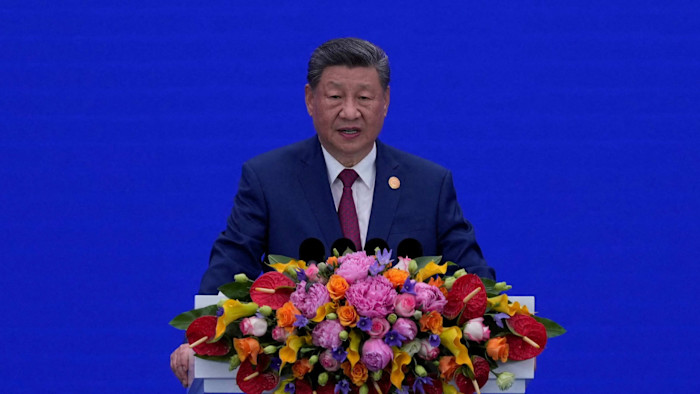
Speaking at the opening of the World Artificial Intelligence Conference (WAIC) in Shanghai, Chinese President Xi Jinping called on countries to seize what he described as the “historic opportunity” presented by open-source AI. Drawing parallels between artificial intelligence, the steam engine and electricity, Xi argued that AI represented a transformative force capable of reshaping economies, industries and societies, making international cooperation more important than ever.
Presenting China as a champion of open and inclusive AI development, Xi pledged to help developing nations build their own AI capabilities and warned against the emergence of “new historical injustices” caused by unequal access to advanced technology. Without directly naming the United States, his remarks carried a clear message: China wants an alternative to a world in which a handful of countries and companies dictate the future of artificial intelligence.
Xi also stressed that AI systems must remain under meaningful human control, urging governments to establish early-warning and emergency-response mechanisms to manage potential risks. His comments reflected Beijing’s attempt to project itself not only as a technology leader but also as a responsible stakeholder in shaping global AI governance.
The speech marked Xi’s clearest articulation yet of China’s ambition to become more than an AI superpower. Beijing is no longer content with simply narrowing the technological gap with the United States, instead it is positioning itself to influence the standards, institutions and partnerships that could define the next era of artificial intelligence.

Beijing’s AI Diplomacy Is Taking Shape
Xi Jinping’s speech was not merely a statement of intent – it was backed by a growing diplomatic framework designed to expand China’s influence over the global AI ecosystem. As competition with Washington intensifies, Beijing is increasingly treating artificial intelligence as a pillar of its foreign policy, using technology partnerships to strengthen ties across the developing world.
A day before Xi addressed the conference, China launched the World AI Cooperation Organisation (WAICO), a new international platform that has already attracted 29 member countries. Describing the initiative as a “milestone in the history of world AI development,” Xi said the organisation was created in response to growing calls from Global South nations for a greater voice in shaping AI governance.
Beyond the new organisation, China also announced plans to establish AI cooperation centres and expand training programmes with countries across BRICS, ASEAN, Latin America and the African Union. The objective is not simply to export Chinese technology, but to build long-term partnerships by helping developing economies acquire AI expertise, infrastructure and technical capabilities.
The strategy reflects Beijing’s broader effort to position itself as the preferred technology partner for emerging economies at a time when many countries are looking to harness AI but lack the resources to develop advanced systems independently. By championing open-source models and promising wider access to AI tools, China is attempting to distinguish its approach from the more tightly controlled ecosystem dominated by leading American technology companies.
Analysts believe these initiatives demonstrate that Beijing no longer wants to be a participant in global AI discussions; it wants to help shape the institutions that govern them. Rather than accepting rules drafted elsewhere, China is laying the groundwork for an alternative framework in which it plays a leading role, particularly across regions where its economic and diplomatic influence is already well established.

The AI Cold War Has Entered A New Phase
China’s diplomatic push comes as artificial intelligence increasingly becomes another front in the strategic rivalry between Beijing and Washington. What began as a race to develop more powerful AI models has evolved into a broader contest over who will shape the technology’s future – through standards, regulations, supply chains and global partnerships.
That rivalry was on display at the United Nations AI dialogue earlier this month, where the world’s two largest economies presented sharply different visions for governing artificial intelligence. While U.S. officials argued that excessive regulation could stifle innovation, China promoted its low-cost, open-source AI models as a way to narrow the global gap in access to advanced technology, particularly for developing nations.
The competition extends well beyond rhetoric. Washington has brought together 35 countries behind its AI Opportunity Statement, while Beijing has rallied 29 countries under the newly launched World AI Cooperation Organisation (WAICO). According to a person familiar with the U.S. position, Kazakhstan is currently the only country to have joined both initiatives, highlighting the limited overlap between the two competing frameworks.
Although Xi Jinping avoided mentioning the United States directly in his address, the message was unmistakable. Chinese state media has increasingly portrayed Beijing’s AI strategy as a response to what it describes as an American effort to build an “AI Iron Curtain.” In a recent commentary, Yuyuan Tantian, a social media account affiliated with state broadcaster CCTV, argued that China was working to create “another order” by bringing countries together to build an open-source AI ecosystem.
Analysts say Beijing’s latest initiatives reflect a determination to avoid becoming a rule-taker in an industry increasingly influenced by U.S. technology companies, export controls and Washington-led partnerships. As George Chen, chair of digital practice at The Asia Group, observed, Xi’s message is: China has no intention of following others on either AI technology or global standards; it intends to lead in both.
The upcoming government-level AI talks between Washington and Beijing under the Trump administration are therefore likely to be about far more than technology. They will test whether the world’s two AI superpowers can find common ground on governance or whether artificial intelligence is becoming the defining geopolitical contest of the next decade.
China Is Finally Backing Its AI Ambitions With Technology
China’s vision of leading the global AI order would have carried far less weight just a couple of years ago. Today, however, Beijing’s diplomatic ambitions are increasingly being reinforced by rapid advances from its domestic AI companies, many of which are closing the gap with America’s leading developers at a remarkable pace.
Underscoring that progress, Beijing-based startup Moonshot AI unveiled Kimi K3, which it describes as the world’s largest open-weight AI model with 2.8 trillion parameters. The announcement came just weeks after the U.S. government withdrew Anthropic’s frontier-class Fable and Mythos models over security concerns, adding another layer to the intensifying AI rivalry between the two countries.
Moonshot said Kimi K3 is designed for advanced reasoning, long-horizon coding and complex knowledge work, while supporting a context window of up to one million tokens – allowing it to process and retain significantly more information in a single prompt than earlier generations of AI models. Unlike proprietary systems, open-weight models can be downloaded, customised and deployed by developers, making them particularly attractive for organisations seeking greater flexibility and lower costs.
Independent benchmark results suggest Chinese AI models are making tangible progress. Arena.ai ranked Kimi K3 first for web interface-building capabilities, while Vals AI placed it second overall behind Anthropic’s Fable 5 and ahead of several leading Western models. Artificial Analysis also reported that Kimi K3 delivered performance comparable to OpenAI’s GPT-5.5 and Anthropic’s Claude Opus 4.8 on tests involving complex, multi-step reasoning tasks.
The launch is part of a broader trend reshaping China’s AI industry. Companies such as Z.ai, MiniMax, DeepSeek and Meituan have accelerated the pace of model releases, challenging the long-held perception that Chinese developers lagged their American counterparts by several months. Increasingly, the conversation is shifting from whether China can catch up to how quickly it is doing so.
That technological progress gives greater credibility to Xi Jinping’s broader geopolitical ambitions. If China can combine competitive AI models with an expanding international coalition built around open-source technology, it could emerge not only as a major AI developer but also as a leading architect of the global AI ecosystem.
Why Chinese AI Is Catching Up So Quickly
China’s rapid progress in artificial intelligence is not the result of a single breakthrough. Instead, it reflects an increasingly competitive domestic ecosystem where startups are releasing more capable models at a faster pace while driving down costs, creating an environment that is beginning to challenge the dominance of established U.S. AI firms.
The momentum has accelerated in recent months. Before Moonshot’s Kimi K3, companies such as DeepSeek and Meituan had already introduced trillion-parameter models, while Z.ai’s GLM-5.2 surprised industry observers by delivering benchmark scores close to some of America’s leading closed-source systems.
These developments have steadily undermined the long-held belief that Chinese AI developers trailed their U.S. counterparts by six months or more.
Cost has emerged as another major differentiator. According to Lian Jye Su, chief analyst at Omdia, Chinese AI models can often be deployed at a fraction of the price charged by leading American providers, making them particularly attractive for businesses and governments with limited computing budgets. Combined with open-weight releases that allow developers to customise and run models independently, China’s approach is expanding access to advanced AI beyond the handful of companies that dominate the global market.
At the same time, analysts caution against equating size with superiority. While Kimi K3’s 2.8 trillion parameters make it one of the largest open-weight AI models announced to date, parameter count is only a rough indicator of scale rather than intelligence or real-world performance. Running models of this size also requires enormous computing resources, placing them beyond the reach of most individual users and smaller organisations.
Moonshot itself continues to scale rapidly. Backed by technology giants Alibaba and Tencent, the startup is reportedly seeking around $2 billion in fresh funding at a valuation of approximately $30 billion ahead of a potential Hong Kong listing. The fundraising effort underscores growing investor confidence that Chinese AI companies are evolving into serious global competitors rather than regional challengers.
For Beijing, these technological gains are doing more than advancing its AI industry – they are strengthening its geopolitical message. A country seeking to influence global AI standards must first demonstrate that it can build world-class AI systems. With each new model release, China moves closer to making that case.
The Last Bit, Battle For AI Is Now A Battle For Influence
Artificial intelligence is rapidly becoming more than a technological contest – it is emerging as a new arena for geopolitical influence. The race is no longer confined to developing faster models or more powerful algorithms; it increasingly revolves around who sets the standards, builds the alliances and shapes the institutions that will govern AI’s future.
Xi Jinping’s address at the World Artificial Intelligence Conference reflected that shift. By championing open-source AI, expanding partnerships across the Global South and launching new international platforms such as WAICO, Beijing is signalling that it wants to play a far larger role than simply competing with American technology companies. It wants to influence the global framework within which artificial intelligence evolves.
At the same time, rapid advances by companies such as Moonshot, DeepSeek and Z.ai suggest that China’s technological capabilities are beginning to catch up with its geopolitical ambitions. While questions remain over export controls, national security restrictions and whether benchmark performance will translate into real-world leadership, the gap between Chinese and American AI developers appears to be narrowing.
Whether Beijing ultimately succeeds in rewriting the rules of the AI age remains uncertain. What is becoming increasingly clear, however, is that the next phase of the AI race will not be decided solely by who builds the smartest model but it will also be shaped by who wins the confidence of nations, defines the global standards and earns the right to lead the world’s artificial intelligence ecosystem.