Why Is The Indian Rupee Sliding Again? RBI’s Hands-Off Approach Leaves Markets Guessing
The Indian rupee has once again slipped close to its weakest-ever level, but this time it is not just the currency's decline that is unsettling markets. Investors and traders are increasingly trying to decode the Reserve Bank of India's evolving intervention strategy, as its restrained response raises fresh questions about how much weakness policymakers are willing to tolerate.


The Indian rupee’s slide back towards historic lows has left investors and currency traders uncertain, as the Reserve Bank of India‘s restrained intervention in the foreign exchange market has made it difficult to assess how much depreciation policymakers are prepared to accept.
The currency has weakened by almost 2% this month, making it the poorest-performing Asian currency over the period. After staging a recovery in June on the back of lower crude oil prices and government measures to attract dollar deposits and overseas debt inflows, the rupee has once again drifted close to its record low.
According to three people familiar with internal discussions at the RBI, the uncertainty reflects differing opinions within the central bank over how actively it should step in to stabilise the currency.
“The RBI’s relatively restrained intervention has puzzled market participants,” said Vivek Rajpal, Asia macro strategist at JB Drax Honore.
Rajpal added that many of his recent conversations with clients have revolved around trying to understand the RBI’s approach to managing the rupee.
The central bank’s intervention strategy plays a critical role in shaping both hedging decisions and speculative trades in the foreign exchange market. Traders often build positions based on where they believe the RBI is likely to intervene, making policy clarity essential for keeping market volatility under control.
Government initiatives aimed at encouraging dollar deposits from the Indian diaspora and boosting foreign investment into debt markets brought in more than $20 billion within a month. The inflows strengthened expectations that India could achieve its year-end target of attracting between $40 billion and $60 billion.
However, despite the influx of dollars, the rupee has continued to weaken, shifting market attention back to the RBI and whether it intends to provide stronger support.
Many traders had anticipated more forceful intervention after Governor Sanjay Malhotra stated that the central bank would do “whatever is required” to ensure orderly movements in the currency. Instead, four senior bankers said the RBI’s actions have remained limited and intermittent, catching the market off guard.
No Clear Path
People familiar with the matter said RBI officials remain divided over the extent to which the central bank should defend the rupee. Because the discussions are confidential, the sources requested anonymity.
Governor Sanjay Malhotra and Deputy Governor Poonam Gupta, both of whom joined the RBI from outside the institution, are believed to favour allowing market forces to determine the rupee’s value while intervening only when volatility becomes excessive.
According to the sources, both policymakers believe the currency should be allowed to reflect broader economic developments, including pressures arising from a higher oil import bill.
While the RBI has consistently maintained that its interventions are intended solely to prevent excessive volatility, it has never publicly specified what qualifies as “excessive,” leaving room for different interpretations under successive leadership teams.
During the tenure of former Governor Shaktikanta Das and former Deputy Governor Michael Patra, the rupee traded within an unusually tight range, with implied volatility at one point falling to its lowest level in more than two decades.
One source said the current leadership places greater emphasis on preserving India’s foreign exchange reserves and takes a more conservative view of reserve adequacy than headline figures may indicate.
India’s foreign exchange reserves currently stand at about $675.2 billion, although several analysts estimate that readily deployable reserves are closer to $460 billion after accounting for gold holdings and forward commitments.
That approach is reportedly not shared by some experienced RBI officials involved in market operations, who favour more frequent and decisive intervention. They believe stronger action would discourage speculative bets against the rupee and reinforce market confidence in the central bank’s policy stance.
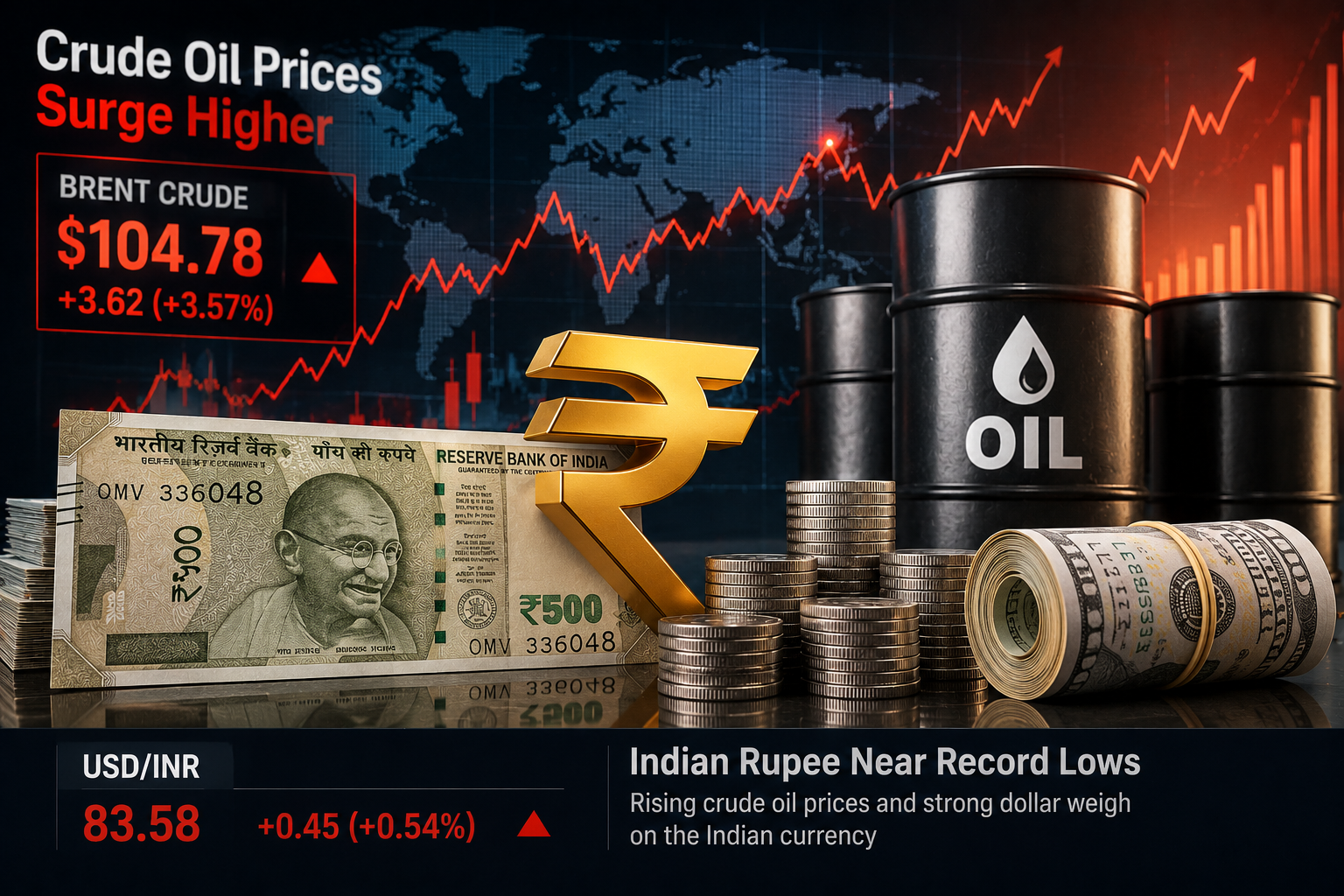
Pressure Beyond Oil Prices
The rupee has underperformed several other Asian currencies exposed to higher oil prices this month, including the Indonesian rupiah, Philippine peso and Thai baht.
According to Michael Wan, Senior Currency Analyst at MUFG Bank in Singapore, the currency’s weaker performance suggests that domestic factors, rather than oil prices alone, are weighing on the rupee.
Wan said the RBI has not been selling significant amounts of dollars apart from occasional interventions and may instead be rebuilding its foreign exchange reserves.
He added that, without stronger RBI action, the rupee’s weakness is merely a visible symptom of broader pressures affecting the currency.
Reflecting that view, two Singapore-based hedge fund managers specialising in currency and rates markets said they had once again taken bearish positions on the rupee after it breached levels they had expected the RBI to defend.
Market sentiment has also turned more negative, according to a recent Reuters foreign exchange positioning survey, which found that bearish bets against the rupee increased during the first 10 days of July after dropping to an eight-month low in June.