Did Zelenskyy Just Open A Dangerous New Chapter In Global Geopolitics? Why Ukraine’s Latest Move Could Redraw The World’s Strategic Map
Ukraine's latest move will be judged by its military impact, but its biggest consequence may lie elsewhere. Four years after refusing to abandon Kyiv, Volodymyr Zelenskyy may once again have changed the geopolitical conversation - not just about how Ukraine fights Russia, but about how the world's conflicts, alliances and battlefields are beginning to merge.

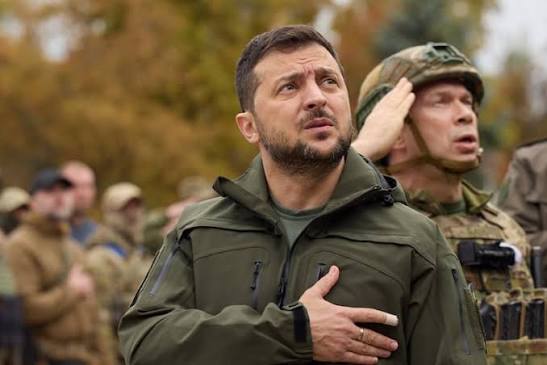
When Volodymyr Zelenskyy won Ukraine’s presidential election in 2019, few imagined he would one day become one of the most consequential wartime leaders of the 21st century. To much of the world, he was a comedian and television actor whose most famous role was playing a fictional president on screen. His transition from entertainer to head of state was viewed with curiosity, and in many circles, skepticism.
That skepticism only deepened when Russia launched its full-scale invasion of Ukraine in February 2022. Military analysts predicted Kyiv would fall within days. Western intelligence agencies reportedly prepared for the possibility of a government-in-exile, while Russian forces advanced rapidly towards the Ukrainian capital. The expectation was not whether Ukraine would lose, but how quickly.
Instead, Zelenskyy stayed.
His decision to remain in Kyiv, despite the very real threat of assassination or capture, became the defining image of Ukraine’s resistance. Over the next four years, his government not only survived but transformed Ukraine into one of the most battle-tested militaries in the world. From pioneering the use of low-cost naval drones against Russia’s Black Sea Fleet to integrating real-time intelligence, commercial technology and long-range precision strikes into conventional warfare, Ukraine consistently found ways to challenge a far larger and better-equipped adversary.
The road, however, has been anything but smooth. Support from Western allies has fluctuated with changing political winds, funding debates and election cycles. Zelenskyy has had to spend as much time campaigning in foreign capitals as he has directing a war at home. That uncertainty was laid bare during his tense and widely publicized meeting with U.S. President Donald Trump at the White House, where the exchange underscored growing questions about the future of American support and the cohesion of the Western alliance.
Yet, if there is one lesson the past four years have taught, it is that writing off Zelenskyy has become a habit that repeatedly proves costly. Every time the odds have appeared stacked against him, he has responded by changing the terms of the contest rather than simply playing by its existing rules.
His latest move may be the clearest example of that yet. Because what Ukraine has now done is not merely strike another target in a long war with Russia – it may have redrawn the strategic boundaries of the conflict itself.
The Strike That Changed More Than A Battlefield
For more than four years, Ukraine’s war has largely been confined – at least in public perception – to the battlefields of Eastern Europe. Russia launched missiles from its territory, Ukraine responded inside occupied regions or deep within Russia, and the conflict remained, geographically speaking, a European war. That perception may have changed the moment Ukraine struck assets linked to the Russia-Iran military supply chain.
While the immediate military impact of the operation is still being assessed, the strategic message was unmistakable. Ukraine was no longer content with merely destroying weapons after they reached Russian hands. It was signaling that the entire ecosystem sustaining Moscow’s war effort – from production facilities and logistics corridors to foreign suppliers – could now fall within its sights.
That ecosystem has never been limited to Russia alone. Since the early stages of the invasion, Iran has emerged as one of Moscow’s most important military partners, supplying Shahed drones that have repeatedly targeted Ukrainian cities and infrastructure. Over time, the relationship expanded beyond hardware to include deeper defence cooperation, technology transfers and logistical coordination. From Kyiv’s perspective, Iran stopped being a distant Middle Eastern power long ago; it had become an active enabler of Russia’s war.
Ukraine’s latest operation reflects that shift in thinking. Instead of treating Iranian support as an untouchable external factor, Kyiv appears to have decided that the supply chains feeding Russia’s military machine are just as legitimate a target as Russian troops on the battlefield. It is a significant evolution in strategy – one that moves beyond defending territory and towards disrupting the networks that make the war possible.
The timing makes the decision even more consequential. The Middle East is already seeing heightened tensions around Iran and the Strait of Hormuz, one of the world’s most critical maritime chokepoints for global energy supplies. By inserting itself into this equation, Ukraine has done more than expand its operational reach. It has linked Europe’s largest war with one of the world’s most volatile geopolitical flashpoints.
Whether that was intended as deterrence, disruption or strategic signaling will be debated for months. What is far less debatable is the effect it has already had on the geopolitical conversation. Ukraine is no longer fighting only on the frontlines of Donetsk or Zaporizhzhia. With a single move, it has forced governments from Washington and Brussels to Tehran and Beijing to view its war through an entirely different lens.
And that raises an even bigger question. If Ukraine has now demonstrated that the Russia-Iran partnership is part of the battlefield, were these ever really two separate wars to begin with?
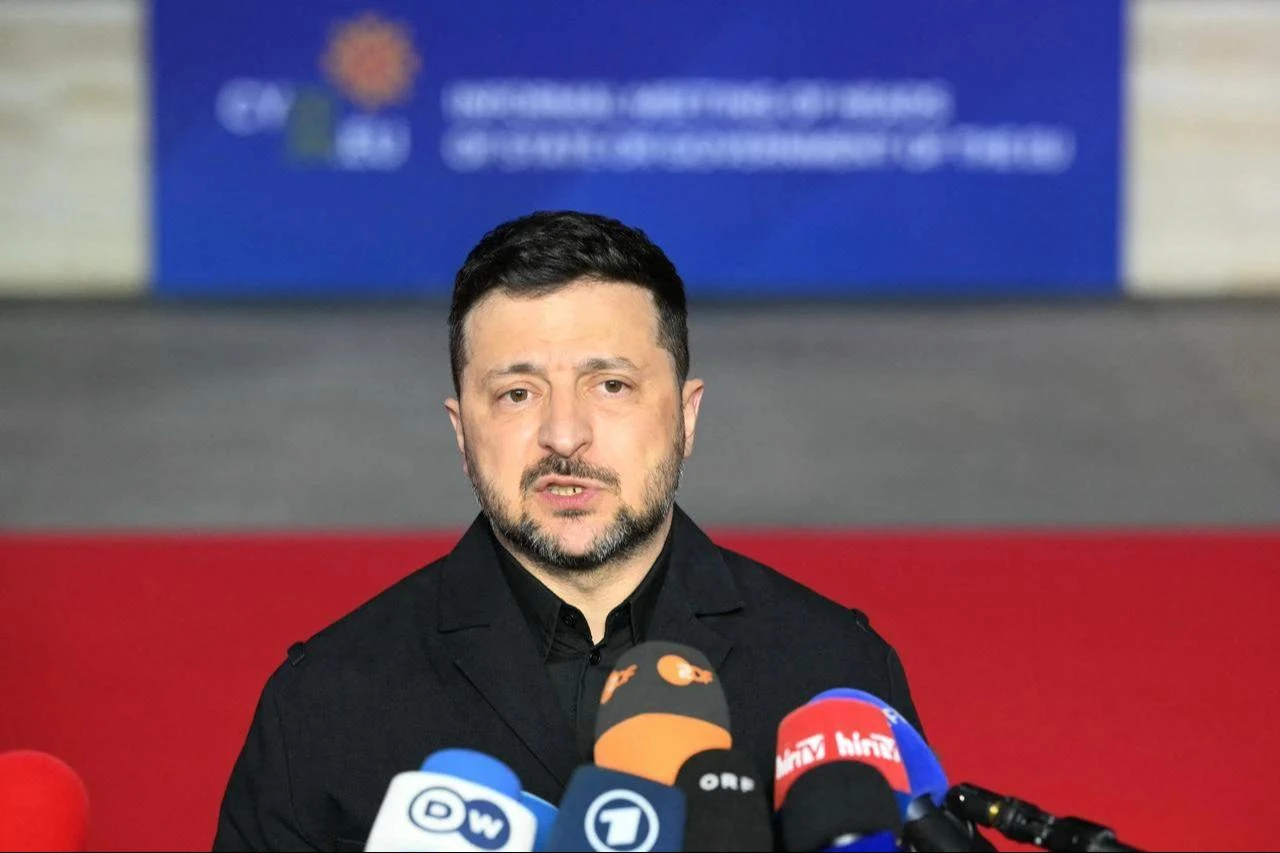
The Masterstroke: When Two Wars Became One
For much of the past four years, policymakers, analysts and governments have treated the war in Ukraine and the conflict surrounding Iran as two separate geopolitical crises. One was viewed as a European security challenge centred on Russia’s invasion of Ukraine. The other revolved around Iran’s regional ambitions, its network of proxy groups, Israel’s security concerns and the ever-present risk of disruption in the Strait of Hormuz.
That distinction may no longer hold.
Long before Ukraine’s latest operation, the two conflicts had already begun converging beneath the surface. Iran supplied Russia with Shahed drones that became a defining feature of Moscow’s air campaign against Ukrainian cities. Military cooperation deepened, defence industries became increasingly intertwined and logistical networks quietly expanded across the Caspian Sea. On paper, Ukraine was fighting Russia. In reality, it was increasingly confronting a military ecosystem that stretched well beyond Russian borders.
Kyiv’s latest move appears to acknowledge exactly that.
Rather than waiting for Iranian-made weapons to arrive on the battlefield, Ukraine has signaled that the supply chain itself is now part of the battlefield. That represents a subtle but profound shift in modern warfare. Instead of responding to military threats after they emerge, Ukraine is attempting to disrupt the web of relationships that allows those threats to exist in the first place.
The implications stretch far beyond Moscow or Tehran. A strike on an interconnected logistics network inevitably draws attention to every actor linked to it. Russia’s dependence on Iranian military support becomes more visible. Iran’s role in the Ukraine war becomes harder to dismiss as indirect. The Caspian Sea (once viewed largely as a secure logistical corridor) suddenly becomes strategically relevant. Even the Strait of Hormuz enters the conversation, not because Ukraine is fighting there, but because the conflict is now influencing calculations across one of the world’s most sensitive energy corridors.
Perhaps the most remarkable aspect of this development is that Zelenskyy has achieved it without formally opening a new war. Ukraine has not declared conflict against Iran, nor has it sought to become a participant in the Middle East’s long-running rivalries. Yet by targeting a critical link in the Russia-Iran partnership, Kyiv has blurred the line between two theatres that governments had long preferred to analyse separately.
That may prove to be the real masterstroke.
For years, Russia benefited from compartmentalization. The war in Ukraine remained Europe’s problem, while Iran’s confrontations unfolded largely in the Middle East. Zelenskyy’s latest move challenges that framework. It argues (through action rather than rhetoric) that these crises are no longer isolated events but interconnected fronts within a broader strategic contest.
If that interpretation gains traction, then the world’s geopolitical map has quietly changed. The conversation is no longer about where one war ends and another begins. It is about whether such boundaries still exist at all.
The New Global Chessboard Is Finally Visible
If Ukraine’s latest move has blurred the lines between Europe and the Middle East, it has also brought into sharper focus another reality that has been taking shape for years: the emergence of competing strategic ecosystems. They are not bound together by treaties or formal military alliances in the way NATO is. Instead, they are connected by shared interests, complementary capabilities and a growing willingness to help one another challenge the existing international order.
Russia sits at the centre of one such network. It remains the military heavyweight, backed by one of the world’s largest nuclear arsenals, vast energy resources and a willingness to sustain a prolonged war despite unprecedented Western sanctions. But Russia has not fought this war entirely alone.
Iran has become a crucial military partner, supplying drones, missile technology and production expertise that have significantly influenced the battlefield in Ukraine. North Korea has emerged as another indispensable supplier, providing artillery shells, ballistic missiles and, according to multiple reports, even manpower to reinforce Russia’s war effort. China, while carefully avoiding direct military involvement, has offered something equally valuable – economic resilience, dual-use technologies, industrial capacity and diplomatic cover that have helped Moscow weather years of Western isolation.
Individually, each relationship tells only part of the story. Collectively, they form a strategic network where every member contributes a different strength. Russia provides military power. Iran offers asymmetric warfare and regional leverage. China brings economic weight and technological depth. North Korea supplies the volume of ammunition and manpower needed to sustain attritional warfare. Together, they create an ecosystem that is proving remarkably resilient.
On the other side, the picture is both stronger and more complicated.
Ukraine has received unprecedented military, financial and intelligence support from the United States and its European allies. NATO has trained Ukrainian forces, modernized their capabilities and helped transform the country’s military into one of the most experienced fighting forces in the world. Yet unlike the increasingly complementary relationship between Russia, Iran, China and North Korea, the Western coalition is not always driven by identical priorities.
The United States remains Ukraine’s single most important backer, but domestic political shifts have repeatedly raised questions about the durability of that support. Europe, meanwhile, continues to balance its commitment to Kyiv with concerns over energy security, economic pressures and the risk of a wider regional conflict. Even within NATO, unity on defending Ukraine has not always translated into agreement on every broader geopolitical issue, particularly those involving the Middle East or relations with Iran.
That is precisely why Zelenskyy’s latest move carries implications far beyond the battlefield.
By linking Ukraine’s war more directly to Iran’s military role, Kyiv has effectively connected two strategic theatres that many Western governments have preferred to manage separately. The conversation is no longer simply about supporting Ukraine against Russia. It is increasingly about how to respond to an interconnected network of states whose cooperation spans Europe, the Middle East and East Asia.
The result is a geopolitical chessboard that looks very different from the one the world inherited after the Cold War. The dividing lines are no longer drawn solely by geography or ideology. They are being shaped by supply chains, defence partnerships, technology transfers, energy routes and shared strategic interests.
And as those lines become clearer, every country watching from the sidelines may soon discover that remaining there is becoming far more difficult.
Europe’s Impossible Choice And The End Of Strategic Neutrality
For much of the war, Europe’s strategic calculation, while difficult, was relatively straightforward. Russia had invaded a sovereign nation. Ukraine needed military and financial support. The objective was clear: help Kyiv defend itself without allowing the conflict to spill beyond Ukraine’s borders.
Zelenskyy’s latest move complicates that equation.
If Ukraine’s battlefield now extends beyond Eastern Europe and directly intersects with Iran’s military partnership with Russia, Europe is no longer dealing with a conflict confined largely to its own continent. It is confronting a crisis that stretches from the Black Sea to the Caspian, reaches into the Persian Gulf and carries consequences for global energy markets, maritime trade and regional stability.
That presents European capitals with a dilemma they have largely managed to avoid until now.
For the past few years, the transatlantic alliance has not always appeared as united as it once did. Donald Trump’s repeated criticism of NATO members over defence spending, disputes over tariffs, and his broader “America First” approach exposed underlying tensions that had long existed beneath the surface. The widely watched confrontation between Trump and Zelenskyy in the Oval Office only reinforced concerns that Washington’s commitment to Ukraine could become increasingly conditional depending on the political climate in the United States.
At the same time, Europe has never been entirely uniform in its approach to the Middle East. While all major European powers share concerns over Iran’s nuclear ambitions and regional activities, they have often differed from Washington on how best to engage Tehran. Diplomatic engagement, sanctions, military intervention and regional strategy have rarely enjoyed unanimous support across the continent.
Ukraine’s latest move suddenly forces those debates to overlap.
If Iran responds more aggressively because of its role in supporting Russia, is Europe prepared to view that as an extension of the Ukraine conflict? Or will governments attempt to keep the two crises separate, even as events increasingly suggest they are becoming intertwined?
Then there is the Middle East itself.
Unlike Europe, where political consensus often requires lengthy negotiation, many countries across the region already have well-established strategic alignments. Iran’s position is obvious. Israel’s security calculations are deeply shaped by Tehran’s growing regional influence. The Gulf monarchies have spent years balancing relations with Washington, Moscow and Beijing while trying to reduce direct confrontation with Iran. Turkey, meanwhile, remains one of the world’s most complicated geopolitical actors – a NATO member that has maintained working relationships with Russia, supported Ukraine militarily and continued dialogue with Tehran.
Each will respond according to its own national interests. But as the Ukraine war and the Middle East become increasingly connected, those interests may no longer be insulated from one another.
And that may be the most significant consequence of Zelenskyy’s decision.
For decades, many countries successfully managed a multipolar world by avoiding hard choices. They traded with China, bought energy from Russia, partnered with the United States on security and maintained diplomatic ties across rival camps. Strategic flexibility became a foreign policy in its own right.
That flexibility is beginning to narrow.
As military alliances, energy security, technology, trade routes and supply chains become more tightly interconnected, governments may find that neutrality is no longer judged by what they say, but by what they do. Supporting one supply chain, sanctioning one country or protecting one shipping lane could increasingly be interpreted as taking a side in a much larger geopolitical contest.
And if Zelenskyy’s latest move has accelerated that process, then the biggest casualty may not be the old balance of power. It may be the shrinking space between the competing blocs where countries once managed to stand.
The One Capital Watching Most Closely Isn’t Washington Or Moscow – It’s Beijing
If there is one country that understands the significance of Ukraine’s latest move beyond its immediate military implications, it is likely China.
Unlike Russia or Iran, Beijing has little interest in becoming directly involved in another conflict. Unlike the United States, it is not under pressure to respond militarily. And unlike Europe, it does not face the immediate challenge of balancing alliance commitments with domestic political divisions.
Instead, China has the luxury of doing something far more valuable in geopolitics – watching.
For years, Beijing has carefully positioned itself as Russia’s economic lifeline without becoming its military ally. It has deepened trade, expanded energy purchases and provided the industrial and technological resilience that has helped Moscow withstand successive rounds of Western sanctions. At the same time, it has sought to preserve stable economic ties with Europe while avoiding a direct confrontation with the United States.
That balancing act becomes even more important if the Ukraine war and the Middle East begin merging into a single strategic theatre.
Every crisis that demands Washington’s attention stretches American diplomatic, military and economic bandwidth. A United States simultaneously managing Russia in Europe, Iran in the Middle East and growing competition with China in the Indo-Pacific inevitably faces more difficult strategic choices than one dealing with each challenge in isolation.
That does not necessarily mean Beijing wants a wider war. In fact, an uncontrolled conflict disrupting global trade, energy supplies or financial markets would run directly against China’s economic interests. Beijing’s preference has consistently been for managed instability – enough geopolitical friction to distract its competitors, but not enough to trigger systemic collapse.
From that perspective, Zelenskyy’s latest move creates an entirely new strategic variable. If Ukraine succeeds in forcing the West to view Russia, Iran, North Korea and China as increasingly interconnected challenges, Beijing may find itself drawn into a geopolitical contest it has spent years trying to influence from the sidelines.
Its economic relationship with Moscow will receive greater scrutiny. Its diplomatic positioning will become harder to separate from Russia’s actions. And its long-standing effort to present itself as a stabilizing global power could become more difficult to sustain.
Yet the opposite outcome is equally possible.
Should Western governments become consumed by managing crises across Europe and the Middle East simultaneously, China gains something no military operation can easily achieve – time. Time to strengthen its economy, modernize its armed forces, deepen regional influence and continue shaping the global order while its principal rival remains strategically overstretched.
Which is why Beijing may ultimately view Ukraine’s latest move with a mixture of caution and opportunity.
Because the real battle is no longer confined to the trenches of eastern Ukraine or the waters of the Strait of Hormuz. It is increasingly becoming a contest over who can best shape the strategic priorities of the world’s major powers.
Did Zelenskyy Just Open A Dangerous New Chapter In Global Geopolitics?
History rarely announces the moment when the rules of international politics begin to change. More often than not, those moments are only recognised years later, after seemingly isolated events reveal themselves to have been connected all along.
Ukraine’s latest move could become one of those moments.
For over four years, Volodymyr Zelenskyy has repeatedly forced the world to revise its assumptions. He was not expected to survive Russia’s invasion. He was not expected to keep Western support together through shifting political tides. He was not expected to transform Ukraine into one of the world’s most innovative military forces. Yet, time and again, he has turned perceived weakness into strategic advantage.
His latest decision may prove to be another such moment.
By challenging the military relationship between Russia and Iran rather than limiting Ukraine’s fight to Russian territory alone, Zelenskyy has effectively asked a question that governments around the world can no longer ignore: if modern wars are sustained by international partnerships, should the battlefield stop at national borders?
That question extends far beyond Ukraine.
It touches Washington, which must now consider whether its European and Middle Eastern security commitments can still be treated as separate challenges.
It reaches Brussels, where leaders must decide whether supporting Ukraine increasingly means managing instability well beyond Europe’s eastern frontier. It reaches Beijing, where China’s carefully balanced strategy could become harder to maintain if global rivalries continue converging. And it reaches capitals across the Middle East, where governments that have successfully balanced ties with competing powers may soon find that remaining equidistant is no longer an option.
Perhaps that is Zelenskyy’s greatest strategic achievement. He has not simply expanded Ukraine’s military reach. He has expanded the strategic conversation itself. The debate is no longer confined to how Ukraine wins a war against Russia. It is increasingly about how the world’s major powers intend to respond to an international system where conflicts are no longer isolated by geography, alliances are no longer defined solely by treaties, and security in one region can no longer be separated from instability in another.
Whether this ultimately proves to be a masterstroke or a dangerous escalation will depend on decisions made not just in Kyiv, but in Washington, Moscow, Beijing, Brussels and Tehran. Those answers will emerge over time.
What is already becoming clear, however, is that Zelenskyy may have done something few leaders manage to accomplish during wartime.
He has changed not just the battlefield, but the way the battlefield itself is understood – a door Zelenskyy may have opened. and rather cleverly too!