How Did A Pilot Struggling With Sleep End Up Flying An Air India Flight That Later Lost 300 Feet Amid Multiple Hydraulic Warnings? Serious Questions For Air India, Its Employees And DGCA
How did a pilot struggling with sleep end up flying an Air India flight carrying 137 passengers? What are the rules around sleep medication and disclosure? And with multiple hydraulic warnings recorded, was AI2379 a human-factors problem, a technical failure, or both? Most importantly, how many safety layers are supposed to prevent an unfit pilot from reaching the cockpit?

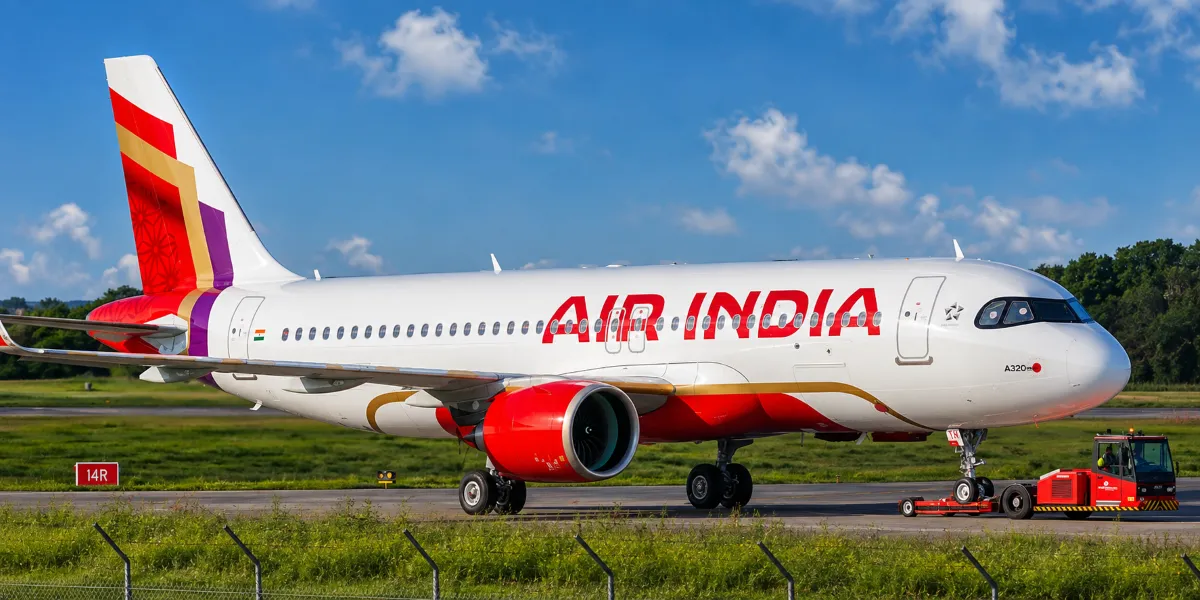
Air India flight AI2379 was flying from Phuket to Delhi on August 4 with 137 passengers, including three infants, and eight crew members when the aircraft suddenly lost altitude during its journey. The Airbus A320neo, registered as VT-EXO, dropped by roughly 300 to 360 feet before stabilising and continuing its flight to Delhi.
The incident occurred while the aircraft was cruising at around 36,160 feet. Flightradar24 data placed the altitude anomaly at approximately 9:33 am IST, when the aircraft dropped to around 35,800 feet. At least 20 passengers and four cabin crew members were injured in the incident. The aircraft eventually landed safely in Delhi.
But the flight had more going on inside the cockpit than a sudden altitude variation.
According to an internal flight safety report, the pilot in command, Sudeep Vashistha, told investigators that he had been experiencing difficulty sleeping for some time because of personal circumstances. He said he had been prescribed medication by his family doctor for the problem.
Vashistha said that during the layover in Phuket, he attempted to rest but was unable to sleep easily. He said he went for a walk because he believed light activity would help with sleep quality.
He also told investigators that his roster duties were legally within prescribed rest limits, but that the scheduling had compressed the amount of daytime rest available to him.
For the first flight, he had to report for duty at 12:10 am, meaning preparations had to begin well before 10 pm. After landing in Phuket, completing post-flight duties and travelling to the hotel generally took another 1.5 to 2 hours.
For the return flight to Delhi, he said he had to wake up at 3 am IST.
The pilot also told investigators that he slept for approximately 30 to 35 minutes during the Phuket-Delhi flight. He had used the washroom and returned to stand behind the first officer when the altitude event occurred. According to people familiar with his account, the two pilots were discussing the aircraft’s air-conditioning system when the event happened and Vashistha was thrown to the cockpit floor.
The first officer was flying the aircraft at the time, while Vashistha was acting as the pilot monitoring.
The incident also triggered scrutiny of the aircraft’s systems. A post-flight Centralised Fault Display System log recorded nine warning messages within one minute around the time of the altitude event. The warnings included low pressure in the Green, Blue and Yellow hydraulic systems, low reservoir levels in the Yellow and Blue systems, an autopilot disconnect and an elevator flight-control fault.
Additional warnings followed, including emergency-exit sensor messages. A separate engine anti-ice fault was recorded later in the flight, while another autopilot disconnect was recorded before landing.
A maintenance report subsequently examined by investigators reportedly recorded 11 system alerts over two to three minutes, including three hydraulic low-pressure warnings followed shortly by the autopilot disconnect.
The sequence has not, however, established a direct cause for the altitude variation. The maintenance report does not confirm whether the hydraulic and flight-control warnings were directly responsible for the loss of altitude or whether an actual loss of hydraulic pressure or fluid occurred.
The incident took another turn when both pilots underwent mandatory psychoactive-substance testing. Vashistha’s preliminary test was recorded as “non-negative”, with a subsequent confirmatory laboratory test returning positive for cannabis. Both pilots were subsequently taken off the flying roster pending the investigation.
The Aircraft Accident Investigation Bureau is examining the flight data, aircraft systems, operational and maintenance records, medical information, crew actions and other evidence related to the incident. The bureau has cautioned against drawing conclusions from isolated pieces of information while the investigation is underway.
What Happens When A Pilot Is Prescribed Medication For Sleep Problems?
The medication question is more complicated than simply asking whether a pilot was taking something to help him sleep.
Vashistha told investigators that he had been experiencing sleep difficulty for some time because of personal circumstances and had been prescribed medication by his family doctor. He did not identify the medication or say how long he had been taking it, according to people familiar with his account.
That distinction matters because the existence of a prescription does not, by itself, establish that a pilot was medically unfit to fly. Nor does the fact that a pilot is struggling with sleep automatically establish that medication contributed to an incident.
The more important question is whether the medication was known to the airline and assessed for its implications on the pilot’s fitness to fly.
According to the reporting cited in the draft, DGCA rules require pilots taking prescription medication to declare it to their airline. Non-disclosure can invite action by the operator. But in Vashistha’s case, it was not clear from the information available whether he had declared the medication.
That creates a very different question from whether the drug itself caused the incident.
If a pilot is prescribed medication for a condition that affects sleep, the airline’s concern is not simply the condition being treated. It is whether the medication, the underlying condition, or both could affect alertness, reaction time, judgement or the ability to safely perform flight duties.
And that is where the chain becomes important.
Vashistha said he was struggling to sleep during the Phuket layover. He also said his roster had compressed the amount of daytime rest available to him. The return flight then required him to wake at 3 am IST. He subsequently told investigators that he slept for only around 30 to 35 minutes during the flight.
None of that, on its own, establishes that the medication made him unfit to fly.
But it does raise a question about the safeguards that are supposed to operate before a pilot reaches the cockpit.
- Who knew that he had been experiencing sleep difficulty?
- Was the medication declared?
- Was the medication assessed from an aviation-medical perspective?
- Was the pilot considered fit to operate the roster he had been assigned?
And if the pilot himself believed he had not obtained adequate sleep, what mechanism existed for him to report that fatigue and be removed from duty without operational pressure becoming a factor?
The Marijuana-Positive Test Changes The Questions
The medication issue is only one part of what investigators are examining.
The other is the pilot’s drug test.
Both pilots underwent mandatory psychoactive-substance testing after the incident. Vashistha’s preliminary post-flight test was recorded as “non-negative”, meaning the sample had flagged for further analysis. His subsequent confirmatory laboratory test came back positive for cannabis.
That finding immediately raises an obvious question: why did the pilot test positive for cannabis?
But a positive test does not, by itself, answer another and more important question: was the pilot impaired while operating the aircraft?
The available reporting does not establish when the substance was consumed, how much was consumed, or whether cannabis had any effect on Vashistha’s ability to perform his duties during AI2379.
A drug test can establish the presence of a substance or its metabolites in a sample. It does not automatically establish that the person was under its influence at the precise time of the incident. Determining what the result means in the context of a flight is therefore a matter for the investigation rather than something that can be inferred from the positive result alone.
There is also a regulatory question.
If pilots are subject to mandatory psychoactive-substance testing following a serious incident, what happens after a preliminary result is flagged? What does the confirmatory test establish? What procedures govern the pilot’s removal from flying duties, and what further medical or regulatory assessment follows?
In this case, both pilots were taken off the flying roster pending completion of the investigation. The positive cannabis result therefore becomes one piece of a much larger investigation rather than a standalone explanation for what happened aboard AI2379.
That is particularly important because the flight also generated a series of technical warnings around the time of the altitude event.
Was AI2379 Primarily A Human-Factors Problem, A Technical Problem, Or Both?
The focus on the pilot’s sleep, medication and positive cannabis test risks making the incident look like a straightforward human-factors story.
But the aircraft was generating warnings of its own.
The post-flight Centralised Fault Display System log recorded nine warning messages within roughly one minute around the time of the altitude event. They included low-pressure warnings across the Green, Blue and Yellow hydraulic systems, low reservoir levels in the Yellow and Blue systems, an autopilot disconnect and an elevator flight-control fault.
The maintenance report examined after the incident reportedly recorded 11 system alerts over two to three minutes. Three hydraulic low-pressure warnings appeared within about a minute, followed shortly by an autopilot disconnection.
That sequence is significant because the aircraft did not simply experience an altitude variation and then continue normally. Multiple aircraft systems were registering warnings around the same period.
There were further indications during the flight. Emergency-exit sensor warnings were recorded shortly after the initial cluster, an engine anti-ice fault appeared later, and another autopilot disconnect was recorded before the aircraft landed in Delhi.
The 300-Foot Drop Needs Context
“300 feet” is the number that immediately stands out from the AI2379 incident. But the number alone does not explain what happened inside the aircraft.
The flight was cruising at around 36,160 feet when Flightradar24 tracking data recorded an altitude anomaly at approximately 9:33 am IST. The aircraft subsequently descended to around 35,800 feet, representing a loss of roughly 360 feet before it stabilised.
This matters because the reported altitude variation occurred during a period when several aircraft-system warnings were also being recorded.
- Who was flying the aircraft?
- What was the commander doing?
- What was the first officer doing?
- Had the autopilot disconnected before the altitude variation, or as part of the same sequence?
- And how did the aircraft respond once the altitude changed?
The available material provides some of those answers, but not all of them.
The first officer was flying the aircraft, while Vashistha was acting as the pilot monitoring. According to people familiar with his account, Vashistha had been standing behind the first officer after returning from the washroom when the altitude event occurred. He was reportedly thrown to the cockpit floor during the event.
The aircraft then remained airborne for nearly 1 hour and 20 minutes after the initial hydraulic warnings before landing safely in Delhi.
What Happens When The Commander Is Not In His Seat?
The altitude event also raises a question about what was happening inside the cockpit at the precise moment the aircraft lost altitude.
According to people familiar with the pilot’s account, the first officer was flying AI2379 while Vashistha was acting as the pilot monitoring. Vashistha had reportedly used the washroom and then returned to stand behind the first officer when the altitude event occurred. He was thrown to the cockpit floor during the sudden movement. A cabin crew member occupying the observer seat subsequently helped him up.
That detail matters because leaving the pilot’s seat is not, in itself, the same thing as abandoning responsibility for the flight.
A pilot may need to leave the seat for operational or personal reasons. What matters is what procedures are followed when that happens, who remains in control of the aircraft and what safeguards are in place to ensure the remaining flight crew can continue to operate the aircraft safely.
If the commander was the pilot monitoring, what exactly was his role at that moment? How was he monitoring the aircraft’s systems? And what happened to that monitoring function when the aircraft suddenly experienced the altitude variation and the commander himself was thrown to the cockpit floor?
These questions become even more relevant because the altitude event coincided with multiple system warnings, including an autopilot disconnect and an elevator flight-control fault.
The cockpit, in other words, was dealing with two things at once: an unexpected change in the aircraft’s behaviour and a crew member being physically affected by that event. That makes crew coordination an important part of the investigation.
The answers matter because modern airline safety is built around crew coordination and redundancy. The system is not supposed to depend on one person being able to do everything at precisely the right moment.
AI2379 therefore raises a question that goes beyond why the commander was standing behind the first officer.
It is whether the cockpit’s normal layers of protection continued to function when the aircraft experienced a sudden altitude variation, multiple system warnings and a physical disruption to one of the pilots at almost the same time.
That is something the investigation will have to reconstruct from the flight data, cockpit procedures, crew accounts and other evidence rather than from any single account of what happened.
Legal Rest Does Not Necessarily Mean Adequate Recovery
This is where the AI2379 incident raises a much bigger question about pilot fatigue.
Vashistha reportedly told investigators that his roster was within the prescribed legal rest limits, but that the way his duties were scheduled had compressed the amount of daytime rest available to him. His account included a 12:10 am reporting time for the earlier flight, 1.5 to 2 hours spent completing post-flight duties and travelling to the hotel after landing in Phuket, difficulty sleeping during the layover and a 3 am wake-up time for the return flight.
The important point is that India’s fatigue rules do not simply look at how many hours a pilot is technically off duty.
The DGCA’s current Flight Duty Time Limitations framework explicitly defines fatigue as a physiological state that can result from sleep loss, extended wakefulness, circadian phase or workload and can impair a crew member’s alertness and ability to safely operate an aircraft.
The same framework requires operators to establish limits for flight time, flight duty, duty and rest periods. It also says operators must not require a crew member to fly if it is known or suspected that the crew member is fatigued to a degree that could adversely affect flight safety.
And there is an important distinction between rest on paper and the opportunity to actually recover.
The DGCA framework says operators should provide adequate opportunity for rest and night-time sleep. It also advises operators to avoid combining long duty periods with minimum rest periods and to avoid alternating night, day, late-night and early-morning duties.
That becomes particularly relevant in Vashistha’s account.
His issue, as described to investigators, was not simply that he had been given no rest. It was that the available rest was compressed by the timing of duties, post-flight requirements, travel to the hotel and the difficulty he was already experiencing in sleeping.
Those are not necessarily the same thing.
A roster can comply with a prescribed minimum and still leave a crew member struggling to obtain meaningful sleep. That does not automatically mean the roster violated DGCA rules. It does, however, raise the question of whether the system’s fatigue safeguards were working as intended in this particular case.
The DGCA framework itself recognises that the prescribed limits are outer limits, rather than targets for routine scheduling. It says operators should strike a balance between commercial imperatives and a crew member’s ability to work effectively, while providing sufficient opportunities for rest and night-time sleep.
There is another safeguard that becomes particularly important here.
Operators are required to have a fatigue-reporting policy explaining how crew members can raise fatigue reports and what action should follow. Those reports are supposed to be handled under a non-punitive and confidential policy, with fatigue reports and action taken made available to the DGCA when required.
The rules also place responsibility on pilots themselves. A crew member is expected to make proper use of available rest opportunities and must not perform flight duties if they know or suspect that they are fatigued to the extent that flight safety could be affected.
That creates a shared responsibility.
- The airline has to build a roster that allows meaningful recovery and has systems for reporting fatigue.
- The pilot has to recognise when he is not fit to fly and use those systems.
- And the regulator has to ensure that operators are complying with the framework.
The question raised by AI2379 is therefore not simply whether Vashistha was legally rested.
It is whether, given the sleep difficulty he had reported, the medication he was taking, the timing of his duties and the limited sleep he said he actually obtained, the safeguards designed to prevent fatigue from affecting flight safety were sufficient – and whether they were used.
That is a much bigger question than whether the roster technically complied with the rules.
Where Does Air India’s Responsibility Begin?
If the pilot’s sleep, medication and fatigue are one part of the investigation, the next question is what the airline’s own systems were supposed to do with that information.
This is not simply about whether an individual pilot made the right decision. Commercial aviation is built around layers of operational and medical safeguards designed to prevent one person’s condition from becoming a passenger-safety risk.
So the questions for Air India are straightforward.
- Who knew about the pilot’s sleep difficulty?
- Was the medication declared to the airline?
- If it was declared, was it assessed for its implications on flight duties?
- Was the pilot medically cleared to fly?
- And perhaps most importantly, what mechanism did the airline have for a pilot to report that he was not adequately rested?
A functioning fatigue-risk system is not supposed to operate only after an incident. It should give pilots a way to report fatigue before operating a flight and give the airline a mechanism to assess the risk and take appropriate operational action.
The same applies to medication.
If a pilot is required to disclose prescription medication, the important question is not simply whether a form was filled out. It is what happened after the disclosure, if there was one. Was the medication reviewed? Was the pilot referred for an aviation-medical assessment? Were any restrictions imposed? Or was the pilot simply rostered as normal?
At present, the available material does not establish which of those things happened in Vashistha’s case.
- If the pilot did not disclose relevant information that he was required to disclose, that raises one set of questions.
- If he did disclose it and the information was known to the airline but did not trigger an appropriate assessment, that raises another.
- If the airline’s systems were never made aware of the problem, the question shifts again to whether the fatigue-reporting culture and procedures were sufficiently accessible and effective.
- And if the pilot was medically cleared and the roster complied with the applicable rules, investigators still have to establish whether anything else in the chain contributed to the incident.
The airline therefore sits at the centre of several overlapping safeguards – rostering, fatigue reporting, medical oversight, drug testing, crew management and operational supervision.
Then There Is The Phuket Party
There is another detail in the account that needs to be examined carefully: what happened during the crew’s time in Phuket.
According to sources cited in the reporting, during the Delhi-to-Phuket flight, Vashistha had earlier gone to the washroom and asked a cabin attendant to occupy his seat. The attendant was reportedly reprimanded by the pilot over his handling of the operation.
Later, Vashistha reportedly wanted to make amends and took the crew to a party in Phuket before the return flight.
That detail is potentially significant because of what investigators subsequently found in the pilot’s drug test. But it is also precisely where the reporting needs to stop short of making assumptions.
The word “party” does not tell us what happened there. Was alcohol consumed? How long did the gathering last? Who attended? When did it end? Was there any substance use? And, most importantly, is there any evidence connecting anything that happened at the gathering with the subsequent positive cannabis test?
The available material does not answer those questions.
A positive cannabis test cannot, by itself, establish that cannabis was consumed at the Phuket gathering. Nor does the existence of a party establish that the pilot was drinking or using any substance before the return flight.
Those connections would have to be established independently.
The timing, however, makes the episode something investigators may reasonably need to examine alongside the rest of the evidence. The pilot had already described difficulty sleeping during the layover, and he subsequently tested positive for cannabis. The investigation will therefore have to establish what happened during the layover, when it happened and whether any of it had relevance to his fitness to operate the return flight.
That requires evidence, not inference.
Crew accounts, hotel records, timelines, medical information, toxicology findings and other investigative material would be needed to establish what actually happened.
The more important question is what investigators find when they reconstruct the hours before AI2379 left Phuket — because that is where the timeline of sleep, rest, medication, crew activity and the eventual flight begins to come together.
The Aircraft Was Talking Too. What Exactly Was It Saying?
The pilot is under scrutiny. But the aircraft was generating its own set of warnings.
The post-flight maintenance data reportedly recorded three hydraulic low-pressure alerts within about a minute, involving the Green, Yellow and Blue hydraulic systems. The autopilot then disengaged, while the aircraft also recorded warnings relating to its elevator flight controls.
That sequence is difficult to ignore because it occurred around the same period as the reported altitude variation.
The Centralised Fault Display System log recorded nine warning messages within one minute at around 9:32 am IST. These included low pressure across the three hydraulic systems, low reservoir levels in the Yellow and Blue systems, an autopilot disconnect and an elevator flight-control fault.
But the data does not provide a neat answer.
The pressure readings reportedly shifted between different hydraulic systems rather than showing one system failing and remaining failed. The analysis cited in the reporting suggests this pattern could be consistent with a transient event, although that does not establish what caused the event or prove that the hydraulic warnings triggered the altitude loss.
There were other warnings too.
Two emergency-exit sensor messages appeared shortly after the initial cluster. An engine anti-ice fault was recorded later in the flight. And another autopilot disconnect was recorded before the aircraft landed in Delhi. The second autopilot disconnect was not accompanied by another set of hydraulic warnings.
That last detail matters.
- If the hydraulic warnings and the first autopilot disconnect were part of one event, what explains the second autopilot disconnect later in the flight?
- And if the warnings were transient rather than evidence of a sustained hydraulic failure, what caused them to appear together in the first place?
The available maintenance report does not answer those questions.
The aircraft remained airborne for nearly 1 hour and 20 minutes after the initial hydraulic warnings and ultimately landed safely in Delhi. Investigators now have to establish what those warnings represented, whether they were connected to the altitude event, and whether any underlying technical problem affected the aircraft’s handling.
That leaves AI2379 with two parallel lines of inquiry.
- What was happening with the pilot?
- And what was happening with the aircraft?
The answer may ultimately lie in one of them. It may lie in both. Or the two may turn out to have been entirely separate events occurring on the same flight.
What Exactly Is The Investigation Trying To Establish?
At this point, AI2379 has produced several pieces of evidence that appear significant on their own.
A pilot who reported difficulty sleeping and said he had been prescribed medication. A confirmatory cannabis-positive test. A reported 300–360-foot altitude variation. Multiple hydraulic warnings. An autopilot disconnect. A flight-control fault. And a second autopilot disconnect before landing.
But an aviation investigation cannot treat each of those findings as an answer. It has to establish how they fit together.
The Aircraft Accident Investigation Bureau has said it is examining flight data, aircraft systems, operational records, maintenance records, medical information and other evidence related to the incident. Both pilots have been taken off the flying roster while the investigation continues.
That means investigators are looking at several timelines at once.
- What was the condition of the aircraft?
- What was happening inside the cockpit?
- What were the pilots doing?
- What was their physical and medical condition?
- What warnings appeared, and in what sequence?
- What happened immediately before, during and after the altitude variation?
- And then comes the harder question: were any of these events connected?
The AAIB has cautioned against drawing conclusions from isolated pieces of information while the investigation is underway. Its assessment is intended to consider the evidence together rather than treating any single finding as the explanation for what happened.
How Many Safety Layers Are Supposed To Protect Passengers?
The biggest question raised by AI2379 is not whether one pilot made a mistake.
It is how many safeguards are supposed to exist between a pilot being potentially unfit to fly and 137 passengers being put in the air with him.
That is why the real issue is bigger than the pilot.
Aviation safety is built on layers. Medical fitness is one. Fatigue management is another. Pilot self-reporting is another. Airline oversight, rostering, crew coordination, drug testing, aircraft maintenance and regulatory supervision all form part of the system.
The AAIB has said it is examining the evidence collectively, including flight data, aircraft systems, operational and maintenance records, medical information and crew actions.
Until that work is complete, it would be premature to declare a single cause. But AI2379 has already exposed something important.
Aviation safety is not supposed to depend on one pilot, one medical declaration, one roster, one drug test, one autopilot or one aircraft system getting everything right. It is supposed to have layers.
The Last Bit, The Questions Are Bigger Than One Pilot
AI2379 leaves us with no shortage of questions, but not yet with one definitive answer.
The pilot’s sleep, medication and positive cannabis test demand scrutiny. So do the aircraft’s hydraulic warnings, autopilot disconnects and flight-control alerts. The roster, the airline’s systems and the regulatory safeguards deserve the same examination.
The investigation will have to determine whether these were separate events or pieces of the same chain.
Because the real test of aviation safety is not whether one warning was missed. It is whether multiple layers of protection can fail at the same time – and still leave 137 passengers safe.
That is the question AI2379 has now put before Air India, its employees, the DGCA and investigators. And it is a question that cannot be answered by looking at the pilot alone.