Honest Beauty, Hidden Chemistry: What BBlunt Reveals About Honasa’s “Toxin-Free” Promise?

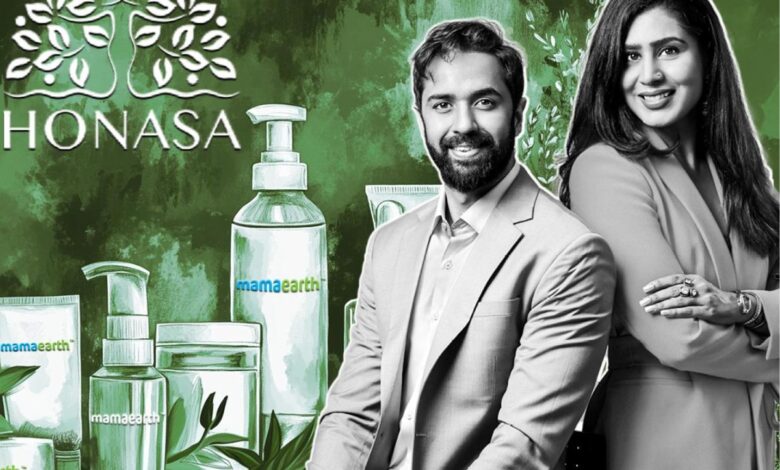
Honasa Consumer Limited built a ₹13,500-crore listed company on a single sentence: “Honest beauty for every Indian.” Its flagship brand, Mamaearth, ‘make’ “toxin-free,” “natural,” and “safe” products- the entire emotional architecture of its pitch to Indian parents and young consumers, which is a promise so central to the brand that it became shorthand for the company’s whole “Goodness Inside” philosophy. So it is worth asking a simple, factual question:
What happens when that same company, mamaearth, with their parent’ Honasa Consumer’ buys a brand BBlunt, whose bestselling shampoos and conditioners are built on sulphates, parabens-adjacent preservatives, and a wall of silicones?
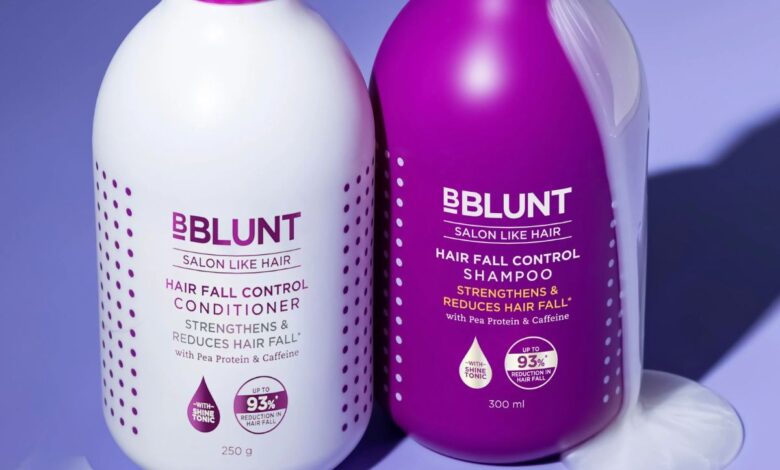
It happened in February 2022, when Honasa Consumer paid Godrej Consumer Products roughly ₹134–138 crore to acquire BBlunt, its haircare products line and its salon business. BBlunt’s shampoo and conditioner ranges, as anyone who reads the ingredient label can verify, lean on Sodium Lauryl Ether Sulphate as the primary cleanser and on Dimethicone, Amodimethicone, Cyclopentasiloxane, and Behentrimonium Chloride to deliver the smoothness and shine the brand is known for. These are not “toxic” ingredients in any regulatory sense, as they’re standard, broadly safe cosmetic chemistry used by virtually every mainstream haircare brand in the world. But they are the exact category of ingredients that Mamaearth has spent 9 years telling Indian consumers to avoid.
The Question Arises Because The Narrative Math Doesn’t Add Up
Here is the problem. Mamaearth’s entire value proposition rests on a binary, where they teach boldly that sulphates and parabens are “toxic,” and everything Mamaearth-branded is framed as their clean alternative. A first-time buyer browsing Honasa’s portfolio on Nykaa or Amazon, seeing BBlunt sitting in the same storefront, under the same parent company that also owns Mamaearth and The Derma Co., has every reason to assume some baseline standard carries over. However, it does not. This presents a valid marketing paradox where a consumer buys a BBlunt product on Amazon assuming they are getting a “Mamaearth-standard” clean formulation, only to find it contains ingredients their flagship brand actively campaigns against.
BBlunt is, by formulation, a conventional salon-chemistry brand. There is nothing wrong with that on its own, as millions of people use sulphate shampoos safely every day. The problem is the hypocrisy; where one arm of the company tells you sulphates are something to fear, while another arm of the same company sells you sulphates at premium pricing, banking on its association with the “clean beauty” parent brand to justify that premium.
This isn’t a minor labeling inconsistency. It’s perhaps a structural feature of how Honasa has scaled. The company’s own IPO filings show it works with 37 third-party contract manufacturers and owns no manufacturing facility of its own, meaning the same factories that produce Mamaearth’s “natural” and “toxic-free” formulations also service other brands using entirely conventional ingredient profiles.
AG Organica, one of Honasa’s most visible contract manufacturers, lists Mamaearth, Dabur, Peesafe, Ustraa, and several other brands as clients on its own corporate website. The “toxin-free” story was never really about a unique manufacturing process exclusive to Honasa; it was a marketing layer applied on top of largely standard contract-manufactured formulations. BBlunt simply makes that visible, because it never bothered to apply the same marketing layer in the first place.
A Brand Built On “Toxin-Free” — With a Documented History of Saying So Without Proof
This pattern of asserting more than the company can substantiate is not new, and it is not anecdotal, but it is documented, repeatedly, by India’s own advertising regulator.
Mamaearth markets itself on its website as “Asia’s first Made Safe certified” brand. But reports found that the Made Safe certification body’s own public registry does not list Mamaearth among its certified brands, even as Mamaearth’s website displays 23 products as “certified” without supporting documentation visible to consumers. Separately, claims of “QACS Lab testing” and “FDA approval” referenced on the brand’s marketing have been flagged as unverified and unsupported by any publicly accessible evidence.
The regulatory record reinforces the pattern. In the Advertising Standards Council of India’s (ASCI) Annual Complaints Report for FY24, Honasa Consumer was named the single largest advertising violator in the country; not in the beauty category, across all sectors, ahead of offshore betting platforms, with 187 flagged advertisements, 175 of which were specifically for violating ASCI’s influencer-disclosure guidelines. The company told the press at the time that 94% of the flagged cases involved influencer content and promised to “enhance internal protocols.” Those protocols did not hold as FY25 brought 29 more flagged Honasa ads, 22 of them again for influencer-disclosure failures.
FY26’s report flagged Honasa again, 24 separate influencer cases requiring modification, on top of 23 ads cited elsewhere in ASCI’s broader personal-care sweep for exaggerated or unsubstantiated skin-benefit and “natural”/”Ayurvedic” claims. That is three consecutive annual reports, three consecutive years, the same category of violation. ASCI’s own CEO, Manisha Kapoor, has stated plainly that under the ASCI Code, influencer posts are legally company advertisements and the company bears ultimate responsibility, meaning Honasa cannot frame this as an “evolving influencer ecosystem” problem it merely failed to anticipate.
What makes this directly relevant to the BBlunt question is the function these violations serve. ASCI can require an ad to be modified after the fact, as it cannot fine a company, suspend its advertising rights, or claw back the sales generated while the misleading version was live. If a hundred undisclosed or exaggerated posts drive a meaningful sales lift before anyone is told to take them down, the rational, repeatable business calculation is to keep running the same playbook.
That calculation does not require legal villainy, but it only requires noticing that the cost of being caught is smaller than the revenue generated before getting caught. Three straight years of identical violations is not a learning curve. It’s a margin.
Why This Matters Beyond One Shampoo Brand
The deeper issue isn’t whether BBlunt’s shampoo is “bad”; by ordinary cosmetic standards, it is a perfectly competent, mid-range product. The issue is what it represents about the model underneath nearly every fast-scaling Indian D2C “house of brands”, that acquire credibility-rich narratives cheaply (a baby-care brand’s trust halo, a salon brand’s professional pedigree), bolt them under one balance sheet, and let consumers’ brand-loyalty assumptions do work the company’s actual formulation practices don’t support.
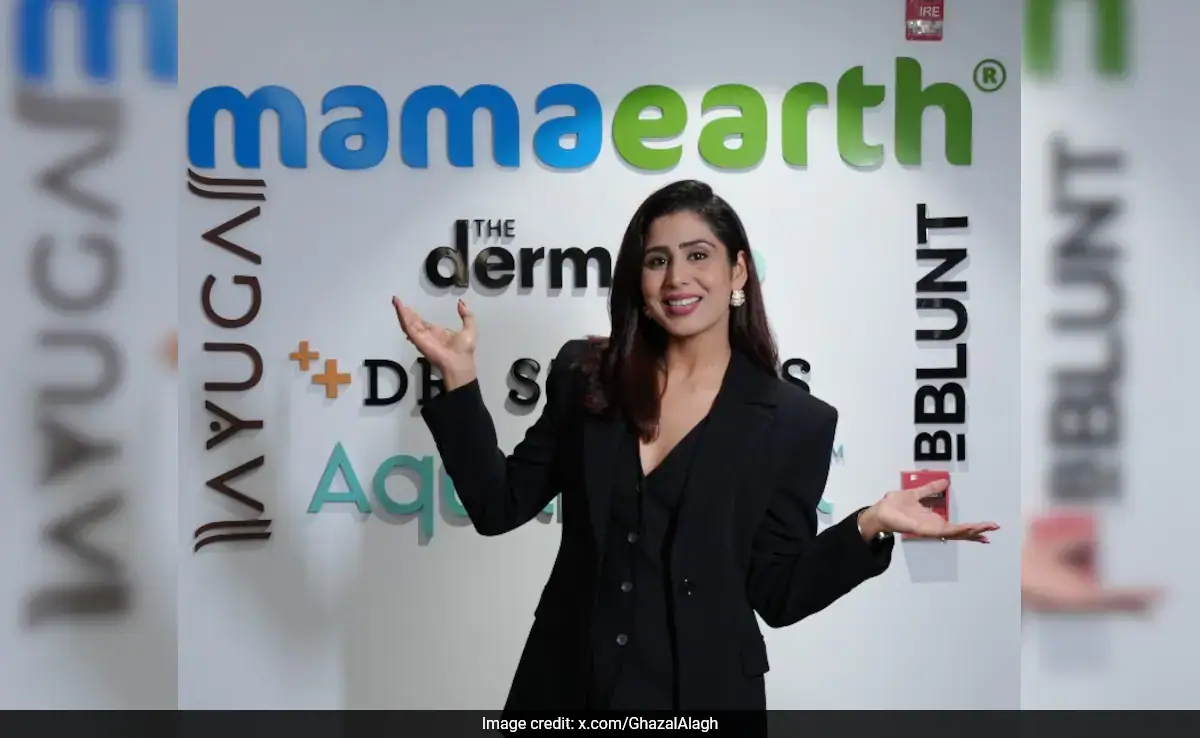
Honasa now owns Mamaearth (toxin-free positioning), The Derma Co. (dermatologist/”active ingredient” positioning), Dr. Sheth’s (clinical-heritage positioning), Aqualogica (hydration-science positioning), and BBlunt (salon-glamour positioning, conventional chemistry), five different trust signals, sold under one roof, with no requirement that any of them apply the same ingredient standard the parent’s headline brand built its reputation on.
This is precisely the gap regulators are structurally unequipped to close. ASCI is a self-regulatory, industry-funded body with no power to fine or suspend; the Central Consumer Protection Authority (CCPA) has statutory power to act against misleading ads under the Consumer Protection Act but, in practice, enforcement against D2C beauty brands at this scale has been minimal even as the ASCI violation counts pile up year after year.
Courts have occasionally stepped in, Honasa and Hindustan Unilever are currently locked in litigation in the Delhi and Bombay High Courts over disparaging sunscreen-efficacy advertising, a sign that scrutiny is rising, but litigation between competitors is not the same as a regulator protecting consumers, and it does nothing to address the brand-narrative inconsistency a BBlunt customer experiences quietly, at the shelf, with no lawsuit attached to alert them.
The Real Test for “Honest Beauty”
None of this requires assuming bad faith on every individual claim Honasa makes, and BBlunt’s ingredients are not dangerous, as that distinction matters and shouldn’t be lost in the noise.
But “honest beauty for every Indian” is a brand promise with a specific, falsifiable meaning, and a company that builds 9 years of market value on telling customers to fear sulphates and parabens cannot simultaneously own and profit from a sulphate-and-silicone-based salon brand without either admitting its original “toxic ingredient” framing was always more marketing than science, or applying a visibly different, lower trust-standard to brands acquired purely for revenue diversification. Right now, Honasa does neither. It lets the ambiguity sit, and lets the parent brand’s halo do the selling.
The fix is not complicated, and it is the same fix that would resolve most of the influencer-disclosure violations too: clear, prominent, ingredient-level honesty on every brand under the house, applied uniformly, regardless of which acquisition it came from — instead of a corporate narrative engineered for one flagship brand and quietly suspended for the rest of the portfolio. Until that happens, “Goodness Inside” is a claim that applies, demonstrably, to some bottles in the cart and not others — and the customer paying a premium for the promise has no easy way to tell which bottle they picked up.