SMPP’s ₹2,000 Crore Army Contracts Under CBI Scrutiny. When Alleged Corruption Reaches The Business Of Equipping The Indian Army, It’s A Dangerous Sign
When a company supplying the Indian Army faces a CBI bribery probe, the questions go far beyond one alleged payment. SMPP Limited is under scrutiny over a ₹500-crore ammunition deal, while around ₹2,000 crore in Army contracts reportedly face examination. The bigger question is whether defence procurement decisions were compromised.

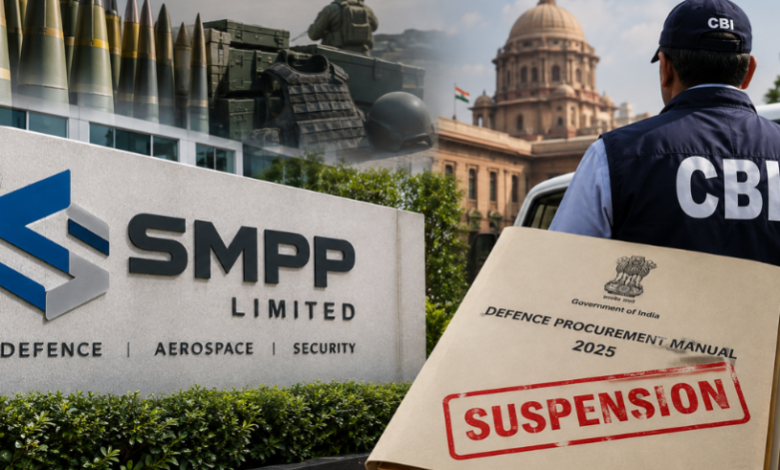
SMPP Limited is facing a CBI bribery probe linked to an alleged ₹500-crore ammunition deal. With around ₹2,000 crore in Army contracts reportedly under scrutiny, the case raises a troubling question: has alleged corruption reached the business of equipping India’s armed forces?
The company in question is a defence manufacturer supplying ammunition, drones and protective equipment to India’s armed forces and is now facing a corruption investigation that extends beyond a single contract.
SMPP Limited’s chief executive, Ashish Kansal, has been arrested by the Central Bureau of Investigation (CBI) in a case involving an alleged ₹500-crore ammunition deal with state-owned Munitions India Limited (MIL). The fallout is now reaching the company’s wider defence business, with around 10 ongoing Army contracts worth more than ₹2,000 crore reportedly under scrutiny.
The CBI registered the case on October 12, 2026, alleging that MIL executive director Anil Kumar had been seeking and accepting illegal gratification from private contractors and vendors in exchange for official favours and access to sensitive information concerning defence production and procurement. Kansal and Kumar were arrested the following day, along with B. Harshavardhan, Kumar’s brother.
The investigation raises questions that go beyond the alleged payment linked to the ammunition contract. The CBI is examining whether confidential information was improperly disclosed, whether other individuals were involved and whether additional contracts handled by the arrested public-sector official require scrutiny. The allegations have not been established in court, but the case has placed SMPP’s dealings with the defence establishment under a sharper spotlight.
The immediate concern is the fate of the company’s existing Army contracts – these agreements cover ammunition, loitering munitions, intelligence-gathering drones and protective equipment, with deliveries under some contracts already in progress. The Ministry of Defence must now determine how the applicable procurement rules should be applied without overlooking the requirements associated with equipment already ordered or delivered.
The alleged bribery concerns the ₹500-crore MIL ammunition contract, while the more than ₹2,000 crore relates to a separate portfolio of ongoing Army contracts facing scrutiny.
The Alleged Money Trail And A Probe That Could Widen
The cash recovered during the investigation has become a central part of the CBI’s inquiry. According to the agency’s reported findings, investigators seized ₹1.73 crore from premises associated with Anil Kumar in Pune and approximately ₹50 lakh during searches at other locations linked to the investigation, taking the total recovery to around ₹2.23 crore. The agency has alleged that the money was connected to suspected corruption. The FIR also refers to an alleged arrangement to move and conceal proceeds through relatives.
According to reports the CBI suspects that Kumar used family members, including his brother Harshavardhan and his wife, Chetnashri, to route or retain illicit funds. Harshavardhan was among those arrested.
The inquiry has also moved beyond the original ammunition deal. In an October 16 report, the CBI had sought documents relating to contracts handled by Kumar and was examining whether other officials, private contractors or intermediaries had played a role. Investigators were also reportedly assessing financial records and electronic evidence as they attempted to reconstruct the alleged transactions and establish whether sensitive defence-related information had been disclosed.
The larger question is how far the investigation will reach. If the CBI identifies evidence relating to other contracts or officials, the inquiry could extend beyond the initial ₹500-crore transaction. For SMPP, the consequences may also extend beyond the criminal case, as the Defence Ministry examines the status of its ongoing procurement engagements.
From Pulp Packaging To Defence Manufacturing
SMPP’s journey into defence manufacturing began well before the current CBI investigation. Founded in 1985 by Dr S. C. Kansal, the company initially operated in pulp packaging, manufacturing protective packaging materials at its facility in Sangrur, Punjab. Over time, it moved into specialised defence products, building capabilities in ammunition components and ballistic protection before expanding into newer areas of military technology.
The transition was gradual rather than a sudden entry into the defence sector. SMPP’s own corporate history records an early order for semi-combustible cartridge cases used in 120 mm and 125 mm ammunition, followed by manufacturing activity involving combustible cartridge cases. The company subsequently obtained licences to manufacture bullet-resistant jackets, helmets, armour plates and protection systems for military vehicles and aircraft. These capabilities gave it a foothold in a sector where specialised manufacturing, technical qualifications and formal procurement approvals are central to winning government business.
A major milestone came in April 2018, when the Ministry of Defence awarded SMPP a contract worth ₹638.97 crore for 186,138 bullet-resistant jackets for the Indian Army.
The order established the company as a significant supplier of personal protective equipment to the armed forces. SMPP later incorporated SMPP Ammunition Private Limited, widening its ambitions beyond protective gear and into ammunition manufacturing. Its subsequent expansion into drones and loitering munitions reflects a broader effort to participate in more technologically advanced segments of defence procurement.
The company’s growth is now closely tied to a diversified portfolio of products supplied to government and security agencies.
That makes the current investigation consequential not simply because its CEO has been arrested, but because SMPP has developed a business spanning several categories of military equipment. Whether that expansion can continue without disruption will depend, in part, on the outcome of the investigation and the government’s decisions on future procurement.
The Contracts Behind SMPP’s Expanding Defence Business
SMPP’s defence portfolio now extends well beyond bullet-resistant jackets. Its business includes helmets, ballistic armour, ammunition components and newer unmanned systems, giving it exposure to several categories of government procurement. The company’s contracts illustrate how its manufacturing operations have expanded alongside its product range.
The 2018 Army order for 186,138 bullet-resistant jackets, valued at ₹638.97 crore, was one of its most significant publicly reported contracts. In 2025, SMPP secured two further Army contracts worth more than ₹300 crore for bullet-resistant jackets and advanced ballistic helmets.
The company also received a reported ₹74.67-crore contract from the Central Reserve Police Force (CRPF) for bullet-resistant jackets. Together, these three sets of orders represent more than ₹1,000 crore in reported contract value, although they span different years and procurement programmes.
SMPP has also moved into unmanned aerial systems.
In June 2026, the company announced the completion of deliveries of 100 operational jet-powered drones, known as Peacekeeper or Agniveg, and six training drones to the Indian Army. The value of that order was not disclosed in the reporting reviewed.
On June 18, 2026, SMPP also announced a teaming agreement with European defence company KNDS to manufacture loitering munitions in India through its ammunition subsidiary. The agreement named systems including VELOCE, RODEUR and the ISTAR family, although no Indian contract value has been established.
This expanding portfolio helps explain why the review of approximately 10 ongoing Army contracts matters. The contracts reportedly worth more than ₹2,000 crore cover ammunition, loitering munitions, intelligence-gathering drones and protective equipment, with some deliveries already underway.
Rising Revenue, Government Dependence And The IPO Question
SMPP’s expansion into defence manufacturing has been accompanied by substantial financial growth. According to financial data reported and company filings, revenue increased from ₹376.92 crore in FY2021–22 to ₹622.57 crore in FY2024–25. Net profit rose from ₹87.74 crore to ₹174.61 crore over the same period. The figures indicate that the company more than doubled its profit over three years while increasing revenue by approximately 65%.
The company’s customer concentration is another important part of the picture.
Its October 2024 draft red herring prospectus reported that revenue from government entities reached ₹439.65 crore in FY2023–24, compared with ₹238.43 crore in FY2022–23 and ₹275.64 crore in FY2021–22. Government entities accounted for 85.19% of operating revenue in FY2023–24, while the company’s ten largest customers together contributed 92.78% of operating revenue. The prospectus used a broad definition of government entities, covering government-controlled organisations and military, paramilitary and police forces in India and overseas.
That concentration makes government procurement decisions particularly significant for the company’s business. A suspension of new dealings, delays in ongoing contracts or restrictions on future tenders could affect its order pipeline and revenue opportunities.
SMPP had also taken steps towards a public listing. It filed a draft red herring prospectus in October 2024 for a proposed initial public offering of approximately ₹4,000 crore. The IPO is still under the wings.
The 2019 Bulletproof-Jacket Controversy And The China Connection
SMPP’s procurement history has attracted scrutiny before. In March 2019, it was reported that the company had changed suppliers after winning a ₹638.97-crore Indian Army contract for 186,138 bullet-resistant jackets, moving from Western sources to Chinese suppliers for certain raw materials.
The report said that around 40% of the jacket material, including ballistic fabric and boron carbide powder, was being imported from China
The controversy centred on the difference between the materials presented during the selection process and those sourced for subsequent production. According to the report, SMPP had initially presented jackets using raw materials from Europe and the United States but changed suppliers after securing the contract.
The company defended the decision, saying it had informed the Army, that the products continued to meet the required standards and that sourcing directly from manufacturers helped reduce costs. Ashish Kansal also argued that Chinese materials had been used by other competing suppliers during the testing process.
The government subsequently defended the procurement process. In a written parliamentary response in July 2019, the Ministry of Defence said there had been no decline in the quality of bullet-resistant jackets supplied to the Army.
It stated that the contract, signed on April 9, 2018, was subject to quality assurance by the Directorate General of Quality Assurance against the Army’s General Staff Qualitative Requirements and approved acceptance-test procedures. The ministry also said there was no embargo on importing raw materials from China under the tender conditions.
The episode nevertheless raised questions about raw-material sourcing, supply-chain dependence and how changes made after a contract is awarded are assessed in defence procurement.
SSMPP’s Overseas Procurement Trouble In The Philippines
SMPP’s procurement record has also come under scrutiny outside India. In September 2025, the Philippine National Police (PNP) blacklisted the company over alleged failure to fulfil contractual obligations relating to a supply contract for all-purpose vests. It was reported that the disqualification was imposed for one year, running until September 2026.
The Last Bit, What Happens To ₹2,000 Crore In Army Contracts?
The immediate question for the Defence Ministry is how to handle SMPP’s existing Army contracts while the CBI investigation proceeds. The reported portfolio comprises around 10 contracts worth more than ₹2,000 crore, covering ammunition, loitering munitions, intelligence-gathering drones and protective equipment. Some deliveries are already underway, according to reports.