Faridabad’s BPTP Residents Erupt in Protest: A Decade of Broken Promises, Collapsing Infrastructure, and Relentless Exploitation by the Builder

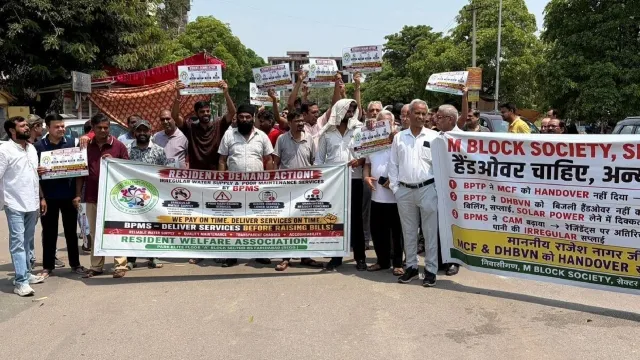
Greater Faridabad, Sector-85 (1 June 2026) – In a powerful display of collective frustration that has been building for over a decade, hundreds of residents from BPTP District’s A, C, M, and J Blocks took to the streets on Sunday, 31 May 2026. They marched to the builder’s office, raised angry slogans, and later stormed the office of Haryana’s Food and Civil Supplies Minister, Rajesh Nagar, to file a formal complaint. Their demand was simple yet damning: deliver the basic amenities that were promised when they bought their “luxury” flats for crores of rupees—or hand over the entire project to the Municipal Corporation of Faridabad so that residents are no longer at the mercy of a profit-driven builder.
This was not a spontaneous outburst. It is the latest chapter in a long, shameful saga of alleged neglect, broken contractual promises, and what residents describe as outright “vaada khilafi” (breach of trust) by BPTP. The protest shines a harsh spotlight on a pattern that has plagued this massive township project for years: sewer lines that have completely collapsed, water supplied only once every 25 to 40 hours, frequent unannounced power cuts, non-existent individual electricity connections despite more than ten years of occupancy, and poorly maintained roads that turn into rivers of filth during the monsoon.
The Ground Reality: A Township in Crisis
Bhupendra Dagar, head of C-Block and one of the protest leaders, did not mince words when speaking to reporters. “We paid crores for these flats with dreams of a modern, well-planned township. Instead, we are living in hell. The sewerage system has totally failed. Sewage water flows openly on the roads every single day. Tankers are called to suck it out, but within days the nightmare returns.” The residents allege that the internal sewer lines were never properly connected to the main municipal line—an engineering failure that has turned their premium residential enclave into a public health hazard.
Saket Kumar and Rakesh Sharma, both long-time residents, highlighted the financial insult added to injury. “They charge up to ₹2,500 per month per flat in the name of maintenance. Thousands of families are paying this month after month, year after year. Yet not a single basic facility is being provided in return. This is daylight robbery.”
Prafull Sharma of A-Block and M-Block secretary Abhi Saxena joined the chorus, pointing out that even basic electricity infrastructure remains incomplete. “We still don’t have individual electricity connections after more than a decade. Common-area maintenance charges have been arbitrarily hiked, while power cuts continue without notice. How long must we suffer?”
The human cost is enormous. Overflowing sewage breeds mosquitoes and disease. Irregular water supply forces families to depend on expensive tankers or unsafe alternatives. Power outages disrupt daily life, especially for working professionals and students in a high-cost township. Roads damaged by constant sewer overflow make daily commuting a nightmare. And all of this in a project marketed aggressively as “premium living” in Greater Faridabad.
Builder’s Defence: Evasive, Insufficient, and Tone-Deaf
When contacted, BPTP’s Managing Director Shyam Sundar offered a carefully worded statement that critics will see as classic corporate deflection:
“Changes in common area maintenance charges have mainly been made because of the increase in minimum wages by the government. We are continuously making efforts to improve the infrastructure. Work related to water pipeline and sewer line is in progress and will be completed in the next few days.”
Residents and observers are unimpressed. Blaming a government-mandated wage hike for steep fee increases while failing to fix core infrastructure that should have been completed years ago comes across as an attempt to shift blame rather than accept responsibility. The claim that “work is in progress and will be completed in the next few days” has been repeated for years in similar disputes. It rings hollow to families who have heard the same assurance countless times while living amid stench and chaos.
A Pattern of Systemic Failure, Not an Isolated Incident
This protest is not happening in a vacuum. BPTP Parklands / District in Sectors 83-85 has a well-documented history of resident-builder conflict. Multiple past agitations, RERA complaints, and even threats by residents to boycott elections in 2024 have repeatedly highlighted the same issues: delayed or incomplete infrastructure handover, poor quality construction, and refusal to transfer maintenance responsibilities to the civic body. The demand to hand over the project to the Nagar Nigam is not new—it is a desperate plea for accountability and professional municipal management instead of perpetual dependence on the builder’s whims.
Under India’s Real Estate (Regulation and Development) Act (RERA), builders are legally bound to deliver what they promise in brochures and agreements. Yet enforcement remains weak, and residents of large townships like BPTP often find themselves trapped in prolonged legal battles while continuing to pay hefty maintenance charges for sub-standard services.
The Bigger Picture: Who is Really Accountable?
The residents’ march to Minister Rajesh Nagar’s office is a strategic escalation. By involving the political establishment, they are signalling that this is no longer just a private dispute—it is a failure of governance and regulation that affects thousands of middle-class families who invested their life savings in the “Gurgaon-Faridabad growth corridor.”
The critical question that remains unanswered is this: How can a major developer continue to collect premium maintenance fees while delivering third-world infrastructure more than a decade after possession? Why has the Haryana government and the Real Estate Regulatory Authority allowed this situation to fester for so long?
Until BPTP is forced to either fix the problems permanently or hand over the township to the municipal corporation, the residents of Sector-85 will continue to pay the price—both financially and in terms of their quality of life. Sunday’s protest was loud. Unless concrete action follows, the anger is only going to grow louder.
The ball is now in the builder’s court—and in the court of the authorities who are supposed to protect home-buyers. The people of BPTP District have waited long enough.