The Indian kitchen has changed more in the last fifteen years than in the previous fifty. Rising disposable incomes, shrinking household sizes, longer working hours, the influence of food content on social media, and a growing culture of home cooking among younger urban Indians have collectively created one of the fastest-growing kitchen appliance markets in the world. India’s kitchen appliance industry was valued at over ₹30,000 crore in 2024 and continues to grow at a compound annual rate that consistently outpaces the broader consumer electronics sector.
What makes the Indian kitchen appliance market particularly interesting is its layered complexity. On one end, millions of Indian households are buying their first mixer-grinder or induction cooktop — first-time appliance buyers who prioritise durability, after-sales service, and value for money above everything else. On the other end, an expanding upper-middle-class and affluent segment is investing in premium built-in hobs, smart ovens, and connected kitchen ecosystems that rival anything available in European or American markets. The brands that are winning in 2026 are the ones that have learned to serve both ends of this spectrum, or that have become undisputed masters of their specific tier. This article profiles the top 10 kitchen appliance brands actively serving Indian consumers in 2026.
1. Prestige (TTK Prestige)
TTK Prestige is perhaps the single most trusted name in Indian kitchen appliances — a brand whose identity has been so thoroughly woven into the fabric of Indian cooking culture that “Prestige” functions in many households as a generic term for a pressure cooker, much the way Xerox became synonymous with photocopying. Founded in 1955 and listed on the BSE, TTK Prestige has built a comprehensive product portfolio spanning pressure cookers, cookware, gas stoves, induction cooktops, mixer-grinders, rice cookers, air fryers, and an expanding range of small kitchen appliances.
What keeps Prestige at the top of this list is not nostalgia but consistent delivery on the three things Indian consumers value most — durability, value for money, and accessible after-sales service. The company operates one of the largest networks of exclusive service centres and retail outlets in India, a physical infrastructure that digital-native brands consistently struggle to match. Its products are engineered for the specific demands of Indian cooking — the heavy daily use, the high heat of traditional cooking methods, the hard water conditions prevalent in much of the country — and that contextual engineering shows in the longevity of their products across price points.
2. Bajaj Electricals
Bajaj Electricals is one of India’s most diversified and enduring electrical consumer goods companies, with a kitchen appliance portfolio that covers everything from the basic iron to sophisticated OTG ovens and multi-function food processors. Founded in 1938 and part of the larger Bajaj Group’s consumer businesses, Bajaj Electricals has built its kitchen appliance reputation on the same pillars that have sustained the brand for generations — wide availability, reliable performance, and a price architecture that consciously serves the value-conscious Indian middle class.
In 2026, Bajaj’s kitchen portfolio is particularly strong in the entry-to-mid segment, where its mixer-grinders, juicers, sandwich makers, and induction cooktops offer consistent quality at price points that make them the default choice for a large proportion of Indian households making their first appliance purchase. The brand’s distribution depth — reaching towns and cities far beyond where premium brands have retail presence — is a structural advantage that cannot be easily replicated by either international brands or newer domestic competitors.
3. Philips India (Versuni India)
Philips has undergone an important structural change that is worth understanding before discussing its kitchen appliance business. The consumer lifestyle division of Philips — which includes kitchen appliances, personal care, and domestic appliances — was spun off into a separate company called Versuni in 2023, which now operates the Philips brand under licence for these product categories. In India, the Philips-branded kitchen appliance business continues to operate strongly under this structure, and for the purposes of a consumer-facing discussion, the brand identity and product quality remain continuous.
Philips’s India kitchen portfolio has always occupied the upper-middle tier of the market, offering products with noticeably superior build quality, more thoughtful ergonomic design, and more innovative features than the value-segment brands — but at prices that remain accessible to aspirational Indian consumers. Its air fryers have been among the most commercially successful kitchen appliances in the premium segment over the past several years, riding the wave of health-conscious cooking trends among urban Indian consumers. The brand’s blenders, mixer-grinders, and hand blenders consistently receive strong quality ratings, and its after-sales service network in India is among the most reliable of the international brands operating in this market.
4. Havells India
Havells is a fascinating brand in the kitchen appliance context because it was built primarily as an electrical equipment company — cables, switches, lighting — and has successfully leveraged the trust that industrial reputation generated into a meaningful consumer appliance brand, including kitchen products. Founded in 1958 and listed on the NSE, Havells entered the kitchen appliance space with the same quality-engineering philosophy that made its industrial products trusted, and the result is a product range that consistently punches above its price point.
Havells’s kitchen portfolio in 2026 spans induction cooktops, mixer-grinders, OTG ovens, hand blenders, electric kettles, food processors, and air fryers. The brand has been particularly successful in the mid-premium segment, where its design sensibility — clean, modern aesthetics rather than the utilitarian look of older Indian appliance brands — resonates with the urban consumer who wants their kitchen counter to look as good as it functions. The company’s robust distribution network, which benefits from its long history in the Indian electrical trade, gives it a reach advantage that newer premium entrants struggle to match.
5. Bosch Home Appliances India
Bosch’s presence in India’s kitchen appliance market represents the premium end of the spectrum with a conviction and consistency that few international brands have sustained. A subsidiary of the global BSH Hausgeräte group, Bosch India offers a comprehensive range of built-in kitchen appliances — hobs, chimneys, ovens, dishwashers, refrigerators, and washing machines — that are targeted squarely at the affluent urban Indian household investing in a modular kitchen.
What makes Bosch particularly significant in 2026 is the rapid growth of India’s modular kitchen industry, which has elevated demand for built-in appliances from niche to mainstream among urban home buyers. Bosch’s products are engineered for the European market’s quality standards but are adapted with features specific to Indian cooking — higher power burners on its hobs, for example, and chimney suction capacities calibrated for the smoke and steam volumes that Indian cooking generates. Its after-sales service, offered through a network of authorised service partners across major cities, is more reliable than most premium international brands. For the upper-middle-class Indian consumer building a kitchen that is meant to last twenty years, Bosch is one of the most trusted investments available.
6. Morphy Richards India
Morphy Richards, operated in India under a licensing arrangement and distributed by TTK Services, occupies a distinctive and commercially well-chosen position in the Indian kitchen appliance market — it offers European design heritage and feature sophistication at price points that are premium but accessible, sitting above the mass-market domestic brands but below the truly aspirational European imports. This middle position has proven to be commercially astute in India’s evolving appliance market.
The brand’s Indian portfolio spans electric kettles, toasters, sandwich makers, OTG ovens, hand mixers, steam irons, and an expanding range of small kitchen appliances. Morphy Richards has been particularly successful in building brand perception through product aesthetics — its appliances have a distinctly European, slightly retro-modern design language that makes them visually appealing kitchen counter objects, not just functional tools. This design-consciousness at an accessible price point has made it a popular gifting brand and a go-to for urban households furnishing their first independent home. Its association with TTK’s distribution and service infrastructure gives it a reliability backbone that imported premium brands without local service networks cannot match.
7. Inalsa
Inalsa is one of the most underappreciated brands in India’s kitchen appliance landscape — a company with a genuinely long history in the market (it has been present in India since the early 1980s) that has maintained consistent relevance by staying laser-focused on what Indian home cooks actually need rather than chasing premium positioning or trend-driven feature additions. The brand’s ownership by the SKIL Group has provided it with stable investment in product development and distribution without the pressure to rapidly upscale into luxury territories.
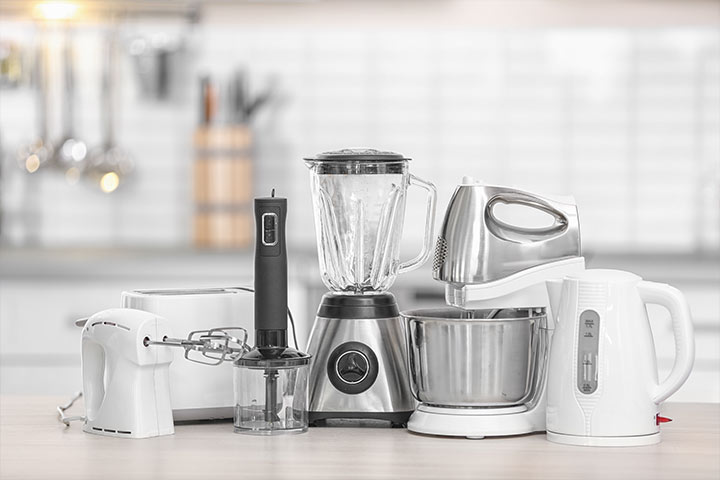
Inalsa’s product portfolio is strong in the workhorses of the Indian kitchen — mixer-grinders, juicers, food processors, induction cooktops, and OTG ovens that are designed for heavy daily use and built to last through years of intensive cooking. Its mixer-grinders, in particular, have a loyal following among Indian homemakers who use them multiple times daily for grinding spices, making chutneys, and blending batters — tasks that would destroy lighter, less-engineered grinders. For the practical Indian household that wants appliances that work reliably for years without requiring constant servicing, Inalsa’s value proposition is straightforward and well-executed.
8. Glen Appliances
Glen Appliances is a Delhi-based brand that has built its strongest reputation in cooking appliances — gas hobs, chimneys, built-in ovens, and cooktops — where it competes in the mid-to-premium segment against both domestic and international brands. Founded in 1999 and grown substantially through the parallel growth of India’s modular kitchen industry, Glen has positioned itself as the aspirational but accessible choice for Indian consumers who want a stylish, functional cooking setup without paying imported-brand prices.
The brand’s chimney and hob combinations have been particularly well-received in the Indian market, where the combination of cooking aesthetics, effective ventilation, and price-conscious engineering hits a sweet spot that many international brands either overprice or underspec. Glen’s design team has clearly studied the aesthetic preferences of the Indian urban consumer — its products have clean lines, stainless steel finishes, and a contemporary look that sits comfortably in both traditional and modular kitchen environments. Its after-sales service network, while not as extensive as the established national brands, has improved considerably over the past few years and now covers most major urban centres effectively.
9. Usha International
Usha is one of India’s most storied consumer appliance brands — a name that carries particularly strong recognition for sewing machines and fans, but whose kitchen appliance division has maintained a consistent and commercially meaningful presence in the mixer-grinder, juicer, food processor, and small appliance categories. Founded in 1935 and now operated as a private company, Usha’s kitchen portfolio targets the value and mid-value segment with a reliability-first product philosophy that its multi-generational customer base finds reassuring.
What Usha has done well in 2026 is use its deep distribution reach in non-metro India — where brand familiarity and access to service centres matters more than design aesthetics or feature innovation — to maintain strong volume sales in categories where the market is still growing rapidly. Its mixer-grinders and juicers are particular strengths, with motor durability being a consistent point of praise among long-term users. For consumers in smaller cities and towns who want a brand they have trusted across product categories for decades, Usha’s kitchen appliances remain a natural first choice.
10. Wonderchef
Wonderchef is one of India’s most interesting and distinctive kitchen appliance and cookware brands, founded in 2009 by celebrity chef Sanjeev Kapoor and entrepreneur Ravi Saxena. The brand’s identity is built around the idea that great cooking begins with great tools — a philosophy that has translated into a product range spanning non-stick cookware, mixer-grinders, air fryers, OTG ovens, induction cooktops, and specialty cooking tools, all presented with the kind of recipe-driven, lifestyle-oriented communication that makes the brand feel like it belongs to the food culture conversation rather than the appliance hardware conversation.

What sets Wonderchef apart from every other brand on this list is this culinary identity — it is the only major Indian kitchen brand that sells appliances as part of a cooking lifestyle rather than purely as functional tools. Sanjeev Kapoor’s association brings recipe content, cooking classes, and food credibility that turns a mixer-grinder purchase into an aspirational cooking decision rather than a commodity transaction.
The brand’s social media presence, its cooking video content, and its engagement with India’s growing community of home cooks and food enthusiasts have given it a cult-like following among urban millennials who see cooking as a creative expression. In a market increasingly influenced by food content and celebrity chef culture, Wonderchef’s brand architecture is genuinely difficult to replicate.
Understanding What Drives Brand Choice in India’s Kitchen Appliance Market
Knowing the brands is only half the picture — understanding what Indian consumers actually use to choose between them helps explain the market dynamics that will define which brands grow fastest in the years ahead.
Durability remains the primary purchase driver across all income segments, but what it means differs by tier. For the mass-market consumer, durability means a mixer-grinder motor that runs daily for five years without burning out. For the premium consumer, it means a built-in oven that maintains precise temperature consistency across a decade of use. Service availability is the second critical factor — India’s geography and the limited technical training for complex appliance repairs mean that brands with wide, reliable service networks consistently earn stronger repeat purchase loyalty than those without.
Design and aesthetic appeal have moved from being a bonus consideration to a near-essential purchase criterion for the urban upper-middle-class consumer, which is why brands like Bosch, Philips, Glen, and Wonderchef have invested heavily in visual product identity. Finally, the influence of food content on social media — particularly YouTube cooking channels and Instagram food communities — has created a new purchase driver that did not exist a decade ago: the aspirational association of specific appliances with the kind of cooking that one admires online.
Conclusion
India’s kitchen appliance market in 2026 is richer, more competitive, and more design-conscious than at any point in its history. The ten brands profiled here span the full range — from century-old Indian institutions with unmatched distribution reach to culturally resonant newer entrants building brand identity around food and lifestyle.
What they share is a genuine understanding of the Indian kitchen’s demands, and a commitment to serving those demands at the specific price and quality tier each has chosen to own. Whether you are equipping a first home on a careful budget or building a dream kitchen with long-term investment in mind, the right choice from this list depends not on which brand is objectively best, but on which one was built most specifically for your kitchen, your cooking style, and your expectations of a long-term appliance relationship.