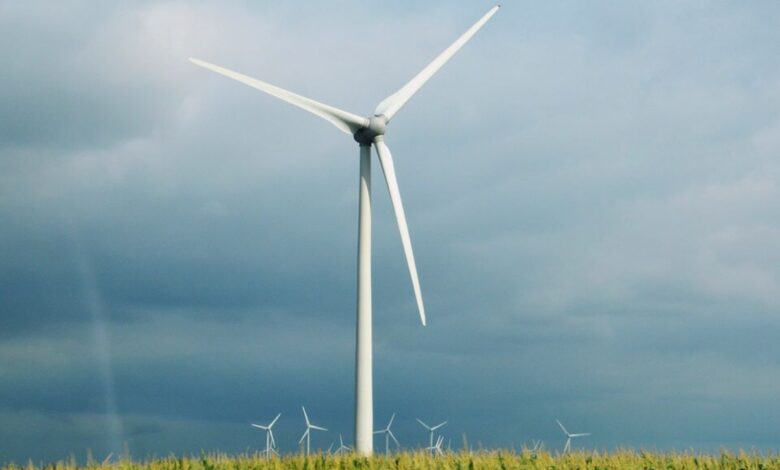
India’s wind energy story in 2026 is one of the most compelling clean energy transformations in the world. As of March 31, 2026, India’s total installed wind power capacity reached 56.00 GW, making it the fourth-largest wind power nation globally, behind China, the United States, and Germany. Wind now accounts for nearly 10% of India’s total utility power generation capacity, generating 80.27 TWh of electricity in FY 2024–25. With the government’s ambitious target of 500 GW of non-fossil capacity by 2030, the wind sector is projected to grow at roughly 8% CAGR over the next decade — and the companies driving this transformation deserve close attention.
This article profiles the ten most active, operationally significant wind energy companies in India in 2026, covering turbine manufacturers, independent power producers (IPPs), and public sector players who are collectively reshaping how India powers itself.
1. Suzlon Energy Limited
Headquarters: Pune, Maharashtra
Suzlon Energy is, without question, the dominant force in India’s wind energy landscape. Founded in 1995 by the late Tulsi Tanti, the company has grown into one of the largest wind turbine manufacturers globally, and its roots in India give it an unmatched execution advantage. Suzlon’s S-series turbines — specifically designed for low and medium wind speed conditions that characterise most of India’s onshore terrain — have been the most widely deployed turbines across the country.
As of 2025–26, Suzlon holds the largest backlog of any wind OEM operating in India, with strong utility-scale and commercial and industrial (C&I) project pipelines. The company is EBITDA positive and reported a profit of ₹563 crore with a growth of 190% in FY24, signalling a decisive financial turnaround after its debt restructuring years. Its manufacturing footprint, domestic supply chain depth, and over 20,000 MW of installed base across India give it a structural moat that no foreign player can easily replicate.
2. Inox Wind Limited
Headquarters: Noida, Uttar Pradesh
Inox Wind has rapidly emerged as Suzlon’s most serious domestic competitor. The company operates three state-of-the-art manufacturing plants — in Gujarat (Ahmedabad), Himachal Pradesh (Una), and Madhya Pradesh (Barwani) — with a cumulative manufacturing capacity of 1,600 MW. Its turbines are specifically engineered for low wind speed sites, and the company claims its models generate 6–18% more power than comparable models in low-wind conditions.
In March 2025, Inox Wind announced a major order of 153 MW from a leading renewable energy developer. It also secured an order to install 200 MW of wind turbines across Gujarat and Rajasthan in July 2024 using its flagship 3 MW platform, with a booster capacity of up to 3.3 MW — a model listed on MNRE’s Revised List of Models and Manufacturers (RLMM) in 2024. With a market capitalisation of ₹305.17 billion and a growing order book concentrated in Gujarat-led buildouts and western state pipelines, Inox Wind is firmly established as one of India’s tier-one wind OEMs.

3. TPG Wind Energy (Formerly Siemens Gamesa India)
Headquarters: Chennai, Tamil Nadu (Indian operations)
In March 2025, Siemens Gamesa’s India wind business was officially acquired by global investment firm TPG, marking one of the most significant restructurings in the Indian wind sector. The Indian entity — which had been among the country’s top contributors to installed wind capacity since entering the market in 2009 — continues to operate under new ownership, maintaining its manufacturing, service, and project execution capabilities.
The company’s installed base spans several major wind projects across Tamil Nadu, Andhra Pradesh, and Karnataka, including supply of turbines for the 300 MW Kayathar Wind Farm in Tuticorin, Tamil Nadu. Under TPG’s ownership, the business has retained its engineering personnel and customer relationships, ensuring operational continuity. The transition brings fresh capital allocation discipline to an entity with deep technical roots in India’s wind market.
4. GE Vernova India
Headquarters: Bengaluru, Karnataka
GE Vernova (the rebranded energy business of General Electric, spun off in 2024) continues to operate in India’s wind sector with a focus on digital integration, large-diameter rotors, and hybrid energy solutions. Its turbines are particularly well-suited for low wind speed sites requiring high hub heights — a category increasingly relevant as India expands wind development into newer geographies.
GE Vernova India’s wider grid technology division (GE T&D India) secured a major HVDC contract win in late 2025 to support grid strengthening in western renewable zones, including large wind evacuation corridors. While its wind turbine order book in India is smaller than Suzlon or Inox Wind, the company’s technological capabilities in digital performance monitoring and hybrid wind-solar-storage projects give it a differentiated positioning as India’s energy mix becomes more complex.
5. Envision Energy India
Headquarters: India operations managed out of Delhi-NCR
Envision Energy, a global wind turbine manufacturer of Chinese origin, has built one of the most impressive order books of any foreign OEM operating in India. The company’s EN156-3.3 MW turbine has been widely deployed, contributing to a total installed capacity of 1,550 MW in India, with 330 MW already commissioned as of 2025. Its confirmed order pipeline stands at 4.7 GW, with a total of 7.7 GW awarded across 21 independent power producers.
A milestone came in June 2025, when Envision’s new EN 182-5.0 MW turbine was added to MNRE’s RLMM, clearing it for immediate deployment and supporting 2 GW of recently secured orders. Globally, Wood Mackenzie recognised Envision as the leading Chinese wind turbine exporter, with 4.1 GW in international orders — 3 GW of which came from India alone. The company has established manufacturing plants in Gujarat, Himachal Pradesh, and Madhya Pradesh to meet localisation requirements.
6. ReNew Power
Headquarters: Gurugram, Haryana
ReNew Power is India’s largest independent renewable energy company by gross portfolio, and wind energy forms a substantial pillar of its operations. As of March 2026, ReNew holds a gross portfolio of approximately 20 GW with an operational capacity of about 12.6 GW spread across more than 150 sites in 10 Indian states. It ranks among the top 10 renewable energy companies globally outside China.
ReNew’s wind portfolio includes large operational wind farms across Rajasthan, Madhya Pradesh, Andhra Pradesh, and Gujarat. The company has diversified into solar manufacturing (6.5 GW of module capacity), battery storage, and corporate renewable solutions, with strategic partnerships including Microsoft, Amazon, and Google. Its clean energy output is estimated to avoid over 20 million tonnes of carbon emissions annually, and it contributes nearly 10% of India’s combined solar and wind generation.
7. Tata Power Renewable Energy Limited
Headquarters: Mumbai, Maharashtra
Tata Power Renewable Energy Limited (TPREL) is the renewable energy arm of the Tata Power Company and one of India’s most trusted integrated energy players. The company has a diversified portfolio spanning wind, solar, and hybrid projects, with operational wind assets in key states including Tamil Nadu, Maharashtra, and Gujarat.
What distinguishes TPREL in 2026 is its integrated value chain — from generation to power distribution to EV charging infrastructure — and its ability to deliver long-term power purchase agreements to both the utility grid and large industrial consumers. The Tata brand’s credibility facilitates easier project financing and land acquisition, two of the biggest execution bottlenecks in India’s wind sector. TPREL continues to expand its renewable portfolio through a combination of greenfield development and acquisitions, maintaining a strong ESG profile that attracts international institutional capital.
8. NTPC Green Energy Limited (NGEL)
Headquarters: New Delhi
NTPC Green Energy Limited is the renewable energy subsidiary of NTPC Limited, India’s largest power utility and a Navratna public sector enterprise. NGEL has been one of the most active bidders in MNRE and SECI (Solar Energy Corporation of India) wind and hybrid auctions over the past three years, building a substantial project pipeline.
As a PSU, NGEL carries sovereign-backed creditworthiness that allows it to win tenders at highly competitive tariffs. Its wind projects are spread across Rajasthan, Gujarat, and the southern states. NGEL’s scale and balance sheet strength position it as a critical anchor for India’s 10 GW annual wind capacity reservation under the government’s renewable bidding programme, and its growing portfolio in wind-solar hybrid projects makes it a bellwether for the sector’s direction through 2030.
9. Greenko Group
Headquarters: Hyderabad, Telangana
Greenko Group has distinguished itself in India’s renewable energy landscape through its focus on integrated renewable energy plus storage — combining wind and solar generation with pumped storage hydro and battery storage to offer “firm” or dispatchable clean power, which commands a premium in the market. This model makes Greenko unique among wind energy players: it is not merely selling intermittent generation but round-the-clock renewable supply.
As of 2025–26, Greenko has disclosed large-scale wind-solar-storage ambitions including pumped storage linked builds, making it a preferred partner for steel, chemicals, and industrial consumers that need 24/7 green power. Its wind assets are concentrated in Andhra Pradesh, Telangana, and Karnataka. Backed by Singapore’s GIC and Abu Dhabi Investment Authority (ADIA), the company has access to patient institutional capital at scale, enabling it to develop capital-intensive integrated projects that pure-play wind IPPs cannot easily finance.
10. JSW Energy Limited
Headquarters: Mumbai, Maharashtra
JSW Energy Limited, part of the JSW Group led by Sajjan Jindal, has been one of the most aggressive capacity acquirers in India’s renewable sector since 2022. The company’s renewable energy portfolio — spanning wind, solar, and hydro — has grown significantly through a combination of greenfield development and portfolio acquisitions. Its operational wind assets are located primarily in Tamil Nadu and Rajasthan.
JSW Energy’s stated ambition is to reach 20 GW of total energy capacity by 2030, with a significant portion expected from wind and hybrid projects. The company’s strong parent group balance sheet (JSW Group has revenues exceeding $22 billion) gives it a competitive advantage in land acquisition, grid connectivity, and long-term PPA negotiations. In 2025, JSW Energy announced multiple renewable project wins through SECI auctions, further consolidating its position as a top-ten wind energy player in India.
The Bigger Picture
India’s wind energy market in 2026 is more competitive, more technologically advanced, and more policy-supported than at any previous point in its history. The MNRE’s mandate of 50 GW of annual renewable energy procurement through FY 2027–28 — with at least 10 GW reserved specifically for wind — provides a durable demand floor for all players on this list. The waiver of Interstate Transmission System (ISTS) charges for qualifying wind projects continues to improve project economics, while the July 2025 update to ALMM (Approved List of Models and Manufacturers) localisation requirements is strengthening India’s domestic manufacturing ecosystem.
The ten companies profiled above span the full value chain — OEM turbine manufacturing, independent power production, and public sector generation — and collectively represent the commercial core of an industry that generated 80.27 TWh in FY25 and is targeting far more by decade’s end. For investors, developers, policymakers, and energy consumers, understanding who these players are and what they bring to the table is essential context for navigating India’s rapidly evolving clean energy economy.