How China’s Robot Revolution Looks Unstoppable, Until The Jobs Question Hits
China’s AI ambitions are no longer theoretical. From humanoid robots to open-source models, the country is industrializing artificial intelligence at speed. Yet as machines grow more capable, a critical question emerges: can China balance technological dominance with the social cost of automation?

China’s AI ambitions are no longer theoretical. They are mechanical, choreographed and increasingly commercial. Just a year ago, the country’s humanoid robots were viral for the wrong reasons.
Clips from an April robot marathon showed machines wobbling off course, collapsing mid-stride and requiring human handlers to steady them. At the 2025 Spring Festival Gala (the country’s Lunar New Year television spectacle watched by hundreds of millions) robots twirled handkerchiefs in a stiff folk routine that drew more amusement than awe.
The internet laughed. This year, it stopped.
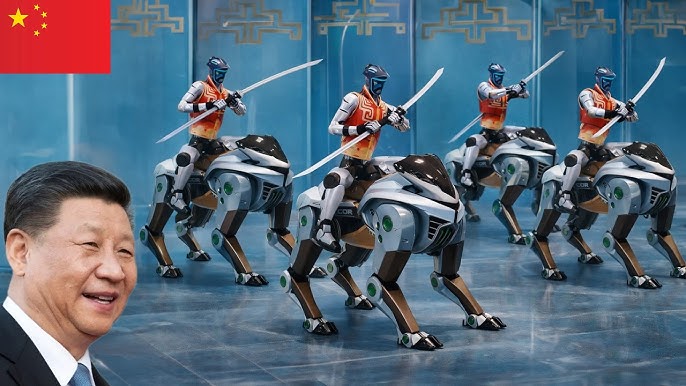
At the latest Spring Festival Gala, humanoid robots executed synchronized kung fu routines, complex gymnastics and tightly choreographed dance sequences with fluidity that would have seemed improbable twelve months earlier. The balance control was sharper. The motion smoother. The sequencing more natural. What looked like novelty in 2025 now resembled iteration at industrial speed.
From Spectacle to Signal
Public demonstrations of robotics are never purely entertainment. They are signals – to investors, to competitors, to policymakers and to the domestic audience.
“People should absolutely be taking these robots seriously,” Reyk Knuhtsen, an analyst at SemiAnalysis, said after the gala. “They’re becoming visibly more lean, fluid and capable.”
The improvements were not cosmetic. The machines demonstrated better dynamic stability, more advanced motion planning and increasingly sophisticated AI-driven control systems. Aerial flips and weapon-handling choreography require not just mechanical engineering precision but real-time feedback loops and increasingly capable underlying models.
The key message was not that humanoids can perform kung fu. It was that iteration cycles are shortening. China’s robotics sector is compressing development timelines at a pace that suggests these machines are moving from laboratory curiosities toward deployable tools.
Scaling, Not Experimenting
The most important shift is not performance. It is scale.
According to estimates cited by Barclays, roughly 15,000 humanoid robots were installed globally in 2025. More than 85% of those installations were in China. The United States accounted for about 13%.
That imbalance reflects structural advantages.
China possesses what analysts describe as a near vertically integrated robotics value chain – from rare earth minerals and high-performance magnets to motors, sensors, batteries and final assembly. Few economies can match that depth. It allows domestic firms to compress costs, iterate quickly and scale production in ways competitors struggle to replicate.
Zornitsa Todorova, Head of Thematic FICC Research at Barclays, pointed to that ecosystem strength as China’s fundamental edge. Manufacturing scale, combined with state support and industrial policy alignment, has enabled Chinese producers to price humanoid platforms aggressively.
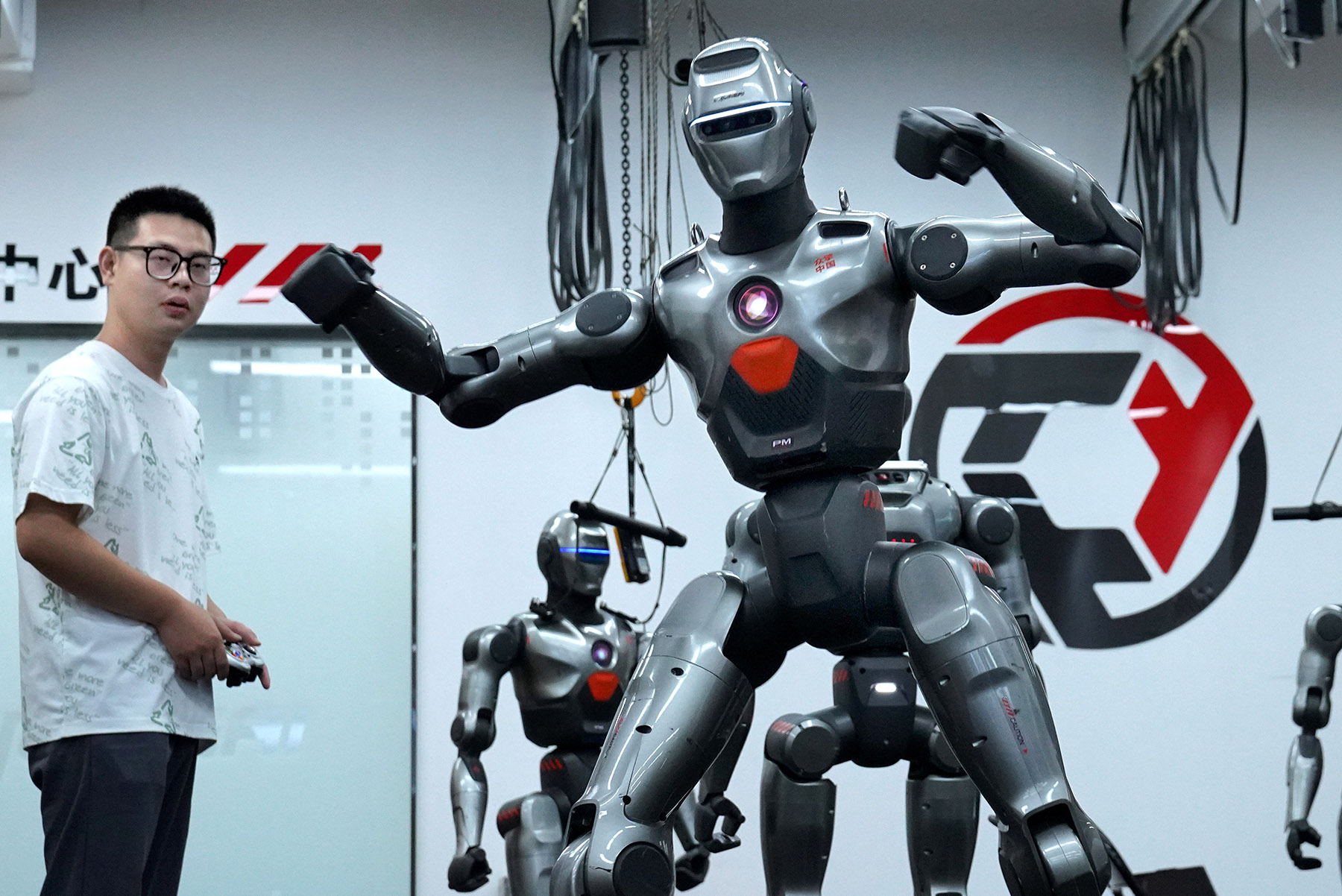
One of the most visible players is Unitree Robotics, whose machines featured prominently at the gala. The company advertises a base price of $13,500 for its G1 humanoid robot – dramatically lower than many Western counterparts. Its CEO told local media that the firm expects between 10,000 and 20,000 shipments in 2026 alone.
Those numbers suggest something significant: humanoids are not being built merely to impress. They are being positioned for adoption.
The American Contrast
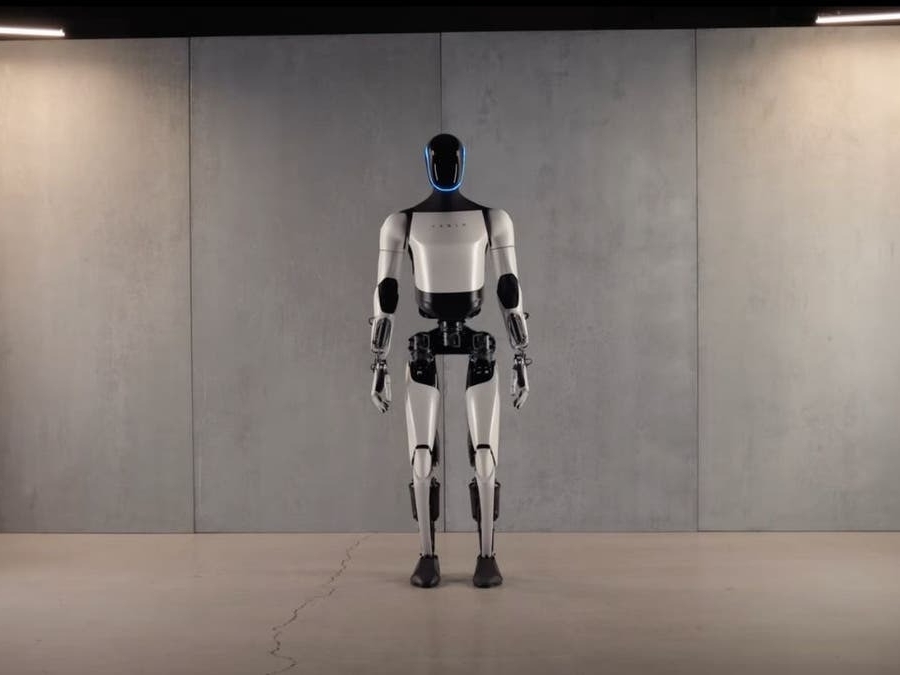
In the United States, Tesla remains one of the most high-profile developers of humanoid robots with its Optimus project. CEO Elon Musk has said production costs could fall below $20,000 if annual output reaches one million units, though final pricing would depend on demand and scaling efficiencies.
American firms are innovating aggressively, particularly in AI model development. But manufacturing depth and cost compression at scale remain China’s comparative advantage.
Omdia chief analyst Lian Jye Su noted that other markets will ramp up production, but they are likely to lag in the near term due to China’s entrenched supply chains and production scale.
The implication is nuanced but powerful: China may not dominate the frontier AI model race (where US firms like OpenAI, Google and Anthropic continue to lead) but in embodied AI, where hardware meets software at industrial scale, it is already setting the pace.
The AI Model Question
Yet hardware alone does not determine impact.
“The AI model race is still undecided,” Knuhtsen observed. “The robot will only be as useful as its model.”
Humanoids performing choreographed routines on stage represent one form of intelligence – tightly scripted, optimized and controlled. Real-world deployment requires something far more demanding: reasoning in unstructured environments.
For example, a factory floor with variable conditions, a warehouse with shifting layouts, a hospital ward with human unpredictability, a home with clutter and ambiguity and so on.
Advances in dexterity and balance are necessary. But breakthroughs in reasoning, task chaining, memory persistence and contextual awareness will ultimately define economic value.
China’s broader AI ecosystem has taken a distinctive path. Faced with restricted access to cutting-edge US semiconductors and geopolitical pressure, Chinese firms have leaned heavily into open-source models and aggressive domestic deployment. Companies have released hundreds of open models to accelerate ecosystem growth and reduce costs for developers.
This strategy has allowed rapid integration of AI into manufacturing, e-commerce and robotics. It has also created a feedback loop between software capability and hardware embodiment.
The result is not just robots that move better but robots increasingly integrated into a national AI industrialization drive.
Industrial Intent
Beijing has made AI central to its economic strategy. President Xi Jinping has repeatedly framed artificial intelligence and advanced manufacturing as pillars of technological self-reliance.
In recent months, national action plans have emphasized deeper AI integration into manufacturing sectors, signaling that robotics is not peripheral to economic planning – it is foundational.
China has demonstrated this model before. High-speed rail. Solar panels. Electric vehicles. In each case, early skepticism gave way to rapid scaling, cost compression and global export capacity.
Humanoid robotics now appears to be entering a similar pattern. What was once novelty is moving toward normalization.
A Global Signal
For the world, the signal is twofold.
First, China’s capacity to industrialize emerging technologies at speed remains intact despite export controls and geopolitical friction. Vertical integration, policy coordination and cost discipline continue to provide leverage.
Second, embodied AI – once considered speculative – is advancing toward commercial viability faster than many expected.
–Investors see compressed timelines.
–Policymakers see strategic capability.
–Competitors see narrowing margins for delay.
The robotics race is no longer hypothetical.
And Then Comes the Jobs Question
If this trajectory continues, the next chapter is inevitable.
Humanoid robots are not built to dance. They are built to work.
Warehousing. Logistics. Assembly lines. Quality inspection. Hazardous environments. Eventually, retail assistance, caregiving support and household tasks.
Analysts cited in international commentary have warned that tens of millions of Chinese workers – particularly in manufacturing, logistics, delivery services and routine white-collar roles – could face displacement over the coming decade as AI systems mature.
China already faces structural economic pressures: slowing growth, youth unemployment challenges and a shrinking working-age population. Automation promises productivity gains. It also threatens job disruption.
The country’s political system provides tools for managing dissent and directing economic transitions. But large-scale displacement is not simply a question of stability. It is a question of pacing.
–Can new industries absorb workers as quickly as machines replace them?
–Can retraining scale at the same speed as deployment?
–Can social policy adapt without undermining productivity incentives?
China’s social contract has long been anchored in rising prosperity. Automation tests that balance.

The Strategic Irony
There is an irony embedded in the AI race.
China’s push to outpace the United States in advanced technologies reinforces the drive toward automation. Export controls on advanced chips have only intensified domestic innovation efforts. The competition is external.
But the consequences are internal. Winning the robotics race may strengthen China’s geopolitical position. It may expand industrial output and enhance manufacturing resilience.
Yet if machines move into roles faster than the labour market can adjust, the most profound disruption will not occur in Washington or Silicon Valley. It will occur in factories, warehouses and offices across China itself.
The Last Bit,
A year ago, viral clips of stumbling robots invited skepticism. Today, steadier machines performing complex routines suggest acceleration.
The production numbers are rising, the prices are falling and the ecosystem is maturing.
Hence, the question is no longer whether China can build advanced humanoid robots – it is whether the country (and the world) are prepared for what widespread deployment means.