Taiwan’s “No Indians” Billboard Sparks An Uncomfortable Question; As India Rises Globally, The World Is Also Judging Indians More Closely
The billboard was crude, racist and impossible to ignore. But beyond the outrage surrounding Taiwan’s “No Indians” campaign lies a more uncomfortable reality: as India rises economically and Indians become more visible across the world, global scrutiny of Indian behaviour, civic culture and public conduct is rising just as rapidly.


Taiwan’s controversial “No Indians” billboard may have triggered outrage over racism and xenophobia, but it has also exposed a deeper discomfort many Indians quietly encounter abroad today.
As India rises economically and Indians become more visible across global politics, business and tourism, the world is also beginning to judge Indian behaviour, civic culture and public conduct far more closely.
Indians abroad largely existed within familiar stereotypes – doctors in the Gulf, motel owners in America, IT professionals in Silicon Valley or corner-shop owners in Britain, this mind you, has been the norm for decades. They were economically useful, culturally noticeable, but rarely politically central. That reality is now changing rapidly.

Today, people of Indian origin are steadily breaking into mainstream politics, business, academia and policymaking across several Western nations. Indian-origin leaders are contesting high-profile elections in cities like New York, diaspora politicians are increasingly shaping political conversations in Canada and the United Kingdom, and Indian executives continue to dominate boardrooms of some of the world’s largest companies.
India itself, meanwhile, is aggressively positioning itself as a future global power – economically, strategically and diplomatically.
But here’s the truth – visibility changes perception.
The moment a community becomes globally influential, it also begins attracting deeper scrutiny, irritation, stereotypes and backlash. History has repeatedly shown that rising migrant communities often move through this cycle. Admiration and resentment tend to grow side by side.
That is partly why incidents like the Taiwan billboard resonate far beyond local politics. The imagery was undeniably offensive, especially with the use of a Sikh turban and the inverted Indian flag. Yet beneath the outrage was another uncomfortable truth many Indians quietly encounter abroad today – the world is noticing Indians more than ever before, and not always positively.
Part of this discomfort is geopolitical and economic. Countries across the world are struggling with migration anxieties, job insecurity and rising nationalism. Indians, because of their growing global presence, are increasingly entering that conversation. But another part of the discomfort is harder to dismiss entirely.
Across parts of Southeast Asia and even Europe, conversations around Indian tourists and migrants have increasingly become tied to complaints around civic behaviour, loudness, bargaining culture, harassment, littering and disregard for public spaces.
This is where the debate becomes deeply uncomfortable. Because while racism against Indians cannot be justified, neither can every criticism simply be dismissed as racism. And perhaps nowhere is this contradiction becoming more visible than in Southeast Asia, where millions of Indians are now travelling every year – only to discover not just how the world sees them, but also how different functioning public life can look outside India.

The Rise Of The “Ugly Indian Tourist”
The past few years have seen an unprecedented explosion in Indian outbound tourism. Cheap airfares, visa-on-arrival schemes, social media travel culture and rising disposable incomes have suddenly pushed millions of Indians into global tourism circuits that were once accessible only to the wealthy. From the beaches of Pattaya and Bali to the cafés of Prague and the night markets of Vietnam, Indian tourists are now everywhere.
But alongside this rise has emerged another far less flattering global stereotype – the “ugly Indian tourist.”
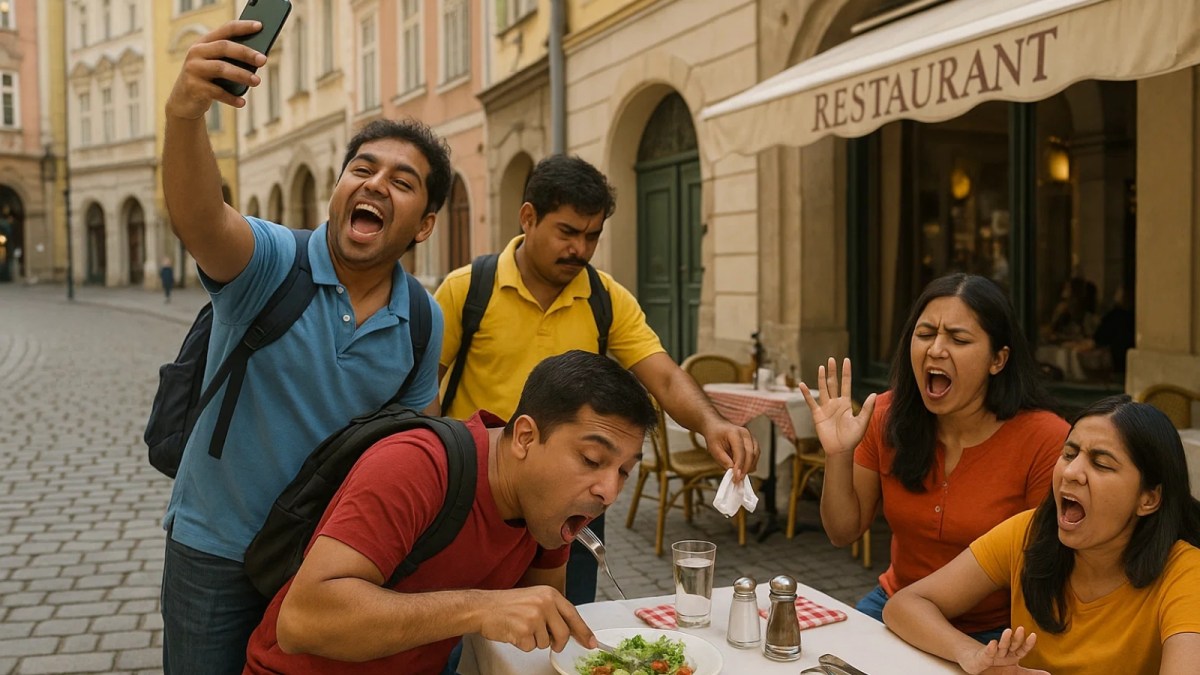
Across parts of Southeast Asia and even Europe, complaints surrounding Indian travellers have increasingly become tied to loud behaviour, aggressive bargaining, littering, public nuisance, harassment and disregard for civic etiquette.
In Vietnam and Thailand, some spas and businesses have reportedly blacklisted Indian male groups after repeated complaints about inappropriate behaviour. Videos showing Indian tourists creating chaos on flights, shouting inside hotel lobbies, drinking openly on beaches or dancing loudly inside public transport have repeatedly gone viral online, often triggering embarrassment even among Indians themselves.
The fallout of this stereotype is now producing something many well-behaved Indians describe as “second-hand shame.”
Many Indians travelling abroad increasingly speak of overcompensating the moment locals hear their accent. They speak softly, avoid bargaining too much, apologise excessively and consciously try not to stand out. Not because they have done anything wrong, but because they fear being instantly associated with the worst behaviour of their compatriots.
Of course, this does not mean all criticism directed toward Indians is fair. Racism, xenophobia and migration anxieties are real, particularly in societies grappling with economic uncertainty and nationalism. Every major travelling nationality has carried stereotypes at some point. Chinese tourists were once globally mocked for unruly travel behaviour, British tourists became infamous for drunken chaos across Europe, while American tourists often faced criticism for cultural arrogance and ignorance.
But the uncomfortable reality is that enough Indians are now behaving poorly abroad for the stereotype to spread rapidly.
Part of the problem lies in the psychology of new-money tourism. For many first-generation international travellers, foreign travel is not merely about curiosity or cultural immersion, but also about status and performance. Social media has amplified this further. Travel today is often consumed less as an experience and more as a public display – proof that one has “arrived.” Loudness, rule-breaking and hyper-visibility become performances of success in unfamiliar spaces.
And yet, beneath the embarrassment surrounding the “uncouth desi traveller” stereotype lies another irony many Indians are beginning to confront abroad. While Indians are often criticised for their civic behaviour in countries like Thailand, Vietnam or Singapore, many travellers are simultaneously returning home shocked by something else entirely – just how clean, orderly and well-maintained many of these countries actually are compared to India.

Southeast Asia Is Quietly Shattering India’s Delusions Of Progress
A few years ago, when you said “Thailand” to an Indian man, his face would often undergo a minor muscular transformation. A smirk would appear, half-guilt and half-anticipation, as if the country itself existed somewhere between fantasy and forbidden entertainment. For years in the Indian imagination, Thailand was less a nation and more an inside joke.
But that imagination largely belonged to people who had never actually been there.
Then something changed. Flights became cheaper, visas became easier and international travel slowly stopped feeling like an elite privilege. Indians began landing in Bangkok, Phuket and Pattaya expecting chaos and cheap indulgence, only to encounter something else entirely – civic order.
And that shock unfolds in phases.
The first begins right outside the airport. You open Grab, Southeast Asia’s equivalent of Uber, and for roughly the same fare as a cab ride in Delhi, a spotless SUV arrives. The driver does not honk every three seconds, abuse bikers or zigzag through traffic like he’s escaping a crime scene. He simply stays in his lane and drives.
The next shock is the footpath itself. Wide, continuous and unobstructed, it functions exactly as the name suggests – a path for walking. Not a parking extension for scooters, not a marketplace spillover and certainly not an obstacle course of open drains and broken slabs waiting to snap your ankle. In many Indian cities, finding a usable footpath still feels like stumbling upon an archaeological discovery.
Then comes the unsettling part.
You check into a hotel cleaner and quieter than many Indian equivalents despite costing less. You look out of the window and notice traffic moving with surprising discipline. Public transport functions. Streets are swept. Public spaces are treated as shared spaces rather than abandoned zones belonging to nobody. Southeast Asian cities often feel like societies that solved certain basic civic problems quietly, without constantly needing to announce themselves as emerging superpowers.
And somewhere in the middle of all this comes an uncomfortable realisation.
For decades, many Indians subconsciously assumed that neighbouring Asian societies were struggling in broadly similar ways. The chaos felt regional, almost normalised. We romanticised dysfunction and called it colour, energy, spirituality or resilience. But once Indians began travelling in large numbers through Vietnam, Thailand, Singapore, Malaysia and even Sri Lanka, many discovered something deeply unsettling – the world around India had moved ahead in visible quality-of-life far faster than India itself.
The truth is, India never really changed. What changed was the world around it.
This is partly why social media today is flooded with Indian vloggers reacting with genuine disbelief to clean roads, disciplined traffic, functioning public infrastructure and basic civic order in countries that many Indians once casually dismissed as “smaller” or “less powerful.” The fascination is no longer limited to Europe or America. Indians are increasingly comparing their cities not with London or New York, but with Bangkok, Hanoi and even Colombo.
That comparison is psychologically important. Because for millions of Indians, travelling abroad is no longer merely tourism. It has become an accidental confrontation with what functional public life can actually look like.

The “Sab Chalta Hai” Civilization
The deeper one travels through Southeast Asia, the harder it becomes to ignore a painful question: why do societies that were once economically behind India often appear significantly ahead in basic civic behaviour and urban functionality today?
The answer cannot simply be money.
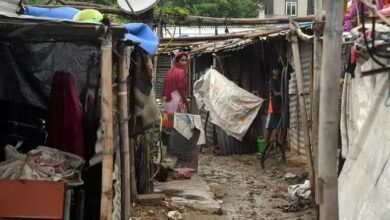
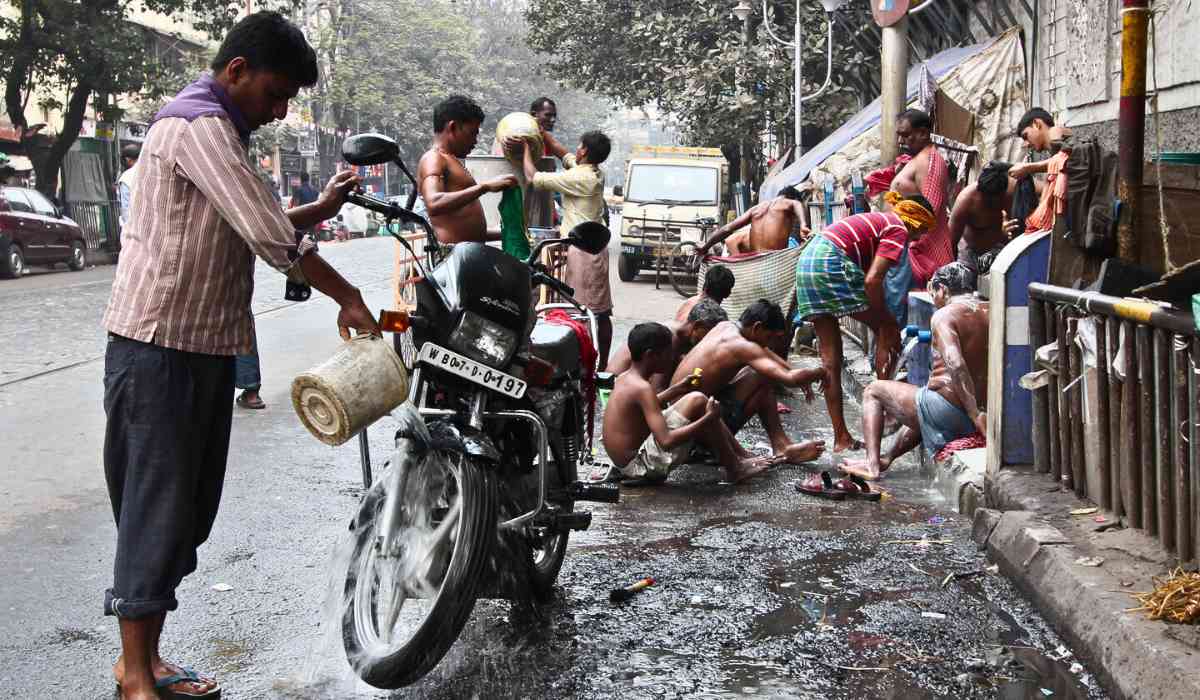
Many Indian cities today have luxury malls, billion-dollar startups, expensive cars and massive wealth concentration. Yet right outside glass office towers often sit overflowing garbage piles, broken pavements, tangled electric wires and open drains. The contradiction has become so normal that most Indians barely register it anymore.
And perhaps that is the real problem – India has spent decades normalising dysfunction.
Littering is rarely treated as a moral failure. Queue-jumping is seen less as bad behaviour and more as smart opportunism. Noise pollution is accepted as personality. Traffic indiscipline is interpreted as survival instinct.
Public property belongs to nobody, which effectively means it is abused by everybody. The famous “sab chalta hai” mindset was once romanticised as flexibility and resilience. In reality, it often became a social permission slip for disorder.
For generations, cleanliness in India was also psychologically outsourced to “someone else.” The idea of shared public ownership remained weak because public spaces themselves were rarely treated as collective responsibility. You throw, someone else cleans. You spit, someone else washes. You break rules, someone else adjusts. Over time, civic irresponsibility stopped feeling abnormal and started feeling cultural.
That contrast becomes brutally visible abroad.
At airports, beaches, hotels and public transport systems across Southeast Asia, many Indians are encountering societies where people do not necessarily wait for the government to enforce basic discipline. Public cleanliness there often operates less through fear and more through habit. The streets are not clean merely because authorities are strict, but because citizens themselves see filth as embarrassing.
For many Indians, this becomes an unexpectedly emotional experience.
Because after witnessing functioning roads, disciplined traffic and clean public spaces abroad, returning home suddenly feels different. The potholes feel deeper, the garbage feels uglier and the chaos no longer appears charming or spiritual. What once felt “normal” begins to feel exhausting.
This explains why frustration around domestic tourism destinations like Goa has intensified in recent years. The backlash is no longer simply about expensive hotels or taxi unions. Increasingly, Indians are asking a far more uncomfortable question: why travel through broken roads, garbage and poor civic infrastructure at home when cleaner, cheaper and better-managed alternatives exist just a few hours away in Southeast Asia?
That question carries political weight far beyond tourism.
The Contradiction At The Heart Of India’s Global Rise
This is what makes the Taiwan billboard episode so uncomfortable. Not because the billboard was correct (it was crude, discriminatory and deeply offensive) but because it collided with a growing anxiety many Indians themselves are beginning to feel abroad.
India today wants global influence on every front. It wants to be seen as an economic powerhouse, a strategic counterweight to China, a technology hub, a manufacturing destination and eventually a developed nation. Indian-origin politicians are rising globally, Indian companies are expanding overseas and Indian tourists are travelling abroad in record numbers. The country’s global footprint is undeniably growing.
But global visibility also means global judgement.
And increasingly, the world is not only judging India through GDP numbers, startup valuations or diplomatic speeches. It is also judging India through the behaviour of Indian tourists, the condition of Indian cities, the treatment of women and foreigners, the functioning of public infrastructure and the everyday conduct Indians carry into global spaces.
That is the contradiction modern India is now confronting.
For years, India’s rise was discussed largely through macroeconomic optimism – growth rates, digital payments, unicorn startups, highways, defence ambitions and the promise of becoming the next great economic giant. But for many Indians travelling abroad today, especially through Southeast Asia, the comparison has suddenly become far more intimate and uncomfortable. It is no longer about who has the bigger economy. It is about who built cleaner streets, calmer cities, better public systems and more dignified everyday living conditions.
And perhaps that explains why countries like Thailand, Vietnam or Singapore produce such psychological shock among Indian travellers. These nations may not possess India’s scale, military ambitions or geopolitical weight, but in many visible aspects of public life, they often appear far more orderly, disciplined and functional.
That contrast is difficult to ignore once experienced firsthand.
The irony is that many Indians now return home carrying two conflicting emotions simultaneously – outrage when confronted with racism or stereotyping abroad, but also quiet frustration after witnessing how efficiently many neighbouring societies function compared to India. The result is a strange mix of wounded nationalism and reluctant admiration.
This is why dismissing every criticism of Indians abroad as racism alone may no longer work. Racism certainly exists and should be called out unapologetically. But introspection matters too. A country aspiring to global leadership cannot endlessly separate national prestige from civic behaviour, public hygiene, urban planning and social conduct.
Because ultimately, global power is not experienced only through military strength or economic growth. It is experienced through airports, roads, footpaths, public transport, civic discipline, cleanliness and how citizens behave when nobody is watching. As India rises globally, Indians are increasingly discovering that the world is no longer merely noticing India’s ambitions. It is also noticing India’s habits.
The Last Bit, A Mirror India Did Not Expect
The Taiwan billboard controversy will eventually disappear from headlines, replaced by the next outrage cycle on social media. But the larger discomfort it exposed is unlikely to vanish anytime soon.
India today stands at a strange historical moment. It is powerful enough to demand global attention, yet still struggling with many of the basic civic problems that several smaller Asian nations solved years ago. Indians are becoming more visible across the world – as politicians, professionals, entrepreneurs, students and tourists – and with that visibility comes something unavoidable: scrutiny.
Some of that scrutiny will undoubtedly be unfair, racist and rooted in prejudice. But some of it will also emerge from genuine observations about behaviour, public conduct and civic culture. The “sab chalta hai” attitude starts resembling national complacency rather than cultural uniqueness.
And perhaps that is why the Taiwan billboard struck such a nerve. Not merely because it was offensive, but because somewhere beneath the outrage lay a deeper fear – that as India rises globally, the world may increasingly judge the country not by the confidence of its speeches, but by the behaviour of its citizens and the condition of its public life.