Is India Creating World-Class Cities By Quietly Emptying Out Its Villages? Can Indian Cities Absorb Endless Migration? And Who Will Grow Our Food?
India’s villages are not disappearing overnight. They are fading slowly, quietly and almost invisibly, one family at a time. India’s development model is creating globally ambitious cities, but in the process it may be weakening the rural ecosystems, agricultural foundations, water security and demographic balance that sustain the country itself.

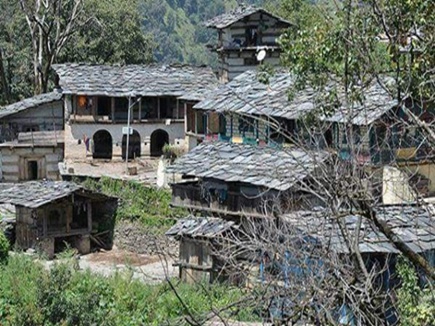
For years, Uttarakhand has occupied a unique place in India’s imagination. The state is often projected as a land of spirituality, clean air, pilgrimage routes and untouched mountain life, a striking contrast to the noise and congestion of India’s expanding cities. Yet beyond this carefully preserved image, another reality has been steadily unfolding across the hills – entire villages are beginning to lose the very populations needed to sustain them.
In many parts of Uttarakhand, migration is no longer episodic or seasonal. It is becoming structural. Younger generations continue to move away toward Dehradun, Delhi, Chandigarh, Bengaluru and other urban centres, driven by a combination of economic pressure and practical necessity.
The issue is not merely employment in the conventional sense. The deeper problem is that large sections of rural Uttarakhand no longer offer the institutional ecosystem required for modern life.
Stable income opportunities remain limited, healthcare infrastructure is uneven, higher education access is concentrated elsewhere and economic diversification outside tourism and small-scale agriculture has remained weak for decades.
This has produced a gradual demographic distortion across several hill regions. Productive working-age populations continue to leave, while ageing residents increasingly remain behind. In many villages, schools struggle with falling enrolment, agricultural activity weakens and local economies begin operating at survival levels rather than growth levels. Homes are not always abandoned dramatically; many simply transition into intermittently occupied spaces visited during festivals, holidays or family obligations.
What makes this trend particularly significant is that Uttarakhand’s crisis cannot be dismissed as an isolated mountain problem. It reflects a larger imbalance within India’s development trajectory, where opportunity increasingly clusters around urban corridors while geographically difficult regions steadily lose economic relevance. In effect, migration becomes less about aspiration and more about adaptation.
The challenge is compounded by the geography of the state itself. Mountain economies are inherently harder to sustain. Infrastructure costs are higher, logistics are slower, agricultural scalability is limited and climate vulnerability is far more severe. Frequent landslides, erratic rainfall patterns, flash floods and ecological degradation have further increased uncertainty around farming and long-term habitation in several areas. For many younger residents, remaining in villages is beginning to appear economically riskier than leaving them.
This creates a dangerous cycle. As populations decline, public and private investment often weakens further. Reduced economic activity then accelerates migration again, creating a self-reinforcing pattern of gradual rural depletion. Over time, villages do not merely lose people; they lose viability.
The implications extend far beyond economics alone. Rural communities are not simply residential clusters. They are repositories of local memory, linguistic identity, agricultural knowledge, social continuity and regional culture. When populations thin out over long periods, these systems weaken quietly in the background. The loss is rarely immediate enough to trigger national alarm, yet cumulative enough to permanently alter the social fabric of an entire region.
Uttarakhand therefore represents something larger than a migration story. It may well be an early warning of what happens when development becomes heavily concentrated around cities while difficult rural geographies are left to slowly negotiate survival on their own.

India’s Rural Emptying Is Becoming A National Pattern
What is unfolding in Uttarakhand is not an isolated phenomenon tied only to mountain geography.
Similar patterns of rural weakening, demographic imbalance and outward migration are emerging across multiple parts of India, although the underlying triggers vary from region to region. In some places the pressure comes from climate stress, in others from agricultural collapse, resource scarcity, economic stagnation or the simple concentration of opportunity inside a handful of urban centres.
The common thread, however, remains remarkably consistent – large sections of rural India are increasingly struggling to retain their younger populations.
Across parts of Himachal Pradesh, particularly in remote districts such as Kinnaur, Chamba and Lahaul-Spiti, many villages face challenges similar to Uttarakhand. Difficult terrain, limited economic diversification and inadequate institutional infrastructure have steadily pushed younger residents toward cities and plains-based economies. Seasonal tourism and remittance income increasingly sustain local populations, but they rarely create the kind of long-term economic stability capable of reversing migration patterns.
In regions such as Ladakh and parts of Jammu and Kashmir, the pressures become even more layered. Geography, climate vulnerability, limited employment opportunities and strategic border sensitivities combine to create conditions where migration often becomes the most practical path toward economic security and educational mobility. Here too, the long-term concern is not merely population movement, but the gradual weakening of local demographic balance.
A very different but equally serious version of rural decline can be seen across Maharashtra’s Vidarbha and Marathwada regions. Unlike Uttarakhand’s visibly emptying villages, these regions often experience what could be described as economic desertification rather than physical abandonment.
Villages may remain populated, but chronic agrarian distress, debt cycles, water scarcity and repeated crop failures steadily hollow out economic life. Migration in such areas frequently becomes seasonal, with families or younger workers moving temporarily to cities in search of labour opportunities that local economies can no longer provide reliably.
Bundelkhand presents another variation of the same structural problem. Years of drought, groundwater depletion, weak irrigation networks and inadequate rural investment have created long-term livelihood instability across parts of Uttar Pradesh and Madhya Pradesh. Large numbers of working-age men migrate seasonally toward Delhi, Punjab, Haryana and Gujarat, leaving behind fragmented village structures increasingly dependent on women, elderly residents and remittance-based survival.
Even states like Bihar, where villages remain densely populated, reveal another dimension of the migration economy. Rural depopulation here may not appear visually dramatic, yet outward labour migration operates at enormous scale. Entire local economies in many districts depend heavily on remittances sent from workers employed in construction, manufacturing, transport, security services and informal labour markets across India’s major cities. In effect, economic sustainability is increasingly outsourced beyond the village itself.
Similar patterns are visible across tribal belts in Odisha, Jharkhand and Chhattisgarh, where weak infrastructure, shrinking traditional livelihoods, mining-linked displacement and limited industrial diversification continue to push younger populations outward. In western Rajasthan too, water scarcity and ecological stress have sustained migration pressures for decades, pressures that climate change may intensify further in the years ahead.
What connects all these regions is not identical geography or identical economics, but a broader structural imbalance in India’s development model. Economic growth, investment, high-value employment, advanced education and institutional capacity have increasingly concentrated around metropolitan clusters, industrial corridors and urban consumption centres. Meanwhile, many rural regions continue operating with weak healthcare access, underdeveloped infrastructure, limited private investment and shrinking local employment ecosystems.
As connectivity improves and aspiration expands through smartphones, digital media and urban exposure, younger generations increasingly compare village realities not with neighbouring districts, but with metropolitan lifestyles and opportunities. Migration therefore becomes both psychological and economic. Staying back begins to feel less like continuity and more like compromise.
This is precisely why India’s rural transformation deserves deeper attention. The issue is no longer confined to isolated pockets of distress. A much larger national redistribution is underway, one where villages across multiple states are gradually losing the demographic energy required to sustain themselves over the long term.
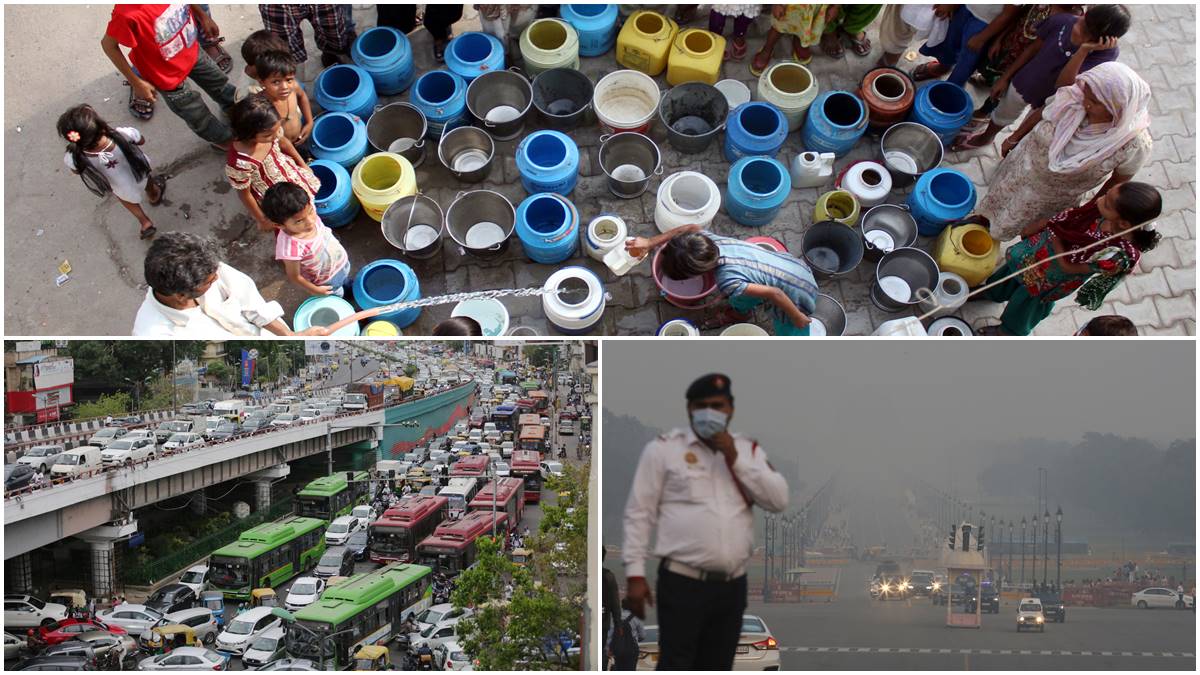
India’s Cities Are Already Bursting At The Seams
For decades, migration toward cities has been viewed as a natural consequence of economic progress. Urbanisation is often associated with industrialisation, higher productivity, rising incomes and expanding opportunity. To a certain extent, this is historically true. Every major economy that industrialised experienced large-scale population movement toward cities.
The problem, however, is that India’s urban transition is unfolding at a scale and speed that its infrastructure may not be fully prepared to absorb.
India’s largest cities are already operating under visible strain. Mumbai continues to battle extreme housing pressure, overstretched suburban transport networks and shrinking living space. Bengaluru faces recurring water shortages, traffic paralysis and infrastructure systems struggling to keep pace with relentless expansion.
Delhi wrestles with pollution, urban sprawl and mounting pressure on civic resources. Hyderabad and Pune, once considered relatively manageable urban alternatives, are now confronting rapid real-estate expansion, rising congestion and growing stress on public infrastructure.
The concern is no longer whether Indian cities can grow. The concern is whether they can grow sustainably.
Urban migration at India’s scale inevitably creates cascading pressures across housing, water, electricity, sanitation, transportation and employment ecosystems. Every new wave of inward migration increases demand not only for jobs, but also for roads, schools, hospitals, sewage systems, rental housing, public transport capacity and energy supply.
When infrastructure expansion consistently lags behind demographic expansion, cities gradually begin operating in a permanent state of stress management rather than long-term planning.
This imbalance becomes particularly visible in informal urban growth. Migrants arriving in cities frequently enter economies already struggling to generate sufficient formal employment. As a result, large sections of urban labour become concentrated in informal sectors with unstable income and precarious living conditions. Simultaneously, unaffordable housing pushes millions toward congested rental clusters, unauthorised colonies and expanding peri-urban settlements that often develop faster than civic infrastructure can support them.
The result is a paradox increasingly visible across urban India. Cities continue to attract people because they remain centres of opportunity, yet many of these same cities are simultaneously becoming harder, costlier and more exhausting to live in.
This is where the larger development question becomes unavoidable. If villages continue weakening while cities absorb endless migration without adequate planning, India risks creating heavily overloaded urban islands surrounded by economically fragile rural interiors. Such a model may generate visible GDP expansion for a period of time, but it also creates deep structural vulnerabilities beneath the surface.
Water may eventually become one of the most serious fault lines. Indian cities already compete aggressively for water resources from surrounding rural regions. Bengaluru depends heavily on the Cauvery basin, Delhi draws resources from neighbouring states and Chennai has repeatedly confronted severe water stress.
As urban populations expand further, competition between urban consumption, industrial demand and agricultural needs is likely to intensify sharply.
Electricity demand presents another layer of pressure. Rapid urban growth requires massive increases in power generation, cooling infrastructure, data infrastructure and transport electrification, all while India simultaneously attempts to navigate energy transition goals and climate commitments. The larger the urban concentration becomes, the greater the strain on national infrastructure systems.
Then comes the employment question.
Can India generate enough high-quality urban jobs to sustainably absorb millions migrating out of rural economies every decade? Or does migration increasingly risk creating large populations trapped between declining rural opportunity and overcrowded urban precarity?
This challenge becomes even more complex when policymakers propose tier-2 cities and satellite urban clusters as the next phase of expansion. While decentralised urban growth may reduce pressure on megacities, it also risks reproducing the same patterns of congestion, speculative real estate growth, infrastructure lag and environmental stress across newer regions if planning remains reactive rather than anticipatory.
At its core, the issue is not whether India should urbanise. Urbanisation is inevitable for a developing economy of India’s scale. The deeper concern is whether India is building cities at the same pace at which it is emptying out rural economic ecosystems.
If that imbalance widens too far, the country may eventually face a situation where neither its villages nor its cities function sustainably enough to support the scale of population pressure being placed upon them.

Who Grows The Food In An Increasingly Urban India?
India’s migration story is usually discussed through the lens of cities – rising skylines, expanding metros, new highways, technology parks and consumption-driven growth. Far less attention is paid to the other side of this transition: what happens to the regions people continue leaving behind, especially when those regions still form the backbone of the country’s food system.
This may eventually become one of the most critical long-term questions confronting India’s development model.
Despite rapid urbanisation, India still depends heavily on millions of small and marginal farmers spread across rural regions. Agriculture may no longer dominate GDP contribution in the way it once did, but it continues to support livelihoods for a massive share of the population and remains central to national food security. Yet across many parts of the country, farming is becoming increasingly difficult to sustain economically, socially and environmentally.
Younger generations in rural India are not abandoning agriculture purely out of preference. In many cases, they are responding rationally to shrinking economic viability.
Small land holdings, rising input costs, erratic weather patterns, water stress, market volatility, debt pressures and uncertain returns have steadily weakened farming as a dependable pathway toward economic mobility. For many families, education and migration increasingly appear to offer more predictable futures than agriculture can provide. The consequence is gradual but significant – the average age of farmers rises while the willingness of younger populations to continue agricultural life weakens.
This creates a structural concern that extends far beyond rural distress alone.
If villages continue losing working-age populations over long periods, who sustains agricultural productivity at the scale required for a country of more than 1.4 billion people?
Mechanisation may partially offset labour shortages in some regions, but Indian agriculture still remains deeply dependent on human labour across vast areas of cultivation. Moreover, fragmented land ownership patterns make large-scale mechanisation uneven and economically difficult in several states.
Climate instability further intensifies this pressure. Heatwaves, unpredictable rainfall, groundwater depletion, floods and soil degradation are already affecting agricultural output across multiple regions. In such conditions, agriculture does not merely become less profitable; in some areas it becomes increasingly uncertain as a long-term livelihood system altogether.
This is where the food security debate intersects directly with migration. A country experiencing simultaneous rural weakening, climate stress and rapid urban population concentration cannot automatically assume food systems will remain stable indefinitely.
Agricultural decline does not always arrive dramatically. Often it unfolds gradually through falling labour participation, shrinking cultivation viability, rising costs and generational disengagement from farming itself.
One possible response may involve greater corporate participation in agriculture, consolidation of land holdings and increased technological intervention. Yet these transitions come with their own social, economic and political complications, particularly in a country where agriculture supports millions of small households rather than a narrow industrial farming base.

The other possibility – increasing food imports – presents even deeper strategic risks.
Global food supply chains are becoming more volatile due to climate disruptions, geopolitical tensions, export restrictions and resource conflicts. Recent years have repeatedly demonstrated how quickly international supply chains can destabilise during wars, pandemics or commodity shocks.
For a country with India’s population scale, large-scale dependence on imported food would create vulnerabilities extending far beyond economics alone. This is why the rural question cannot be treated merely as a sentimental conversation about preserving villages.
At its core, it is also a question about long-term national resilience. Cities may drive economic growth, innovation and consumption, but they remain fundamentally dependent on vast underlying systems of food, water, labour and ecological stability that originate outside urban boundaries.
And that leads to an uncomfortable but increasingly unavoidable question: can a civilisation of India’s scale sustainably urbanise if the rural ecosystems supporting it continue weakening faster than they can regenerate?
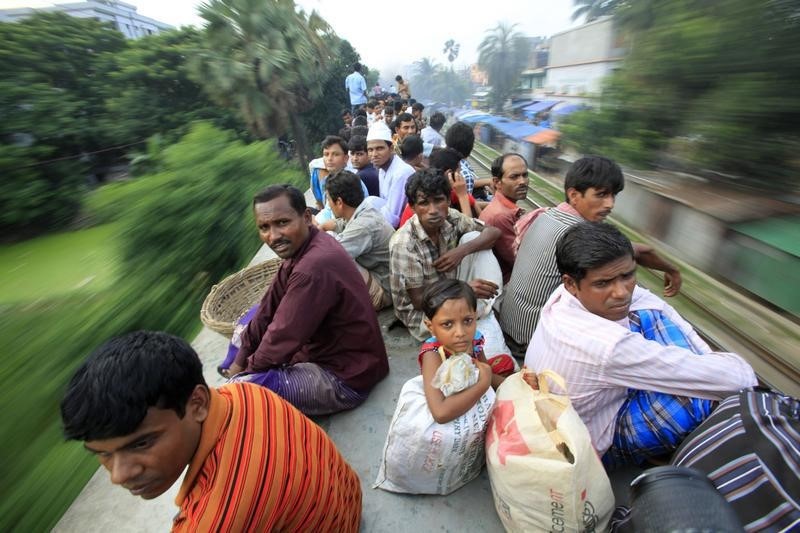
Climate Migration, Water Stress And The Next Internal Crisis
India’s migration debate is still largely framed around economics – jobs, salaries, opportunity and urban expansion. Yet beneath this visible economic transition, another force is beginning to reshape migration patterns far more aggressively: climate stress.
In the years ahead, India may not merely witness rural-to-urban migration driven by aspiration. It may increasingly confront climate-driven internal displacement on a scale that current planning frameworks are still inadequately prepared for.
Large parts of the country are already experiencing growing environmental instability. Heatwaves are intensifying across northern and central India. Groundwater levels continue declining in several agricultural regions. Erratic rainfall patterns are disrupting farming cycles, while floods, landslides and extreme weather events are becoming more frequent and economically damaging. In fragile mountain states such as Uttarakhand and Himachal Pradesh, ecological degradation and repeated climate shocks have made entire regions more vulnerable to long-term habitation stress.
When agriculture becomes unreliable, migration accelerates. When groundwater weakens, both farming and local industry suffer. When extreme weather repeatedly damages infrastructure, roads, crops and homes, younger populations increasingly view migration not as ambition, but as risk management.
This is precisely why climate change and migration can no longer be treated as separate policy conversations.
In several ways, India may already be entering the early stages of climate-linked internal redistribution. Regions facing severe water scarcity, declining agricultural productivity or recurring environmental disruption could steadily lose population over time, while cities and economically stable urban corridors absorb increasing demographic pressure.
Perhaps the most uncomfortable reality is that some villages across India may not be emptying temporarily at all. In certain ecologically stressed regions, the process could become semi-permanent or irreversible over time. Once schools shut, working-age populations disappear and local economic systems weaken beyond a threshold, rebuilding long-term viability becomes extraordinarily difficult.
This is why the migration story unfolding across India should not be viewed merely as an urbanisation trend. It is increasingly becoming a climate story, a resource story and a sustainability story unfolding simultaneously. And unless development planning begins integrating migration, ecology, water security and regional economic balance together rather than treating them as isolated sectors, the pressures now visible in pockets of India may eventually converge into a far larger national challenge.

What Happens To A Civilization When Its Villages Fade?
The decline of villages is often discussed in economic terms – migration numbers, labour shifts, agricultural stress and infrastructure gaps. Yet the deeper consequences are civilisational, and those losses are far harder to quantify on spreadsheets or policy dashboards.
Villages are not merely clusters of homes connected by geography. Across India, they have historically functioned as repositories of language, memory, food traditions, ecological knowledge, social identity and intergenerational continuity.
Long before modern urban India emerged, it was village networks that preserved local customs, oral histories, dialects and community structures across centuries of political upheaval and economic change.
When villages weaken over long periods, these systems weaken with them.
Languages and dialects often disappear gradually once younger generations migrate permanently toward cities dominated by more economically useful languages. Folk traditions survive briefly through festivals and nostalgia, but eventually lose continuity when communities themselves fragment across urban spaces. Local agricultural knowledge, seasonal practices and ecological understanding built over generations also begin fading once the populations sustaining them move away.
In many ways, migration changes not only where people live, but how societies remember themselves.
Urbanisation also reshapes social structures fundamentally. Cities tend to produce more individualised and economically transactional lifestyles, while village systems historically operated around interdependence, continuity and collective participation. Neither model is inherently superior, but the transition from one to the other alters social behaviour in profound ways.
The emotional consequences of this shift are increasingly visible across both rural and urban India.
Many ageing parents now remain alone in villages while younger family members work in distant cities. Simultaneously, millions living inside crowded urban environments increasingly experience forms of social isolation, instability and psychological exhaustion rarely associated with traditional rural community structures.
India may therefore be entering a peculiar transition where villages lose people while cities gain populations, yet loneliness expands in both spaces simultaneously.
The weakening of rural ecosystems also creates political and cultural consequences over time. When development becomes concentrated around metropolitan regions, public discourse, media attention, investment priorities and institutional power increasingly shift toward urban concerns. Rural regions then risk becoming politically visible primarily during elections, disasters or moments of crisis rather than through sustained developmental engagement.
This imbalance can eventually deepen regional resentment and social fragmentation, particularly if populations begin feeling that economic opportunity, institutional access and state capacity are distributed unevenly across the country.
At the same time, it is important not to romanticise rural India simplistically. Villages have never been free from hardship, inequality, caste hierarchies, unemployment or economic vulnerability. Migration itself is not inherently negative either. Urbanisation has historically lifted millions out of poverty and remains essential for economic growth, industrialisation and modernisation.
The real concern lies elsewhere.
A country the size of India cannot sustainably depend on a model where opportunity concentrates disproportionately in a limited number of urban corridors while vast rural regions steadily lose demographic and economic vitality. Strong cities are necessary for India’s future, but durable national growth also requires viable rural ecosystems capable of sustaining agriculture, regional economies, environmental balance and social continuity.
That is perhaps the central tension now confronting India. The country is trying to modernise, industrialise and urbanise at extraordinary speed while still carrying the demographic weight, geographic complexity and civilisational depth of a vast rural society.
And the question quietly emerging beneath this transition may ultimately define the next phase of India’s development story itself — what happens when a nation modernises faster than its social foundations can adapt?
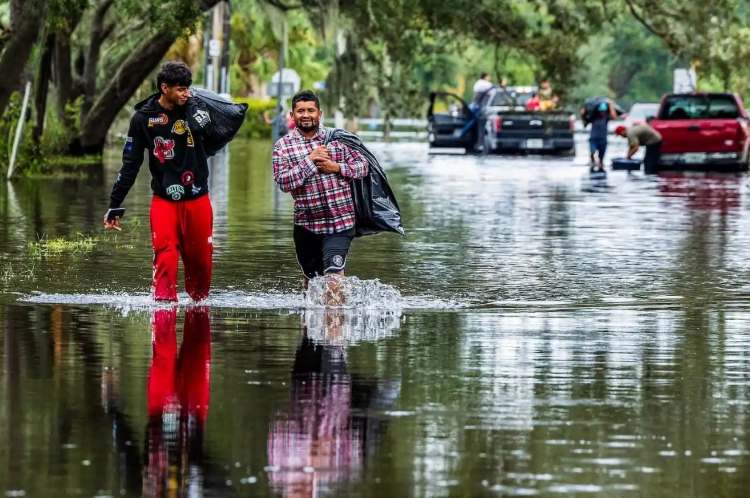
The Last Bit, The India Between Empty Villages And Overloaded Cities
India’s urban rise is real. Its cities are becoming centres of technology, finance, manufacturing, consumption and global ambition. New expressways, airports, industrial corridors and startup ecosystems are reshaping the country at remarkable speed. Millions continue to migrate toward cities because cities still represent opportunity, mobility and economic possibility in ways large parts of rural India often no longer can.
But beneath this transformation lies a difficult imbalance that India may eventually be forced to confront more seriously.
If villages continue weakening while cities absorb endless demographic pressure, the country risks creating two parallel crises simultaneously – overloaded urban ecosystems on one side and gradually depleted rural ecosystems on the other. Neither becomes sustainable over the long term.
This is why the debate can no longer remain limited to whether India should urbanise. Urbanisation is inevitable and necessary for a country seeking economic expansion and industrial growth. The real challenge is whether India can urbanise without steadily eroding the systems that continue sustaining the country underneath that growth.
Food security, water access, ecological stability, labour availability and regional balance are not secondary concerns operating outside urban success stories. They are the foundations that make those success stories possible in the first place.
The danger is not that villages will disappear overnight. India is far too large, diverse and rural for that kind of simplistic collapse. The deeper risk is slower and far more difficult to reverse – a gradual weakening of rural viability across enough regions that the imbalance eventually begins destabilising cities themselves.
Can the country build globally competitive cities while still preserving economically viable villages, sustainable agriculture and balanced regional growth? Or will India eventually discover that no city, no matter how modern or globally ambitious, can remain stable for long if the rural foundations beneath it continue hollowing out quietly in the background?