Tata, India’s Most Trusted Brand, Is Now Asking A Question It Never Had To Answer Before: Who Really Controls It?
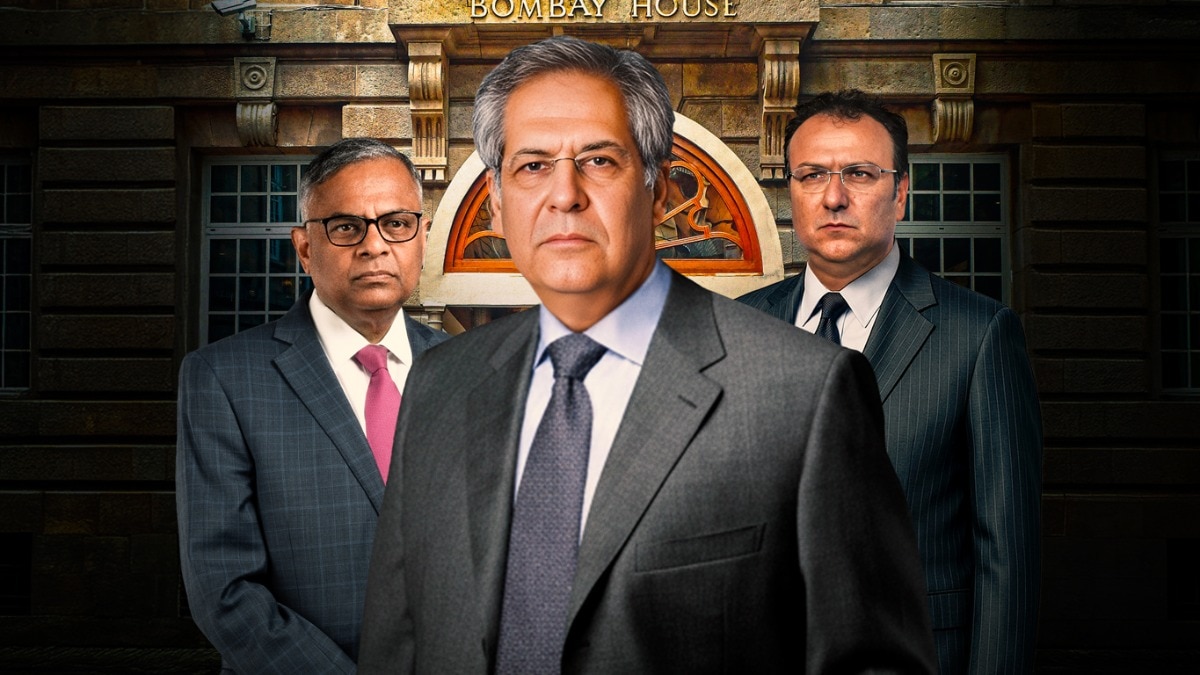
For decades, the Tata Group stood apart, its reputation built on trust, stability, and quiet authority under Ratan Tata. But a sudden resignation, allegations of concealed information, and an escalating internal dispute now suggest that era may be ending, forcing the group to confront a question it never had to answer before: who really controls it?

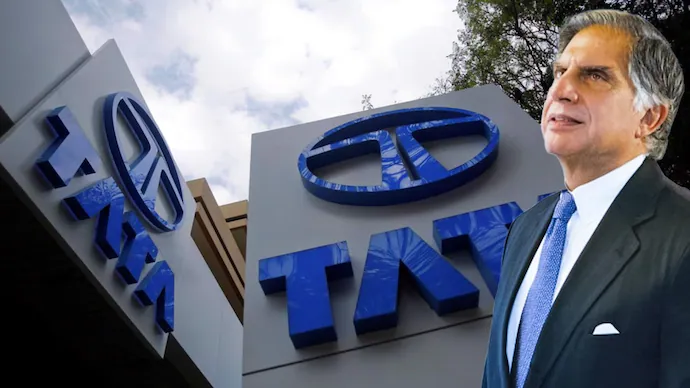
The latest developments within Tata Trusts have unfolded with a speed and intensity that suggest this is far from a routine governance matter. The CEO of Tata Trusts, Siddharth Sharma, recently asked two senior trustees, Venu Srinivasan and Vijay Singh, to step down from the Bai Hirabai Jamsetji Tata Navsari Charitable Institution, triggering a chain reaction that has now spilled into the public domain.
While Srinivasan chose to resign, Singh has, at least for now, held his ground. What has made the situation significantly more serious are the allegations made by both individuals, who have claimed that a crucial legal opinion, one that directly pertains to their eligibility as trustees, was not shared with them before the request for resignation was made. Srinivasan has gone on record to state that he was not fully informed of the circumstances, suggesting that the decision may have been taken without complete transparency.
If such an opinion existed and directly affected the legitimacy of the decision, the question naturally follows: why was it not placed before trustees at the time the resignation was sought?
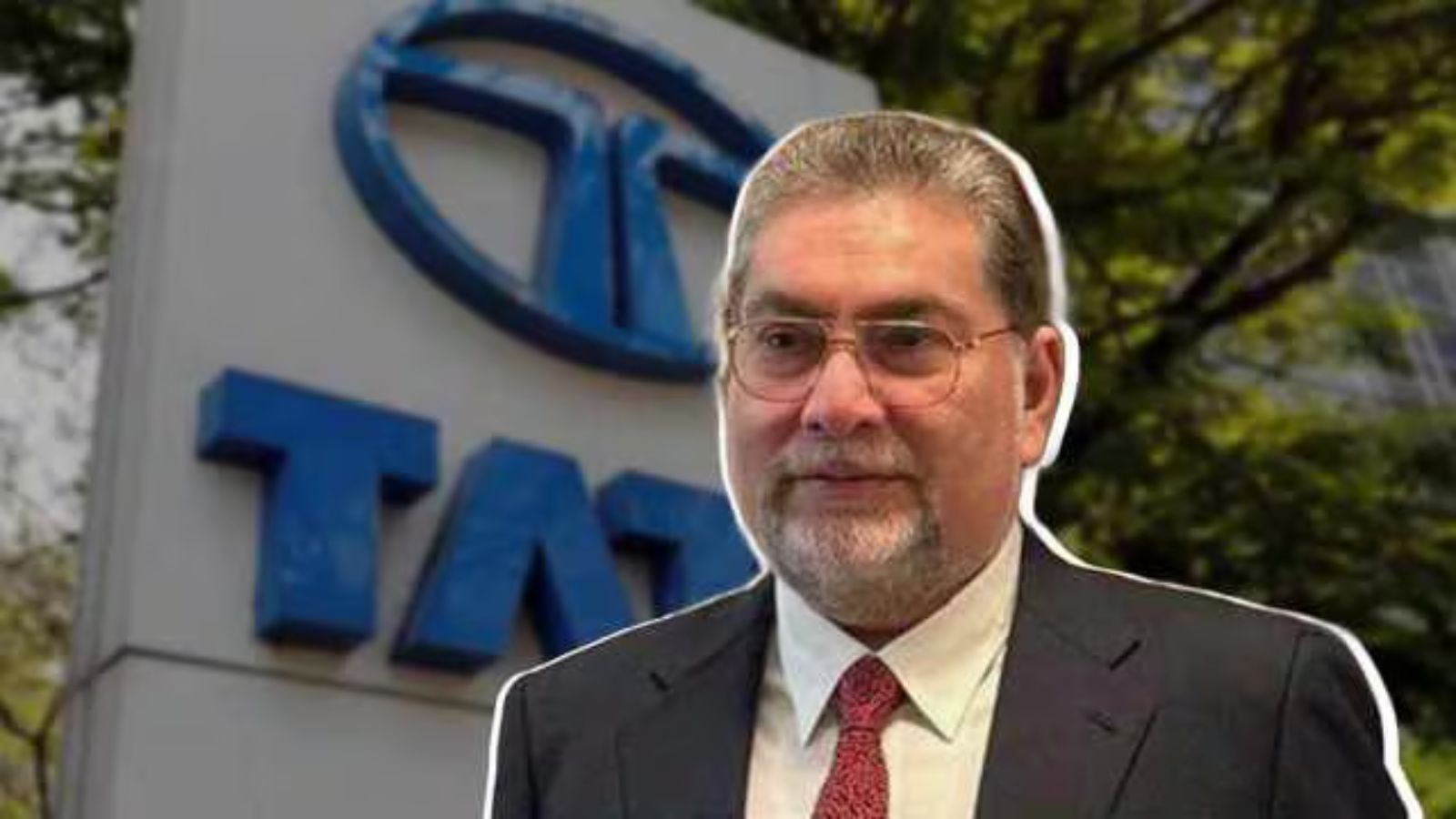
The backdrop to this development lies in a petition filed by Mehli Mistry, who has challenged the eligibility of both trustees on the grounds that they do not meet certain criteria related to religion and residency as outlined in the trust deed. Acting on this challenge, the Trusts appear to have moved swiftly, asking for resignations even as questions around the interpretation of these very criteria remain contested.
What stands out, however, is not merely the existence of a dispute, but the manner in which it has unfolded. The alleged non-disclosure of a key legal opinion, the urgency with which resignations were sought, and the fact that one trustee has resisted stepping down together point to a situation that feels less like administrative housekeeping and more like a moment of internal friction that could have deeper implications.
The Legal Contradiction That Raises More Questions Than Answers
At the heart of this dispute lies a legal contradiction that makes the situation far more complex than a straightforward eligibility issue. A prior legal opinion by former Chief Justice of India MH Kania had already examined the very clauses now being cited, concluding that restrictions based on religion and residency were not sustainable in law, as they were effectively overridden by the codicil to the will of Sir Ratan Tata.
This opinion was not merely theoretical but had, in fact, guided trustee appointments in the past, including instances where individuals who did not meet those restrictive criteria were still considered eligible. In other words, there existed a precedent within the Trusts themselves that acknowledged a more inclusive interpretation of the rules.
Yet, despite this clarity, the same clauses have now been invoked to question the eligibility of current trustees, creating a situation where the application of rules appears inconsistent. If the legal position had already been settled in practice, the decision to rely on those very provisions now raises the unavoidable question: is this truly about adherence to the trust deed, or is it about interpreting it in a way that suits the present moment?
The contradiction is difficult to ignore, and it introduces a deeper layer of uncertainty into what might otherwise have been seen as a procedural matter. When rules that were once set aside are suddenly brought back into focus, it becomes necessary to ask not just what the rules are, but why they are being used now.
Why This Is Not Just A Trust Dispute But A Question Of Control
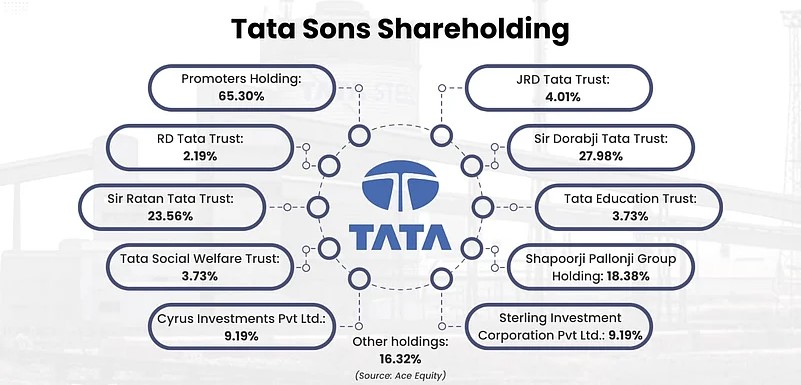
To view this as a disagreement within a charitable institution would be to miss the larger picture entirely. The trusts at the centre of this unfolding conflict are not peripheral bodies but the very entities that hold a controlling stake in Tata Sons, which in turn sits at the apex of the entire Tata Group. In effect, control of the trusts translates directly into control of one of India’s largest and most influential business empires.
This structure, which has long been seen as a defining strength of the Tata model, places enormous power in the hands of a relatively small group of trustees. Decisions taken within these trusts do not remain confined to philanthropy or internal governance, but have far-reaching implications for the direction, leadership, and capital allocation of the broader group. It is precisely this concentration of influence that makes the current dispute far more consequential than it may initially appear.
If control ultimately rests with a small group of trustees, an equally important question arises: how accountable is that control to the wider ecosystem that the group now operates in?

When disagreements emerge within such a structure, they are not merely differences of opinion but potential fault lines that can shape the future of the entire enterprise.
The present situation, therefore, is not about the composition of a single trust or the eligibility of a few trustees, but about the balance of power within an arrangement that ultimately governs a multi-billion-dollar corporate ecosystem. Seen in this light, the question is no longer confined to what is happening within the trusts, but extends to what it could mean for control over the group itself.
The Post-Ratan Tata Phase And The Emerging Power Equations
For decades, much of this structure functioned with an underlying coherence that was closely associated with the presence of Ratan Tata, whose influence extended beyond formal roles and into the broader ethos of the group. His leadership, while not without its challenges, provided a sense of continuity and stability that often kept internal differences from surfacing in ways that could unsettle the organisation’s public image.
In the period following his passing, that stabilising presence is no longer there, and the system is, perhaps inevitably, adjusting to a new reality. Under the leadership of Noel Tata, the trusts are facing a phase where authority, alignment, and decision-making processes are being tested in ways that were not as visible earlier. This does not necessarily imply a breakdown, but it does suggest that the internal dynamics are evolving, and not always smoothly.
What is beginning to emerge are signs of a structure that is no longer operating with the same degree of quiet consensus that once defined it. Differences that may have previously remained contained are now becoming visible, whether through contested appointments, delayed decisions, or public disagreements. In such a phase, even routine governance actions can take on a different meaning, as they are viewed through the lens of shifting influence and competing interpretations of authority.
The current episode, therefore, may not be an isolated disruption, but part of a broader transition in how the group is governed in a post-Ratan Tata era. And in transitions such as these, the question is not merely about who holds formal positions, but about how power is exercised, negotiated, and, at times, contested behind the scenes.
Old Faultlines That Never Fully Disappeared
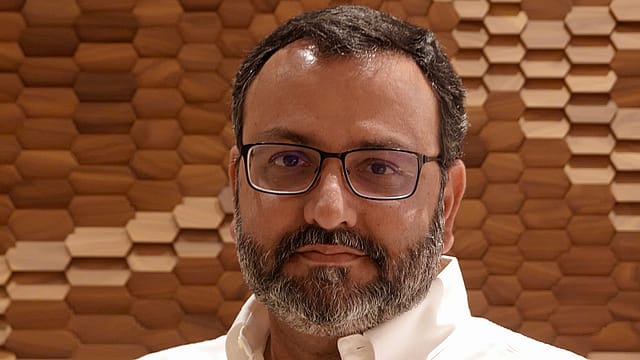
To understand the present without revisiting the past would leave the picture incomplete. The Tata Group has, for much of its history, projected an image of cohesion that set it apart from many other large business houses in India. Yet, beneath that image, moments of internal discord have surfaced before, most notably during the Cyrus Mistry ouster, which exposed deep divisions within the group’s leadership.
That episode was not merely about a change in chairmanship but revealed tensions between the Tata Trusts and the Shapoorji Pallonji Group, whose stake in Tata Sons has long been a source of friction. While the dispute eventually moved into the courts and appeared, at least on the surface, to reach a resolution, the underlying issues were never entirely settled. The question of control, particularly over an illiquid but highly valuable stake, has continued to linger in the background.
Even today, the demand for an exit or a listing of Tata Sons remains tied to that unresolved tension. The Trusts have resisted such a move, partly due to concerns around valuation and control, while the minority shareholder has continued to push for liquidity. This divergence of interests has ensured that the faultline, though less visible at times, has never truly disappeared.
What is unfolding now, therefore, does not exist in isolation. It sits on top of a history where questions of authority, ownership, and decision-making have surfaced before, sometimes quietly and sometimes dramatically.
The difference this time is that these tensions are emerging in a phase where the group is also navigating leadership transition and operational challenges, making their impact potentially more far-reaching.
When Financial Pressure Meets Governance Stress
Complicating this internal dynamic is the fact that the group is currently witnessing a phase of significant financial strain across several of its newer and more ambitious ventures. Losses across businesses such as Air India, Tata Digital, and other emerging bets have widened considerably, with projections suggesting a sharp escalation in cumulative losses over the current financial year.
While such investments are often justified as long-term strategic plays, the scale and persistence of these losses inevitably place pressure on leadership and decision-making processes. The spotlight has, in this context, increasingly turned towards Natarajan Chandrasekaran, whose continuation and strategic direction have come under closer scrutiny, particularly as the group balances capital-intensive bets with the need for financial discipline.
At the same time, regulatory expectations are beginning to add another layer of complexity, with requirements around listing for large non-banking financial entities raising the possibility that structural changes may eventually be forced, regardless of internal preferences.
It is often during such periods of financial stress that underlying governance tensions begin to surface more visibly. Decisions that might otherwise have been taken with consensus can become points of contention, and differences in approach or priorities can sharpen into more pronounced disagreements. The intersection of financial pressure and internal divergence tends to create an environment where even routine actions are viewed through a more critical lens.
In this context, the current dispute within the trusts cannot be seen as entirely detached from the broader business environment. While it may not have been triggered by financial performance, it is unfolding at a time when the group’s strategic bets, capital allocation, and leadership choices are all under heightened scrutiny. And when pressure builds simultaneously on multiple fronts, the margin for internal cohesion often narrows.
A Larger Structural Question Begins To Emerge
As the immediate dispute, historical context, and financial pressures begin to intersect, a larger and more fundamental question starts to take shape. The Tata Group has long operated under a structure that is both unique and deeply rooted in its legacy, where philanthropic trusts hold controlling stakes in Tata Sons, thereby shaping the direction of a vast and diversified business empire.
For decades, this model has been seen not just as a governance mechanism but as a moral framework, one that allowed the group to balance profit with purpose while maintaining a degree of insulation from the pressures typically associated with publicly held corporations. It created an image of stability, continuity, and ethical restraint that became central to the Tata identity.
However, the scale and complexity of the group today are vastly different from what they were when this structure was conceived. The business now spans multiple geographies, capital-intensive sectors, and rapidly evolving markets, all of which demand agility, transparency, and, at times, swift decision-making. In such an environment, a tightly held structure with concentrated control can begin to face new kinds of challenges.
The current developments raise the possibility that the very framework which once ensured stability may now be under strain, not necessarily because it is flawed, but because it is being tested in ways it was not originally designed to handle. When disagreements arise within such a system, they do not just remain internal matters but begin to raise broader questions about how effectively the structure can adapt to the demands of the present.
The Questions That Can No Longer Be Avoided
As these layers come together, what remains are a series of questions that are difficult to ignore and even harder to answer conclusively.
- The circumstances surrounding the recent resignation raise the issue of whether it was entirely voluntary or shaped by factors that have not been fully disclosed.
- The allegation that a key legal opinion was not shared before such a decision was sought introduces concerns around transparency and process.
- At the same time, the renewed reliance on eligibility clauses that had previously been set aside brings into focus the possibility of selective interpretation, prompting the question of whether rules are being applied consistently or in a manner that aligns with present objectives.
- The broader shift in leadership following the passing of Ratan Tata also raises the question of whether influence within the trusts is undergoing a quiet but significant realignment.
- Beyond this, there is the unresolved tension around ownership and liquidity, particularly in relation to the stake held by external shareholders, which continues to keep the possibility of structural changes, including a potential listing of Tata Sons, in the realm of discussion.
- And perhaps most importantly, there is the question of whether a system that depends so heavily on internal alignment can function effectively when that alignment begins to show signs of strain.
These are not questions that can be addressed through official statements alone, nor are they likely to find immediate answers. But their very emergence signals a shift in how the group is being perceived, both internally and externally.
The Last Bit, When Trust Itself Comes Under Scrutiny
For generations, the Tata Group has occupied a space that few corporate entities have been able to claim, where its reputation for ethical conduct and institutional stability allowed it to operate without being drawn into the kind of public scrutiny that often accompanies large business houses.
It was a system built not just on ownership and control, but on an implicit assurance that both were exercised with restraint and clarity.
What the current developments suggest, however, is that this assurance can no longer be taken for granted. As internal disagreements become visible, and as questions begin to emerge around process, authority, and interpretation, the group finds itself in a position where it must engage with a level of scrutiny that it has historically managed to avoid.
This does not necessarily signal a breakdown, nor does it diminish the legacy that has been built over more than a century. But it does mark a moment of transition, where the structures and assumptions that once seemed unshakeable are being tested in real time.
And in that moment, for perhaps the first time in its history, Tata is being compelled to confront a question it never truly had to answer before, not about its businesses or ambitions, but about something far more fundamental, which is who really controls it.
If these fractures deepen, the question may no longer be about control alone, but about whether the very structure that held Tata together can remain intact.
And in that moment, for perhaps the first time in its history, Tata is being compelled to confront a question it never truly had to answer before, not about its businesses or ambitions, but about something far more fundamental, which is who really controls it.