The NEET Crisis Is No Longer About One Leak; It Is About Whether India’s Examination System Can Still Be Trusted
The Supreme Court’s sharp observations on the latest NEET-UG paper leak controversy have once again placed India’s examination system under uncomfortable scrutiny. Remarking that the National Testing Agency appeared to have “not learnt lessons” from the 2024 NEET crisis, the apex court reignited a debate that now goes far beyond one examination and into the very credibility of meritocracy itself.

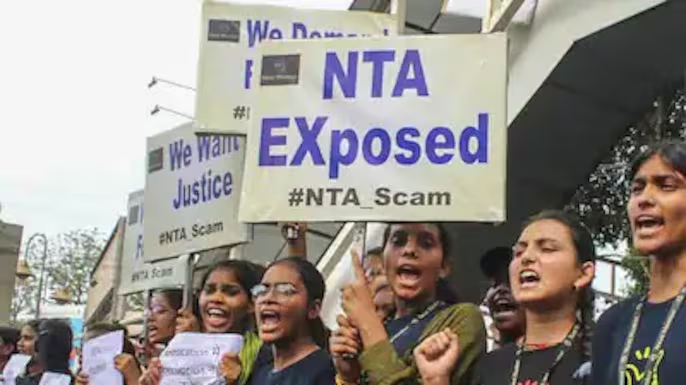
The latest controversy surrounding NEET-UG has once again pushed India’s largest medical entrance examination into the eye of a national storm. Hearing petitions linked to the alleged paper leak, the Supreme Court recently expressed serious concern over the functioning of the National Testing Agency (NTA), observing that it was “sad” that the agency appeared to have learnt little from the chaos and outrage that engulfed the examination process in 2024.
The apex court subsequently issued notices to the Centre, the NTA and other concerned authorities, seeking detailed responses into the allegations and the manner in which the examination was conducted.
At the centre of the controversy are fresh claims that examination-related material may have circulated before the test, reviving fears that organised cheating networks continue to exploit weaknesses within India’s highly centralised examination system.
Investigative agencies are now probing whether intermediaries, coaching-linked operators and even local officials may have played a role in facilitating access to sensitive material before the examination.
The NTA, meanwhile, has maintained that the alleged breach did not originate from its internal digital systems and that examination protocols were followed. But for lakhs of students and parents already shaken by the events of 2024, those assurances are no longer enough.
That is because NEET today is not merely another competitive examination. It is the single gateway to India’s medical education system, determining the future of nearly 22 lakh aspirants competing for a limited number of seats. For many middle-class families, years of preparation, emotional pressure and substantial financial sacrifices are tied to one examination conducted on one day.
In such a climate, even the perception of unfairness can trigger enormous public anger. A confirmed paper leak, meanwhile, risks something even more dangerous – the gradual erosion of trust in the belief that hard work alone can still secure opportunity in India.
The Supreme Court’s latest remarks therefore carry significance far beyond the immediate controversy. They revive uncomfortable memories of the 2024 NEET crisis, when allegations of paper leaks, inflated scores, grace marks and administrative irregularities triggered nationwide protests, political confrontations and judicial intervention.
And perhaps more importantly, they raise a larger question that India has still not fully answered – why does NEET continue to find itself at the centre of controversy, almost year after year?
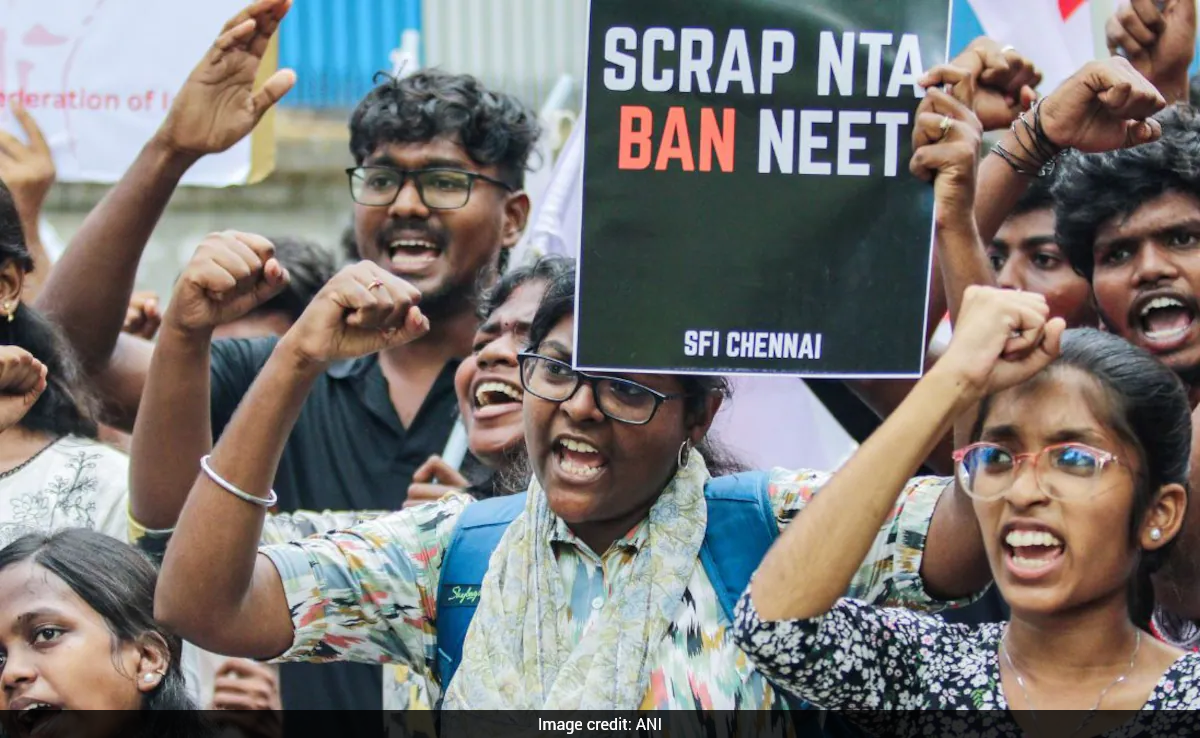
How The 2024 NEET Controversy Shattered Public Trust
The fears surrounding NEET in 2026 are rooted largely in what unfolded a year earlier – a controversy that transformed public perception of India’s medical entrance system and severely damaged the credibility of the National Testing Agency.
The NEET-UG 2024 examination, conducted on May 5 for nearly 24 lakh students, was initially expected to proceed like any other year. But within hours of the examination ending, allegations began surfacing on social media that portions of the paper had allegedly been leaked in advance, particularly in Bihar.
At first, the claims were dismissed by many as routine rumours that often follow highly competitive examinations. The NTA also maintained that the examination process remained secure and denied any large-scale compromise.
But the controversy escalated dramatically after the results were declared on June 4.
Students and coaching institutes quickly began pointing out unusual patterns in the scorecards and merit lists. A record 67 students secured a perfect score of 720 out of 720 — an unprecedented jump compared to previous years. Even more controversial was the appearance of marks such as 718 and 719, scores many students argued were mathematically impossible under NEET’s marking structure.
The situation deteriorated further when the NTA clarified that over 1,500 students had been awarded “grace marks” due to alleged loss of examination time at certain centres. While the agency defended the decision as part of a normalization formula, the explanation instead intensified suspicion and confusion among students already questioning the integrity of the process.
Soon, the issue stopped being merely about unusual marks.
Police investigations in Bihar began uncovering evidence suggesting that organised networks may have facilitated access to the paper before the examination. Arrests followed, including students, intermediaries and individuals allegedly linked to the leak racket. Separate allegations also emerged from states such as Gujarat and Jharkhand, where investigators later probed the possible involvement of examination centre officials and local operators.
As the controversy deepened, the matter eventually reached the Central Bureau of Investigation. According to investigative findings that later emerged in public reports, the alleged leak was traced to a school in Hazaribagh, Jharkhand, where accused individuals allegedly accessed the question papers from a strong room, photographed them and circulated solved answers to selected candidates before the examination began.
The developments triggered nationwide outrage.
Students launched protests across multiple cities, demanding transparency, accountability and in some cases even a complete re-examination. Opposition parties accused the government of mishandling the crisis, while social media platforms became flooded with allegations, score comparisons and claims of unfair advantage.
The Supreme Court eventually intervened and made a significant observation – that the “sanctity” of the examination had indeed been affected. During hearings, the apex court acknowledged that a paper leak had occurred and that certain candidates had benefited from it.
However, despite acknowledging the breach, the court stopped short of ordering a nationwide re-examination. The judges argued that while evidence pointed toward a leak affecting some candidates, there was insufficient proof to establish that the entire examination process across the country had been systematically compromised.
Yet by then, the damage had already been done.
For lakhs of students, the controversy fundamentally altered the way NEET was viewed. What was once projected as a highly standardised national examination increasingly began appearing vulnerable to leaks, manipulation, administrative lapses and organised malpractice.
And perhaps for the first time on such a massive scale, students openly began questioning whether India’s most important entrance examinations were truly capable of guaranteeing a level playing field.
Why NEET Keeps Running Into Controversy
While the 2024 controversy may have become the biggest crisis in NEET’s history, the uncomfortable reality is that the problems surrounding the examination did not emerge overnight. In many ways, the scandal merely exposed deeper structural weaknesses that had been building for years beneath the surface of India’s competitive examination system.
The first and perhaps biggest challenge is scale.
NEET today is among the largest entrance examinations in the world, with over 20 lakh students appearing across thousands of centres spread over multiple states and cities. Conducting an examination of this magnitude requires question papers to be printed, transported, stored and distributed under extreme secrecy within very narrow timelines.
Every stage of that process creates potential vulnerabilities.
Question papers move through multiple physical checkpoints before reaching examination halls. Strong rooms have to be secured. Local administrators, invigilators, transportation officials and centre coordinators all become part of an enormous chain where even a small lapse can compromise the integrity of the system. The larger the examination becomes, the harder it becomes to eliminate every weak link.
The second issue lies in the sheer intensity of competition surrounding medical education in India.
Every year, millions of students compete for a relatively small number of government medical seats. For many aspirants, securing admission into a government medical college can determine not only professional success but also long-term financial stability for entire families. In such a high-pressure environment, the incentives for malpractice rise dramatically.
This pressure has also fuelled the explosive growth of India’s coaching-centre economy.
Cities such as Kota, Sikar, Hyderabad and Delhi have become hubs of an examination industry worth thousands of crores, where students spend years preparing for NEET through highly specialised coaching ecosystems. While the overwhelming majority of students prepare honestly, the enormous commercial stakes surrounding these examinations have also allegedly created opportunities for organised cheating networks, middlemen and paper-solving rackets to flourish.
Over time, these networks themselves have evolved.
Earlier controversies often involved isolated impersonation attempts or localised cheating. But recent investigations suggest increasingly sophisticated operations involving interstate coordination, encrypted communication channels, proxy candidates, manipulated biometric systems and the illegal circulation of question papers before examinations even begin.
The problem, therefore, is no longer merely about individual cheating. It is increasingly about organised criminal ecosystems built around high-stakes examinations.
Another major issue is the over-centralisation of the examination system itself.
The National Testing Agency was created to professionalise and streamline entrance examinations across India under a single specialised body. But critics argue that as the scale of responsibilities expanded rapidly, institutional accountability mechanisms failed to evolve at the same pace.
The NTA today oversees some of India’s most critical examinations, including NEET, JEE and UGC-NET. Yet repeated controversies – ranging from technical failures to allegations of leaks and irregularities – have raised concerns about whether the agency possesses the administrative depth and crisis-management capabilities required to manage examinations impacting millions of students.
Questions have also repeatedly emerged around transparency.
Students and parents often complain that explanations from authorities tend to arrive late, appear inconsistent or fail to adequately address public concerns. During the 2024 controversy, for instance, the confusion surrounding grace marks and unusual scores significantly worsened distrust because communication from authorities appeared reactive rather than reassuring.
And then there is perhaps the most uncomfortable reality of all – India’s examination system remains heavily dependent on a single high-stakes test to decide the future of millions.
When one examination becomes the sole gateway to opportunity, the pressure attached to it becomes almost unbearable. In such a system, even small irregularities acquire enormous consequences, and every controversy quickly transforms into a national crisis.
This is precisely why NEET controversies now provoke such intense reactions. The issue is no longer just about leaked papers or flawed logistics. It is about whether India’s examination infrastructure is capable of protecting fairness, credibility and public trust in an environment where the stakes have become extraordinarily high.
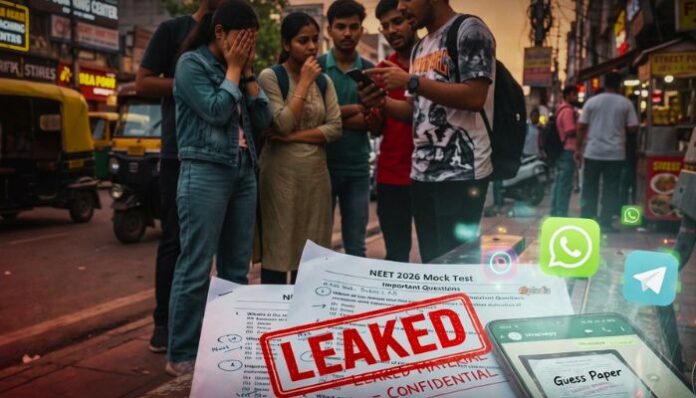
From 2015 To 2026: A Decade Of Leaks, Solver Gangs And Court Battles
The latest controversy surrounding NEET-UG has also revived an uncomfortable truth – India’s medical entrance system has been repeatedly shadowed by allegations of leaks, impersonation rackets and organised malpractice for more than a decade.
Long before the National Testing Agency came under scrutiny, the system itself had already shown signs of vulnerability.
The first major rupture came in 2015, when the All India Pre-Medical Test (AIPMT), the predecessor to NEET, was cancelled entirely by the Supreme Court after investigators uncovered a large-scale cheating racket involving leaked answer keys and electronic devices. The court’s decision to scrap the examination altogether was unprecedented and exposed how vulnerable high-stakes entrance tests had become to organised manipulation.
The following year, fresh allegations surfaced during NEET-II in 2016, with petitions claiming that portions of the paper had again circulated before the examination. Authorities denied any confirmed leak, arguing that seized papers did not match the original examination. Unlike in 2015, however, the examination was allowed to stand, even as questions around security protocols persisted.
Over the next few years, the nature of malpractice itself began evolving.
By 2020 and 2021, several states witnessed the emergence of what investigators described as “solver gangs” – organised networks allegedly arranging proxy candidates, manipulating biometric systems and helping students cheat through sophisticated methods. Cases surfaced across Tamil Nadu, Bihar, Uttar Pradesh and Rajasthan, exposing weaknesses not only in paper security but also in the physical conduct of examinations at the ground level.
These incidents revealed a disturbing shift.
The problem was no longer limited to isolated leaks or local cheating attempts. Investigators increasingly began uncovering organised interstate networks capable of exploiting loopholes across multiple layers of the examination process.
Then came 2024 – the year that transformed public anxiety into a full-blown national crisis.
The NEET-UG examination conducted on May 5, 2024 soon spiralled into controversy after Bihar Police uncovered a suspected paper leak racket on the very day of the examination. Investigators later alleged that candidates had paid enormous sums of money for advance access to the paper.
As the probe expanded, the Central Bureau of Investigation traced portions of the alleged operation to Hazaribagh in Jharkhand, where accused individuals allegedly gained access to question papers from a school strong room before the examination began. Reports suggested that solved answers were then circulated to selected candidates across multiple cities.
The controversy intensified further after results revealed unusual score patterns, record numbers of toppers and the controversial allocation of grace marks. Nationwide protests erupted, opposition parties launched attacks on the government and the matter eventually reached the Supreme Court.
Although the apex court later stopped short of ordering a nationwide re-examination, it acknowledged that the leak had indeed occurred and that some candidates had benefited from it.
In the aftermath of the controversy, authorities initiated action against hundreds of students and aspirants allegedly linked to unfair practices, including impersonation and leaked-paper networks. But critics argued that the response largely focused on punishing beneficiaries after the damage had already been done rather than fixing the deeper institutional weaknesses enabling such incidents to recur.
Now, in 2026, India once again finds itself confronting remarkably familiar questions.
Fresh allegations, fresh investigations and fresh judicial scrutiny have once again placed NEET under the microscope. And with every new controversy, the pattern becomes harder to dismiss as coincidence.
Over the past decade, India’s medical entrance system appears to have evolved from facing isolated incidents of malpractice to confronting a recurring institutional crisis involving organised cheating networks, administrative lapses and repeated judicial intervention.
Which is precisely why the debate today is no longer merely about one paper leak or one examination cycle. It is about whether India’s examination infrastructure is fundamentally equipped to protect fairness in a system upon which millions of futures depend.
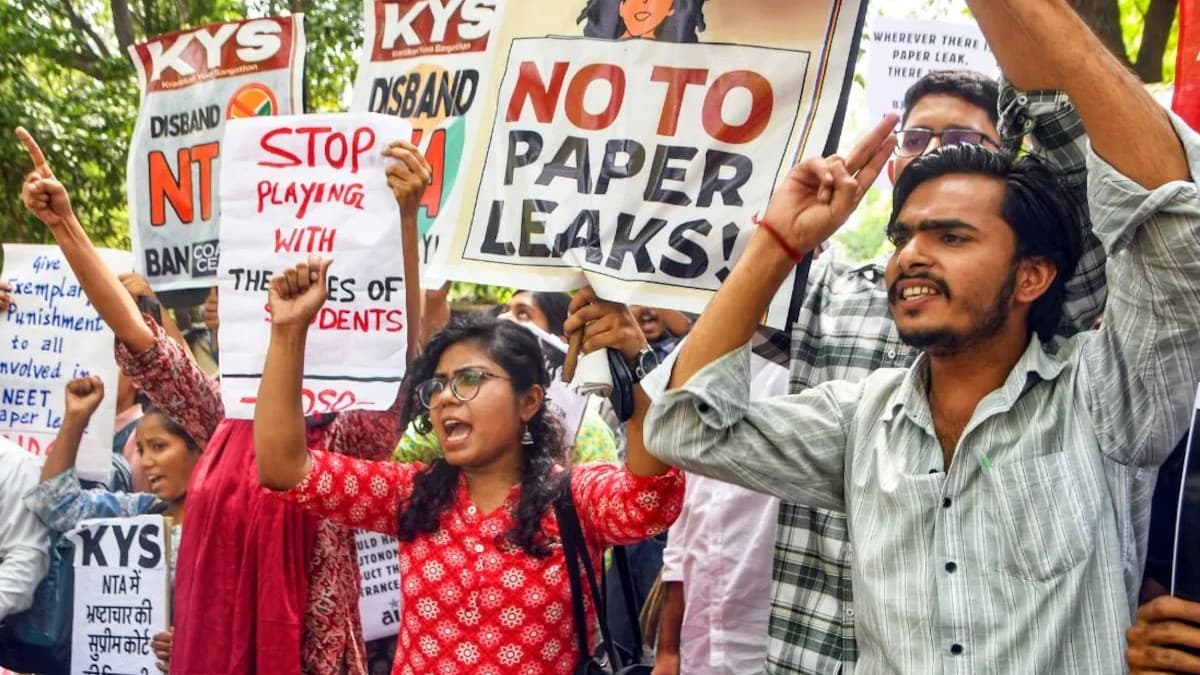
How The NTA’s Credibility Crisis Deepened
The National Testing Agency was originally created with a fairly ambitious objective – to professionalise and centralise India’s entrance examination system under a specialised body capable of conducting large-scale tests with greater efficiency, transparency and standardisation.
For a while, that promise appeared convincing.
The agency gradually took charge of some of India’s most important examinations, including NEET, JEE and UGC-NET, effectively becoming one of the most powerful institutions in the country’s education ecosystem. The idea was simple: a centralised agency equipped with modern technology and uniform procedures would reduce irregularities and create a more reliable examination structure.
But the events of recent years have significantly altered public perception.
The NEET controversy of 2024 became a turning point largely because many students and parents felt the NTA appeared slow, defensive and at times inconsistent in responding to growing concerns. As allegations surrounding paper leaks, unusual scores and grace marks intensified, communication from authorities often seemed reactive rather than transparent.
This, in many ways, deepened the crisis further.
For students already emotionally exhausted from one of the country’s toughest examinations, the absence of immediate clarity created an information vacuum that was quickly filled by rumours, social media speculation and political outrage. Every delayed clarification only amplified public distrust.
Questions also began emerging about whether the NTA had expanded too rapidly without developing equally strong accountability systems.
Managing examinations involving millions of candidates across thousands of centres requires not only technological capability but also institutional resilience, crisis management and robust oversight mechanisms at every level. Critics argue that repeated controversies have exposed weaknesses in coordination between central authorities, local administrators and examination centres on the ground.
The problem is not merely operational, it is reputational.
Competitive examinations function largely on trust. Students may accept difficult papers, intense competition and even failure, but they must believe the process itself is fair. Once that belief weakens, the credibility of the institution conducting the examination also begins eroding rapidly.
And that erosion appears to have accelerated after 2024.
The controversy surrounding grace marks, conflicting explanations and subsequent investigative findings left many students with the impression that authorities were constantly responding to crises rather than staying ahead of them. Even though the Supreme Court stopped short of declaring the entire examination compromised, the perception of institutional instability had already taken root.
This is precisely why the latest 2026 controversy has triggered such sharp reactions from both the judiciary and the public.
For many observers, the issue is no longer whether one specific paper was leaked or whether one isolated breach occurred. The deeper concern is whether the institution entrusted with safeguarding the future of millions of students has been able to restore confidence after the damage caused in 2024.
And so far, the answer appears increasingly uncertain.
That uncertainty now extends beyond NEET itself. Repeated controversies involving competitive examinations have started fuelling a broader national debate about the reliability of India’s testing infrastructure, the pressure created by hyper-competitive entrance systems and the ability of public institutions to maintain credibility under enormous scale and scrutiny.
Because ultimately, an examination system survives not merely through surveillance cameras, encrypted papers or digital monitoring but through public trust.
And once that trust begins to crack, rebuilding it becomes far harder than conducting the examination itself.
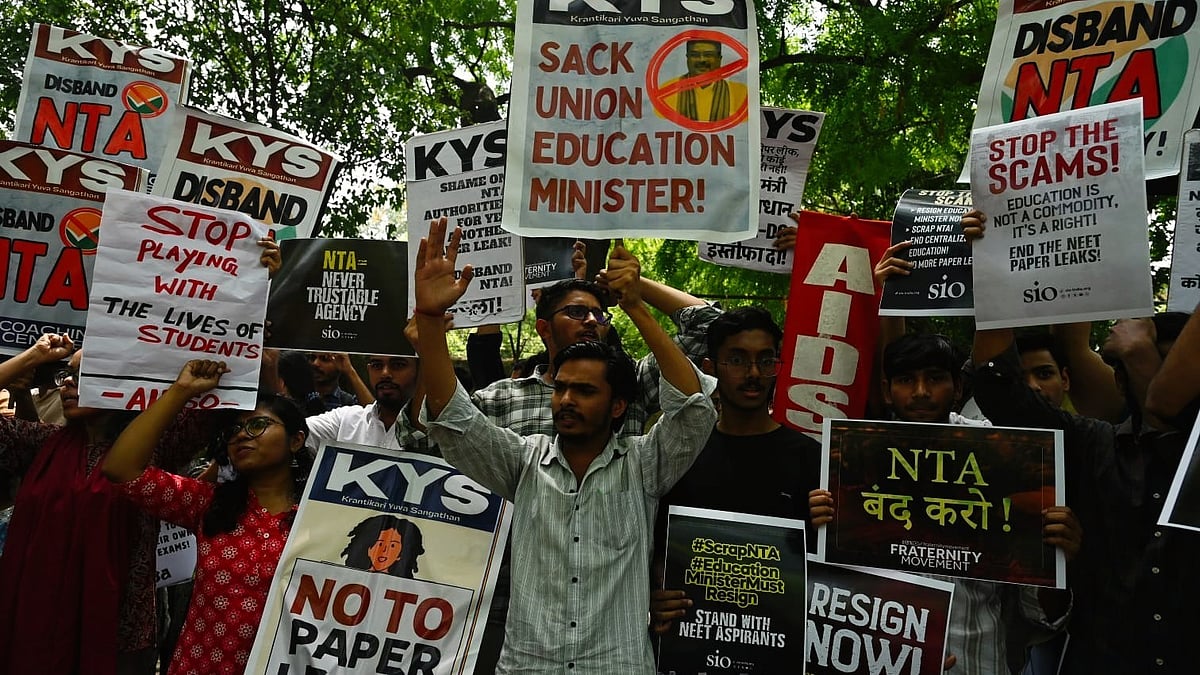
The Bigger Danger: When Students Stop Believing In Meritocracy
Perhaps the greatest danger emerging from the repeated NEET controversies is not merely the possibility of leaked papers or compromised examinations. It is the gradual erosion of faith in the very idea of meritocracy that India’s competitive examination system has long claimed to represent.
For decades, examinations like NEET were projected as the ultimate equaliser – a system where background, wealth and influence supposedly mattered less than discipline, preparation and hard work. For millions of middle-class and lower middle-class families, these examinations became symbols of aspiration and social mobility.
That belief is what makes every controversy so emotionally explosive.
Behind every NEET candidate lies years of sacrifice – students studying for 12 to 14 hours a day, parents spending savings on coaching classes, families relocating to education hubs like Kota and countless young aspirants placing enormous emotional pressure upon themselves in pursuit of one seat in a government medical college.
In such an environment, the consequences of even a small breach become devastating.
When students begin hearing repeated allegations of paper leaks, proxy candidates, solver gangs and manipulated systems, the fear is no longer just about unfair advantage. The deeper fear is that the system itself may no longer reward honesty consistently.
And that changes the psychological relationship students have with examinations.
The pressure surrounding these examinations has already contributed to rising mental health concerns among students across India. In coaching hubs, stories of anxiety, burnout and depression have become disturbingly common. Every fresh controversy only intensifies that emotional burden because students are no longer battling competition alone – they are also battling distrust.
The Last Bit,
The recurring controversies surrounding NEET are no longer isolated disruptions that can be dismissed as occasional administrative failures. Over the past decade, what began as sporadic allegations of leaks and impersonation has gradually evolved into a much larger institutional crisis – one involving organised cheating networks, repeated judicial intervention, public outrage and a growing erosion of trust in the country’s examination infrastructure.
The Supreme Court’s latest remarks against the National Testing Agency have once again exposed how fragile that trust has become. Which is precisely why repeated controversies carry consequences far beyond education policy.
Every allegation of a leak, every inconsistency in results and every investigation into malpractice chips away at the belief that the system remains fair and transparent. And once students begin losing faith in the credibility of competitive examinations, rebuilding that confidence becomes extraordinarily difficult.