The Double Life of Satish Sanpal: Wanted Fugitive in India, “Billionaire” in Dubai
How a Jabalpur betting kingpin allegedly laundered over ₹1,000 crore through shell companies, fled to Dubai, and engineered a glamorous new identity — while Indian courts list him as an absconder.

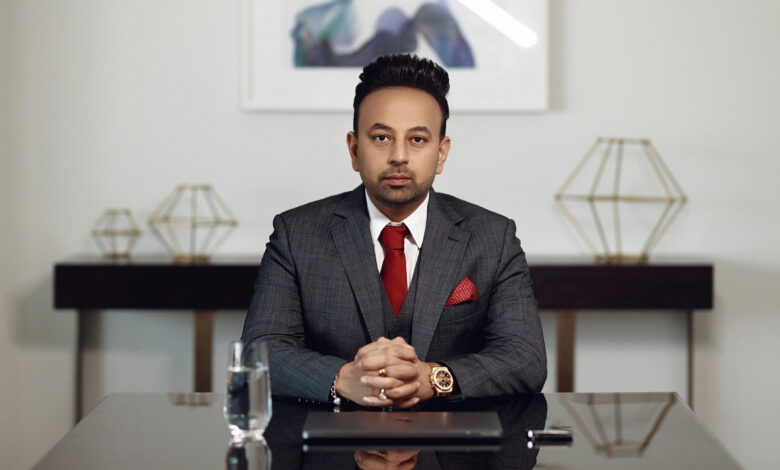
In the bylanes of Jabalpur’s Wright Town neighbourhood, a nondescript office on the fourth floor of RK Tower once hummed with quiet, purposeful activity every evening. Between 5 PM and 11 PM, cash would arrive — carried by runners, delivered by local bookmakers, aggregated from across the city’s low-income localities. On a busy match day during the IPL, the intake could touch ₹2 crore. On a single unremarkable evening in May 2022, police cracked open an almirah in that very office and found ₹21.55 lakh in cash — what investigators described as just one day’s collection. That almirah, and the man whose directives filled it, sits at the centre of one of the largest organised betting and money laundering cases ever uncovered in central India. Satish Sanpal — 40 years old, originally of Adarsh Nagar, Jabalpur — stands accused of orchestrating a transnational criminal enterprise that allegedly moved over ₹1,003 crore through a web of shell companies, hawala channels, and compromised bank accounts, funnelling proceeds to Dubai where he now resides in considerable luxury. Indian courts list him simply, and damningly, as “Farar” — absconded. Yet type his name into a search engine today, and a very different portrait emerges: a polished LinkedIn profile, lavish event photographs, sponsored newspaper features describing a visionary entrepreneur, and press releases heralding ANAX Holding — his Dubai-based conglomerate — as a $3 billion real estate and hospitality empire. The contrast between these two realities is not accidental. It is, investigators and journalists say, the product of a calculated and well-funded image rehabilitation campaign running in parallel with a criminal manhunt.
Origins: From Small-Town Bookie to Digital Betting Baron
Satish Sanpal‘s involvement in illegal gambling traces back to the early 2010s in Jabalpur, Madhya Pradesh. He began modestly — running small-scale betting operations through physical runners in low-income neighbourhoods, taking wagers on cricket matches the old-fashioned way. But Sanpal had ambitions that outgrew the street-corner bookie trade. By 2016, he had pivoted to digital platforms. Applications such as Open Web Exchange, Set Sports, Mumbai Exchange, and Set Casino allowed him to accept real-time wagers on IPL matches, international cricket fixtures, and other sporting events from users across India. The shift to digital was transformative: suddenly, geographical limitations dissolved. By 2020, police sources say, Sanpal’s operation had scaled to cover 22 states, with a centralised command structure managed remotely — first from Jabalpur, then increasingly from Dubai, where Sanpal relocated around 2020. Multiple FIRs had been lodged against him as early as 2018 and 2019 at Gorakhpur, Madan Mahal, and Omti police stations in Jabalpur, citing criminal intimidation, cheating, and violations of the Madhya Pradesh Gambling Act. But no decisive intervention occurred. The operation continued to grow. Daily collections in Jabalpur alone ranged between ₹50 lakh and ₹2 crore during peak match periods — cash aggregated at designated drop points before being routed into corporate bank accounts.

The Architecture of Deception: 13 Shell Companies
The genius — and the criminality — of Sanpal’s operation lay not in the betting itself, but in what happened to the money afterward. To move and legitimise staggering sums, Sanpal and his close associate Vivek Pandey are alleged to have constructed an elaborate money laundering architecture anchored by 13 shell companies. These entities — typically registered as One Person Companies (OPCs) or small private limited firms under the Ministry of Corporate Affairs — had no offices, no employees, no products, and no legitimate commercial activity whatsoever. They existed on paper alone, as vehicles for cycling cash. Their registered addresses often corresponded to fictitious locations or slum dwellings. And crucially, the individuals listed as their directors and owners had, in virtually every documented case, no idea they were associated with any company at all. The mechanics were elegantly simple and devastatingly exploitative. Sanpal and Pandey would identify economically vulnerable individuals — daily wage workers, clothes pressers, auto-rickshaw drivers, domestic workers — and approach them with an offer of a small loan or financial help. In exchange, they would ask for a photocopy of the person’s Aadhaar card, PAN card, and a signature on documents the target was told were merely loan paperwork. In reality, those signatures were being affixed to company incorporation forms and bank account opening documents. The resulting accounts, opened at major banks including Axis Bank, Yes Bank, ICICI Bank, HDFC Bank, Bank of India, and SBI, would then receive enormous volumes of cash deposited from betting collections — amounts utterly inconsistent with the nominal account holder’s identity or income. Transaction analysis covering the period from account opening through June 10, 2022, revealed aggregate inflows of ₹1,003.24 crore and outflows of ₹1,001.12 crore across these accounts, with only ₹2.12 crore frozen at the time of the post-raid account seizure. The speed of the cycling was remarkable: funds were typically transferred out within hours. Top Shell Account Transactions (through June 2022):
- Axis Bank — A/C 920020060278055: ₹182 crore deposited / ₹181.5 crore withdrawn
- Yes Bank — A/C 044484100000302: ₹148 crore deposited / ₹147.8 crore withdrawn
- HDFC Bank — A/C 59211022446688: ₹121 crore deposited / ₹120.7 crore withdrawn
- ICICI Bank — A/C 019805008485: ₹98 crore deposited / ₹97.9 crore withdrawn
- Total (all 13 accounts): ₹1,003.24 crore deposited / ₹1,001.12 crore withdrawn
The banking sector’s failure to detect these patterns has drawn sharp criticism from investigators. Current account openings for these companies proceeded with minimal due diligence. Physical verification of registered offices was not mandated, and transaction monitoring systems failed to flag the unmistakable signature of the scheme: repetitive high-volume cash deposits followed by near-immediate bulk transfers, month after month, through accounts registered to individuals with no conceivable legitimate business generating such volumes.

A Human Face on the Numbers: The Story of Pramod Rajak
Behind the billions of rupees in transaction data, there are human lives upended. No story illustrates the human cost of Sanpal‘s alleged operation more vividly than that of Pramod Rajak. In December 2021, on the eve of his wedding, Pramod Rajak — a 31-year-old clothes presser from Narsingh Ward in Jabalpur’s Madanmahal neighbourhood, earning between ₹5,000 and ₹10,000 a month — found himself in urgent need of ₹30,000. His brother Deepak, who worked as an employee at Sanpal’s RK Tower office, facilitated the loan through the network, connecting Pramod with Vivek Pandey and Amit Sharma. The money came with conditions that Pramod did not fully understand. He was asked to provide his Aadhaar card, his PAN card, a photograph, and his signature on several documents. He was told, reassuringly, that the papers would stay in the office and that he should not worry. He signed. He received his ₹30,000. He did not know that his identity had just been used to incorporate Washit Services OPC Private Limited, or that a bank account in that company’s name would go on to process ₹48 crore in transactions — money he never saw, never touched, and never knew existed. When police later traced the Axis Bank account linked to Washit Services, they arrived at Pramod Rajak’s doorstep. He filed a formal complaint at Lordganj Police Station against Satish Sanpal, Vivek Pandey, Amit Sharma, and Manoj Sharma for cheating. Today, he faces scrutiny from income tax authorities for unexplained financial turnover linked to an account in his name. His complaint — “he cheated me” — encapsulates both the personal betrayal and the systemic exploitation that defined Sanpal’s alleged recruitment strategy. Rajak’s case was not unique. Similar patterns emerged across multiple shell companies, each with a different face: an autorickshaw driver here, a domestic worker there, all approached with promises of small financial assistance, all unwittingly enrolled as directors of entities they never controlled.

The Raid That Broke the Network Open
On the morning of May 19, 2022, Jabalpur’s Crime Branch and officers from Lordganj Police Station acted on information provided by bettors arrested during an earlier operation in Madanmahal. Their destination: the fourth floor of RK Tower in Wright Town — the operational hub registered under the front name Digital India Express. What they found there exceeded expectations. Manoj Sanpal, Satish’s uncle and on-site office manager, was present and taken into custody. Employee Deepak Rajak was also arrested. Vivek Pandey — Sanpal’s right-hand man and the alleged architect of the shell company scheme — was conspicuously absent, having already fled to Dubai. Satish Sanpal himself was nowhere to be found. Items Seized During the RK Tower Raid, May 19, 2022:
- ₹21.55 lakh in cash (one day’s betting proceeds)
- 27 corporate seals corresponding to the shell entities
- 34 cheque books
- 7 handwritten betting ledgers documenting wagers, match outcomes, and settlements
- 3 loan record books detailing advances to bettors and associates
- 3 mobile devices (forwarded for forensic examination)
- 12 property document files
The seized seals — 27 in total, corresponding to far more entities than the 13 directly tied to betting — suggested Sanpal had built contingency layers into his architecture, maintaining reserve corporate identities for resilience against exactly this kind of law enforcement intervention. The betting ledgers documented individual wagers, match outcomes, and settlement amounts in meticulous detail. The loan registers revealed a network of advances to bettors and associates. The almirah at the centre of the office — its key reportedly held by the absent Pandey — contained ₹21.55 lakh in cash across both a digital locker and a regular compartment. Officers described it as a single day’s intake, a figure that, annualised even conservatively, confirms the extraordinary scale of daily operations.
The Network: Key Associates
Sanpal did not operate alone. His alleged criminal enterprise functioned through a carefully structured network of associates, each assigned specific roles within the broader operation. Vivek Pandey served as Sanpal’s most trusted lieutenant. Pandey is alleged to have handled the operational mechanics of the shell company scheme: meeting nominees personally, collecting their documents, shepherding the incorporation paperwork, and managing the bank accounts. He fled to Dubai alongside or ahead of Sanpal following the FIRs and has been absconding since June 10, 2022. His anticipatory bail application was rejected by the High Court on August 2, 2024 — judges were notably wary of the close inner circle around Sanpal. Manoj Sanpal, Satish’s uncle, served as the on-site office manager at RK Tower. He was arrested during the May 2022 raid and subsequently obtained bail in 2023, and was acquitted in January 2024 — a development police are appealing in higher courts. Amit Sharma handled document logistics and loan distributions to nominees. He was also acquitted in January 2024, with police filing appeals against the verdict. Deepak Rajak, the employee whose familial connection to Pramod was leveraged to recruit the clothes presser, facilitated introductions and document handovers from inside the RK Tower office.
The Legal Quagmire: Nine Cases, One Absconder
Nine criminal cases are currently registered against Satish Sanpal across six Jabalpur police stations — Gorakhpur, Garha, Madanmahal, Lordganj, Omti, and others. Charges span violations under the IT Act, the Madhya Pradesh Gambling Act, and the Indian Penal Code’s provisions on criminal conspiracy, cheating, forgery, and assault. Active Cases: Case 3482/2023 (CNR: MP20010160442023) — Omti Police Station Charges: Criminal conspiracy (IPC 120-B) and violations of the Public Gambling Act, based on FIR 271/2022. Co-accused include Ajeet Goga, Akash Goga, and Satish Sanpal. Status: Absconding. Case 5603/2024 (CNR: MP20010295312024) — Madan Mahal Police Station Charges: Cheating (IPC 420), abetment, conspiracy, forgery (IPC 467, 468, 471), based on FIR 170/2022. Nine accused including Amit Sharma, Vivek Pandey, and Satish Sanpal. Next hearing: October 2025. Status: Absconding. Case 1821/2022 (CNR: MP20010111212022) Charges: Criminal intimidation (IPC 506), public nuisance (IPC 294), based on FIR 195/2022. Charge sheet filed under Section 173(8) CrPC. A Look Out Circular has been issued by SP Siddharth Bahuguna to prevent Sanpal from re-entering India. The Enforcement Directorate was formally informed of the case in 2023 and presented with the ₹1,003 crore transaction trail — yet, as of the time of investigation, no case under the Prevention of Money Laundering Act has been formally initiated. A reward of just ₹5,000 has been announced for information leading to Sanpal’s arrest — widely regarded as wholly disproportionate to the alleged offence.
A Timeline of a Dual Existence
Early 2010s: Sanpal begins small-scale illegal betting operations through physical runners in Jabalpur’s low-income localities. 2016–2017: Transition to digital betting platforms — Open Web, Set Sports, Mumbai Exchange, Set Casino. Indian companies Lakshy Cinemotion and Laakshya Hoteliers incorporated in Jabalpur. 2018: ANAX Holding founded in Dubai. Early FIRs filed at Gorakhpur and Madan Mahal police stations — no decisive action follows. 2020: Operation scales nationally across 22 states. Sanpal relocates to Dubai, managing the Jabalpur network remotely. Shell company formations accelerate. December 2021: Pramod Rajak, a clothes presser, is tricked into providing identity documents for a ₹30,000 loan — unknowingly incorporated as director of Washit Services OPC Pvt. Ltd. May 19, 2022: Major police raid at RK Tower, Jabalpur. ₹21.55 lakh cash, 27 corporate seals, 34 cheque books, and betting ledgers seized. Manoj Sanpal and Deepak Rajak arrested. Satish Sanpal and Vivek Pandey already in Dubai. June 10, 2022: Shell company accounts frozen. Aggregate transactions confirmed at ₹1,003.24 crore in / ₹1,001.12 crore out. Look Out Circular issued. Sanpal officially classified as absconding. August 2022: 4.2 acres of government land encroached upon by Sanpal in Tilwara, Jabalpur, demolished by municipal authorities. 2023: ED formally informed of the ₹1,003 crore transaction trail. No PMLA case initiated. Manoj Sanpal and Amit Sharma obtain bail citing insufficient evidence. January 2024: Manoj Sanpal and Amit Sharma acquitted. Police announce intention to appeal in higher courts. August 2, 2024: High Court rejects Vivek Pandey’s anticipatory bail application, citing flight risk and ongoing investigations. 2025: Lavish parties, sponsored PR campaigns, and advertorials continue promoting Sanpal as a Dubai billionaire. Indian court records still list him as “Farar.” No extradition proceedings publicly announced.
From ₹80,000 to a Burj Khalifa Residence: The Dubai Transformation
Police sources in Jabalpur note, with a mixture of grim irony and professional frustration, that Satish Sanpal reportedly left his home city with approximately ₹80,000. Today, he maintains a residence in Dubai’s Burj Khalifa and is reported to own five Rolls-Royce motor cars. His flagship overseas entity, ANAX Holding, claims a valuation of $3 billion, with a portfolio spanning real estate development and hospitality, including the VI Club Hotel. The alignment between the timeline of Sanpal’s alleged shell company operations and his dramatic accumulation of Dubai-based wealth is not coincidental, investigators argue. Bank flows traced in the Jabalpur investigation show patterns consistent with rupee-to-dirham conversions facilitated by hawala operators — the informal, unregulated money transfer system that leaves no traceable banking trail. Funds deposited at RK Tower would be aggregated, electronically transferred to the shell accounts, withdrawn via cheque or transfer to hawala operators, and eventually channelled into UAE-based accounts and assets. ANAX Holding lacks Indian registration, and online employee reviews of associated Jabalpur premises characterise them as gambling hubs rather than legitimate business offices. The firm’s claimed $3 billion valuation has not been independently verified by any Indian financial regulator; neither SEBI nor the RBI has reported any public regulatory action against ANAX entities.
The Image Machine: Sponsored Media and Manufactured Legitimacy
Perhaps the most troubling dimension of the Satish Sanpal case — beyond the alleged financial crimes themselves — is the sophistication and apparent success of his image rehabilitation campaign. While Indian courts stamp “Farar” next to his name in official eCourts records, a parallel media ecosystem has been systematically constructed to present an entirely different person to the world. Sponsored advertorials and syndicated content in Indian media outlets describe Sanpal as a visionary entrepreneur, a self-made success story, a philanthropist and hospitality innovator. Glossy event photographs from Dubai galas circulate on social media. A Republic World article cited in investigative reporting went so far as to claim that “no police report, court case, or legal document” connects Sanpal to any wrongdoing — a statement that directly and demonstrably contradicts the publicly available FIRs and eCourts records. He continues to post photos and videos of his extravagant lifestyle from abroad, even as Indian authorities have been unable to execute his arrest. This visible impunity has led to widespread public criticism and perceptions of systemic failure. This manufactured legitimacy serves a dual purpose. Commercially, it helps insulate his Dubai business interests from reputational damage. Legally, it creates confusion in the public record, making it harder for potential whistleblowers, business partners, or regulatory authorities to immediately identify him as a wanted criminal. The jurisdictional separation between his alleged Indian crimes and his UAE-based business operations provides the structural foundation; the PR campaign provides the narrative cover.
The Enforcement Gap: Why He Remains Free
The question that shadows every aspect of this case is the most obvious one: why, more than three years after the raid that exposed his operation, is Satish Sanpal still free — still posting luxury lifestyle content from Dubai, still running what appears to be a thriving business empire? The answer involves a convergence of jurisdictional, institutional, and procedural obstacles. Extradition from the United Arab Emirates, though technically possible under existing bilateral treaty frameworks, is a slow and diplomatically complex process requiring substantial documentation and inter-agency coordination. India’s Enforcement Directorate, which possesses the tools to pursue Sanpal’s overseas assets under the Prevention of Money Laundering Act, has yet to formally open a PMLA case despite being informed of the ₹1,003 crore transaction trail in 2023 — a delay that investigators and legal observers have struggled to explain. Domestically, evidentiary gaps have allowed associates to secure acquittals; witness reluctance — unsurprising given the coercive tactics documented in the case — has weakened some charges; and the hawala system that moved the bulk of the funds leaves no conventional banking trail for prosecutors to follow. Legal experts suggest the path forward requires a multi-track approach: accelerated extradition proceedings under the India-UAE treaty; formal PMLA case initiation by the ED targeting ANAX Holding and associated assets; international asset freezes through mutual legal assistance channels; and mandatory reforms to corporate formation and bank account opening procedures that allowed 13 shell companies to process over ₹1,000 crore with no meaningful scrutiny.
The Broader Stakes: A Test of Accountability
The Satish Sanpal case has come to represent something larger than itself in India’s ongoing struggle with organised financial crime. It is, at its core, a test of whether the country’s institutions are capable of pursuing accountability when the accused has the resources, the international mobility, and the media access to construct an alternative reality. For every ₹1,000 crore laundered, there are dozens of Pramod Rajaks — ordinary people whose identities, signatures, and financial futures were quietly annexed in service of an empire they never knew existed. For every Rolls-Royce photographed outside a Dubai hotel, there are communities in Jabalpur where betting addiction destroyed families, where informal loan defaults cost people their homes, where the promise of quick winnings on a cricket match ended in ruin. The frozen ₹2.12 crore, the 27 seized company seals, the seven handwritten betting ledgers, the charge sheets filed under Section 173(8) CrPC — these are the foundations of a prosecution that, if pursued with the full weight of Indian and international law, could dismantle not just one network but establish precedents that deter the next. As of 2025, Satish Sanpal — fugitive, absconder, “Farar” — continues to live openly in Dubai. He has not been arrested. He has not been extradited. He posts photographs from luxury venues. His company’s press releases speak of billion-dollar portfolios and visionary leadership. And in Jabalpur’s courts, the cases against him accumulate, hearing by hearing, waiting for the day the man at their centre chooses — or is compelled — to appear. — This investigation draws from official court records (eCourts portal, Jabalpur), police charge sheets and FIR documentation, Income Tax Department transaction analyses, bank account records presented in judicial proceedings, statements by affected individuals, and reporting by journalists including Unmesh Gujarathi (Sprouts News). All figures cited are sourced from documented police and judicial filings. ANAX Holding’s claimed $3 billion valuation is self-reported and has not been independently verified by Indian financial regulators.