Is Satish Sanpal The New Hari Shankar Tibrewal Of India?
How India's Betting Fugitives Are Writing the Same Playbook — Small-Town Origins, Dubai Towers, and a Justice System Left Chasing Shadows

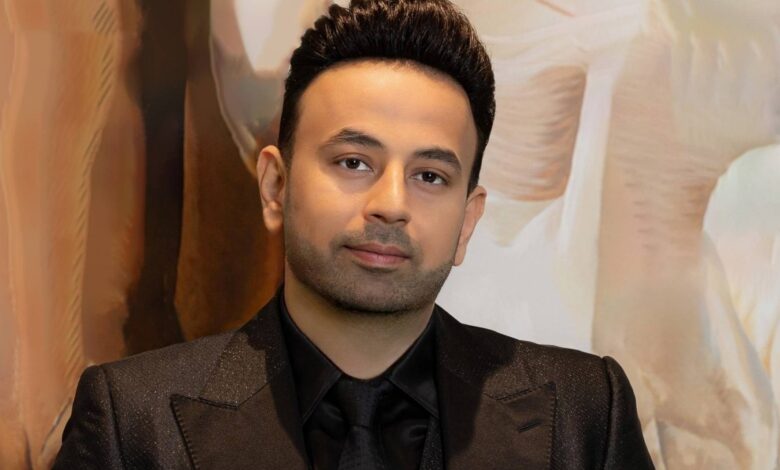
India has a problem it cannot seem to solve. Its most audacious financial criminals do not hide. They post reels. They drive pink Rolls-Royces. They host birthday parties for toddlers at Dubai’s Atlantis The Royal, with Bollywood stars in attendance. They give interviews to business magazines calling themselves self-made billionaires. And yet, despite active FIRs, Look-Out Circulars, court warrants, and enforcement agencies burning through resources, these men remain — in the clinical language of Indian court records — simply “farar.” Absconding.
Two names now sit at the center of this crisis, separated by the scale of their alleged crimes but united by almost everything else: their origins in modest Indian towns, their pivot to online betting empires, their flight to Dubai, their brazen self-promotion even under legal clouds, and their masterful use of corporate shells, hawala networks, and jurisdictional distance to mock the Indian legal system.
One is Hari Shankar Tibrewal — the Kolkata-born alleged hawala kingpin named as Accused No. 24 in the Mahadev Online Book betting scam, described by the Enforcement Directorate itself as a “huge hawala operator,” with assets worth over ₹1,296 crore attached or frozen, and now a citizen not of India but of the Pacific island nation of Vanuatu.
The other is Satish Sanpal — the Jabalpur-born man who dropped out of school after Class 8, allegedly built a ₹1,000-crore online cricket betting and hawala empire from Madhya Pradesh, fled to Dubai, and now presents himself as the billionaire chairman of ANAX Holding, recently featured on Netflix’s Desi Bling, even as Indian courts list him as “farar” in at least nine criminal cases.
The question this article asks is not merely rhetorical: Is Satish Sanpal the new Hari Shankar Tibrewal of India? The answer, drawn from court records, enforcement agency filings, and investigative reports, suggests something more disturbing — that these are not two isolated cases, but two chapters of the same unfinished story about how India’s legal architecture repeatedly fails to catch the men it is most urgently looking for.
Part One: Hari Shankar Tibrewal — The Hawala Architect of India’s Biggest Betting Scam
From Kolkata Markets to Dubai Shadows
Hari Shankar Tibrewal was born into a middle-class Marwari family in Kolkata, West Bengal — a city with historic and deep ties to India’s informal economy and hawala networks, where trust-based value transfer systems have operated alongside formal banking for generations. In the early 2000s, Tibrewal cut his teeth in informal finance, leveraging family connections in the gems trading business to build a cross-border remittance network that would become, over the next two decades, one of the most consequential financial operations in the history of Indian illegal gambling.
By the early 2010s, he had relocated to Dubai, operating under the informal alias “Hari Bhai” in the city’s sprawling Indian expat underworld. His entry into the online betting ecosystem came around 2020, when the promoters of the Mahadev Online Book — Sourabh Chandrakar and Ravi Uppal, two Bhilai natives who had gone from selling juice and running a tyre shop to running a ₹6,000-crore illegal gambling syndicate — sought a conduit sophisticated enough to repatriate UAE-held funds back to India without triggering Reserve Bank of India alerts.
Tibrewal was not merely a facilitator. He owned and operated SkyExchange, a sister betting platform to the Mahadev app that generated an estimated ₹50 crore per month. Through Dubai-based entities — Zenith Multi Trading DMCC, Ecotek General Trading, and the Mauritius-registered Tano Investment Opportunities Fund — he engineered what the ED describes as a “proceeds placement” strategy of remarkable sophistication: illegal Indian betting proceeds were routed offshore, then laundered back into India’s capital markets through the Foreign Portfolio Investment (FPI) route, disguising dirty money as legitimate foreign investment.
The Enforcement Directorate Closes In
On March 1, 2024, the Enforcement Directorate issued an official press release formally identifying Tibrewal as a “huge hawala operator” who had partnered with the Mahadev promoters. In the ED’s third chargesheet, he is listed as Accused No. 24, credited with laundering ₹1,500 crore through stock market manipulation — using his capital to create artificial price fluctuations in listed companies, then withdrawing once prices reached a desired level, leaving retail investors to absorb the fall.
ED raids in February and March 2024 froze securities worth ₹580.78 crore held by entities beneficially owned by Tibrewal. His associate Nitin Tibrewal was arrested in Kolkata. By December 2024, a fresh provisional attachment order under PMLA attached assets worth ₹387.99 crore more — including investments made by Tano Investment Opportunities Fund through FPI and FDI routes, and properties across Chhattisgarh, Mumbai, and Madhya Pradesh. Total attachments, freezes, and seizures in the Mahadev case stand at over ₹2,295 crore — the largest in any Indian online betting investigation.
The Vanuatu Escape
Rather than face Indian courts, Tibrewal made a calculation that has become familiar in India’s fugitive economy: he acquired foreign citizenship. In 2025, he renounced his Indian passport and obtained citizenship of Vanuatu — a small Pacific island nation whose citizenship-by-investment program requires approximately US$130,000, no residency, and offers visa-free access to over 130 countries. Crucially, Vanuatu has no extradition treaty with India. With a Vanuatu passport, Tibrewal becomes far more difficult to touch through bilateral legal channels.
As of early 2026, he is believed to be residing in Dubai, operating through safe houses, conducting business through shell entities, and even — in a brazenness that has infuriated investigators — offering financial commentary to investment media as a thought leader. The Supreme Court of India, in November 2025, criticized the failure to apprehend the “kingpins playing around with courts.” Yet Tibrewal remains free.
Part Two: Satish Sanpal — The Betting King Who Built a Brand Out of a Warrant
The Jabalpur Origins
Satish Sanpal’s story begins not in Kolkata’s trading lanes but in the quieter streets of Jabalpur, Madhya Pradesh. He dropped out of school after Class 8 — a fact he now deploys strategically in his personal branding as proof of raw-edged, self-made ambition. At fifteen, he borrowed ₹50,000 from his mother and opened a small grocery shop. It failed within two years. He then reportedly moved to the UAE around 2014 with ₹80,000 to his name, initially facilitating introductions to stock market brokers.
What his promotional biographies do not mention is the other story running in parallel — what Jabalpur police, the Madhya Pradesh courts, and the Income Tax Department allege was happening back home between approximately 2011 and 2022. According to police dossiers and investigative reports, Sanpal was allegedly masterminding six online betting exchanges operating across India through Open Web Exchange platforms, with local agents in Jabalpur collecting bets, managing payments through a network of shell companies, and routing proceeds to Sanpal’s Dubai accounts via hawala.
The Empire of Shells
Central to the alleged operation was a network of at least 13 — some reports say up to 32 — bogus companies registered in names of local residents, many of them unaware of how their identities were being used. These firms maintained 32 bank accounts across five Jabalpur banks: Axis Bank, Yes Bank, ICICI Bank, State Bank of India, and Kotak Mahindra Bank. The accounts served as collection points for betting proceeds from bookies across India, which were then wired to Dubai intermediaries. A total of ₹2,10,54,384 was ultimately frozen in these accounts by Jabalpur police.
Among the shell companies were Lakshy India Cinemotion Productions Private Limited and Laakshya Hoteliers Hub Private Limited, both registered at the same address — 2nd Floor, Shop No. 204, R.K. Towers, Wright Town, Jabalpur — that would later be raided by police. Laakshya Hoteliers Hub had authorized capital of ₹3.5 crore but no real operations. Sanpal resigned from directorships in these companies shortly before the raids, in what investigators interpreted as a hasty effort to distance himself from them.
The Raids and the Flight
On 23 April 2022, Madan Mahal Police intercepted an online betting operation near Jabalpur’s Home Science College and arrested two individuals. Their interrogation led investigators directly to Sanpal’s network, naming Azam Khan and Vicky Jain as his key local operatives. The resulting crackdown, conducted jointly by Jabalpur Police and the Income Tax Department, produced one of the most significant hauls in the city’s history.
When police raided the hi-tech collection center in Wright Town — a “luxurious” setup equipped with two technologically advanced safes for storing betting proceeds — they seized over ₹21.55 lakh in cash, 27 company seals from shell entities, 34 cheque books, detailed betting transaction ledgers, property documents, mobiles, and laptops. Two associates, Ajeet Goga and Akash Goga, were arrested on site. Sanpal and four others fled. He has not returned to India since.
In May 2022, district authorities also demolished illegal structures worth ₹80 lakh — built by Sanpal’s network on 6,000 square feet of government land in Adarsh Nagar, Jabalpur, valued at ₹4.20 crore.
The FIRs and the Courts
The legal trail against Sanpal is extensive, though not fully consolidated in any single public document. Based on police records, eCourts filings, and investigative reports, at least nine criminal cases have been registered across Jabalpur’s police stations:
Confirmed FIRs with court-verifiable CNR numbers:
- FIR 170/2022 — Madan Mahal Police Station: This FIR forms the basis of Case 5603/2024 (CNR: MP20010295312024), filed July 30, 2024, charging Sanpal alongside eight co-accused including Amit Sharma, Vivek Pandeyy, Azaam Khan, and Nicky Jain under IPC Sections 109, 112, 114, 120-B, 420, and Public Gambling Act Section 4A.
- FIR 271/2022 — Omti Police Station: The basis of Case 3482/2023 (CNR: MP20010160442023), filed May 6, 2023, charging Sanpal along with Ajeet Goga and Akash Goga under IPC Section 120-B (criminal conspiracy) and Public Gambling Act Section 4A.
- FIR 356/2022 — Lordganj Police Station: Related to cheating and conspiracy, involving unauthorized bank accounts and illegal transactions. A ₹5,000 arrest reward was issued under this FIR.
- Additional FIRs have been reported across Kotwali Police Station and in connection with Income Tax Department probes under IPC Section 420, relating to the network of bogus firms.
In both eCourts-verified cases, Sanpal is listed as “Farar” — the Urdu legal term for absconded. Proceedings under CrPC Sections 82 and 83 have been initiated, the formal legal mechanism for proclaiming an accused as a declared absconder and attaching their property. Jabalpur SP Siddharth Bahuguna issued a Look-Out Circular through the Bureau of Immigration, preventing Sanpal’s return to India. His uncle, Manoj Sanpal, was arrested in December 2022 for hiding black money and facilitating transfers. Associate Dilip Khatri, who allegedly managed Dubai-based betting operations on Sanpal’s behalf, was also arrested.
The Netflix Billionaire
Meanwhile, in Dubai, Sanpal has been busy constructing an entirely different public identity. As chairman of ANAX Holding — a Dubai-registered conglomerate he claims is valued at $3 billion — he oversees ANAX Developments (luxury real estate), ANAX Hospitality (including VII Club Dubai), and ANAX Capital, a forex and CFDs broker launched in May 2025. He reportedly owns a Burj Khalifa penthouse, a $120-million mansion in Dubai Hills, a yacht, and five Rolls-Royces, including a pink Rolls-Royce Phantom gifted to his infant daughter Isabella at her first birthday party at Atlantis The Royal, with performers Atif Aslam and Nora Fatehi in attendance.
In 2025, he appeared in Netflix’s Desi Bling, a series showcasing the opulent lifestyles of wealthy Indians in Dubai — perhaps the ultimate expression of the reputation-laundering strategy that one unnamed Indian official described bluntly: “He has mastered the art of reputation laundering. Every glossy article is timed to bury the criminal record beneath hashtags of success.”
Part Three: The Comparison — Two Men, One Playbook
To compare Satish Sanpal and Hari Shankar Tibrewal is not merely to note surface similarities. It is to identify a repeating structural pattern — a template that India’s underground betting economy has produced with alarming consistency.
Origins: The Modest Beginning as Myth
Both men have constructed powerful origin narratives around modest beginnings. Tibrewal is the Kolkata trader’s son who built his network from informal finance. Sanpal is the Class-8 dropout who started with ₹50,000 and his mother’s faith. These are not merely biographical facts — they are carefully curated brand anchors, deployed in media interviews and promotional content to make the story of sudden, spectacular wealth seem not just plausible but inspirational.
What these narratives omit is the alleged mechanism of wealth creation. In Tibrewal’s case, it was a hawala empire connected to India’s largest illegal betting syndicate. In Sanpal’s, it was an alleged cricket satta network running six online betting exchanges across India. The rags-to-riches arc is real; the means, according to Indian enforcement agencies, were not.
The Operational Blueprint: Shells, Hawala, and Nominee Architecture
The technical architecture of both men’s alleged operations shows a near-identical design. Both used networks of shell companies registered under nominee names — in Tibrewal’s case, associates like Suraj Chokhani and Nitin Tibrewal served as directors in layering firms; in Sanpal’s, local Jabalpur residents whose identities were allegedly used without full awareness. Both used hawala channels to move proceeds offshore — Tibrewal through entities like Zenith Multi Trading DMCC; Sanpal through a Siliguri bank intermediary and direct wire transfers to Dubai. Both invested in Dubai-based holding structures (Tibrewal’s Tano Investment Opportunities Fund and Ecotek General Trading; Sanpal’s ANAX Holding) that present a veneer of legitimate business to the outside world.
The scale differs significantly: Tibrewal’s alleged laundering is measured in thousands of crores and involved manipulation of India’s capital markets through FPI routes. Sanpal’s alleged operation, while substantial — investigators allege a ₹1,000-crore hawala network — appears to be a regional predecessor of the more nationally sophisticated models. But the design principles are identical: layer, route, legitimize, and brand.
Dubai: The Common Refuge
Both men chose Dubai as their base — and for reasons that extend beyond lifestyle preferences. Dubai offers a combination of advantages that make it functionally ideal for Indian financial fugitives: a thriving Indian business community that provides social cover, a sophisticated banking infrastructure, a Golden Visa program that offers residency to property investors and entrepreneurs without requiring close scrutiny of wealth origins, and — crucially — a bilateral extradition treaty with India (signed in 1999) that, while technically operative, is riddled with practical obstacles.
Extraditions under the India-UAE treaty require proof of “dual criminality” — the alleged offense must be a crime under both Indian and UAE law. Hawala, while illegal in India under FEMA and PMLA, occupies an ambiguous legal status in the UAE. Gambling offenses registered in India do not automatically translate into arrestable conduct in a jurisdiction where certain forms of betting are permitted. These grey zones have allowed both Tibrewal and Sanpal to operate in Dubai openly — attending events, managing businesses, building media profiles — while Indian courts adjourn their cases month after month due to non-appearance.
Reputation Laundering: The Modern Fugitive’s Essential Tool
Perhaps the most striking parallel between the two men is their aggressive use of public relations and sponsored media to construct counter-narratives. Both have benefited from paid promotional content in mainstream Indian media. Sanpal has reportedly appeared in sponsored features in outlets including NDTV and Hindustan Times, been recognized at the Emirates Business Conclave as ‘Entrepreneur of the Year (Nightlife)’, and received a Mid-Day Iconic Entrepreneur award in 2022. A Republic World article about him claimed that “no police report, court case, or legal document has ever connected him to unethical activities” — a claim that directly contradicts verified eCourts records.
Tibrewal, in a development that borders on the surreal, has reportedly been offering investment commentary to financial media as a thought leader even as ED warrants remain unserved, and filed a defamation suit against the investigative outlet Inventiva for its reporting on his alleged crimes. Both men understand that in the age of digital media, a sufficient volume of positive coverage can bury inconvenient court records in search results. Reputation is not a byproduct of legitimacy — it is a legal defense strategy.
The Scale of Difference
For fairness, the differences must also be noted. Tibrewal’s alleged operation intersected with some of the most powerful political and financial networks in India — the Mahadev scam has ensnared a former Chief Minister, Bollywood celebrities, and allegedly involved connections that reach toward the highest levels of government. The ED’s total attachment in that case exceeds ₹2,295 crore. He has been formally named in four chargesheets and had securities worth over ₹580 crore frozen.
Sanpal’s alleged operation, while serious — nine FIRs, a ₹1,000-crore hawala network, 32 frozen bank accounts, a proclaimed absconder status — has not, based on available public records, generated the same breadth of formal enforcement action. No PMLA prosecution complaint has been publicly confirmed. No Interpol Red Notice has been formally confirmed. In that sense, Sanpal may be better described as an earlier-stage iteration of the phenomenon Tibrewal represents — a regional betting entrepreneur who has followed the same trajectory, but has not yet attracted the full force of federal enforcement machinery.
Part Four: How India’s Criminals Escape the Legal System and Settle Abroad
The stories of Sanpal and Tibrewal do not exist in isolation. They are part of a well-documented, structurally enabled pattern that has allowed dozens of India’s most wanted economic offenders to live comfortable, often ostentatious lives abroad while Indian courts wait in vain for their appearance. Understanding this pattern requires examining the specific mechanisms of escape — and why India has so consistently failed to close them.
The Exit Window: Leaving Before the Net Tightens
In nearly every high-profile case, the most critical failure is the same: the accused leaves India before formal arrest can be executed. Vijay Mallya flew to London in March 2016 — the day after meeting the Finance Minister. Nirav Modi and Mehul Choksi slipped out of India in January 2018, days before the Punjab National Bank scam broke publicly. Satish Sanpal reportedly relocated to Dubai between 2014 and 2020, well before the 2022 raids that triggered his FIRs. Hari Shankar Tibrewal was already in Dubai when the ED began closing in and departed the formal reach of Indian jurisdiction well before the 2024 raids.
The pattern reveals a systemic failure in intelligence sharing between investigative agencies, tax authorities, and immigration controls. Look-Out Circulars — the primary tool for preventing suspects from leaving India — are typically issued after, not before, the accused has already left.
The Dubai Fortress: Treaty That Does Not Deliver
The India-UAE Extradition Treaty of 1999 exists on paper, but its practical utility has been extremely limited. The dual criminality requirement creates the first obstacle — hawala and online gambling, the most common crimes in these cases, do not translate cleanly into UAE criminal law. Beyond legality, there are practical challenges: UAE banks are reluctant to share financial records with foreign governments, and the UAE’s own interest in maintaining its status as a global financial hub creates institutional incentives to avoid aggressive cooperation with Indian enforcement requests.
The case of Sourabh Chandrakar — the Mahadev promoter who was arrested in the UAE in October 2024 on the basis of an Interpol Red Notice — is instructive. His arrest was possible in part because it was connected to drug-related charges that carry clear dual criminality. Purely financial crimes face a far higher bar. As of 2026, despite years of effort, India has managed to secure the return of only a handful of economic offenders from abroad in total — a number that stands in stark contrast to the hundreds of active Interpol Red Notices and Look-Out Circulars outstanding.
Citizenship Shopping: The Vanuatu Solution
Tibrewal’s acquisition of Vanuatu citizenship in 2025 represents the next evolution in fugitive strategy — one that Sanpal has not yet been publicly reported to have attempted, but which represents a logical progression. For approximately US$130,000, an individual can acquire Vanuatu citizenship through its citizenship-by-investment program with no residency requirement. The country has no extradition treaty with India. With a Vanuatu passport, an accused person can travel freely across more than 130 countries while remaining formally unreachable through Indian bilateral channels.
Mehul Choksi preceded Tibrewal in this strategy — he acquired Antiguan citizenship before the PNB scam became public, which complicated his extradition significantly. Choksi’s eventual arrest in Dominica in 2021 came only through highly unusual circumstances. Ravi Uppal, the co-promoter of Mahadev, also reportedly holds a Vanuatu passport. The pattern suggests that “citizenship diversification” has become a standard item in the Indian financial fugitive’s toolkit — a legal firewall acquired well before it is needed.
The PMLA and FEOA: Powerful Laws, Limited Reach
India has responded to the fugitive crisis with two significant legislative tools. The Prevention of Money Laundering Act (PMLA) allows the ED to attach proceeds of crime and prosecute money laundering independently of the predicate offense. The Fugitive Economic Offenders Act (FEOA), enacted in 2018, allows courts to declare an individual a Fugitive Economic Offender if they have left India to avoid criminal proceedings involving offenses worth ₹100 crore or more — and to confiscate all their Indian assets, including those of associates, upon such a declaration.
Both Vijay Mallya and Nirav Modi have been declared Fugitive Economic Offenders. These declarations have allowed substantial asset seizures in India. But they do not compel extradition from abroad, and they are most effective against individuals with significant Indian asset holdings — a vulnerability that sophisticated operators increasingly neutralize by shifting wealth offshore before enforcement begins.
For men like Tibrewal and Sanpal, whose assets are primarily held in Dubai or routed through offshore structures, Indian asset seizure is at best a partial remedy. The real estate in Jabalpur, the frozen bank accounts, the demolished illegal structures — these represent a fraction of the alleged total wealth. The bulk, according to investigators, has already left Indian jurisdiction.
The Reputation Economy: How Media Becomes a Defense
A dimension of this crisis that receives insufficient attention is the systematic use of paid media to construct legitimacy. Both Tibrewal and Sanpal have benefited from a media ecosystem in which sponsored content can be placed in otherwise credible outlets, diluting the impact of genuine investigative journalism. When a Netflix documentary features Sanpal’s lifestyle without any reference to his criminal record, it does not merely provide entertainment — it generates reputational capital that is subsequently deployed in legal and business contexts as evidence of his standing.
This is not coincidental. It is strategy. The bollywood appearances, the award ceremonies, the Forbes-style profile interviews — all serve the same function as the shell companies: they create a layer of apparent legitimacy that insulates the principal from scrutiny. And because Indian media’s regulatory framework does not currently require disclosure of the criminal records of individuals featured in paid promotional content, this strategy operates largely without restriction.
Systemic Failures and the Road Ahead
The persistence of this phenomenon reflects multiple, compounding systemic failures. There is the fragmentation of Indian law enforcement — the ED, CBI, state police, Income Tax Department, and Interpol all operate in parallel, with imperfect information sharing and occasional jurisdictional friction. There is the slowness of Indian courts, which allows cases to drag on for years, with each adjournment due to an absconder’s non-appearance representing another increment of impunity. There is the absence of a comprehensive national registry of financial offenders that would trigger automatic travel restrictions or asset tracking the moment an investigation is opened, rather than after an FIR is filed and a suspect has departed.
There is also, critically, the absence of a serious strategy for engaging Dubai directly. India and the UAE have deepened their bilateral relationship significantly in recent years — but the translation of strategic partnership into effective extradition cooperation has not followed automatically. Indian enforcement agencies have secured some notable UAE-based arrests when UAE authorities were persuaded to cooperate. A more systematic, treaty-based approach to mutual legal assistance, focused specifically on financial crimes, would represent a meaningful step forward.
Conclusion: The Pattern Must Be Named
Satish Sanpal is not identical to Hari Shankar Tibrewal. Their scales differ, their networks differ, their specific criminal allegations differ. But they are recognizably products of the same ecosystem — one that India has created through a combination of gambling law ambiguity, enforcement fragmentation, extradition weakness, and a media environment that can be purchased into silence or praise.
What they share is the playbook: small-town origins, early entry into India’s informal betting economy, the building of shell company networks to launder proceeds, relocation to Dubai under the cover of “entrepreneur” branding, flight before warrants could be executed, and then — most revealingly — the aggressive construction of a public persona designed to reframe a criminal record as jealous rumor.
The question India must ask is not just whether Satish Sanpal is the new Hari Shankar Tibrewal. The deeper question is how many more iterations of this story will play out before the country builds the institutional architecture to interrupt it. Tibrewal has Vanuatu citizenship. Sanpal has Netflix. The next man in this lineage is already, somewhere, building his brand.
The FIRs in Jabalpur wait. The courts adjourn. Dubai shines.
This article is based on publicly available records including Enforcement Directorate press releases, eCourts India filings (CNR: MP20010160442023 and MP20010295312024), Madhya Pradesh Police records, district administration demolition orders, and published investigative reports. All allegations are as reported by law enforcement and investigative sources. No conviction has been recorded against Satish Sanpal or Hari Shankar Tibrewal in the matters referenced. Both individuals have denied wrongdoing.