India’s DNA Story; What Modern Genetics Reveals About Our Ancient Past And Future Health Challenges. After AI, Could Genetics Drive The Next Scientific Revolution?
For centuries, historians searched for clues to humanity's origins in ancient texts, monuments and archaeological discoveries. Today, scientists are turning to something far more powerful - our DNA. As modern genetics unlocks secrets about India's ancient past, it is also revealing health risks, medical possibilities and a future that could be transformed by the science of our genes.

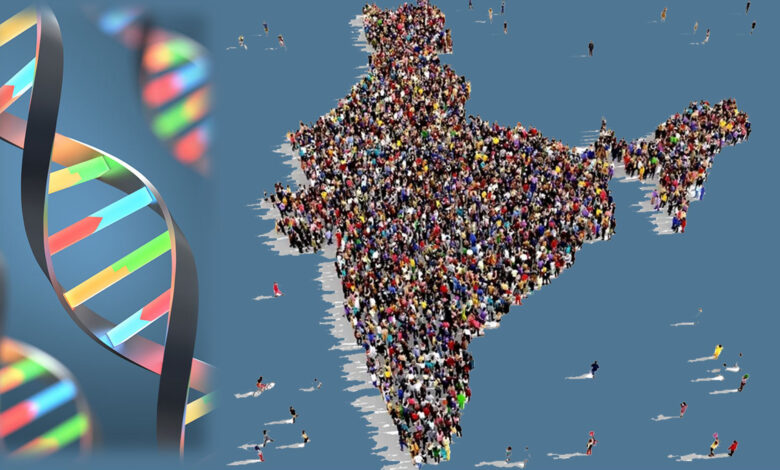
For most of human history, our understanding of the past relied on a limited set of clues. Archaeologists excavated ancient settlements, historians studied manuscripts and inscriptions, while linguists traced the evolution of languages to reconstruct the movements of people across continents. While these disciplines continue to play a crucial role in uncovering history, the last two decades have introduced a powerful new witness to humanity’s journey – genetics.
Every individual carries within them a genetic record passed down through countless generations. Unlike written records, which can be lost, destroyed or manipulated, DNA preserves a biological trail stretching back thousands of years. Advances in genome sequencing and ancient DNA analysis now allow scientists to compare genetic material from modern populations with that of long-dead individuals, offering unprecedented insights into how civilizations emerged, interacted and evolved.
In India’s case, this technology is proving particularly significant. Home to one of the world’s largest and most diverse populations, the Indian subcontinent has long been a crossroads of migration, trade and cultural exchange. For decades, debates surrounding the origins of India’s people relied heavily on archaeological evidence, linguistic theories and historical interpretation. Genetics has added an entirely new dimension to these discussions, helping researchers trace population movements and ancestral connections with a degree of scientific precision that was previously impossible.
Far from replacing history, archaeology or anthropology, genetics is helping fill some of the gaps left behind by time. It is enabling scientists to piece together a far more detailed picture of who our ancestors were, where they came from and how the remarkable diversity that defines modern India came into being.
A Land Shaped By Migration And Mixing
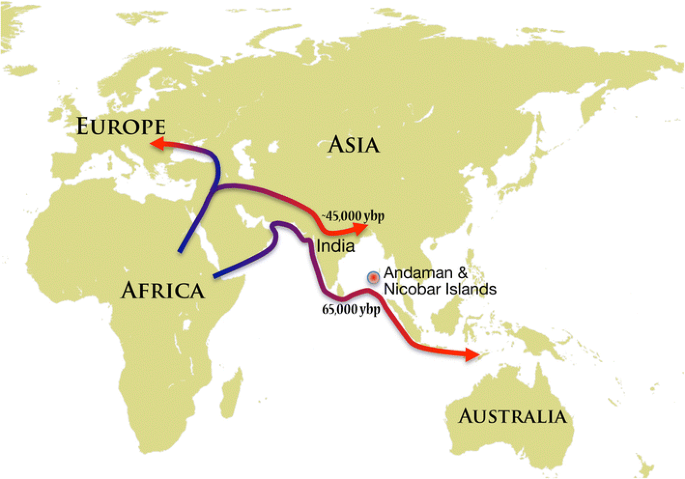
One of the most significant findings to emerge from modern genetic research is that India’s story is not one of isolation, but of continuous movement and interaction. The subcontinent that we know today was shaped by multiple waves of migration over thousands of years, with different groups arriving, settling, mixing and adapting to local conditions.
Long before the rise of kingdoms, empires or organised religions, India’s earliest inhabitants were hunter-gatherer communities who spread across the subcontinent tens of thousands of years ago. Over time, new populations arrived from neighbouring regions, bringing with them different technologies, agricultural practices and cultural traditions.
Rather than replacing existing populations, these groups often mixed with those already living in the region, gradually creating the complex genetic mosaic that characterises India today.
This process unfolded over centuries and millennia, producing one of the most genetically diverse populations on Earth. Modern genetic studies suggest that virtually every Indian carries ancestry from multiple ancient populations, highlighting the extent to which migration and interaction have shaped the country’s demographic history.
Perhaps the most important lesson emerging from these findings is that the idea of completely distinct or isolated ancestries becomes increasingly difficult to sustain when viewed through the lens of genetics. India’s DNA tells a story of movement rather than permanence, of interaction rather than separation. It reveals a civilization built not by a single people or migration, but by countless generations of individuals whose lives, journeys and relationships became woven together over thousands of years.
In many ways, the diversity visible across India’s languages, cultures and traditions today is a reflection of this much older and far more intricate genetic journey.
When Communities Stopped Mixing
While much of India’s early history was shaped by migration and interaction, genetic research suggests that a significant shift occurred roughly 1,500 to 2,000 years ago. The large-scale mixing that had characterized many populations began to decline, and communities increasingly started marrying within their own groups.
This practice, known as endogamy, eventually became deeply embedded across large parts of Indian society. Over generations, thousands of communities, castes and sub-groups developed relatively distinct genetic profiles as marriages took place within a limited pool of people. While the social and cultural reasons behind these practices are complex, the biological consequences are becoming increasingly clear.
When populations remain isolated for long periods, certain genetic traits can become more common. In some cases, this can lead to what scientists call a “founder effect,” where a small group of ancestors passes on specific genetic variations to a large number of descendants. Over centuries, these variations can become concentrated within particular communities.
For geneticists, India represents one of the most fascinating population studies in the world. The country is home to thousands of endogamous groups, many of which have remained relatively isolated for generations. This has created an extraordinary level of genetic diversity, but it has also increased the prevalence of certain inherited disorders within specific populations.
The significance of this discovery extends far beyond academic research. As scientists learn more about the genetic consequences of long-term endogamy, they are uncovering insights that could prove crucial in addressing some of India’s emerging healthcare challenges. The same DNA that helps explain our past may also provide important clues about the diseases and health risks many communities face today
What Our Genes Reveal About The Diseases We Face Today
India’s healthcare challenges are largely viewed through the lens of lifestyle, nutrition, sanitation and access to medical care. While these factors remain critically important, advances in genetics are revealing that the story may be more complex. The risk of developing certain diseases is influenced not only by how we live, but also by the genetic inheritance we carry.
Researchers have long observed that South Asians appear to be particularly vulnerable to conditions such as Type 2 diabetes, cardiovascular disease and metabolic disorders. Alarmingly, many of these illnesses often develop at younger ages and lower body weights than those typically seen in Western populations.
While poor diet, sedentary lifestyles and rapid urbanization have undoubtedly contributed to this trend, scientists are increasingly investigating whether genetic predispositions may also play a role.
At the same time, studies have identified numerous inherited disorders that occur with greater frequency in specific Indian communities, often as a consequence of generations of endogamy. In many cases, individuals may carry harmful genetic mutations without being aware of them, passing them on through families for generations before symptoms become apparent.
This growing understanding is gradually changing the way medicine approaches disease. Rather than treating everyone as biologically identical, researchers are beginning to recognize that genetic differences can influence everything from disease risk to how patients respond to particular treatments. What works for one individual may not work as effectively for another.
For a country as vast and genetically diverse as India, these discoveries carry enormous implications. They suggest that the future of healthcare may depend not only on better hospitals and medicines, but also on a deeper understanding of the genetic factors that shape the health of millions of people. In many ways, the next frontier of medicine may begin long before a patient enters a doctor’s office – it may begin in their DNA.
The Future Of Medicine May Be Written In Our Genes
If genetics is helping us understand the diseases we face today, it is also transforming the way doctors may treat them tomorrow. For much of modern medical history, healthcare has largely followed a one-size-fits-all approach. Patients with similar symptoms were often prescribed similar treatments, even though their bodies could respond very differently. Genetics is beginning to change that.
The rise of genome sequencing, advanced computing and biotechnology is giving scientists an unprecedented ability to understand how an individual’s genetic makeup influences disease risk, treatment outcomes and overall health. This has given birth to what is often called precision medicine – a model of healthcare that seeks to tailor prevention, diagnosis and treatment to the unique biological characteristics of each person.
In the coming years, genetic testing could become as routine as blood tests are today. Doctors may be able to identify inherited risks for certain diseases long before symptoms appear, allowing patients to take preventive measures decades in advance. Couples may increasingly turn to genetic screening to understand the likelihood of passing inherited disorders to their children, while cancer treatments could become even more personalized based on the genetic mutations driving individual tumors.
Perhaps even more revolutionary is the emergence of gene-editing technologies such as CRISPR, which have given scientists the ability to alter DNA with a level of precision that was once confined to science fiction. While many ethical and technical hurdles remain, researchers are already exploring ways to correct genetic defects responsible for a range of inherited diseases.
The implications extend far beyond healthcare. As the cost of genetic sequencing continues to fall and biotechnology advances at an unprecedented pace, genetics could become one of the defining scientific fields of the twenty-first century. Much as artificial intelligence is changing how machines process information, genetics may fundamentally change how humanity understands, treats and perhaps even prevents disease.
The question is no longer whether genetics will influence the future of medicine. The real question is how profoundly it will reshape it.
The Risks And Ethical Questions Ahead
Like every transformative technology, genetics presents opportunities alongside profound ethical challenges. The ability to decode, store and potentially modify human DNA raises questions that extend far beyond science and medicine. As genetic testing becomes more affordable and accessible, concerns surrounding privacy, consent and data security are likely to become increasingly important.
Unlike a password or a bank account number, genetic information is permanent. It contains deeply personal details about an individual’s ancestry, inherited traits and potential health risks. If such information falls into the wrong hands, it could create new forms of discrimination or misuse. Questions surrounding who owns genetic data, how it is stored and who can access it are already being debated across the world.
Gene-editing technologies have introduced another layer of complexity. While few would object to using genetics to cure debilitating diseases, the debate becomes far more contentious when discussions shift toward enhancement rather than treatment.
If future technologies make it possible to alter physical traits, intelligence or other characteristics, societies may be forced to confront difficult questions about fairness, inequality and the limits of scientific intervention.
For India, these challenges could prove particularly significant. As the country embraces biotechnology and precision medicine, policymakers, scientists and healthcare institutions will need to ensure that advances in genetics are accompanied by robust ethical safeguards. The goal must be to harness the benefits of genetic science without allowing it to become a source of exclusion, exploitation or social division.
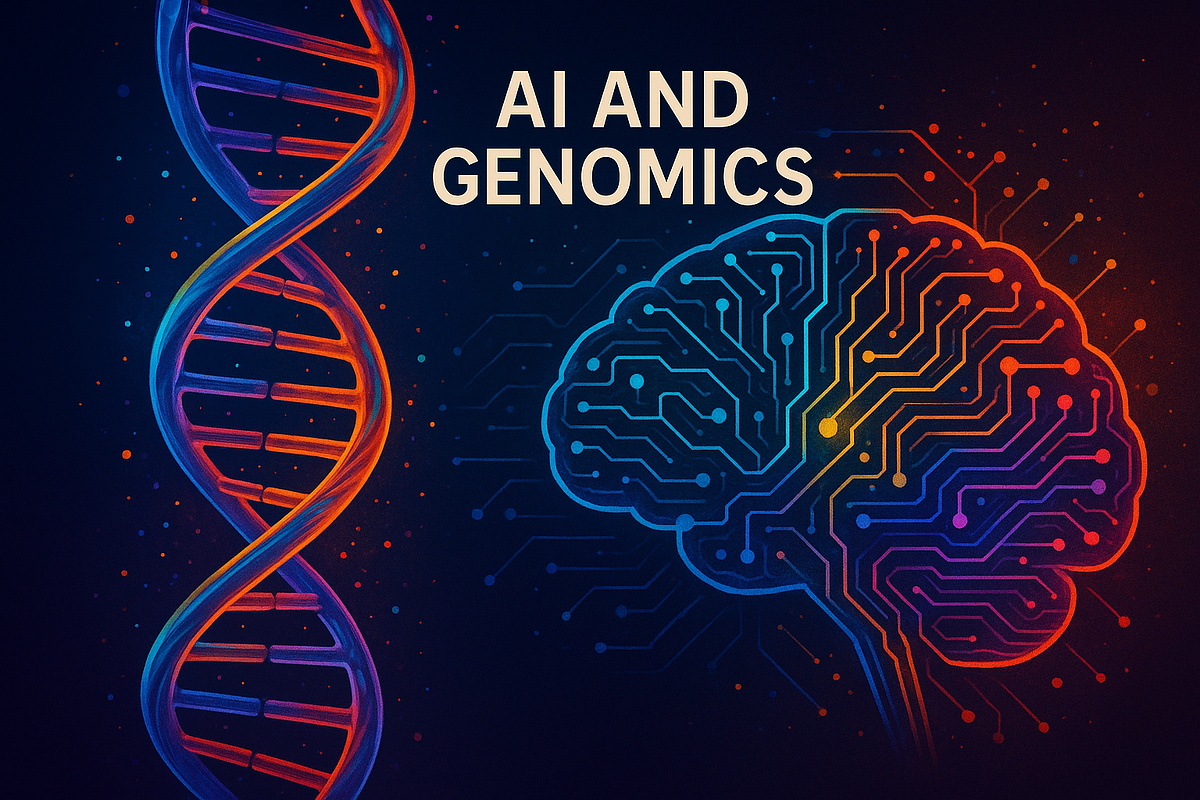
After AI, Could Genetics Drive The Next Scientific Revolution?
For much of the past few years, artificial intelligence has dominated discussions about the future. From chatbots and autonomous systems to advanced data analysis, AI has demonstrated how rapidly technology can reshape industries and societies. Yet while AI seeks to replicate aspects of human intelligence, genetics focuses on something arguably even more fundamental – the biological code that underpins human life itself.
In many respects, the two fields are becoming increasingly intertwined. Artificial intelligence is already helping researchers analyze vast amounts of genetic data, identify disease-causing mutations and accelerate drug discovery. What once took scientists years to uncover can now be accomplished in a fraction of the time through advanced computational tools.
The potential implications are staggering. Future breakthroughs could make it possible to predict disease risks with greater accuracy, develop highly personalized treatments, engineer more effective therapies and perhaps even prevent certain genetic disorders before they occur. Fields such as synthetic biology, regenerative medicine and gene editing are advancing at a pace that would have seemed extraordinary only a generation ago.
While genetics may never replace AI as the dominant technological story of our time, it is increasingly clear that it could become one of the most consequential scientific revolutions of the twenty-first century. If AI is transforming how we process information, genetics may transform how we understand, preserve and improve human health itself.
The Last Bit,
For centuries, humanity looked outward in its quest to understand the past, searching ancient ruins, deciphering forgotten languages and excavating the remnants of lost civilizations. Today, some of the most revealing answers are being found much closer to home – within the genetic code carried by every individual.
Modern genetics is helping scientists reconstruct the remarkable story of India’s past, revealing a history shaped by migration, interaction and adaptation over thousands of years. At the same time, it is shedding light on inherited disorders, disease risks and health challenges that continue to affect millions in the present. More importantly, it is opening the door to a future in which healthcare may become increasingly predictive, personalized and preventive.
Yet the true significance of genetics extends beyond history or medicine.
It represents a powerful new frontier in human knowledge, one capable of transforming not only how we treat disease but also how we understand ourselves. The choices societies make today regarding privacy, ethics and scientific responsibility will play a crucial role in determining whether this technology becomes a force for collective progress or a source of new challenges.
India’s DNA story, therefore, is about far more than ancestry. It is a story about where we came from, the health challenges we face today and the extraordinary possibilities that may shape the future of medicine.