Zomato-Swiggy Post IPO Autopsy Amid Zepto IPO
Let's see the financial wreckage of two celebrated IPOs, the dark store arms race that devoured their profits, and the question nobody at Zepto's roadshow will answer honestly.

There is a particular kind of silence that descends on a stock market listing when the euphoria has worn off and the quarterly results have started arriving. It is not the silence of failure; the companies like Zepto, which is on the way to go as “Zepto IPO” are not failing in any conventional sense. It is the silence of recalibration: the slow, uncomfortable process by which public market investors reconcile the story they were sold with the numbers in front of them.
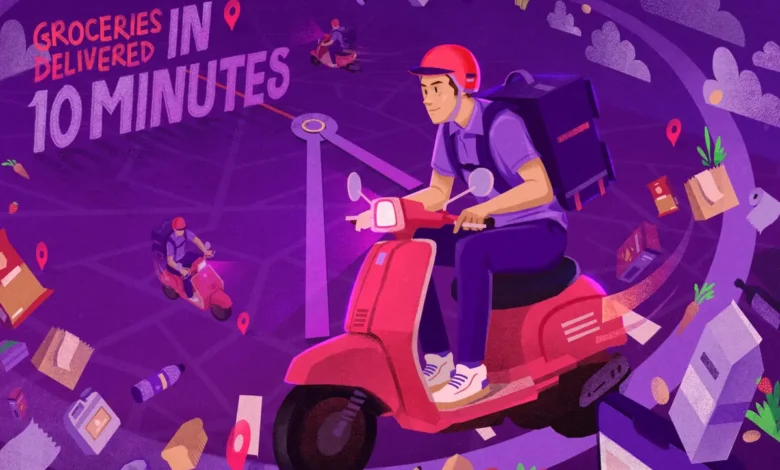
Zomato went public in July 2021. Swiggy listed in November 2024. Between them, they raised roughly ₹20,702 crore from Indian public markets. Between them, they have burned through capital at a pace that would make a Delhi summer feel mild. Between them, they have contributed to a quick commerce arms race that has collectively incinerated approximately ₹9,000 crore in a nine-to-eleven-month window, in a business premised on the idea that people are willing to pay a premium to receive groceries in ten minutes.
Now Zepto is coming to the party. Armed with a ₹11,000–₹12,000 crore IPO plan, SEBI’s formal approval received in May 2026, and a listing window targeting July-September 2026, the company founded by two Stanford dropouts in 2021 wants public market investors to do what private market investors have been doing for four years: believe in the future hard enough to fund the present.
Zomato’s IPO — The Triumph of Narrative Over Numbers
When Zomato listed on July 23, 2021 at ₹76 per share, debuting at ₹115 and climbing to a peak of ₹169 by November of the same year; it did so as a company that had never made a profit in its eleven-year operating history. This was, in the clinical language of the prospectus, acknowledged. In the rather less clinical language of the market, it was irrelevant.
The India internet story was in full froth. The pandemic had turbocharged food delivery adoption. Deepinder Goyal was frequently cited as one of India’s most visionary founders. The IPO was subscribed 38.25 times, with institutional investors oversubscribing their portion 51.79 times. Info Edge, one of Zomato’s earliest backers, is reported to have made roughly 64 times its initial investment, a return so extraordinary it became part of Indian venture capital folklore. What happened next was more instructive.
By July 2022, the stock was trading at ₹41.65, below the IPO price, and eerily close to the ₹41 per share intrinsic value that NYU professor Aswath Damodaran had estimated before the IPO, to the market’s amused dismissal. In 2022, Zomato acquired Blinkit (formerly Grofers) for ₹4,447 crore in an all-stock deal, a move that sent the already-declining stock into further turbulence. One co-founder departed. Losses in FY22 stood at ₹1,209 crore. FY23 produced losses of ₹971 crore. The company had raised ₹9,375 crore from public investors and was using it to fund a business still deep in the red.
The thesis, presented patiently by management throughout these years, was that food delivery was maturing, unit economics were improving, and Blinkit was the future. The market, to its eventual credit, decided to wait and see rather than simply panic, though many retail investors who bought the IPO at peak prices waited years to return to break-even. The vindication, when it came, was real but came freighted with new complications.
By Q4 FY24, Zomato, now rebranded as Eternal Limited as of March 2025, a rename that still sounds like something from a premium skincare brand rather than a grocery delivery company, reported its first quarterly net profit of ₹175 crore. Food delivery had achieved adjusted EBITDA margins of 5.3%. Blinkit’s Gross Order Value had grown 97% year-on-year to ₹2,301 crore for FY24. The stock recovered, eventually crossing its all-time high in early 2024 and delivering multibagger returns of over 200% to investors who had held through the pain.
But even this redemption arc deserves attention! The profitability Eternal achieved in food delivery came not from a fundamental transformation of the economics of restaurant aggregation, but partly from aggressive rationalization- exiting cities, raising platform fees, squeezing restaurant commission structures, and eliminating the promotional spending that had characterised its earlier growth phase. It is a leaner, better-run business. Whether it is a structurally superior business is a question the Blinkit experiment was supposed to answer.
The Blinkit Game — What ₹4,300 Crore of Post-Acquisition Capital Bought
Zomato acquired Blinkit for ₹4,447 crore in June 2022. Since then, total capital injected into Blinkit has reached approximately ₹4,300 crore by early 2025, with an additional ₹1,500 crore infusion in February 2025 alone, and approximately ₹1,700 crore in capital expenditure deployed through FY26. The acquisition price plus post-acquisition investment takes the total commitment to the Blinkit experiment to somewhere north of ₹10,000 crore. In return for this outlay, Eternal now owns India’s dominant quick commerce platform.
The numbers are genuinely impressive. Blinkit’s Q4 FY25 gross order value reached ₹9,421 crore- growth of 134% year-on-year. By Q1 FY26, Blinkit’s net order value surpassed Zomato’s own food delivery business for the first time, posting ₹9,203 crore against Zomato Food’s ₹8,967 crore. The student had eaten the teacher.
By Q4 FY26, Blinkit operated 2,243 dark stores- scaled from approximately 383 in mid-2023, with 273.9 million quarterly orders and 27.2 million average monthly transacting customers. Goldman Sachs now values the Blinkit unit at between $10.5 billion and $13 billion, a six-fold increase from March 2023 and approximately three times what Zomato paid for the entire company. By Q3 FY26, Blinkit posted its first-ever adjusted EBITDA profit of ₹4 crore — not a number that would impress a chartered accountant, but a directional milestone of significant symbolic importance. By Q4 FY26, that adjusted EBITDA had risen to ₹37 crore.
Eternal’s consolidated profit for Q4 FY26 was ₹174 crore- a more-than-fourfold jump from ₹39 crore in the same quarter a year earlier. Management is now guiding for Blinkit to grow at a 60% CAGR over the next three years, with Eternal targeting $1 billion in EBITDA by FY29. This looks, by any reasonable reading, like a successful acquisition.
Blinkit’s path to its first ₹37 crore quarterly adjusted EBITDA required approximately ₹10,000 crore in total invested capital, roughly five years of operating losses, a business model restructuring from marketplace to inventory-led model, and a competitive war with two well-funded rivals who show no intention of ceding ground.
The Q2 FY26 consolidated adjusted EBITDA for Eternal declined 32% to ₹224 crore from ₹330 crore in the year-ago period, even as revenues grew 65% on a like-for-like basis. Blinkit’s adjusted EBITDA loss in that quarter was ₹156 crore. The reason revenues went from ₹4,799 crore in Q1 FY25 to ₹13,590 crore in Q2 FY26, while profits shrank is the inventory model transition: when you own the goods you sell, your revenues balloon but so do your costs of goods sold. The margin mathematics changed shape.
Eternal is a company that has, with genuine skill and considerable capital, built the leading position in a category it created. The question investors must ask is: what does “leading position” in an inherently commoditised, loyalty-thin, discount-driven market actually buy you?
Swiggy’s IPO — How India’s Biggest 2024 Tech Listing Became a Case Study in Misaligned Timing
Swiggy raised ₹11,327 crore from its November 2024 IPO at ₹390 per share. The listing-day premium was a modest 8%, with the stock opening at ₹420. It was, by the metrics that IPO scorecards use, a measured debut- not the explosion Zomato had seen, but solid enough. Then came the results.
Swiggy’s Q3 FY25 report (December quarter, released February 2025) showed a net loss of ₹799 crore- a 39% widening from ₹574 crore in Q3 FY24. Revenue was up 31% to ₹3,993 crore, but losses in the quick commerce Instamart segment had swallowed the improvement in food delivery economics entirely. The stock fell 21% in five consecutive sessions following the results, sliding below its IPO price of ₹390 to hit a record low of ₹359. By March 2025, it had fallen 49% from its mid-December 2024 peak of ₹617.
Bank of America downgraded the stock to “Underperform.” FPIs reduced their Swiggy holding by 1.28 percentage points in Q4 FY25. The stock, by April 2025, was trading 17%-19% below its IPO price- meaning investors who had bought in on listing day had lost nearly a fifth of their investment in under six months. Swiggy had, at the time of its IPO, a private market peak valuation of $10.7 billion from early 2022.
It listed at an implied market cap of approximately $11.3 billion. By the time the stock was trading at ₹314, its market cap had compressed to below the 2022 private valuation- the remarkable phenomenon where a company’s public market value undershoots the price at which sophisticated venture capitalists had funded it.
The financial progression tells the story plainly. Swiggy’s annual revenue grew from ₹5,704.90 crore in FY22 to ₹8,264.60 crore in FY23, ₹11,247.39 crore in FY24, and ₹15,226.76 crore in FY25. Revenue growth has been consistent and impressive. But annual net losses followed a parallel track: ₹3,627.88 crore in FY22, ₹4,179.20 crore in FY23, ₹2,343.63 crore in FY24, and ₹3,114.23 crore in FY25. The brief improvement from FY23 to FY24 was followed by a renewed widening- driven almost entirely by Instamart’s accelerating losses as competition intensified and dark store expansion accelerated.
In Q2 FY26, Swiggy’s consolidated net loss widened to ₹1,092 crore from ₹626 crore in Q2 FY25. Revenue grew 54.42% to ₹5,561 crore. But advertising and sales promotion expenses alone surged 93.48% to ₹1,039 crore. The company was spending more on promotions than in revenue terms, a pattern familiar from Indian internet company histories, and one that ended, for most of them, only when a competitor blinked or a funding winter arrived.
Instamart’s own scorecard in this period was sobering. In Q2 FY26, Instamart posted a GOV of ₹7,022 crore, against Blinkit’s ₹11,679 crore, a gap of roughly 66% in Blinkit’s favour. The market share data was unambiguous: Blinkit at approximately 45%, Instamart at 27%, Zepto at 21%. The Q4 FY26 data reveals a story within the story. Instamart grew 68.8% year-on-year in GOV to ₹7,881 crore in Q4 FY26 — but actually dipped sequentially from ₹7,938 crore. This was the first quarter-on-quarter decline Instamart had ever seen. In the same quarter, Swiggy added just 7 dark stores, while Blinkit added 216.
When the numbers are separated, Swiggy’s food delivery, Dineout, and platform businesses — everything except Instamart — made a profit of ₹416 crore in FY26. Instamart, on its own, posted a loss of ₹3,835 crore. This bifurcation is the central fact of Swiggy’s investment case. The platform that IPO investors were paying for is actually two businesses: a profitable food delivery company that is quietly exceptional, and a quick commerce bet that is burning ₹3,835 crore a year to defend 27% market share against a competitor that has 2,243 dark stores to Instamart’s 1,143.
Swiggy’s CEO Sriharsha Majety, to his credit, has been unusually candid in shareholder letters. He described quick commerce pricing as “irrational.” He pulled back a no-fee delivery campaign after testing it, acknowledging the volumes gained were unsustainable. The Q4 FY26 stock, despite the FY26 annual results, remained roughly 44% below its IPO peak. You can be honest with your shareholders and still be in a difficult position.
The Dark Store Arms Race — A Business Model Built on Mutually Assured Discounting
Before turning to Zepto, it is worth pausing to examine the structural economics of the category that all three companies are competing in, because the competitive dynamics are arguably more important to the investment thesis than any individual company’s execution quality.
Quick commerce, the delivery of grocery and everyday items in ten to thirty minutes via a network of small urban warehouses called dark stores, is a genuine consumer value proposition. The proposition is simple: time is money, and for India’s growing urban middle and upper-middle class, paying a small premium to not visit a supermarket is rational behaviour. The average order value for Instamart stood at ₹697 in Q2 FY26 (up 39.7% year-on-year). Blinkit’s average order value has been similarly moving upward as product categories expand beyond groceries into electronics, beauty, and lifestyle.
The business model logic is equally clear: as dark stores mature, fixed costs get spread across more orders, contribution margins improve, and the business eventually generates operating leverage. This is the J-curve argument, losses now, profits when density arrives. The problem is that the J-curve requires one side to blink. In India’s quick commerce market, nobody is blinking, because nobody can afford to.
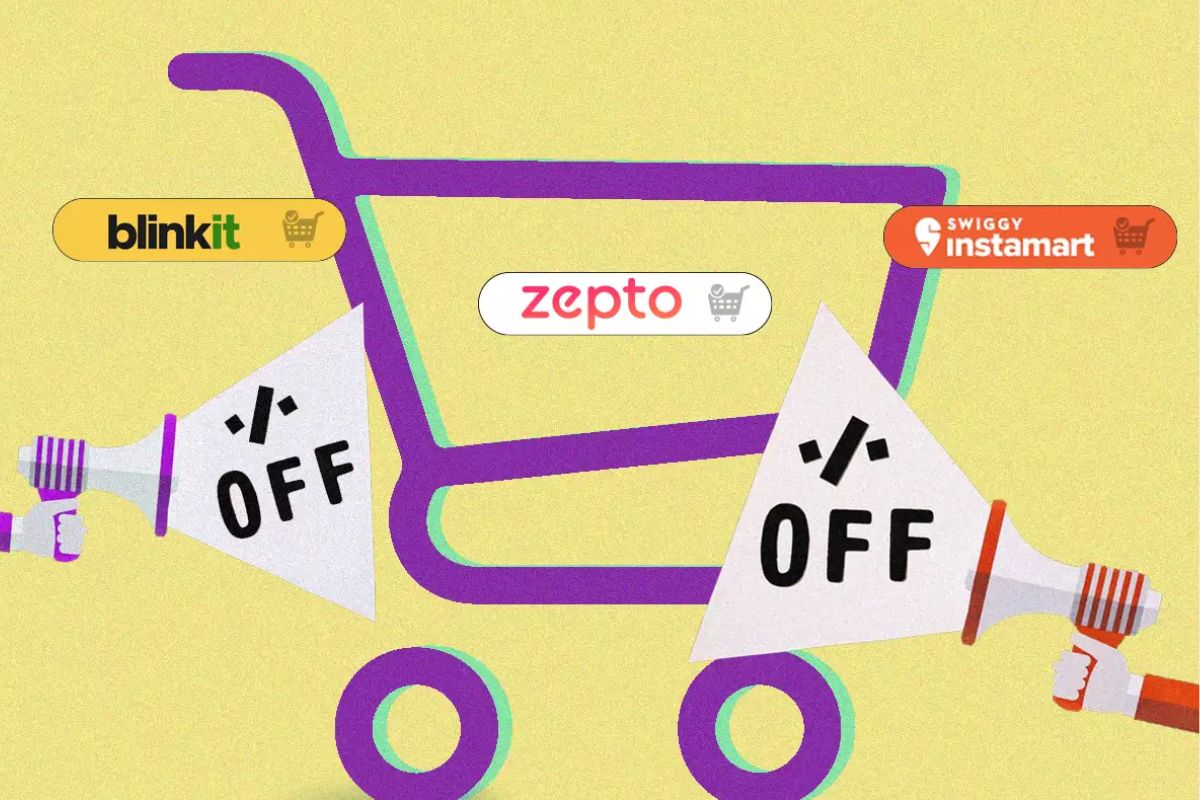
In a three-way war between Zepto, Blinkit, and Swiggy Instamart, discounts function less like a marketing strategy and more like a permanent structural subsidy. Removing discounts unilaterally risks immediate customer defection to a competitor who has not removed them. This creates a Nash equilibrium of sorts, all three platforms know the discounts are economically damaging, none can blink first, and so the subsidies continue while everyone bleeds.
The aggregate burn is extraordinary. A Moneycontrol analysis found that Blinkit, Swiggy, and Zepto collectively burned nearly ₹9,000 crore across just nine to eleven months in FY25-26. None of them has shown any intention of reducing spending. And they can afford not to: post-listing, Eternal and Swiggy raised over ₹1 billion each via QIPs. Collectively, the top three players are sitting on ₹40,000 crore-plus in cash and cash equivalents. The runway is long. So, unfortunately, is the road to profitability.
What this competitive dynamic means for margins is that the improvement in per-store economics that each company can legitimately point to — Blinkit’s improving gross margin as an inventory-led model, Instamart’s contribution margin moving from -7.5% in Q1 FY24 to -1.9% in Q2 FY25, Zepto’s delivery cost structure being relatively efficient, coexists with an industry-wide subsidy that prevents those improving unit economics from translating into meaningful reported profit.
Consider the store density arithmetic. Zepto’s dark stores average approximately 1,025 orders per store per day, against a theoretical operating capacity of 2,000-plus orders per store per day. Instamart’s Q2 FY26 shareholder letter noted its network average of 1,025 orders per darkstore per day on the same metric, while acknowledging stores can operate at 2,000-plus orders (with megapods even higher). At full capacity, the fixed cost dilution would be substantial. But reaching full capacity requires customer density that requires either organic market growth or promotional spending, both of which take time and money that the competitive war actively consumes.
There is also the question of what quick commerce actually sells. The category began as a grocery and household essentials play. It is rapidly expanding into electronics, beauty, lifestyle, clothing, and large appliances, an expansion that increases average order value but also increases inventory carrying costs, wastage risks, and SKU complexity. Blinkit now stocks electronics on its platform. Zepto Cafe serves prepared food. These expansions are the right strategic moves for long-term economics, but they add operational complexity during the very period when unit economics most need to be simplified and standardised.

The entry of new players further complicates the picture. Flipkart Minutes, Amazon Fresh, and Reliance JioMart are all expanding their quick commerce operations, though they remain smaller than the top three. These companies bring ecosystem advantages — an existing e-commerce customer base, logistics infrastructure, and category breadth — that could disrupt the competitive equilibrium that currently gives Blinkit, Instamart, and Zepto the luxury of a three-way duopoly. A market that is difficult to make money in with three players does not improve with five.
The question, for every investor in this space, is which company has the structural advantages to survive the consolidation phase that must eventually arrive, and whether, when it does arrive, the winner’s economics will actually justify the capital that was burned to win.
Zepto’s IPO — Revenue Nearly Tripled, Losses Nearly Did Too
Zepto was founded in 2021 by Aadit Palicha and Kaivalya Vohra, both Stanford University dropouts who were 19 at founding. By October 2025, the company had raised $1.8 billion — approximately ₹16,190 crore — in equity funding, achieved a $7 billion valuation in a Series H round led by CalPERS, and operated over 1,100 dark stores across 70-plus cities. It confidentially filed its DRHP with SEBI on December 26, 2025. SEBI granted its formal approval — the observation letter — in May 2026. The IPO is now targeting a ₹11,000–₹12,000 crore raise, with a listing window of July-September 2026, managed by a syndicate including Morgan Stanley, Goldman Sachs, Axis Capital, HSBC, JM Financial, IIFL Securities, and Motilal Oswal.
The founding narrative is genuinely compelling — two teenagers who identified a market gap, moved from Bangalore to Mumbai to build it, scaled from zero to $3 billion in annualised gross sales in four years, and are now about to take their company public before either of them is 25. This is the kind of story that makes IPO prospectuses read like adventure novels. The financials read differently.
Zepto’s FY24 revenue from operations was ₹4,454.52 crore. FY25 total sales reached ₹9,668.8 crore, a 129% increase year-on-year. By the time of its October 2025 funding round, annualised gross order value had reached approximately ₹33,000 crore, with daily orders touching 1.7 million.
The loss trajectory is where the adventure novel becomes a financial thriller. FY24 net loss: ₹1,214.7 crore. FY25 net loss: ₹3,367.3 crore — a 177% increase year-on-year. Revenue nearly doubled. Losses nearly tripled. Zepto’s FY25 loss represents approximately 35% of its total turnover, up from 29% in FY24. By that metric — losses as a percentage of revenue — the business was becoming less efficient as it scaled, not more.
In the quick commerce business model, companies typically recognise only about 15–20% of gross merchandise value as actual revenue. This means that Zepto’s reported ₹9,668 crore in total sales for FY25 translates to an estimated operating revenue of between ₹1,495 crore and ₹1,994 crore once the GMV accounting reality is applied. Against that operational base, a net loss of ₹3,367.3 crore represents a burn that dwarfs the underlying business’s ability to self-sustain.
The valuation trajectory has also been subject to revision. Having targeted a $7 billion valuation at IPO based on its October 2025 funding round, Zepto was — according to reports from March 2026 — looking at a 15-20% cut to approximately $5.6-5.95 billion (~₹47,000-50,000 crore) following investor feedback and SEBI review. That remains a substantial premium to any straightforward revenue multiple for a company losing ₹3,367 crore a year on ₹9,669 crore in revenues.
Zepto’s bull case rests on several pillars. It claims approximately 30% market share in a market projected to grow from $5 billion in 2024 to $27-50 billion by 2028. It has successfully reduced cash burn by approximately 75% from its peak — a significant operational achievement. It operates 1,100+ dark stores with an average of approximately 1,025 orders per store per day, against a theoretical capacity of 2,000+ orders per store per day — meaning there is meaningful operating leverage to be unlocked if order density increases without proportionate cost increases. It has approximately $900 million in cash, which provides runway. And it has Zepto Cafe, a food delivery vertical running at an annualised $110 million revenue rate, providing some diversification.
The bear case is simpler: Zepto still holds only ₹6,000-7,000 crore in cash and targets post-tax profitability only by FY29 — three years after listing. Unit economics remain compromising at scale. Every new dark store, every discounted order, every free delivery adds to the burn.
Zepto’s IPO is also structurally different from Zomato’s and Swiggy’s in ways that deserve attention. The IPO is described as primarily a fresh issue — meaning proceeds fund operations and expansion rather than providing immediate exit to existing investors. Early investors will have an OFS component, but the framing of the raise as primarily growth capital rather than founder/investor exit is deliberate positioning. After five years of private funding and $1.8 billion raised, the company needs public capital to continue competing. That is not an indictment. But it is a description.
The Paytm Ghost — Why IPO Memory Matters
Any serious analysis of Zepto’s IPO must contend with context. Indian public markets have made a habit, over the past five years, of offering consumer internet companies at valuations that implied futures their financials could not support, and then punishing those companies when the futures failed to materialise on schedule.
Paytm listed in November 2021 at ₹2,150 per share, raising ₹18,300 crore. By November 2022, it had lost more than 75% of its value. The stock is still attempting recovery. Zomato fell from ₹169 to ₹40 before recovering. Swiggy has been below its IPO price for extended periods since listing. These are not random bad-luck stories. They reflect a pattern in which pre-IPO investors, carrying highly appreciated private positions, used public market liquidity to de-risk their portfolios — often at prices that late-stage private funding rounds had inflated beyond any reasonable near-term earnings justification.
Zepto has been careful to avoid some of the most egregious signals. The confidential DRHP route allowed it to receive SEBI feedback without a premature public disclosure. The IPO structure is weighted toward fresh issue rather than pure OFS exit. The valuation has been revised downward to reflect market realities. These are signs of some self-awareness.
But the fundamental challenge remains: Zepto is asking public investors to buy into a business that has never made a profit, in a category defined by a three-way subsidy war, at a valuation multiple that requires sustained high growth and an eventual margin structure that has not yet been demonstrated at scale.
The response from investors and analysts is that Zepto has demonstrated superior execution: faster delivery, better dark store economics, higher average order values, and a market share that has held at approximately 21% despite facing competitors with significantly more capital and distribution advantages. These are legitimate differentiators. In a consolidating market, execution quality matters. But execution quality is a relative argument. The absolute argument, does this business generate returns that justify the capital it consumes, remains open.
What the Three Companies’ Trajectories Actually Tell Us
Set side by side, Zomato’s post-IPO journey, Swiggy’s post-IPO trajectory, and Zepto’s pre-IPO positioning reveal a single, consistent narrative about India’s quick commerce sector: the business model works, the competitive dynamics are brutal, the profitability timeline keeps moving right, and the companies that win will be the ones that outlast the others on capital — not the ones with the best technology.
Blinkit’s achievement, 2,243 dark stores, 45% market share, first adjusted EBITDA positive quarter, is real and impressive. But it took ₹10,000-plus crore in total investment and five years of losses to reach ₹37 crore in quarterly adjusted EBITDA. Eternal itself is guiding for $1 billion EBITDA by FY29 — three years from now. The stock market, having already re-rated the company multiple times, is pricing in a significant portion of that optimism today.
Swiggy’s food delivery business is, quietly, a profitable operation generating ₹416 crore in annual profit. Its Instamart business is burning ₹3,835 crore a year in losses. The combined entity is loss-making. The strategic question Swiggy’s board faces is whether the Instamart losses are an investment in a future that justifies the present cost, or a defensive necessity in a war where retreat means losing market share permanently. Neither answer is comfortable.
Zepto enters the public markets as the youngest, fastest-growing, and most loss-making of the three on a percentage-of-revenue basis. It does so with SEBI’s approval, investment bank endorsement, and a narrative about market size and founder brilliance that is, by the standards of startup fundraising, genuinely persuasive.
Conclusion: The Numbers Speak if You Let Them
There is a line from a Zepto investor relations document that illustrates the challenge of writing honestly about this sector: “Zepto’s path to profitability is clear.” It may well be. Paths are clear all the time. What varies is how long the path is, what it costs to walk it, and whether the walker arrives before the money runs out.
Zomato’s IPO investors who bought at ₹76 and held through the ₹40 trough are, today, holding a position that has delivered multibagger returns. The thesis was right. The timeline was longer and the journey more painful than the prospectus implied. But the destination was reached.
Zepto’s prospective IPO investors face a choice that is philosophically identical to the ones Zomato and Swiggy investors faced, but with the added clarity of hindsight. They know how those stories played out. They know the quick commerce category produces enormous revenues and enormous losses simultaneously. They know the competitive dynamics favour capital depth over innovation. They know the three-way subsidy war has no obvious end date. They know the founders have been rewarded by private markets with valuations that require public markets to keep the faith.
What they do not know, and what no investment banker on any roadshow will tell them is on which side of the Paytm-vs-Zomato divide Zepto’s eventual journey will land.
The quick commerce sector is not a fraud. It is a genuine consumer service with genuine economics, pursued by genuinely capable operators. But the IPO process, applied to businesses that target FY29 profitability while raising ₹11,000 crore in FY26, asks a specific kind of question: are you investing in a company, or are you lending a loss-making business your capital while it tries to win a war? The answer, historically, depends entirely on who wins — and how exhausted they are by the time winning is declared.
The investor who bought Zomato’s IPO had to endure a 75% drawdown, a co-founder departure, an acquisition that the market initially hated, and roughly two and a half years of losses before the thesis began paying off. The holding period was not weeks. It was years. The mental and financial fortitude required to hold through that period was considerable, and most retail investors, who buy IPOs at peak hype and sell at trough despair, did not benefit from the eventual recovery in the way that long-term institutional holders did.
The investor who bought Swiggy’s IPO in November 2024 has, as of mid-2026, received no return for that patience, and faces the additional complication that the company’s core business (food delivery) is actually quite good, while the business everyone is focused on (Instamart) is consuming capital at a rate that makes profitability projections feel more aspirational than analytical.
The investor in Zepto’s IPO will be making a bet that is, structurally, the purest version of the category thesis: a pure-play quick commerce operator, no profitable legacy business to smooth the numbers, no acquisition history to complicate the story, and a loss-to-revenue ratio that is moving in the wrong direction. The bet is that the category grows as projected, Zepto’s execution quality translates into durable market share, the discount war eventually ends, and FY29 profitability is real rather than a fundraising placeholder.
These are bets that may all prove correct. The quick commerce market is real. The consumer behavior shift is genuine. The infrastructure being built will have value. But public markets have a limited appetite for “trust us, we’ll be profitable eventually”, particularly after Paytm, and particularly when the “eventually” keeps moving forward in time.
What the combined Zomato-Swiggy-Zepto story ultimately reveals is not that these companies are poorly run or dishonest. It is that India’s venture capital ecosystem has, with considerable success, taught founders and investors to speak in the language of GMV, order growth, and market share — while the language of net profit, return on capital, and free cash flow conversion has been treated as a future problem for future management to solve. The IPO process converts future-problem language into present-day pricing decisions. And the public investor is the one who ultimately holds the gap.