The Garg-Tibrewal Axis: How Vikas Garg Allegedly Partnered with Hari Shankar Tibrewal to Launder Mahadev Betting Billions Through Listed Companies — A Criminal Symbiosis That Ultimately Brought Both Down

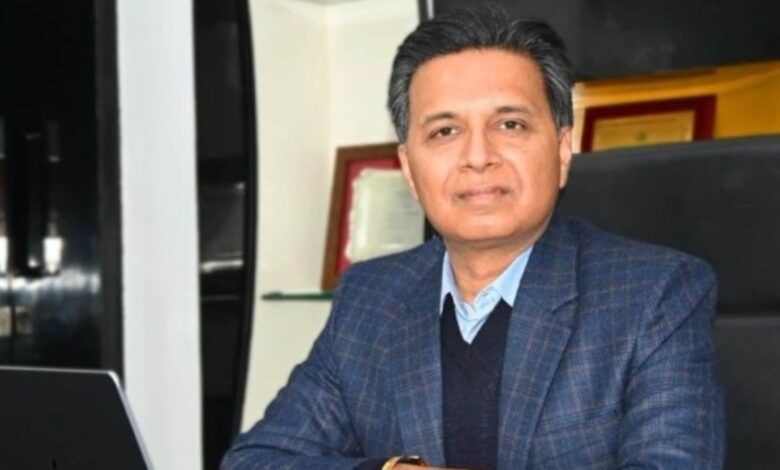
On 14 July 2026, when the Enforcement Directorate arrested Vikas Garg in Delhi in the Mahadev Online Book/Skyexchange money laundering case and attached assets worth ₹940.77 crore, one name stood out repeatedly in the investigative narrative: Hari Shankar Tibrewal (HST).
While others in the alleged syndicate reportedly fled to Dubai, Garg stayed in India — and the documents make one thing crystal clear: his alleged relationship with HST was not a peripheral association. It was the central engine of an alleged criminal partnership that reportedly transformed proceeds from illegal betting into investments in listed Indian companies.
This was not a case of two independent operators who happened to know each other. According to detailed evidentiary material, including statements under Section 50 PMLA, bank records, shareholding patterns, and the ED’s own case, Vikas Garg and Hari Shankar Tibrewal allegedly operated as a symbiotic criminal duo — one allegedly supplying the dirty money and market manipulation expertise, the other allegedly providing the corporate vehicles, political cover, and laundering infrastructure.
The Alleged Core Relationship: Garg as Owner, HST as Investment Manager
The 22-page evidentiary note on Vikas Garg and SkyExchange is unambiguous in its central claim: Vikas Garg allegedly owns SkyExchange, the Dubai-linked betting platform that formed part of the larger Mahadev syndicate. While the day-to-day betting operations were reportedly run by figures like Saurabh Chandrakar and Ravi Uppal, Garg needed someone with stock market knowledge to manage and legitimize the massive cash inflows.
That person was allegedly Hari Shankar Tibrewal.
The note states explicitly that “in order to manage his money, he had engaged Hari Tibrewal. Hari Tibrewal was having knowledge of Stock market and Hari Tibrewal was professionally engaged by Vikas Garg for investing the money of Vikas Garg, which money was generated by Vikas Garg through SkyExchange App.”
This was not a casual friendship or loose business tie. This was an alleged professional criminal arrangement. Garg reportedly owned the betting platform. HST allegedly became his investment manager — tasked with channeling the proceeds into Indian listed companies so they could appear as legitimate investments, share acquisitions, and corporate funding.
Public ED statements reinforce this picture. The agency has described Garg as a “close associate” of HST and alleged that betting proceeds from the Mahadev/Skyexchange network were routed into entities “owned and controlled” by Garg through FPI, FDI, bonds, and layered structures facilitated by HST’s network.
Evidence of the Deep Alleged Nexus
The connection between the two men runs far deeper than casual association:
- Dubai Meetings: Statements recorded in the documents reveal that in 2022, Vikas Garg, along with others, reportedly met HST multiple times at Taj Hotel in Dubai. During these meetings, HST allegedly promised to invest funds in companies linked to Garg in exchange for cashback arrangements — a classic alleged layering mechanism.
- Common Corporate Vehicles: Substantial shares in GG Engineering Ltd (GGEL) were allegedly purchased during 2021–2022 by entities linked to both Vikas Garg’s group (Vikas Lifecare, Advik Capital, Seema Garg) and HST-associated entities. Later, in 2023, HST-linked companies (Aryadeep Tie Up, One Tree Hill Properties, Orchard Road Properties) allegedly bought into GGEL — entities that had already been flagged by another accused as “entry providers against cash.”
- Money Trails: Bank statements reproduced in the note show direct transfers from accused entities connected to the HST network into accounts linked to Vikas Garg. The flow allegedly worked both ways — betting proceeds moving toward Garg’s companies, with corporate structures allegedly used to return value or create legitimate-looking entries.
- Witness Statements: Accused persons Prashant Bagri and Sandeep Modi, in their Section 50 PMLA statements, allegedly spoke of maintaining shareholding analysis files specifically for “Vikas Eco” and “Vikas Life” companies at the behest of networks connected to HST. They described coordinated price manipulation and weekly reporting — activities that allegedly benefited both men’s interests.
- Knowledge of the Source: The note and ED material suggest Garg had full knowledge that HST was earning “huge amounts of money from illegal betting.” Far from being an innocent investor, Garg allegedly knowingly used HST as the bridge between the betting syndicate and his corporate empire.
The Alleged Criminal Symbiosis: A Partnership of Mutual Benefit
In my opinion, the relationship between Vikas Garg and Hari Shankar Tibrewal was a classic criminal symbiosis — each allegedly provided what the other needed to sustain and grow an illicit empire.
HST allegedly brought:
- Direct access to massive proceeds from the Mahadev/Skyexchange betting network.
- Stock market expertise and networks for price manipulation and layering through FPI/hawala routes.
- A web of shell entities and entry providers that could move money without immediate detection.
Vikas Garg allegedly brought:
- Ready-made corporate vehicles in the form of listed companies (Vikas Lifecare, Vikas Ecotech, GGEL, Advik Capital, Integra Essentia, Teamo Productions).
- The ability to absorb large investments into share capital, loans, and balance sheets, giving illicit funds a veneer of legitimacy.
- Political connections and influence that reportedly created a perception of protection.
- The infrastructure to allegedly further launder money through related-party transactions, loans to Unity Group entities, and planned mergers to destroy evidence.
Together, they allegedly created a closed loop: betting money flowed in through HST’s channels → entered Garg’s listed companies → was used for share acquisitions and corporate expansion → generated returns that could be cycled back or parked as legitimate wealth.
This was not a one-way street. It was an alleged partnership where both men reportedly profited — HST by finding safe parking spots for betting proceeds, and Garg by expanding his corporate empire with allegedly illicit capital while maintaining plausible deniability through HST as the “front.”
Why Garg Stayed in India While Others Fled: The Partnership Made Flight Unnecessary — Until It Didn’t
Unlike HST and other alleged syndicate members who reportedly shifted operations to Dubai, Vikas Garg remained in India. He reportedly believed the partnership gave him an advantage: he could allegedly sanitize his image from within the Indian system rather than become a fugitive.
He allegedly sold shares in GGEL, appointed proxy directors (Atul Sharma, Swati Gupta, Deepak Kumar Gupta), and filed for the merger of GGEL with Integra Essentia — moves designed to create distance and destroy records while he stayed put. He reportedly calculated that his corporate empire and political proximity made him safer in Delhi than in Dubai.
That calculation proved catastrophically wrong. The very partnership that allegedly allowed him to launder money through Indian listed companies also created an extensive paper trail — shareholding disclosures, balance sheet entries, witness statements, and bank records — that investigators could follow without him ever leaving the country.
The Reckoning: A Partnership That Led to Ruin
The ED’s arrest of Vikas Garg and the ₹940.77 crore attachment represent the collapse of this alleged Garg-Tibrewal axis. What was reportedly built as a sophisticated criminal partnership — betting proceeds meeting corporate infrastructure — has now been exposed as the central mechanism behind one of the largest alleged money laundering operations linked to the Mahadev syndicate.
HST may have operated from the shadows of Dubai. But it was Vikas Garg’s decision to embed the proceeds deep into India’s listed companies, using HST as his investment manager, that ultimately made the entire operation traceable and prosecutable on Indian soil.
The relationship between Vikas Garg and Hari Shankar Tibrewal was never a legitimate business association. It was, according to the evidence now on record, a mutually reinforcing criminal alliance — one that allegedly allowed illegal betting money to masquerade as corporate investment, share capital, and loans. Both men reportedly believed they had created a system too complex and too well-connected to be dismantled.
The Enforcement Directorate has now proven them wrong.
The Garg-Tibrewal axis did not just launder money. It allegedly corrupted the integrity of India’s stock market, misled investors, and exploited corporate structures meant for legitimate business. Its exposure serves as a stark warning: no amount of alleged political cover or corporate camouflage can ultimately protect a criminal partnership when determined investigators decide to follow the money — all the way from the betting app to the boardroom.