TN Seshan, Ashok Kumar Khemka, Tukaram Mundhe- The Iron Men Because Of Whom Indian Bureaucracy Is Called ‘Steel Frame Of India’!


The Honest Men: What TN Seshan, Ashok Kumar Khemka and Tukaram Mundhe Tell Us About India’s Rotting Steel Frame
Sardar Vallabhbhai Patel called the Indian Administrative Service the “steel frame” of the country — the permanent, non-political backbone that would hold the state together no matter which government came and went. It was a good idea on paper. In practice, that steel frame has spent seven decades being bent, melted down, and reforged into something far more pliable: an administrative machine that mostly does what the powerful want, and only occasionally produces an officer who refuses to bend.
TN Seshan, Ashok Khemka, and Tukaram Mundhe are three of those rare exceptions. They did not work in the same era, the same state, or even the same wing of government — one ran the Election Commission of India from Delhi in the 1990s, one spent more than 3 decades cancelling illegal land deals in Haryana, and one has spent 21 years confronting corrupt contractors and food adulterators across Maharashtra. But put their careers side by side and a single, uncomfortable pattern emerges: every time one of these men did his job properly, the system’s first instinct was not to reward him. It was to punish him.
That pattern is the real subject of this piece — not just three biographies, but what their treatment tells us about the health of three institutions that are supposed to protect ordinary Indians today: the Election Commission, the real estate regulatory ecosystem, and the food safety regulator. All three remain under strain in 2026, and the contrast with what TN Seshan, Ashok Kumar Khemka, and Tukaram Mundhe achieved when given even limited independence is not flattering to those currently occupying similar chairs.
TN Seshan: The Man Who Made the Election Commission Feared
Before December 1990, the Election Commission of India was, for all practical purposes, a paper tiger. It existed because the Constitution required it, but few in Indian politics treated it with genuine fear. Booth capturing was routine. Candidates spent freely with little scrutiny. Liquor and cash changed hands openly during campaigns. The Model Code of Conduct existed largely as a set of gentle suggestions that ministers and candidates ignored without consequence.
TN Seshan changed that almost single-handedly, using powers that had technically existed all along but that few predecessors had fully exercised. He pushed for voter identity cards on a national scale to combat bogus voting. He scrutinised candidates’ election expenditure accounts rigorously.
The stricter enforcement culture he established contributed to later actions, including the barring of roughly 1,488 candidates for three years during the 1999 general elections for failing to properly account for spending, and the disqualification of thousands more for submitting false information. In 1992, he cancelled elections in Bihar and Punjab because the process itself was compromised. He prepared a detailed 34-page reform document and sent it to the government, outlining structural fixes ranging from constituency delimitation to the counting process.
None of this made him popular with the political class. Prime ministers, chief ministers, and party bosses who had never answered to a firm electoral referee suddenly found themselves told that the law applied to them too. TN Seshan fought them anyway, understanding something too many of his successors have appeared to forget: the Election Commission is not an arm of the government of the day. It is an independent constitutional body that answers to the Constitution, not to whoever holds power at the moment.
When TN Seshan died in 2019, tributes came from across the political spectrum — from the Prime Minister’s office to the Congress leadership. That bipartisan praise itself is revealing. It is far easier to honour a fearless regulator once he is safely retired and gone than to tolerate one while he is still cancelling favours and enforcing rules.
Ashok Kumar Khemka: Cancelling Deals, Collecting Transfers
If TN Seshan is remembered for one dramatic season of reform, Ashok Kumar Khemka is remembered for something almost the opposite: more than three decades of quiet, repeated defiance, each act followed with mechanical predictability by a transfer order.
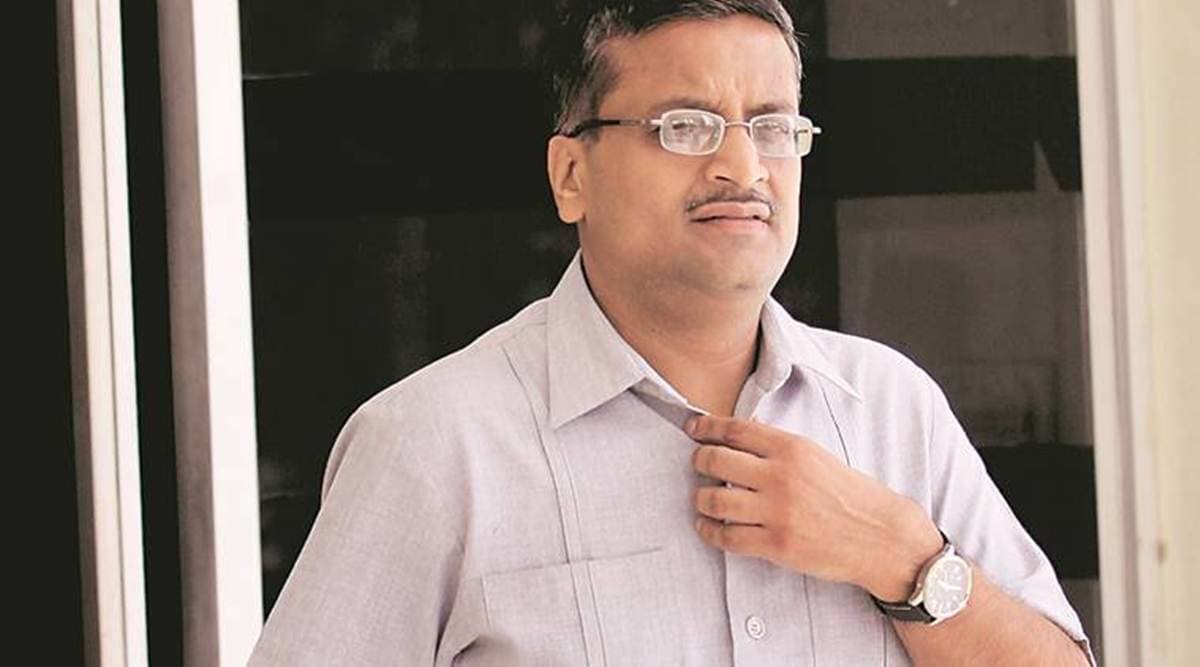
Ashok Kumar Khemka, an IIT Kharagpur graduate with a PhD from the Tata Institute of Fundamental Research, joined the IAS in 1991. By the time he retired on 30 April 2025, he had been shifted between postings 57 times — an average of roughly once every six to seven months, in a system where officers are supposed to receive a minimum tenure of around three years to achieve meaningful results. Few in Haryana’s bureaucracy come close to that record, and it did not happen by accident.
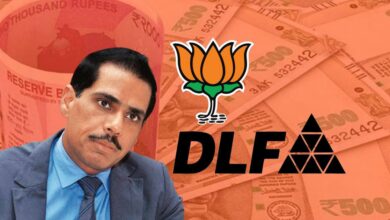
The moment that defined his public career came in October 2012. As Director-General of Land Consolidation and Land Records in Haryana, Ashok Kumar Khemka ordered the cancellation of a land mutation involving a company linked to Robert Vadra, son-in-law of the then Congress president Sonia Gandhi, and the real estate firm DLF. He identified what he regarded as clear irregularities in how a parcel of land in the Manesar-Shikohpur area had changed hands. Within a short period of ordering a broader probe into related land dealings and on the day he signed the cancellation order, Khemka was transferred out of the post.
The government of the day described the move as a routine administrative reshuffle. Ashok Kumar Khemka did not. He called the transfer demoralising and dehumanising and stated publicly that the consequence of doing his job correctly was to be moved before he could see the matter through.
Years later, a Comptroller and Auditor General report flagged serious irregularities in precisely the kind of land deals he had objected to — a delayed vindication that arrived long after the immediate political cost had been extracted from him. He faced chargesheets, was sidelined from central postings for extended periods, and noted that colleagues less inclined to raise difficult issues had advanced past him in seniority and promotions while he was penalised for refusing to look away.
What makes Ashok Kumar Khemka’s story so damning is not only what happened to him. It is what did not happen to the larger pattern of deals he flagged. A single honest officer can slow one transaction, embarrass one company for a news cycle, and force one critical paragraph into an audit report. He cannot, by himself, reform a real estate ecosystem in which land records, approvals, and valuations are manipulated as a matter of routine, because the machinery around him is not designed to reward that kind of intervention — it is designed to isolate it.
Tukaram Mundhe: The “Singham” Who Kept Getting Moved
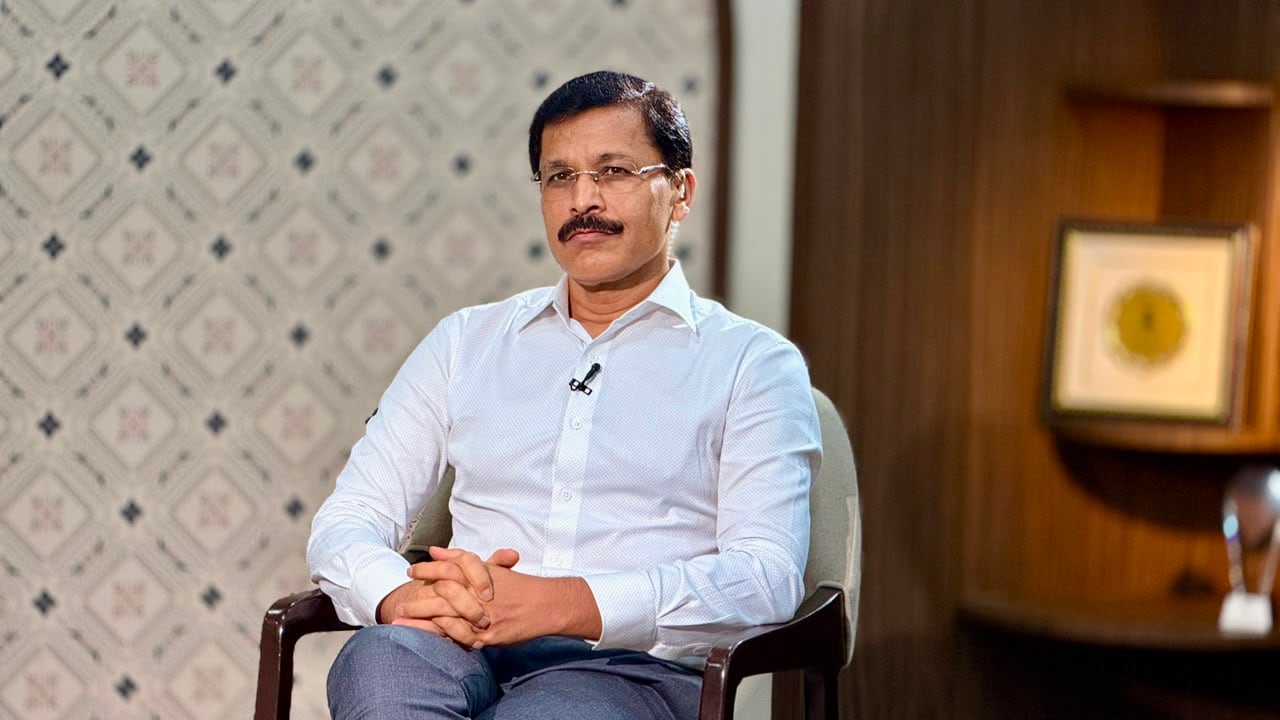
Tukaram Mundhe’s story follows a similar track, just two decades later and in a different state. A farmer’s son from Beed district who secured All India Rank 20 in the civil services examination, Tukaram Mundhe has spent twenty-one years in Maharashtra’s administration building a reputation as the officer few in power wish to retain for long. He has faced around twenty-five transfers, an average tenure well under a year against a supposed norm of three.
Wherever he has gone, the pattern has repeated. As District Collector of Solapur, he improved water management and administrative transparency in a drought-prone region sufficiently to win the state’s Best District Collector award and earn the nickname “Waterman of Maharashtra.” As Chairman and Managing Director of Pune’s public transport utility, PMPML, he confronted an organisation struggling with losses and poor discipline, removing over a hundred contract drivers for chronic absenteeism and imposing accountability on a system that had grown comfortable without it — a move that predictably angered workers’ unions and the political interests linked to them.
As Municipal Commissioner of Nashik, he pursued illegal construction and encroachment with consistency that earned genuine public support and, equally predictably, triggered resistance from elected representatives whose preferred style of management he had disrupted. When he was eventually transferred out of Nashik, ordinary citizens and activists took to the streets demanding his reinstatement — an almost unheard-of response to the removal of a bureaucrat.
Today, Tukaram Mundhe serves as Commissioner of Maharashtra’s Food and Drug Administration, leading a statewide enforcement drive that has involved more than a thousand raids and seizures targeting fake milk, synthetic paneer, illegal gutkha networks, and other adulterated products.
It is, in a sense, the most fitting posting of his career, because food safety in India is precisely the kind of regulatory space where enforcement is supposed to be constant and unremarkable, not dependent on one officer’s personal willingness to make enemies. That it requires a high-visibility crackdown rather than routine regulatory diligence to remove adulterated food from shelves in one of India’s richer states says a great deal about how the system is meant to function versus how it actually functions.
Three Careers, One Institutional Verdict
Line up TN Seshan, Ashok Kumar Khemka, and Tukaram Mundhe, and the message the Indian system has sent, again and again, across three decades and three different domains, is remarkably consistent: doing one’s job with integrity is treated as an act of disruption rather than an act of duty. The reward for enforcing the law is not promotion or protection — it is isolation, transfer, chargesheets, and, at best, grudging respect from a public that has learned to treat honest officers as folk heroes precisely because they remain so rare.
This is the real tragedy inside all three biographies. None of what TN Seshan, Ashok Kumar Khemka, or Tukaram Mundhe did required superhuman ability. Enforcing the Model Code of Conduct, cancelling a mutation built on irregular paperwork, removing drivers who fail to report for work — these are not acts of genius. They form the baseline job description of a regulator. The fact that performing the baseline job earns a bureaucrat national attention, professional risk, and dozens of transfer orders is not primarily a story about three exceptional men. It is a story about how low the baseline has sunk for everyone else.
The Comparative Failure: Three Regulators, Three Ongoing Problems
Now hold that pattern against the state of the institutions these three men touched, as they function today.
The Election Commission that TN Seshan helped turn into a body politicians genuinely feared has, in the view of a substantial section of India’s opposition and civil society, drifted back toward greater deference in certain periods. Questions about voter list integrity, the timing and consistency of Model Code enforcement, and the transparency of decisions during politically sensitive moments have become recurring features of election seasons rather than rare exceptions.
Whatever one’s view of any specific controversy, the broader point stands: the Commission’s authority was strengthened by one man’s willingness to be unpopular with those who appoint his successors, and authority built that way remains inherently fragile. It depends on each subsequent Chief Election Commissioner choosing similar independence, and that is a heavy expectation for an institution whose leadership is still selected by the political establishment it is meant to oversee.
India’s real estate sector has not fundamentally escaped the problems Ashok Kumar Khemka highlighted in 2012. The Real Estate (Regulation and Development) Act of 2016 was intended as the structural solution — dedicated RERA authorities in every state, mandatory project registration, escrow accounts to prevent diversion of homebuyers’ money, and time-bound grievance redressal. On paper, it is exactly the kind of institutional protection that no single officer can provide alone.
In practice, many RERA bodies remain understaffed, rule notifications and full-time appointments have moved slowly in several states, and enforcement orders against defaulting builders often remain unimplemented for years. Insolvency proceedings against stalled projects can drag on for the better part of a decade, developers restructure debt and reduce liability, and buyers who paid for flats years earlier continue waiting for possession, refunds, or simply serious attention from authority. Khemka could interrupt one deal. He could never have built the machinery that stops the pattern, and India has still not fully constructed that machinery.
Food safety regulation presents a parallel picture. The Food Safety and Standards Authority of India exists, holds a legal mandate, and issues standards that, if consistently enforced, would make large-scale adulteration commercially unviable. Yet it has taken an officer with a reputation for personally confronting violators — Mundhe — to generate a high-intensity series of raids that expose synthetic paneer and fake milk operating at scale. That is not the hallmark of a fully functioning regulator. A healthy regulator detects and shuts down adulteration as routine, unglamorous, ongoing work, not as a headline campaign led by one uncompromising commissioner who, based on the pattern of his career, may well be transferred again before the momentum becomes permanent.
What “Corruption” Actually Looks Like in This Story
It is important to be precise about what is broken here, because the simple claim that “bureaucrats are corrupt” is too blunt to explain what happened to TN Seshan, Ashok Kumar Khemka, and Tukaram Mundhe. Their principal obstacles were rarely classic envelopes of cash. More often, the failure sits one level higher — in a political and administrative culture in which transfer orders function as an informal punishment mechanism, postings are treated as patronage to be granted or withdrawn according to loyalty rather than competence, and regulatory bodies are kept just independent enough to exist on paper but not independent enough to act consistently against powerful interests.
That is the deeper, structural form of corruption many of India’s institutions suffer from: not always cash for favours, but a permanent, low-grade capture of the transfer-and-posting system itself. It allows governments to neutralise inconvenient officers without ever formally punishing them for performing their duties. There is no need to bribe an honest Collector to ignore illegal construction if he can simply be transferred before the demolition order is completed.
There is no need to threaten an honest land records officer if he can be moved to a less consequential department before his cancellation order takes full legal effect. This is corruption by administrative attrition, and it is in some ways more dangerous than the cruder variety because it rarely appears in a chargesheet. It simply appears as fifty-seven transfer orders spread across thirty-four years that the system is never required to justify with a coherent public reason.
Why This Matters Beyond Three Individual Stories
There is a temptation to treat stories like these as purely inspirational — three honest men who refused to bend, a triumph of individual character over a flawed system. That reading is not wrong, but it is dangerously incomplete, because it lets the system itself off the hook.
India cannot run a multi-trillion-dollar economy, protect the savings of crores of homebuyers, keep adulterated food off dinner tables, and guarantee free and fair elections for 1.4 billion citizens by hoping that, every generation or so, a Seshan, a Khemka, or a Mundhe clears the civil services examination and refuses to be broken by the transfer system. That is not institutional design. It is institutional luck, and luck is not a governance strategy.
The honest comparison is not between these three officers and their less scrupulous colleagues. It is between what one determined individual can achieve with almost no institutional protection, and what an entire regulatory body with full legal backing, a dedicated budget, and a specific mandate still fails to achieve consistently.
Seshan needed no new law to force greater accountability into Indian elections — he used powers the Election Commission already possessed. Khemka needed no new agency to expose one irregular land deal — he simply refused to endorse paperwork that did not add up. Mundhe needs no new statute to seize fake paneer — existing food safety rules already make the activity illegal. In every case, the tools already existed. What was missing, and remains missing, is the institutional will to use those tools steadily, without waiting for one uncompromising officer to risk his career doing the work alone.
What Needs to Change
If TN Seshan, Ashok Kumar Khemka, and Tukaram Mundhe are the exceptions that prove the rule, the solution is not to hope for more exceptions. It is to make honesty the path of least resistance rather than the path of maximum professional risk. That requires fixed minimum tenures for regulatory postings, enforced by law rather than convention, so that transfers cannot be used as silent punishment for inconvenient decisions. It requires genuinely independent selection processes for the heads of bodies such as the Election Commission and state RERA authorities, insulated from the discretion of the governments they are meant to oversee.
It requires real, publicly tracked consequences for developers, officials, or institutions that violate homebuyer protections or food safety standards, rather than settlements and restructurings that allow the underlying behaviour to continue under a new name. And it means treating an officer’s transfer record as a matter of public accountability in its own right — because a bureaucrat moved fifty-seven times in one career is not, on its own, evidence of that officer’s instability. Increasingly, in India, it looks like evidence of the opposite.
Sardar Patel wanted a steel frame that would hold the country together regardless of who held power. What India has often produced instead, judging by the treatment of its own Seshans, Khemkas, and Mundhes, is a frame that stays straight only for as long as one honest officer is willing to absorb the bending on his own back. That is not a compliment to the system. It is an indictment of it.