BLS International’s Record Of Service Failures: How The Company Is Degrading India’s Name On Foreign Soil?


For years BLS International presented itself as a reliable global partner for governments that needed to outsource visa, passport and consular services. The company processed millions of applications, expanded across continents and reported rising revenues. Yet by 2026 a different picture had taken shape. The Indian Embassy in the UAE ended a partnership that had lasted since 2011 and handed the work to Alhind Tours and Travels. In the same year diplomatic sources confirmed that BLS International also lost its mandates in Kuwait and Singapore. These exits did not occur in isolation. They followed earlier terminations, regulatory action and a steady stream of applicant complaints that raised persistent questions about service quality, transparency and modernisation.

The UAE decision carries special weight. BLS International had held the contract for passport renewals, visa applications, OCI cards and related services for a community of more than four million Indians. 15 years after winning the work, the company was replaced. A diplomatic source familiar with the process offered a direct explanation: the company received the UAE contract in 2011, yet “in 15 years they did not upgrade services and did not modernise the system.” That assessment points to the central criticism now levelled against BLS International.
While digital tools, online appointment systems and customer expectations advanced, many applicants continued to encounter long queues, limited slots, opaque optional fees and slow handling of routine deficiencies. The loss of the UAE mandate, coming alongside the exits from Kuwait and Singapore, signals that several Indian missions had reached the same conclusion at roughly the same time.
The pattern did not begin in 2026. In 2023 Estonia terminated its arrangement with BLS International for the e-Residency programme after authorities identified unauthorised issuance of documents, including activity in Bangkok. Estonian officials described the breaches as a serious violation of protocol. BLS International responded that the problem involved individual employees, that disciplinary action had been taken, and that the conduct was not systemic. The contract was still ended. The episode left a clear public record: a European government had found the company’s processes wanting and chosen to walk away.
Canada produced a different but equally damaging set of complaints. As the exclusive provider of Indian consular services, BLS International became the subject of sustained applicant frustration. A CBC investigation in 2025 documented numerous accounts of pressure to pay extra fees for services that applicants felt were unnecessary — courier charges even when documents were collected in person, “premium” add-ons that felt mandatory, and corrections for minor form or photo issues.
Former employees described internal incentives that encouraged staff to maximise charges. Online petitions gathered thousands of signatures. The Better Business Bureau assigned an “F” rating. Members of the Indian diaspora reported feeling that their ability to renew documents or visit family depended on agreeing to additional payments. BLS stated that it investigates concerns and operates in line with government standards. The volume of complaints, however, remained high and publicly visible.
India’s own Ministry of External Affairs added formal weight to the criticism. In October 2025 the MEA debarred BLS International from participating in new tenders for Indian missions abroad for two years, citing court cases and applicant complaints about overcharging and service deficiencies. Existing contracts were left untouched. BLS International challenged the order and the Delhi High Court later set the debarment aside, restoring formal eligibility. The judicial reversal did not erase the original finding that the ministry had sufficient grounds for concern. The episode placed an official Indian government stamp on the same issues that applicants and foreign missions had already been raising.

Questions of disclosure compounded the service critiques. In July 2023 BLS International announced that it had signed a contract with the Embassy of Egypt in India. The claim later proved incorrect. The episode fed a broader narrative that the company’s public statements sometimes outran the facts on the ground. When a firm’s credibility depends on the trust of governments and the patience of applicants, even a single inaccurate announcement carries lasting cost.
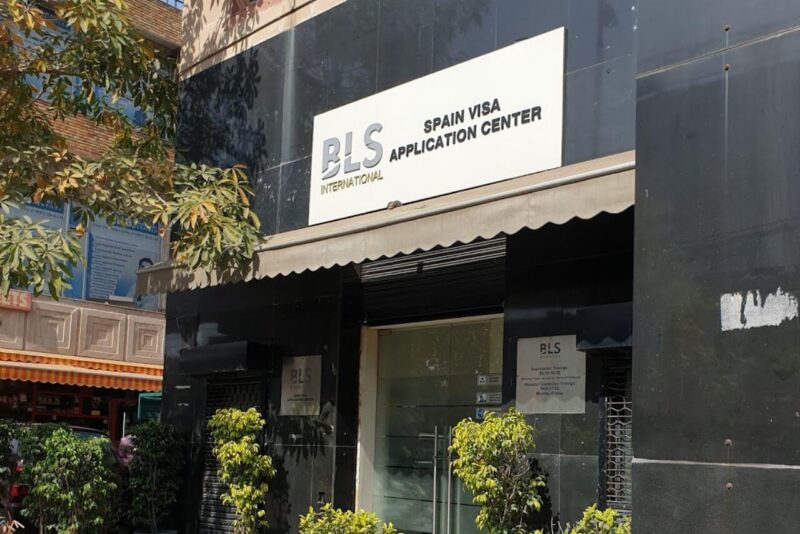
More recent developments have kept the pressure alive. In August 2026 Spanish investigators examining an alleged visa-for-cash network at the Spanish Consulate in Algiers expanded their inquiry to include processing platforms and named BLS International. The company issued a categorical denial, stating there was no evidence of wrongdoing by it or its employees and that its role was strictly administrative. Shares fell sharply. No contract has been cancelled, yet the investigation added another layer of scrutiny to a firm already facing multiple open questions.
Across these episodes a consistent theme emerges. Applicants repeatedly describe systems that feel slow, opaque and geared toward extracting optional fees. Missions that once relied on BLS International have chosen to replace it. Regulatory bodies have recorded complaints and, in one case, imposed a temporary ban. Estonia terminated a contract over documented process breaches.
The UAE, after 15 years, decided the service had not been modernised. Kuwait and Singapore followed in the same year. What the record also shows is a repeated failure to convince clients and applicants that the quality of service matches the scale of the operation. A company that processes millions of applications and reports record revenues still finds itself losing long-standing contracts and facing public complaints in multiple countries. The financial results for FY26 and the first quarter of FY27 demonstrate continued growth and strong cash generation. Those numbers, however, sit alongside a lengthening list of markets that have chosen to end or restrict their relationship with the firm.
The practical consequences fall on ordinary people. An Indian worker in Dubai who needs a passport renewed, a student in Toronto who needs a police certificate, or a family seeking OCI cards all become dependent on the efficiency and transparency of the outsourced centre. When that centre is perceived as slow, expensive or unresponsive, the cost is measured in delayed travel, extra payments and eroded trust in the system itself. Governments that outsource these services retain ultimate responsibility for the quality of the experience. The 2026 exits from UAE, Kuwait and Singapore suggest that at least some missions concluded the previous arrangement no longer met that responsibility.
BLS International continues to hold contracts with other governments and has expanded its digital and domestic citizen-service businesses. The Aadhaar-related work offers a multi-year revenue stream independent of international visa mandates. The balance sheet remains strong. Yet the simultaneous loss of three significant Indian-mission contracts in a single year, coming after Estonia’s termination, Canada’s wave of complaints, the temporary MEA debarment and the Spanish investigation, has altered the company’s public standing. What was once marketed as a global success story now includes a visible record of service shortfalls and client departures.
The central question is no longer whether isolated problems occurred. The question is whether a pattern of inadequate modernisation, applicant dissatisfaction and repeated client exits has become the defining feature of BLS International’s recent history. The UAE’s decision after fifteen years of partnership, the parallel losses in Kuwait and Singapore, the earlier termination in Estonia, the sustained complaints in Canada and the MEA’s temporary ban all point in the same direction. For a company whose business depends on the confidence of governments and the tolerance of applicants, that pattern is the most serious challenge it now faces.