Zepto’s Betting Link? ED Says Zepto Promoted Parimatch
How India's Fastest-Growing Grocery App Quietly Promoted a Banned Platform, And Why Investors Should Be Worried

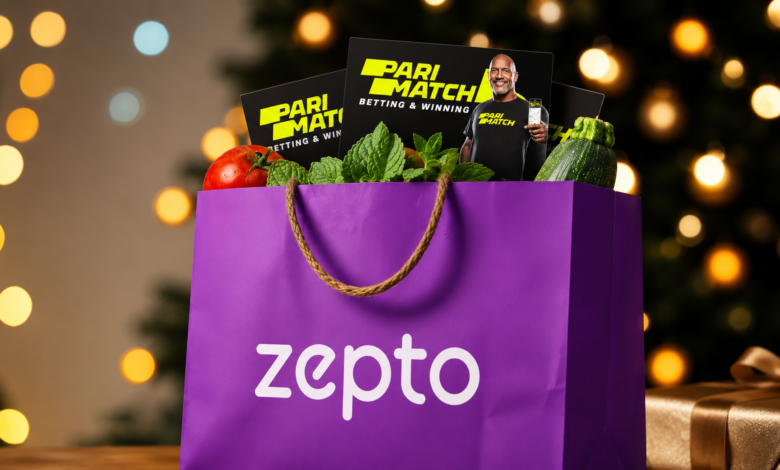
Imagine you open your Zepto app to order groceries. You add some milk, bread, eggs, and a packet of biscuits. You check your cart one last time before paying, and sitting right there, alongside your weekly essentials, is an advertisement for an offshore betting platform that the Indian government has banned. It costs ₹0. It does nothing. But it stays on your screen, every time you open your cart, quietly burning a brand name into your memory. This is not a hypothetical. This is what reportedly happened in March 2025, right in the middle of India’s most watched cricket season.
And now, just as Zepto is gearing up for one of India’s most-anticipated IPOs, the Enforcement Directorate, India’s federal financial crimes agency, has come knocking on its door.
What Happened: The Parimatch Ad That Should Never Have Existed
Parimatch is a Cyprus-based online betting platform. It is banned in India. The Ministry of Electronics and IT (MeitY) issued a blocking order against it, and the Ministry of Information and Broadcasting issued an advisory as far back as 2022 warning platforms against carrying advertisements for online betting and gambling services.
Despite all of this, in March 2025, Parimatch advertisements appeared inside Zepto’s app, during the IPL season, when cricket-mad Indians are at their most susceptible to sports-adjacent marketing.
According to reports, the ad was embedded not as a banner- the kind users scroll past- but as a product in the shopping cart, priced at ₹0. This is a crucial detail. A zero-rupee item triggers no financial instinct. Users scanning their carts for expensive additions have no reason to question a free item. So the ad sat there, days after days, building what marketers call “passive brand recall” for a platform that had no legal right to advertise anywhere in India.
It did not stop at the app. Physical flyers promoting Parimatch were reportedly inserted into customer delivery orders; meaning the illegal betting platform’s advertising was physically carried into Indian homes, tucked between grocery bags, by Zepto’s own delivery infrastructure.

The ₹0 Trick: Isn’t This a Dark Pattern?
What was deployed on Zepto’s platform is a hint of dark pattern, a design technique that manipulates users without their knowledge or consent. India’s Central Consumer Protection Authority (CCPA) issued guidelines on dark patterns in November 2023. Under those guidelines, two categories apply directly here.
The first is “Disguised Advertisement”, where promotional or commercial content is presented in a format that users associate with something else. In this case, an advertisement was presented as a product listing. Users trust their cart to contain only items they have consciously added. Placing an ad inside that trusted space, in a product-shaped container, is deceptive by design.
The second is a variant of “Forced Action”, where users are exposed to commercial content as an unavoidable condition of performing a normal action. Every time a Zepto user opened their cart, they were exposed to the Parimatch brand without ever choosing to engage with an advertisement.
This is not a minor UX quibble. Globally, regulators have increasingly treated cart-injection and disguised listing tactics as serious violations of consumer rights. The EU’s Digital Services Act and the US Federal Trade Commission have both flagged such practices as manipulative. India’s own CCPA framework, while relatively new, is explicit on disguised advertising, and many companies have come under the scanner for exploiting dark patterns to lure customers. Recently, CCPA slapped fines on PhysicsWallah, McAfee for ‘Dark Pattern’ practices.
What makes this particular dark pattern more serious than most is the layer of illegality sitting beneath it. Most dark patterns trick users into spending money they didn’t mean to spend, or sharing data they didn’t mean to share. Those are ethically problematic. This one was doing something structurally different: it was being used as a regulatory evasion tool, a method to generate brand awareness for a banned platform through a channel that enforcement agencies were not, at the time, monitoring.
Think about the sophistication of the choice. Parimatch could not run a Google ad in India, because that would be flagged. It could not take out a television commercial because the rulebook, aka the advisory covers that. But a ₹0 item slipped into a shopping cart on a quick-commerce platform? That is a format nobody had thought to police yet. The very novelty of the format was the shield.
The “Third Party Did It” Defence, And Why It Doesn’t Hold
When the story broke and the ED came calling, Zepto issued a statement. It was carefully worded. It said the advertisement was placed in March 2025 “through a third-party media agency arrangement for a merchandise entity,” that Zepto “did not directly onboard, contract with, or manage the advertiser in question,” and that the company “had no involvement in any betting, gaming, payments, user acquisition, or operational activity linked to the entity under investigation.”
It is, on the surface, a coherent defence. And it is also, on examination, one that raises more questions than it answers. Here is the fundamental problem with the “third party did it” argument: Zepto’s UI is not a third-party property. Rather than relying on third-party software as a service (SaaS) or white-label providers for their app experience, Zepto’s engineering and product teams maintain complete control over their application environment
The ₹0 cart item did not appear on some external website over which Zepto has no control. It appeared inside Zepto’s own application, in Zepto’s own cart interface, in a product-listing format that Zepto itself designed and maintains. When a user opened their Zepto app and saw a Parimatch “product” sitting in their cart, they were looking at Zepto’s own screen real estate. The fact that a vendor intermediary facilitated the placement does not change who owns the interface, who profits from advertising on it, and who is responsible for what appears there.
This event is similar to what quick commerce, or food delivery companies do with their delivery partners. When Indian quick-commerce and food-delivery platforms classify their delivery workers as “independent contractors” rather than employees, they use the same structural logic. They say- these workers are managed by a third-party arrangement, we don’t directly employ them, and therefore we owe them no provident fund, no ESI, no minimum wage guarantee, no job security. The legal fiction of the intermediary is used to sever the platform’s liability from the consequences of its operational decisions.
The problem in both cases is identical. The platform exercises full control when it is convenient to do so, and then declares itself a passive intermediary when accountability arrives. Zepto controls every pixel of its app interface. It controls which ad formats are permitted, what verification process advertisers must pass through, and how the cart behaves. It made a decision, whether consciously or by negligence, to allow a format where promotional content could be embedded as a product listing. That is a platform architecture decision, not a vendor decision.
The Ministry of I&B had issued its advisory against betting platform advertising in 2022, three years before this incident. Any advertiser verification process with real teeth should have flagged “Parimatch” immediately. It is a platform that has been on Indian regulatory radar for years. The failure to catch it is not a neutral oversight. It is evidence of a verification process that was either entirely absent or so poorly designed that a Cyprus-based banned betting company could slip through by routing its spend via a media agency. Zepto’s defence also conspicuously avoids four questions that genuine accountability would require answering.
One: What does your advertiser onboarding checklist look like, and which specific step failed to catch Parimatch?
Two: Who approved the ₹0 product-listing format as a permissible advertising mechanism, and was it ever reviewed for misuse potential?
Three: How much advertising revenue did Zepto earn from this campaign?
Four: Has the third-party vendor been terminated or blacklisted?
None of these have been publicly answered. Instead, what was offered was a statement that pointed outward, expressed cooperation with the ED, and said nothing of substance about internal failure. That is reputation management, not accountability.

Who Is Parimatch, and Why Does the ED Care?
To understand the scale of what is at stake, it helps to understand what Parimatch actually is, and what Indian investigators have found. Parimatch is a Cyprus-based sports betting and online gambling platform that has been banned in India. Despite the ban, it allegedly continued operating in India through mirror websites, alternative web addresses that replicate the main platform and can be accessed even when the primary domain is blocked.
In August 2025, the Enforcement Directorate conducted raids at 17 locations across six states, Mumbai, Delhi-NCR, Hyderabad, Jaipur, Madurai, and Surat. What they found was significant. According to the ED, Parimatch allegedly generated over ₹3,000 crore in a single year through its Indian operations. The agency froze ₹110 crore held in what it described as mule bank accounts and seized more than 1,200 credit cards allegedly used to launder money.
The ED’s investigation, filed under the Prevention of Money Laundering Act (PMLA), stems from a 2024 FIR filed by the Mumbai cyber police. Preliminary findings indicated that funds collected from users were layered through multiple payment aggregators, domestic money transfer agents, crypto wallets, and cash withdrawals, classic money laundering architecture.
Crucially, the ED found that Parimatch had set up Indian entities specifically to run surrogate advertisements under the names “Parimatch Sports” and “Parimatch News”, shell-brand names that made the content look like sports media rather than gambling promotion. Investigators also found the platform had gained reach in India through sports sponsorships and celebrity partnerships.
In short, Parimatch ran a sophisticated, multi-channel advertising and distribution operation in India while the platform itself was banned. The Zepto incident, ₹0 cart listings and flyers in grocery deliveries, was one node in a wider network designed to keep the Parimatch brand visible to Indian consumers regardless of what the law said.
The Broader Pattern: India’s Illegal Betting Industry Is Getting Creative
The Zepto-Parimatch incident is not an isolated event. It is part of a visible escalation in how offshore betting platforms have been evading India’s advertising restrictions.
Analysts have documented the following tactics in use. Surrogate brand advertising under names like “Parimatch Sports” that suggest a sports media entity; influencer partnerships where content creators post about “sports analysis” while obliquely promoting platforms; social media pages built around cricket commentary that carry embedded promotional links; and now embedded advertising inside trusted consumer apps.
The Zepto incident followed reports that 1xBet, another Cyprus-based betting platform banned in India, had placed advertising on Uber cabs in Delhi and Mumbai during the same IPL season. The pattern is clear. These platforms are systematically testing Indian consumer touchpoints to find the ones that enforcement has not yet reached. Quick-commerce platforms, with their massive user bases, high-frequency engagement during sports seasons, and relatively opaque advertising stacks, were an obvious next target.
The IPO Question: What Investors Are Not Being Told
This is where the story moves from consumer rights to investor rights. Zepto is preparing for an IPO. The company has grown at remarkable speed, built significant infrastructure, and established itself as a serious player in India’s quick-commerce market. Institutional and retail investors are being asked to value that company and decide whether to put their money into it. What the Parimatch incident reveals is a set of governance questions that those investors deserve clear answers to.
An advertiser verification failure of this nature, allowing a banned, money-laundering-linked offshore betting platform to embed advertising inside the app’s core transactional UI is not a minor compliance slip. It suggests gaps in ad governance, legal risk review, and platform policy enforcement. For a company seeking a public market valuation, these are material questions.
The ED’s involvement adds a layer of regulatory risk that any prospective investor should factor in. Zepto has not been named as an accused, and the agency has reportedly communicated primarily by email. But regulatory attention from India’s federal financial crime investigator, in the context of a ₹3,000 crore money laundering case, is not a footnote. It is a disclosure-level event.
There is also a reputational dimension. A company whose platform delivered illegal betting advertisements physically into customers’ homes, even if through a vendor faces a legitimate question about the culture of compliance that its leadership has built. Culture is not visible in a balance sheet, but it shows up eventually in decisions like which ad formats to enable, which verification steps to require, and how swiftly to address a regulatory advisory issued years before the incident.
None of this necessarily makes Zepto a bad investment. But the questions raised by this incident are material, they are unresolved, and they are the kind of questions that an IPO prospectus should address head-on rather than leave to an investigative article to surface.
What Accountability Should Look Like
India’s Promotion and Regulation of Online Gaming Bill, 2025, makes advertising of real-money gaming and betting platforms a criminal offence, with jail terms of up to two years and fines up to ₹50 lakh for first-time violations, and up to three years with fines of ₹1 crore for repeat offences. Platforms that allow such advertising, whether directly or through intermediaries will need to demonstrate that their verification and compliance infrastructure meets a serious legal standard.
For Zepto, the minimum steps that genuine accountability would require are straightforward. Publish the details of its advertiser verification process, and explain which step failed. Commission an independent audit of its ad formats, specifically any format that places promotional content inside transactional user interfaces. Return any revenue earned from the Parimatch campaign. Terminate its relationship with the vendor responsible. And report publicly on what it has changed.
These are not radical demands. They are the baseline of what a company that takes its governance seriously would do without being asked.
The Shrug Has Consequences
There is a phrase that describes what Zepto has done in response to this episode: the corporate shrug. It is a move that large platforms have perfected over the past decade. When something goes wrong, when a worker is injured, when a user is defrauded, when a banned entity’s advertising ends up inside your app, you point at the intermediary, express cooperation with the relevant authority, and wait for the news cycle to move on. It works, most of the time. Until it doesn’t.
What this episode illustrates, at its core, is that the infrastructure of India’s digital consumer economy, where its apps, its delivery networks, its advertising stacks, is being exploited by bad actors, and that the platforms operating that infrastructure have an incentive to look the other way because doing so is profitable. The ad revenue flows in. The liability flows out to a vendor. The banned platform gets its brand recall. The consumer gets a ₹0 item in their cart they never asked for.
India’s regulators are catching up. The ED’s multi-state raids, the new online gaming legislation, the CCPA’s dark patterns guidelines — these are signs that the era in which platforms could treat “third party did it” as a complete defence is ending. For Zepto, the timing could not be more consequential. The company is asking the Indian public to trust it with their investment. That trust has to be earned with transparency — about what went wrong, why it went wrong, and what has changed. A press statement pointing at a vendor is not that. It is the beginning of a conversation that, so far, has only been started by the people asking the questions.