The IDFC Bank ₹645 Crore Fraud, Realty Baron Vikram Wadhwa’s Arrest And The Question India Keeps Avoiding: Who Protects Powerful Builders?
How do builders, developers and real-estate promoters repeatedly find themselves facing allegations of fraud, diversion of funds, regulatory violations, delayed projects, or homebuyer complaints for years before serious enforcement action arrives? Beyond the arrest of Vikram Wadhwa in the IDFC First Bank Scam, the broader question: can scandals of this scale thrive without serious failures somewhere within the system?

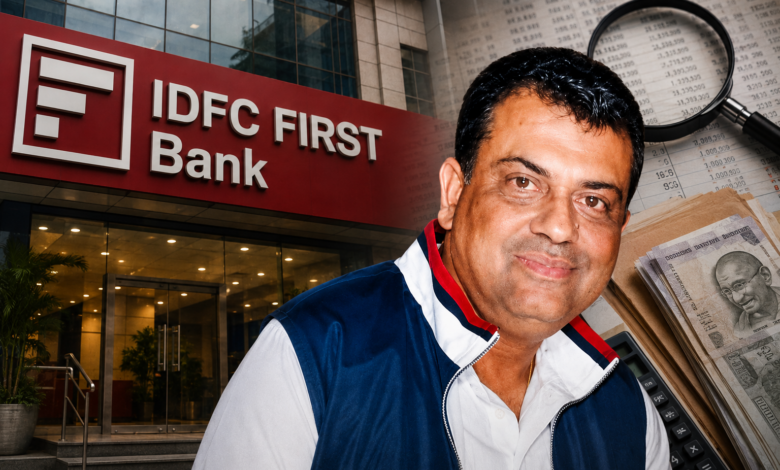
What began as an alleged banking fraud at an IDFC First Bank branch in Chandigarh has since evolved into one of the more closely watched financial crime investigations in recent months, drawing the attention of multiple agencies, including the Haryana Vigilance Bureau, the Central Bureau of Investigation (CBI) and the Enforcement Directorate (ED).
The case centres around the alleged fraudulent diversion of approximately ₹645 crore from accounts linked to various government departments and other entities. Authorities claim that funds were siphoned off through a network of transactions that remained undetected for a considerable period before the alleged irregularities eventually came to light.
The investigation was initially taken up by the Haryana Vigilance Bureau, which began examining allegations that funds had been improperly transferred from government-linked accounts maintained at the Chandigarh branch of IDFC First Bank. As investigators dug deeper, the probe reportedly expanded to include multiple individuals, entities and financial transactions spread across different jurisdictions.
The scale of the alleged fraud soon attracted the attention of central agencies. The CBI subsequently entered the picture, while the Enforcement Directorate launched a parallel investigation under the Prevention of Money Laundering Act (PMLA) to determine whether the alleged proceeds of crime had been concealed, transferred or invested through various channels.
The case has already grown far beyond the boundaries of a conventional banking fraud. What initially appeared to be a case of unauthorised fund transfers has now expanded into a far larger probe involving allegations of financial misconduct, complex money trails and the movement of hundreds of crores through multiple channels.
It is this expanding investigation and the questions surrounding where the money allegedly went — that would eventually bring prominent real-estate businessman Vikram Wadhwa under the Enforcement Directorate’s scanner.

Why Did The Enforcement Directorate Enter The Picture?
While the alleged ₹645 crore fraud was serious enough on its own, the case took on an entirely new dimension once investigators began examining what happened to the money after it was allegedly diverted.
This is where the Enforcement Directorate entered the picture.
Unlike agencies investigating the alleged fraud itself, the ED’s primary focus is not merely on how the money was allegedly taken, but on what happened to those funds afterwards.
Under the Prevention of Money Laundering Act (PMLA), the agency investigates whether proceeds generated from an alleged crime were subsequently concealed, transferred, layered or integrated into seemingly legitimate financial channels.
According to investigators, the money trail in the IDFC First Bank case extended well beyond the original transactions that triggered the probe. As authorities began tracing the movement of funds, they reportedly uncovered a network of accounts, entities and financial transactions that warranted closer scrutiny.
The ED’s investigation is centred on determining whether the funds allegedly siphoned from the bank accounts were subsequently routed through various entities in an attempt to disguise their origin. Such investigations typically involve painstaking analysis of bank statements, corporate records, property transactions and financial relationships between individuals and businesses.
What makes money-laundering investigations particularly significant is that they often reveal a much larger ecosystem than the original offence. A banking fraud may involve a handful of individuals, but following the money can lead investigators through layers of transactions, companies, investments and assets spread across multiple jurisdictions.
In the present case, the ED has reportedly examined numerous bank accounts and financial transactions as part of its effort to reconstruct the alleged flow of funds. The agency has also taken steps against certain accounts and assets that investigators believe may be connected to the proceeds of crime.
Among the most prominent names to emerge from the investigation was that of real-estate businessman Vikram Wadhwa, whose arrest has now brought the case into the national spotlight.
Why Was Vikram Wadhwa Arrested?
According to the ED, Wadhwa came under the agency’s scanner during its investigation into the alleged movement of funds linked to the ₹645 crore IDFC First Bank fraud case.
The agency has alleged that more than ₹70 crore linked to the suspected proceeds of crime was routed through entities associated with Wadhwa. Investigators further claim that some of these funds were subsequently invested in businesses, real-estate projects and other assets. It is these alleged transactions that form the basis of the money-laundering allegations currently being examined by the ED.
Yet, irrespective of how the legal proceedings eventually unfold, the arrest has added a new dimension to the case. The involvement of a well-known real-estate figure has shifted public attention beyond the original banking fraud and towards a broader examination of how large sums of money allegedly moved through various channels before attracting the attention of enforcement agencies.
The Money Trail And The Questions It Raises
One of the most striking aspects of the ₹645 crore IDFC First Bank case is not merely the size of the alleged fraud, but the complexity of the money trail that investigators claim to have uncovered. Yet perhaps the most important question raised by the case has little to do with the technicalities of money laundering and everything to do with oversight.
Modern banking systems are built around compliance mechanisms designed to flag unusual activity. Financial institutions are required to maintain records, monitor transactions and report suspicious activity. Auditors, regulators and compliance teams exist precisely because large and unusual movements of money are expected to attract scrutiny.
Were there warning signals that were missed? Were existing safeguards adequate? Did compliance mechanisms function as intended? And most importantly – could the alleged movement of funds have been detected earlier had stronger controls been in place?
These are questions go to the heart of how effectively India’s financial and regulatory systems are equipped to identify and prevent large-scale wrongdoing before losses reach hundreds of crores. Every major financial scandal eventually reaches a point where the focus shifts from the accused to the system itself.
Unlike many other industries, real estate cannot function in isolation.
Developers require land acquisitions, change-of-land-use permissions, building plan approvals, environmental clearances, utility connections, financing arrangements and a host of other regulatory approvals before a project can move from blueprint to reality. In many cases, this means interacting with multiple government departments, local authorities, financial institutions and regulatory bodies over the lifespan of a project.
This is precisely why controversies involving real-estate developers often attract intense public scrutiny.
Over the years, homebuyers across India have repeatedly found themselves protesting delayed projects, missed possession deadlines, stalled construction, insolvency proceedings and allegations of fund diversion. While every case is different and many developers have successfully delivered projects while navigating difficult market conditions, the frequency of such disputes has fuelled concerns about accountability within the sector.
The introduction of the Real Estate (Regulation and Development) Act, or RERA, was intended to address many of these concerns by improving transparency and strengthening consumer protections. The legislation undoubtedly represented a major step forward. Yet despite these reforms, disputes between developers and homebuyers continue to surface across several parts of the country, often leading to prolonged litigation and years of uncertainty for affected buyers.
This is where the larger question emerges.
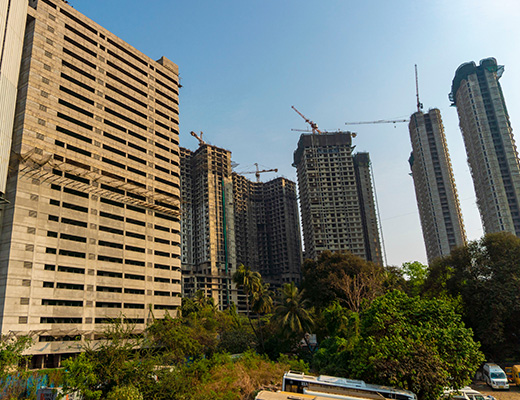
When a sector repeatedly finds itself at the centre of financial disputes, regulatory interventions and consumer grievances, is the problem limited to a handful of bad actors, or does it point towards deeper structural weaknesses that remain unresolved?
The issue is not whether every builder is guilty of wrongdoing. Far from it. India’s real-estate sector has played a vital role in economic growth, employment generation and urban development. Thousands of developers operate within the law and deliver projects that transform cities and communities.
The concern, rather, is whether the systems meant to ensure accountability are robust enough when things go wrong.
- Why do homebuyers often spend years fighting for possession of homes they have already paid for?
- Why do major disputes sometimes reach a breaking point before attracting serious regulatory attention?
- Why do allegations involving financial irregularities frequently emerge only after losses have mounted and public frustration has reached a tipping point?
These are questions that extend beyond any one company or any one individual. They speak to a broader challenge facing India’s real-estate ecosystem: how to ensure that growth, investment and development are accompanied by equally strong mechanisms of transparency and accountability.
The problem is that individual homebuyers typically possess limited resources compared to the organisations they are challenging. What begins as a dream of home ownership can quickly turn into years of legal battles, financial strain and emotional stress. For many families, a home represents the largest investment they will ever make. When projects are delayed or disputes arise, the consequences extend far beyond balance sheets and court filings.
This reality raises an important question about the effectiveness of oversight mechanisms.
The Last Bit,
The arrest of Vikram Wadhwa is welcome, but the bigger question extends far beyond one developer.
If allegations of wrongdoing can persist for years before the system reacts, then perhaps India should spend less time examining individual builders and more time examining the ecosystem that allows such controversies to survive for so long.
But regardless of how the case eventually concludes, it has already exposed a question that extends far beyond any one businessman, one bank or even one alleged fraud.
How does an alleged ₹645 crore fraud grow to such proportions before attracting the full attention of the system?
If investigators are today able to trace money trails, identify entities, reconstruct transactions and map financial relationships, why were those warning signs not detected earlier?
More importantly, who is responsible when the safeguards fail?
Banks have compliance mechanisms. Regulators have oversight powers. Government departments have audit systems. Enforcement agencies have investigative powers. Yet time and again, major scandals seem to come to light only after losses have mounted, public outrage has grown and the damage has already been done.
The questions become even more difficult when real estate enters the picture. A sector that depends on approvals, financing, regulation and public trust cannot afford persistent doubts about accountability.