Why India Is Reassessing The Indus Waters Treaty, A 66-Year-Old Pact Now At The Centre Of India-Pakistan’s Newest Conflict
Few agreements have demonstrated the resilience of the Indus Waters Treaty. It survived wars, terrorist attacks and decades of hostility between India and Pakistan. Yet today, a 66-year-old pact once hailed as a model of cooperation finds itself at the centre of a growing confrontation, raising questions about water, security and the future of bilateral relations.

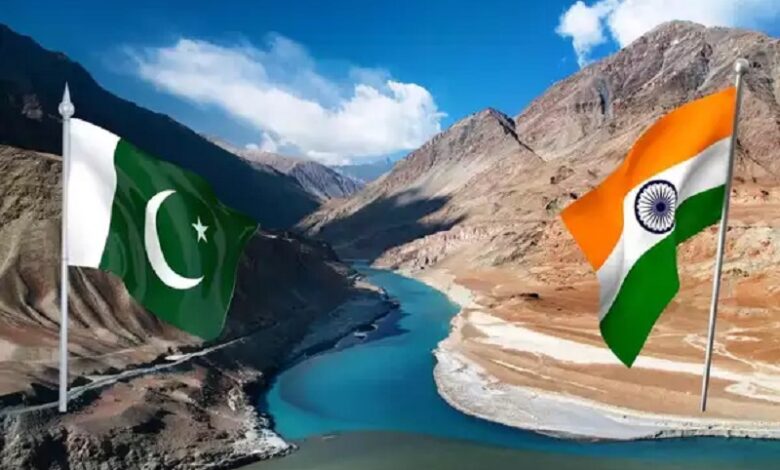
The Indus Waters Treaty occupied a rare space in India-Pakistan relations. Governments changed, wars were fought, diplomatic ties collapsed and terrorist attacks repeatedly pushed the two nuclear-armed neighbours to the brink. Yet through every crisis, the treaty endured.
Today, that certainty is gone.
The latest flashpoint emerged after Pakistan’s Defence Minister Khawaja Asif warned that Islamabad could resort to war if it believed the country’s water security was under serious threat. The remarks came amid growing tensions over India’s decision to place the Indus Waters Treaty in abeyance following the April 2025 terror attack in Pahalgam that killed 26 people.
At first glance, the statement may appear to be another episode in the long history of hostile rhetoric between India and Pakistan. Yet the significance of the dispute extends far beyond political posturing. Water has become intertwined with questions of national security, terrorism, economic stability and strategic leverage in a way that was almost unthinkable a few years ago.
The immediate trigger for the current crisis was India’s decision to suspend normal treaty obligations until Pakistan takes what New Delhi describes as credible and irreversible action against cross-border terrorism. The move marked a fundamental shift in India’s approach. Rather than treating water cooperation as a separate humanitarian or technical issue, the government has explicitly linked it to Pakistan’s security behaviour.
This is what makes the current standoff different from previous disagreements over dams, river flows or arbitration proceedings. The debate is no longer centred on how the treaty should be interpreted. It is about whether the assumptions that sustained the agreement for more than six decades still hold relevance in a relationship increasingly defined by distrust and security concerns.
The real story, therefore, is not simply about rivers flowing across borders. It is about the future of one of the world’s most durable international agreements and whether India has decided that water, like trade and diplomacy, can no longer remain insulated from the broader realities of its relationship with Pakistan.

The Treaty That Survived Every War
To understand why the current dispute carries such significance, it is necessary to revisit the origins of the Indus Waters Treaty itself.
The agreement was born out of one of the most complicated consequences of Partition. When British India was divided in 1947, the rivers of the Indus basin suddenly became an international resource shared between two newly independent countries. While several rivers originated in India, much of the canal infrastructure that depended on them lay inside Pakistan.
The vulnerability of this arrangement became apparent almost immediately. In April 1948, India temporarily halted water supplies from certain canals flowing into Pakistan, triggering one of the earliest disputes between the two nations. The episode exposed a difficult reality: Pakistan’s agricultural economy was heavily dependent on rivers whose sources lay across the border.
Recognising the potential for a prolonged conflict, the World Bank stepped in to facilitate negotiations. What followed was more than a decade of discussions, technical studies and diplomatic bargaining before a breakthrough was finally achieved.
The result was the Indus Waters Treaty, signed in Karachi on September 19, 1960, by Indian Prime Minister Jawaharlal Nehru and Pakistani President Ayub Khan. Instead of attempting to jointly manage every river, the agreement adopted a simpler approach. The six rivers of the Indus basin were effectively divided between the two countries, creating a framework intended to minimise future disputes.
What followed was remarkable. The treaty survived the India-Pakistan wars of 1965, 1971 and 1999. It remained intact during periods of military mobilisation, border skirmishes and diplomatic breakdowns. Even after major terrorist attacks such as Mumbai in 2008 and Pulwama in 2019, both countries continued to honour the agreement.
Few international treaties have demonstrated such resilience. In a relationship often defined by hostility, the Indus Waters Treaty came to symbolise the idea that certain areas of cooperation could remain insulated from politics and conflict. For decades, it was cited globally as proof that even bitter rivals could find ways to manage shared resources peacefully.
That reputation is precisely why the current confrontation is attracting so much attention. A treaty once regarded as virtually untouchable is now facing its most serious challenge since the day it was signed.
Why India Began Questioning The Treaty
While the Pahalgam attack may have accelerated events, India’s dissatisfaction with the Indus Waters Treaty did not emerge overnight.
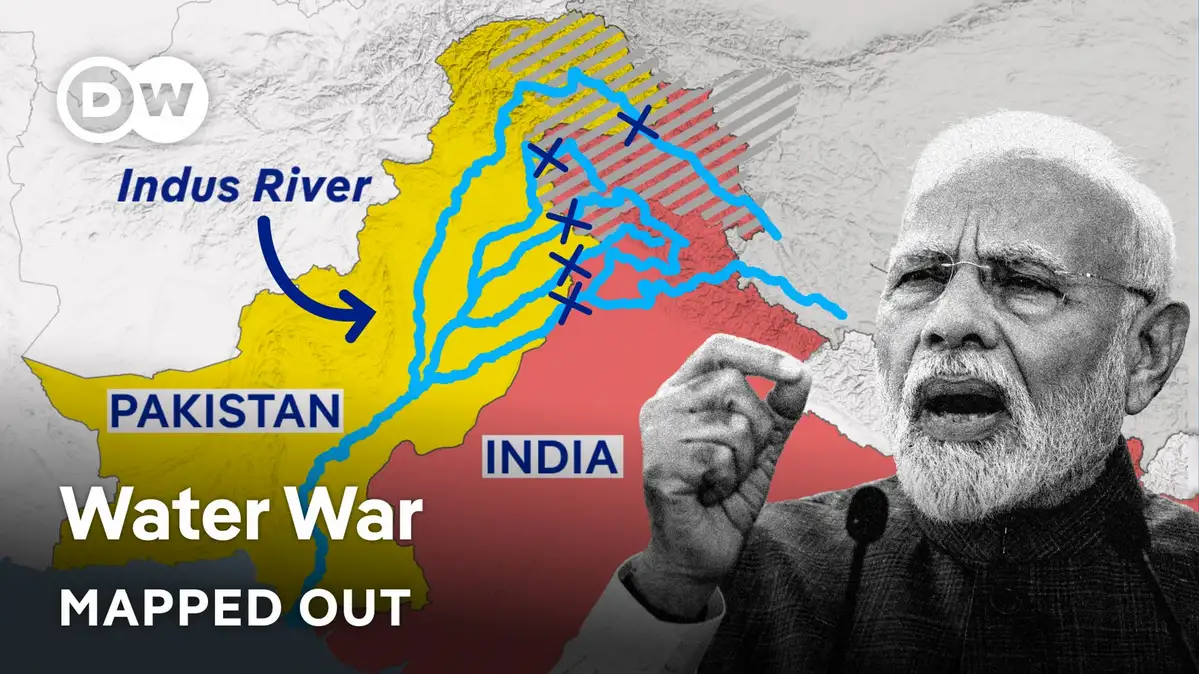
For years, policymakers and water experts have argued that the agreement places disproportionate constraints on India despite the country being the upstream state. Under the treaty, Pakistan received near-exclusive rights over the three western rivers – the Indus, Jhelum and Chenab – while India retained control over the eastern rivers of Ravi, Beas and Sutlej. In practical terms, Pakistan gained access to the overwhelming majority of the basin’s water resources.
When the treaty was signed in 1960, the arrangement was viewed as a necessary compromise to ensure regional stability. However, six decades later, Indian officials increasingly argue that the agreement no longer reflects contemporary realities. India’s population has expanded dramatically, demand for water has surged, climate patterns have become more unpredictable and the country’s energy requirements have grown significantly.
Successive governments have also maintained that India has never fully utilised the rights available to it under the treaty. While New Delhi is permitted limited irrigation, domestic consumption and run-of-the-river hydropower projects on the western rivers, several proposed projects have faced repeated objections and legal challenges from Pakistan.
This has become a growing source of frustration in New Delhi. Indian officials argue that Pakistan has increasingly used the treaty’s dispute-resolution mechanisms not merely to address technical concerns but to delay or obstruct projects that are otherwise permitted under the agreement. The result, according to India’s position, is a framework that has become cumbersome, outdated and increasingly difficult to implement efficiently.
These concerns eventually translated into formal action. In January 2023, India issued a notice seeking modifications to the treaty. A second notice followed in 2024, signalling that New Delhi’s frustrations were no longer confined to technical discussions but had become a matter of policy.
At international forums, Indian representatives have openly described the agreement as outdated and in need of revision to account for changing environmental, demographic and developmental realities.
Long before Pahalgam, therefore, the foundations of the treaty were already being questioned. The terror attack did not create India’s grievances; it merely transformed a long-running policy debate into a much larger national security issue.
How Pahalgam Changed The Equation
If India’s concerns about the treaty had been building for years, the Pahalgam terror attack became the event that fundamentally altered the government’s calculations.
On April 22, 2025, terrorists killed 26 people in Pahalgam, one of the deadliest attacks witnessed in Jammu and Kashmir in recent years. The incident triggered widespread outrage across the country and renewed scrutiny of Pakistan’s role in supporting cross-border terrorism. As pressure mounted for a stronger response, New Delhi began reassessing not only its security posture but also the broader framework governing relations with Islamabad.
It was in this context that India announced it was placing the Indus Waters Treaty in abeyance until Pakistan took what it described as credible and irreversible action against terrorism emanating from its territory. The decision represented far more than a diplomatic protest. It signalled a willingness to challenge an agreement that successive Indian governments had largely treated as sacrosanct.
The logic behind the move was straightforward. Indian policymakers increasingly questioned whether a treaty built on principles of cooperation and mutual trust could continue to function normally when one side believed it was facing persistent security threats from the other.
In New Delhi’s view, it had become increasingly difficult to separate water cooperation from the larger issue of terrorism.
This marked a significant departure from India’s traditional approach. For decades, even during periods of intense hostility, New Delhi had avoided linking the treaty directly to security disputes. The assumption was that water-sharing should remain insulated from political disagreements because of its humanitarian and economic importance.
That assumption now appears to be changing.
By placing the treaty in abeyance, India effectively sent a message that bilateral agreements cannot exist in isolation from the broader state of relations between the two countries. The move introduced a new variable into India-Pakistan dynamics: the possibility that cooperation in one domain could become contingent on behaviour in another.
Whether the decision ultimately results in formal treaty revisions or merely serves as a strategic pressure tactic remains uncertain. What is clear, however, is that Pahalgam transformed the debate. The discussion is no longer about technical disputes over dams and river projects. It is about whether national security concerns have become powerful enough to reshape one of the most enduring agreements in South Asia.

Why Pakistan Is Worried
Pakistan’s sharp reaction to India’s decision is rooted in a simple reality: few countries in the world are as dependent on a single river system as Pakistan is on the Indus basin.
The Indus, Jhelum and Chenab rivers form the backbone of Pakistan’s agricultural economy. The vast irrigation networks that sustain the country’s farms, particularly in Punjab and Sindh, depend heavily on water flowing from these rivers. Millions of livelihoods, food production systems and rural communities are directly linked to the basin.
The dependence extends beyond agriculture. The Indus river system also plays a critical role in Pakistan’s electricity generation, with most of the country’s major hydropower facilities located within the basin. Water shortages therefore have the potential to affect not only crop yields but also industrial activity, energy production and economic growth.
This vulnerability is amplified by Pakistan’s existing water challenges. Rapid population growth, inefficient irrigation practices, declining groundwater reserves and climate-related disruptions have already placed significant pressure on the country’s water resources. International assessments frequently rank Pakistan among the most water-stressed nations in the world, with experts warning that demand is steadily outpacing supply.
Against this backdrop, even the perception of uncertainty over future water flows creates anxiety in Islamabad. Pakistan’s concerns are not necessarily centred on the possibility of India abruptly stopping rivers from flowing—a scenario that most experts consider technically unrealistic in the near term. Instead, the fear is that India could gradually increase its control over upstream water management through new storage facilities, hydropower projects and infrastructure development.
From Pakistan’s perspective, the implications go far beyond diplomacy. Water security is directly linked to food security, economic stability and social cohesion. Any disruption, whether real or perceived, carries political consequences for a country already grappling with economic pressures and resource constraints.
This explains why Pakistani officials have increasingly framed the issue in existential terms. For Islamabad, the Indus Waters Treaty is not merely a legal agreement governing shared rivers. It is a critical safeguard underpinning an economic system that remains deeply dependent on the uninterrupted flow of water from the Indus basin.
The stronger India’s position becomes as an upstream state, the greater Pakistan’s concerns about what the future could hold if the treaty’s existing framework continues to weaken.
Can India Really Stop The Water?
The short answer is no – not immediately.
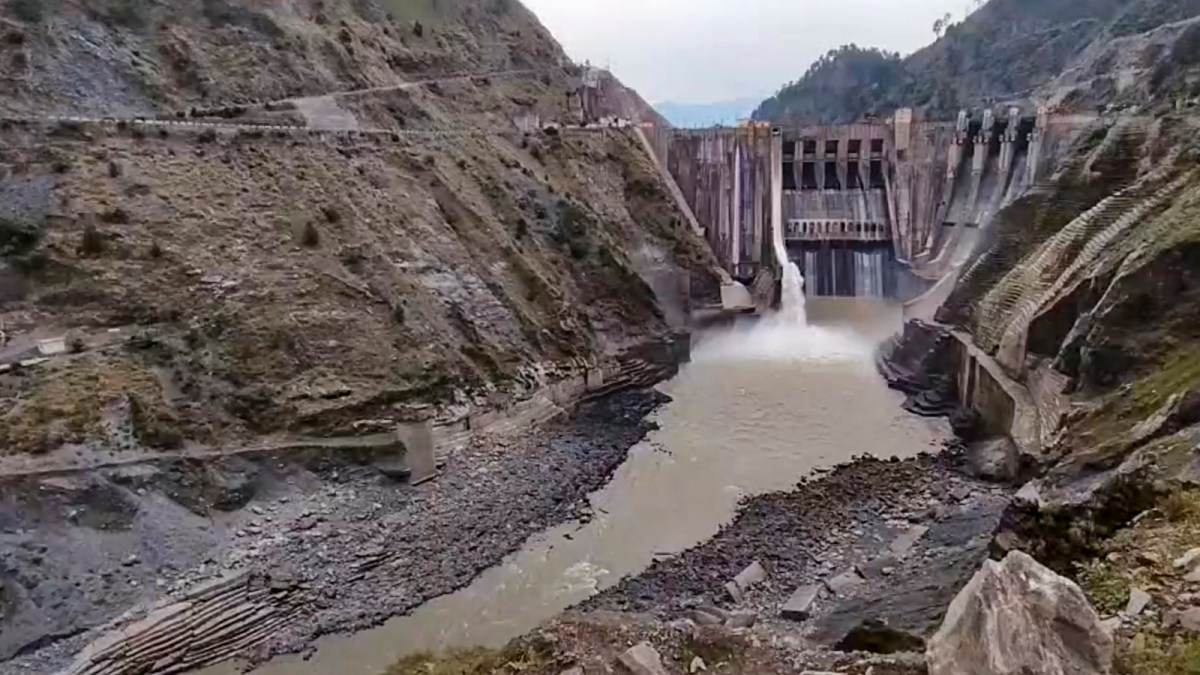
Despite the political rhetoric on both sides, the physical realities of the Indus basin make an abrupt cutoff of water flows highly unlikely. The western rivers carry enormous volumes of water, and India currently lacks the storage capacity and diversion infrastructure required to significantly alter their flow on a large scale.
This is an important distinction often lost in public debate. When Indian leaders speak about ensuring that Pakistan does not receive a “single drop” of water, they are not referring to an overnight closure of the rivers. Building the reservoirs, canals and associated infrastructure needed to exercise greater control over the basin would take years, if not decades, of investment and construction.
However, that does not mean India lacks options.
Under the treaty, India is already entitled to certain uses of the western rivers, including irrigation, domestic consumption and run-of-the-river hydropower generation. Successive governments have often been criticised for failing to fully utilise these rights. With the treaty now in abeyance, New Delhi appears determined to accelerate projects that could increase its ability to store, regulate and utilise water within the limits of its own requirements.
Over time, such projects could alter the dynamics of the basin. Greater storage capacity would provide India with more flexibility in managing water flows, while expanded irrigation and hydropower infrastructure would enable it to extract more value from resources that have historically flowed downstream. Even if total flows into Pakistan remain substantial, the ability to influence timing and seasonal availability could become strategically significant.
This is precisely why the current debate extends beyond engineering. The question is not whether India can turn off the tap today. It is whether India is laying the groundwork to exercise greater control over a resource that Pakistan views as vital to its survival.
The answer appears to be yes.

The Last Bit, Water, Terror And Strategy
For more than six decades, the Indus Waters Treaty stood as proof that even bitter rivals could find common ground when national interests demanded it. It endured wars, political upheavals and repeated diplomatic crises because both India and Pakistan recognised the costs of allowing water disputes to spiral into larger conflicts.
Today, that understanding appears increasingly fragile. India’s decision to place the treaty in abeyance reflects not only frustration with the agreement itself but also a broader reassessment of how it engages with Pakistan in an era where security concerns dominate every aspect of the relationship.
Whether the treaty is eventually modified, revived or replaced remains uncertain. What is clear, however, is that the debate is no longer confined to rivers, dams and water flows. It has become a reflection of a deeper collapse of trust between two neighbours whose history remains shaped by conflict and suspicion.
The Indus Waters Treaty survived multiple wars. Its greatest challenge may now be surviving a world in which the trust that sustained it is steadily disappearing.