Can a ₹600-Crore Health Procurement Scam Be Pulled Off by Just Two Government Officials Without Political Cover? The Unanswered Questions in Delhi’s CPA Fraud
When Will ED & CBI Raid And Question Delhi CM Rekha Gupta & Health Minister Pankaj Kumar Singh

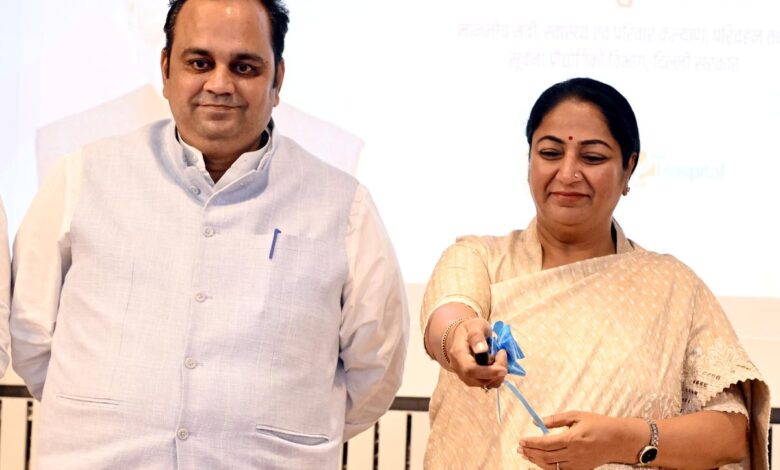
Delhi, July 2026 — In the heart of India’s capital, a procurement machinery meant to deliver affordable medicines and equipment to government hospitals allegedly became a pipeline for hundreds of crores in siphoned public money. The Central Procurement Agency (CPA) under the Directorate General of Health Services (DGHS) stands accused of facilitating one of the most brazen medical procurement frauds in recent Delhi history — estimated between ₹600–650 crore by investigators.
Three people have been arrested so far by Delhi’s Anti-Corruption Branch (ACB): Dr. Vinod Kumar Ranga (former Head of Office, CPA), Dr. Vatsala Aggarwal (former DGHS), and Neeraj Chopra (former Deputy Controller of Accounts, CPA). A private middleman, Rajiv Rangila, is named as the alleged kingpin who created a web of fake companies, rigged technical specifications, and allegedly coordinated the cartel.
The question that refuses to go away — and that every serious investigation must answer — is this: Can a scam of this scale, duration, and sophistication really be executed by a handful of mid-to-senior bureaucrats and one private broker without the knowledge, facilitation, or at least willful blindness of those at the very top of the political and administrative chain?
The Mechanics: How the Alleged Fraud Worked
According to the ACB FIR and investigative reporting, the modus operandi was textbook cartel capture of a government procurement system:
- Technical specifications for equipment (portable X-ray machines, C-arm units, anaesthesia workstations) and even consumables were allegedly tailor-made to favour pre-selected vendors.
- Unrealistically high turnover and experience criteria were inserted to disqualify genuine competitors.
- Tenders were processed at lightning speed — technical evaluation, secret financial bid opening, and purchase orders issued the same day.
- Awards were deliberately not uploaded properly on the Government e-Marketplace (GeM) or e-procurement portals. Tenders continued to show as “active” or “under process” long after payments were released.
- Fake/shell companies allegedly controlled by Rajiv Rangila (F Med Devices, Technocrats, Raj Shree, Ashi Surgical, etc.) walked away with contracts at massively inflated rates.
Concrete examples documented across multiple reports:
- Portable X-ray machines (market price ~₹10 lakh) allegedly billed at ₹33 lakh — one contract alone reportedly caused excess payment of around ₹100 crore.
- Hospital bedsheets (market ~₹150) billed at ₹450.
- ORS packets (₹2.5) billed at ₹15.
- Overall inflation in some categories reportedly ranged from 200% to over 400%.
Payments were allegedly cleared in 1–2 days. Files went missing or were allegedly kept in personal custody. Comparative price analysis was weak or absent. In one reported instance, large quantities of anti-rabies vaccines remained undelivered because the government warehouse lacked adequate cold storage — yet the procurement and payment chain had already moved forward.
This was not a one-off over-invoicing. It was allegedly a sustained, multi-year operation involving medicines, surgical consumables, diagnostic equipment, and hospital linen worth hundreds of crores.
The Arrested Officials vs the Scale of the Scam
Dr. Vinod Kumar Ranga, Dr. Vatsala Aggarwal, and Neeraj Chopra are senior officials. Their roles in tender approvals, administrative sanctions, and payment clearance were critical. Their arrests are significant.
But here is the uncomfortable arithmetic that investigators and the public must confront:
A scam running into ₹600–650 crore requires:
- Sustained political-administrative protection over multiple years.
- Ability to suppress competition and whistleblowers.
- Rapid movement of files through multiple layers without red flags being raised at the highest levels.
- A money trail that eventually benefits someone beyond just the middleman and three arrested officials.
So far, the arrests have remained confined to the bureaucratic layer and one private operator. Rajiv Rangila, the alleged mastermind who reportedly controlled multiple fake companies and drafted the rigged specifications, has not been arrested in the reports available as of early July 2026. The Enforcement Directorate (ED) has initiated a parallel PMLA probe into the money trail, shell companies, and hawala layering — but no raids on high-profile political figures have been reported.
The Core Question: Political Involvement or “Lower-Level” Cleanup?
Delhi Chief Minister Rekha Gupta’s government has publicly taken credit for ordering the probe. The Directorate of Vigilance (under the Delhi Government) conducted the initial raids in May 2026 after receiving complaints. The ACB registered the FIR on 2 June and made the arrests. Health Minister Pankaj Kumar Singh has stated that the BJP government has “zero tolerance” for corruption and that the CM personally ordered the enquiry after irregularities came to light.
This is important context. In many past Indian procurement scams, ruling dispensations were accused of shielding their own. Here, the ruling dispensation’s own agencies have arrested senior officials who served under the current setup.
Yet serious questions persist in investigative and political circles:
- How did a cartel allegedly operate so openly for so long under the nose of the Health Department and CPA leadership?
- Were the inflated rates and rigged tenders flagged at any point by the Finance Department, CAG, or internal audit mechanisms?
- Who ultimately benefited from the alleged kickbacks routed through intermediaries and shell entities? Was it limited to the arrested officials and Rajiv Rangila, or did the money flow further up the political or bureaucratic chain?
- Why has the ED’s money-laundering probe not yet produced visible action against higher political or administrative figures, despite the scale?
- When — if at all — will the Central Bureau of Investigation (CBI) be brought in for a more comprehensive probe that can look beyond Delhi’s ACB jurisdiction?
Opposition voices (particularly from AAP) have already framed this as the “Rekha Gupta government’s ₹650 crore scam” and demanded that ED and CBI question the Chief Minister and Health Minister. Social media and political commentary are filled with demands for raids on the CM’s and Minister’s residences/offices.
As of 3 July 2026, no such raids or questioning of CM Rekha Gupta or Health Minister Pankaj Kumar Singh have been reported in connection with this case.
Why This Question Matters
In India’s governance reality, large-scale, sustained procurement frauds rarely thrive in a complete vacuum. They usually require one or more of the following:
- Active collusion at higher levels.
- Deliberate weakening or bypassing of oversight mechanisms.
- Political protection for favoured middlemen.
- Or, at minimum, criminal negligence and failure of supervision at the ministerial level.
The CPA was created precisely to bring efficiency and bulk discounts. Instead, centralisation appears to have created a single point of capture. When specifications, approvals, technical evaluations, and payments can be pushed through in a single day with files allegedly disappearing, the system itself becomes the vulnerability.
A genuinely independent and fearless investigation must answer:
- Was this purely a bureaucratic-middleman nexus that somehow escaped political radar?
- Or was there political facilitation — active or passive — that allowed the cartel to flourish?
- What does the money trail ultimately reveal about the real beneficiaries?
The Road Ahead
The ED’s PMLA probe is the most critical ongoing element because corruption proceeds become “proceeds of crime” under the law. If the money trail leads to benami properties, hawala channels, or politically connected entities, the picture will change dramatically.
The absence of CBI involvement so far is also notable. ACB cases of this magnitude, especially those with inter-state and money-laundering dimensions, often get transferred to or paralleled by the CBI.
Until the money trail is fully mapped, higher approvals are scrutinised, and the role (or failure) of political oversight is examined without fear or favour, the central question will remain unanswered:
Can a ₹600-crore scam in a sensitive sector like public health really be the handiwork of just two or three government employees and one private broker?
Or does the scale, the duration, the sophistication of the rigging, and the ease with which public money moved demand a deeper probe — one that does not stop at convenient bureaucratic scapegoats?
The people of Delhi, whose hospitals and medicines were allegedly short-changed, deserve nothing less than a complete, transparent, and fearless investigation. Anything short of that will only reinforce the cynicism that in Indian governance, some scams are investigated while others are managed.
The next few months will reveal whether this is a genuine clean-up or another chapter in the long history of selective accountability.