Why Is LinkedIn The Dumbest Social Media Website In 2026?
LinkedIn presents itself to the world in the language of aspiration. It promises careers built, networks forged, opportunities unlocked. It boasts over one billion users across more than 200 countries. Its homepage copy radiates professional optimism. Its marketing insists it is the trusted heartland of the global professional class. But behind this carefully constructed exterior lies something far less inspiring — a platform riddled with arbitrary enforcement, dysfunctional automated systems, rampant fraud, catastrophic data failures, and a documented pattern of causing serious financial and psychological harm to the very users it charges for access. This is not a matter of a few dissatisfied customers. It is a systemic, multinational, years-long pattern of institutional failure that deserves to be examined in full and without mercy.

The Account Suspension Epidemic: Punishing Users For Using The Platform
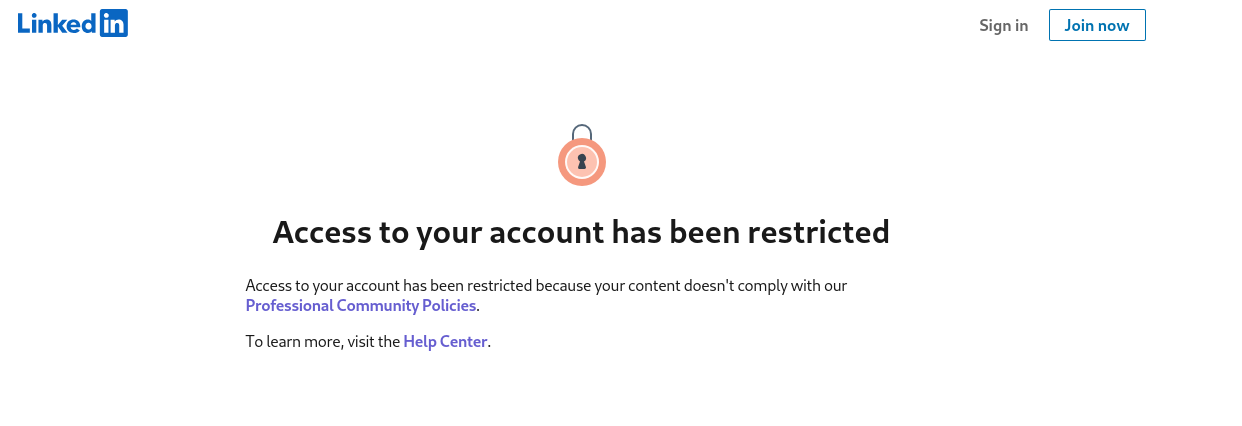
There is perhaps no greater insult a subscription-based platform can deliver to a paying customer than to lock them out of the service they are paying for, without warning, without a specific explanation, and without any meaningful path to appeal. LinkedIn does this routinely and at scale, and has built an entire vocabulary around it.
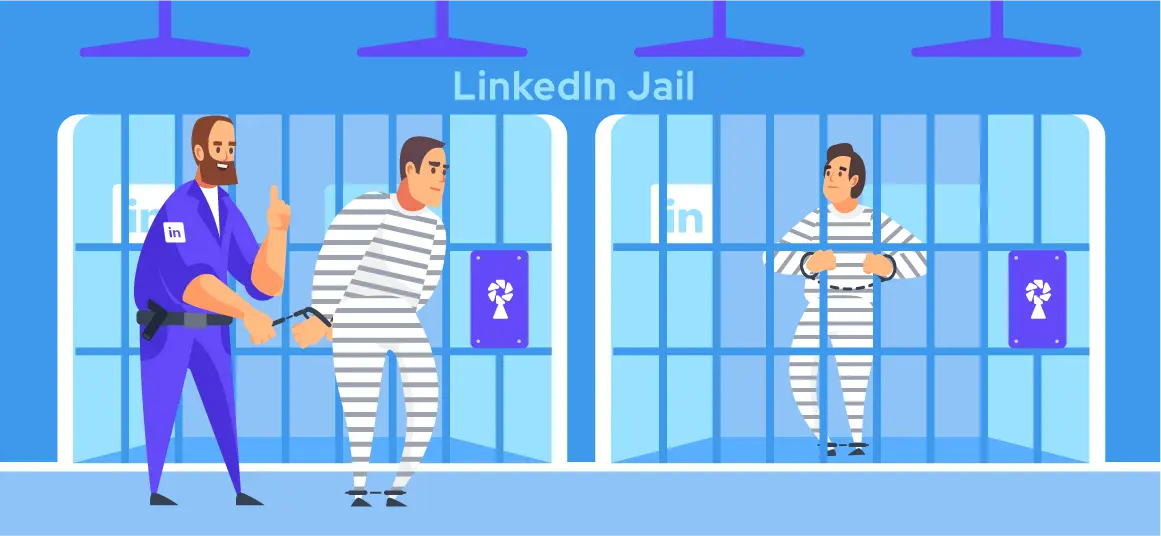
Users call it “LinkedIn Jail” — a phrase that has become so widely used that it has its own dedicated entries across dozens of technology blogs, professional advice websites, and sales communities. LinkedIn Jail is real and happening to more professionals than ever, with restrictions triggered by excessive connection requests, automation tool use, or behaviour that the platform’s systems flag as suspicious — and the worst part, as users consistently report, is that LinkedIn does not always tell you what you did wrong.
The cruelty embedded in this system becomes clear when you examine exactly what kind of behaviour triggers it. The restrictions are commonly the product of automated behaviour detection, which can flag violations ranging from going over platform limits to suspicious logins. So far, so reasonable in theory; except that in practice, the system is egregiously miscalibrated.
Customer support in documented cases took nearly two weeks to issue an initial response after an account was suspended, leaving the user completely in limbo without access to their account, and the potential opportunity loss for business during that period is a measurable, real consequence that LinkedIn takes no responsibility for. Two weeks without access to a platform that serves as the professional communication infrastructure for a recruiter, a salesperson, or a business owner is not an inconvenience. It is a crisis.
What makes this intolerable from a consumer protection perspective is the combination of billing and suspension. Premium account holders, who are paying monthly fees for LinkedIn Career, Business, Sales Navigator, or Recruiter products, find their accounts suspended while billing continues uninterrupted. You pay for a service. The service becomes inaccessible due to the provider’s own automated decision. The billing does not pause. In many jurisdictions, this constitutes a straightforward breach of contract and would meet the definition of an unfair trade practice under applicable consumer law.
In most cases, temporary restrictions are lifted within seven days, but those who use any automation tools, engage in high-volume manual activity, or post content that LinkedIn’s systems dislike risk permanent suspension, and if an account is permanently banned a second time, restoring access is no longer possible. The stakes, in other words, are enormous, which include years of professional history, thousands of connections, published articles, recommendations, and endorsements, all of it held hostage to a system that can pull the plug at any moment, permanently, based on an algorithmic judgement with no human review.
When all appeal attempts fail and a user creates a new account, they lose all their existing connections and history, and LinkedIn can often link new accounts to banned ones, resulting in automatic restrictions on the new profile as well. The platform thus creates a trap, as it takes away everything you built, then penalises you for trying to rebuild it.
The Algorithm That Punishes Success: How LinkedIn’s AI Targets Its Best Users
The structural irony at the heart of LinkedIn’s automated enforcement system is so extreme it almost defies satire. The platform’s entire value proposition rests on encouraging users to network aggressively, to send connection requests, engage with posts, message potential contacts, and expand their professional circles. That is what LinkedIn is for. And yet its automated detection systems treat high-volume, high-engagement usage, precisely the behaviour LinkedIn is selling, as a red flag. LinkedIn has implemented a limit of 100 connection requests per week across all account types, a threshold that is laughably inadequate for a professional recruiter, a business development executive, or any other user with a legitimate and urgent need to expand their network rapidly.
If the acceptance rate for connection requests drops too low, meaning enough recipients simply ignore the request, LinkedIn may consider the sender a spammer or a bot, and a low acceptance rate can also hurt a profile’s visibility and ranking on the platform. It is even worse if recipients click “I don’t know this person” after ignoring the request, as this is a second confirmation for LinkedIn that the outreach was not personalised enough. So the platform penalises users not only for their own behaviour but for the behaviour of others; third parties who choose not to respond. This is not a reasonable enforcement mechanism. It is a system that punishes users for outcomes they do not control.
What is never disclosed to users with any operational clarity is where the thresholds lie, how they are calculated, how they interact, or what combination of behaviours triggers which consequence. There is no public enforcement manual. There are no published standards. There is only a vague User Agreement whose enforcement is applied by an opaque algorithm that users are left to reverse-engineer through painful trial and error — often at the cost of their accounts.
LinkedIn Jail refers to having your account permanently banned or stuck in a review loop after the account has been suspended too many times, and it is hard to say how to get out of it. That sentence, from a widely-consulted professional source, is the honest state of play: LinkedIn’s own enforcement ecosystem has no reliable, published exit ramp.
Customer Support: A Kafkaesque Void
To fully appreciate the scale of LinkedIn’s dysfunction, one must experience its customer support system. There is no phone number. There is no live chat for the overwhelming majority of users, as it is mainly for premium users. There is a help centre filled with articles that are genuinely useful only for routine questions, and a ticketing system that generates automated responses with the speed of a functioning organisation and the helpfulness of a form letter. For a platform that generated approximately $16 billion in annual revenue as part of Microsoft’s Productivity and Business Processes segment, this is not a resource constraint — it is a policy choice.
- In FY 2025, LinkedIn’s advertising revenue alone (combined with Bing) crossed $19 billion.
- By early 2026, LinkedIn surpassed $5 billion in quarterly revenue for the first time, putting it on a run rate exceeding $20 billion annually.
- Its Premium subscriptions reached an annual revenue of $2 billion in late 2024/early 2025.
The review process for account restriction appeals typically takes one to two weeks, sometimes longer during busy periods, and constant follow-ups will not speed things up and might actually hurt your case. So a paying customer, locked out of a service they have paid for, is advised not to follow up too insistently with the company that locked them out — lest it make things worse. This is not customer service. It is corporate hostage-taking with the peculiar instruction that the hostage should remain calm and patient.
A public tweet tagging LinkedIn Support often gets faster attention since companies prioritise addressing public complaints. This is an admission, in plain language, that the normal customer support infrastructure is so broken that the fastest path to resolution is to humiliate the company publicly. Paying subscribers are reduced to posting grievances on social media to trigger a response. If this is the designed experience, it is unconscionable. If it is an unintended outcome, it represents a management failure of remarkable proportions.
The appeal process, when it does yield a decision, provides no reasoning. Users are told their account has been reviewed and the decision stands, or that their account has been restored, but never what evidence was considered, what standard was applied, or what they should do differently. This is a denial of basic procedural fairness that would be recognisable as a legal deficiency in virtually any formal dispute resolution context.
The Financial Black Hole of LinkedIn Advertising
LinkedIn’s Campaign Manager advertising platform, used by businesses of all sizes to run sponsored content, lead generation campaigns, and job advertisements, represents the most direct path to financial harm for users. The mechanism of loss is straightforward: an account running paid campaigns is suspended; the campaigns terminate immediately; the unspent budget is not refunded; the business has no recourse.
It is a documented pattern that plays out for advertisers globally. A company that has invested in creative production, strategic planning, and a pre-paid campaign budget to support a critical recruitment or sales push can see the entire investment vaporised in a moment by an automated enforcement decision — one that is never reviewed by a human being, never explained in specific terms, and never compensated. LinkedIn’s terms and conditions contain clauses that disclaim liability for exactly these losses, but consumer protection lawyers in multiple jurisdictions have argued, with considerable legal basis, that such disclaimers are unconscionable and unenforceable against paying consumers.
The billing system itself is independently unreliable. Users globally report being billed amounts in excess of their stated daily budgets, charged for campaigns they had cancelled, and given credits that were applied incorrectly or not at all. The billing dispute process — routed through the same dysfunctional support infrastructure — rarely results in recovery of the overcharged amounts.
The Data Catastrophe: 700 Million Users, One Hacker, Zero Accountability
On June 22, 2021, a hacker operating under the name “GOD User TomLiner” appeared on a popular hacking forum and posted a simple message: “Hi, I have 700 million 2021 LinkedIn records.” He was not lying. Data scraped from LinkedIn user profiles included full names, gender, email addresses, phone numbers, and information about professional experience.
Approximately 92% of LinkedIn’s user base was impacted, adding up to 700 million affected accounts out of an estimated 756 million at the time. To be precise about the magnitude of what this means: nine out of every ten people who had a LinkedIn account in 2021 had their professional data, contact information, and inferred personal details listed for sale on a criminal forum. LinkedIn’s response was to insist this was not a “data breach” but a “data scraping” incident — a semantic distinction that provided precisely zero comfort to the 700 million people whose data was now circulating on the dark web.
The hacker told the BBC that it took him several months to exploit LinkedIn’s API, and he was selling user data from the platform to multiple customers for around $5,000. He later told the BBC he had done it “for fun.” LinkedIn, a company with the full resources of Microsoft behind it, had its entire user database extracted by one person acting recreationally. This was not a sophisticated state-sponsored attack. It was one man, a laptop, and several months of persistence.
The data made available online threatens LinkedIn users with potential spam campaigns, identity theft, and the risk of hackers using email addresses from public records to access users’ accounts through brute-force methods; even though sensitive information like credit card data and private messages were not exposed. The downstream consequences of this exposure, like phishing campaigns that reference specific professional details, credential stuffing attacks, social engineering operations, have been playing out for years since, and LinkedIn has offered no systematic remediation to affected users beyond a generic advisory to change passwords.
This was not LinkedIn’s first catastrophic security failure. The LinkedIn 2012 breach, initially disclosed as affecting 6.5 million accounts, was later confirmed to have compromised 117 million. And this pattern of underestimating, semantically reframing, and minimising data failures is itself a form of harm to users — it deprives them of accurate information about the risks they face.
LinkedIn as a Criminal’s Marketplace: Scams, Fraud, and the FBI’s Warning
The FBI has specifically identified LinkedIn as a significant threat vector for financial fraud; an assessment that deserves to be read as the extraordinary indictment that it is. A government law enforcement agency has formally warned the American public that a platform marketed as the world’s trusted professional network is being systematically exploited by organised criminal syndicates to defraud users of their savings.
The primary fraud vector is what the FBI calls “pig butchering” — a confidence-based investment scam in which criminals build a trusted relationship with a victim over weeks or months before introducing a fraudulent cryptocurrency investment opportunity. Scammers use social media to reach out to victims directly through messages or indirectly through deceitful job advertisements or investment opportunities, and LinkedIn’s professional credibility makes it particularly potent as a starting point. Because LinkedIn is a professional networking platform, victims may see investment offers on LinkedIn as more trustworthy than they would on Facebook or Twitter; this elevated perceived credibility is precisely what makes LinkedIn so attractive as a hunting ground for fraudsters.
The financial consequences for individual victims are catastrophic. In one documented case, a victim in Ohio fell prey to a scammer who initiated contact through LinkedIn in July 2024, with the fraudster following a methodical playbook of building trust, establishing credibility through supposed crypto successes, and ultimately stealing half the victim’s life savings; later mocking the victim with messages saying “Thank you for giving me half of your savings.”
The FBI’s Operation Level Up, which began in January 2024 to identify and notify victims of cryptocurrency investment fraud, has now notified over 4300 victims of such scams, with an estimated savings to victims of over $285 million. Of the victims identified by this operation, many were referred to FBI victim specialists for suicide intervention, a statistic that should be read with the full weight it carries. People brought to the edge of ending their lives by financial crimes that began on platforms including LinkedIn. In 2023 alone, the FBI’s Internet Crime Complaint Center reported losses totalling more than $4 billion to crypto-related fraud, which is an increase of 45% over 2022.
LinkedIn’s response to this epidemic has been inadequate in every measurable respect. The platform claims to remove hundreds of millions of fake accounts annually, but the sheer volume that remains operational, actively defrauding real users, demonstrates that these removals are not keeping pace with the rate of creation. Users who report fake profiles frequently receive no response for weeks, during which time the fake profile continues to be used to victimise others.
The Mental Health Crisis LinkedIn Refuses to Acknowledge
LinkedIn’s psychological impact on its users is increasingly documented in academic literature, and the picture that emerges is deeply troubling. The platform’s design, which is structured around professional achievement signals, follower counts, engagement metrics, and the curation of career success creates a social comparison environment with documented links to anxiety and depression.
A nationally representative study of 1,780 U.S. young adults between the ages of 19 and 32 found a statistically significant association between frequency of LinkedIn use and depression and anxiety, assessed using validated Patient-Reported Outcomes Measurement Information System measures, raising the possibility that increased use of LinkedIn results in lower self-esteem and overall life satisfaction.
Going on LinkedIn can be jarring because it feels like a collection of high-highs and low-lows; feeds filled with workers who have lost jobs interspersed with people announcing promotions, creating an anxiety-producing experience where users feel they should be able to thrive at work even when they know the market is against them.
The “humble brag” culture that LinkedIn’s algorithm actively rewards, posts about funding rounds, promotions, and speaking engagements, creates a curated professional reality that is as distorted as Instagram’s body image culture but operating in the domain of career identity, where the stakes for self-worth are arguably higher. A majority of young adults have reported that when too much time is spent on LinkedIn, they end up feeling stressed and inadequate because they feel they do not measure up to their peers, and LinkedIn Premium is considered even more detrimental to mental health because it allows users to view job applicants and their skillsets when applying for jobs, providing more room for self-comparison and feelings of deficiency.
For job seekers specifically, the platform is psychologically brutal in a very specific and designed way. LinkedIn’s notification system, which informs applicants that their applied-to positions are “receiving many applicants” or that hiring teams are “actively reviewing applicants” functions as a mechanism for delivering rejection signals without the dignity of actual communication. Users are informed, algorithmically, that they have probably been passed over, but are given no feedback, no reasoning, and no acknowledgement from the hiring party. The research literature on professional ghosting consistently associates this experience with significant self-esteem damage.
A study published in the Journal of Business and Psychology found that regardless of an applicant’s gender and the evaluator’s age, when job applicants write about their experiences with anxiety and depression on LinkedIn, it affects evaluators’ impressions of their emotional stability and conscientiousness, suggesting that stigmatising beliefs about those who experience mental health issues still persist in professional environments, and that LinkedIn’s platform is actively transmitting that stigma into hiring decisions.
The platform therefore creates a double bind: it is documented to worsen the mental health of its users through social comparison and professional ghosting, and then, if those users express the resulting mental health struggles on the platform itself, those disclosures damage their career prospects. LinkedIn has neither acknowledged this dynamic nor made any systemic attempt to address it.
Privacy Violations: Your Data Is Not Your Own
LinkedIn’s relationship with user data has been, over the years, one of systematic exploitation concealed behind privacy policy language that most users never read and would not fully understand if they did.
In 2022, LinkedIn settled a class-action lawsuit in the United States for $8 million after it was found to have used the phone numbers that users provided for two-factor authentication security purposes; numbers given to LinkedIn for the specific purpose of protecting their own accounts, to target those same users with advertising. This was not a grey area. Users gave LinkedIn a phone number under an explicit, specific representation that it would be used for security verification. LinkedIn used it for advertising. A US federal court found this sufficient basis for a substantial settlement.
The platform’s AI training practices present the next frontier of this problem. LinkedIn has faced accusations of using user-generated content, posts, articles, messages, and profile information, to train its artificial intelligence models without obtaining specific, informed consent. In an era where both the European Union’s GDPR and India’s Digital Personal Data Protection Act impose strict requirements on the purposes for which personal data may be processed, these practices represent potential violations of regulatory law across multiple jurisdictions. LinkedIn quietly introduced opt-out toggles for AI training data use only after significant user backlash, but an opt-out is not the same as informed consent, and the data already used before users discovered the setting had no retrospective remedy.
The platform’s privacy settings are a masterwork of obfuscation. They change without meaningful notice. They interact with each other in non-intuitive ways. Users routinely discover, through the uncomfortable experience of a recruiter referencing information they believed was private, or a former employer seeing that they have been searching for new jobs, that the privacy protections they believed were in place were either less comprehensive than they assumed or had been quietly modified.
Algorithmic Bias: The Platform That Discriminates By Design
Multiple independent academic studies and investigative reports have documented systematic bias in LinkedIn’s job-matching and candidate-surfacing algorithms along dimensions of gender, age, and ethnicity. These are not fringe findings in obscure journals — they represent a growing body of evidence that has been covered in investigative journalism, cited in regulatory proceedings, and acknowledged in principle (if not in practice) by LinkedIn itself.
Women’s profiles are systematically less likely to be surfaced for certain job categories even when qualifications are equivalent to those of male candidates. Older candidates are deprioritised in recommendation algorithms in ways that constitute age discrimination by any reasonable definition of the term. Users with names associated with certain ethnic backgrounds receive fewer recruiter InMails for equivalent qualifications — a digital recreation of the resume discrimination that analogue hiring was meant to have left behind.
For users experiencing this discrimination, the harm is not abstract. It is quantifiably financial; fewer job opportunities surfaced means fewer interviews, fewer offers, and in aggregate, lower lifetime earnings. LinkedIn’s response to these findings has been to express general commitment to fairness while making changes that researchers consistently find insufficient to address the underlying algorithmic bias. The gap between LinkedIn’s public commitments to diversity and the documented reality of its algorithmic outputs is itself a form of institutional dishonesty.
The Premium Subscription Trap: Paying More, Getting Less
LinkedIn’s premium offerings, priced at rates ranging from moderate to substantial depending on the tier promise features that sound transformative in the marketing materials and prove deeply disappointing in practice. InMail credits, the flagship premium benefit, expire monthly if unused and deliver response rates that are notoriously poor for cold outreach, often falling well below 15%. LinkedIn does not disclose data on InMail effectiveness before users commit to premium plans — a disclosure that would be required in most other industries where companies sell products on the basis of expected performance.
The “who viewed your profile” feature, prominently marketed as a premium benefit, contains a structural contradiction that LinkedIn has never addressed honestly: the platform simultaneously sells anonymous browsing as a premium feature, meaning that other premium users can deprive you of the very profile-view data you are paying for. You pay to see who is looking at you. Others pay to become invisible while they look at you. LinkedIn profits from both sides of this contradiction.
Cancellation of premium subscriptions is designed with friction deliberately built in. Users navigate multiple confirmation screens, encounter persistent discount offers, and in documented cases discover that their cancellation was not successfully processed, with billing continuing for months afterward. LinkedIn’s customer support, predictably, is of little help in recovering these charges.
Content Moderation: The Algorithm That Protects Power
LinkedIn’s content moderation system exhibits a consistent pattern that will be familiar to anyone who has spent time observing how algorithmic platforms handle the tension between protecting users and protecting revenue. Posts that challenge employers, discuss workplace abuse, advocate for labour rights, or expose corporate misconduct are frequently removed or suppressed on grounds that are rarely explained with any specificity. Posts from corporate accounts and high-advertising clients promoting misleading job descriptions, unrealistic expectations, and toxic workplaces disguised as “dynamic environments” are rarely actioned at all.
Whistleblowers who use LinkedIn to share information about institutional misconduct — precisely the kind of speech that a genuinely professional platform should protect and amplify — find their content removed, their reach suppressed, or their accounts restricted. Meanwhile, the algorithm systematically promotes content from “LinkedIn Top Voices” — a designation that involves a formal relationship with LinkedIn — and from companies with significant advertising spend. The result is a feed that is structurally tilted toward promotional content and away from substantive professional discourse.
The Conclusion: A Platform That Has Forgotten Its Users Exist
The full picture assembled from this piece is of a platform that has, over its twenty-three-year existence, evolved from a genuine professional networking innovation into a surveillance and monetisation apparatus dressed in the language of career empowerment. LinkedIn user data exposed in the 2021 scraping incident included full names, gender, email addresses, phone numbers, and professional histories — data that users contributed in good faith and that was made available to criminals, advertisers, and data brokers with consequences that are still playing out.
The systemic failures documented in this article are not isolated incidents. They are the predictable product of a set of institutional priorities in which revenue optimisation, corporate client relationships, and advertising yield consistently outrank user safety, data integrity, and basic service quality. When LinkedIn’s automated enforcement system suspends a premium subscriber mid-campaign with no human review and no refund, that is not a glitch — it is a policy outcome.
When LinkedIn takes fourteen days to respond to an account suspension appeal while billing continues uninterrupted, that is not an oversight — it is an incentive structure. When LinkedIn’s algorithm surfaces fraudulent job offers, enables pig-butchering scams, and systematically discriminates against women and older workers, these are not accidents — they are the outputs of systems whose designers did not make user protection the primary objective.
For the ordinary professional — the recruiter, the job seeker, the small business owner, the marketer, the freelancer — who relies on LinkedIn because the platform has successfully positioned itself as a professional necessity, this reality is both infuriating and deeply unfair. They did not sign up for algorithmic surveillance, arbitrary account termination, data exposure to criminals, fraudulent job offers, or a mental health challenge disguised as a networking tool. They signed up for a professional network.
What they got is something else entirely. And in 2026, with over a billion users and the full financial resources of one of the world’s most valuable companies behind it, LinkedIn has no excuse for any of it.