The Quiet Exodus: What Three Quarters of Relentless FII Selling Is Really Telling Us About HDFC Bank?


The Verdict Before the Verdict: FII Selling at HDFC Bank, and the Uncomfortable History of What Comes Next
There is a language that capital markets speak that is far more honest than any earnings call, any management interview, or any regulatory reassurance. It is the language of sustained institutional selling, quiet, methodical, quarter after quarter, by investors whose entire professional infrastructure is designed to detect risk that others cannot yet see. When that language is spoken about India’s largest private sector bank, HDFC, across three consecutive quarters, it is not noise. It is a verdict being delivered in slow motion, before the court of public opinion has even been called to order.
Foreign institutional investors reduced their stake in HDFC Bank to 44.05% at the end of March 2026, down from 47.67% in December 2025, marking the third straight quarter of overseas stake reduction. The numbers behind this headline are more alarming than the headline itself. During the March 2026 quarter alone, FIIs sold HDFC Bank shares worth ₹43,085 crore, a figure that represented a staggering 30% of the total net cash sales of all FIIs across all of India during that period.
If FII selling in India were uniformly distributed, HDFC Bank, with an index weight of roughly 10–12%, should account for proportionally that much of total FII sales. When it accounts for 30%, the excess selling of 18–20 percentage points is not a macro story. It is a HDFC story.
The number of distinct FII entities invested in the bank also fell, from 2,757 at end-December 2025 to 2,528 at end-March 2026. That distinction matters enormously. When the percentage held drops but the number of holders stays stable, it means existing investors are trimming. When the number of holders falls alongside the percentage, it means some investors have liquidated entirely and they have not reduced exposure, they have ended their relationship with the institution. Entire positions, built over years of conviction, have been closed. That is the signal of a structural exit, not a tactical rebalancing.
The stock itself has fallen 25% in 2026 so far. A 25% decline in the market capitalisation of India’s largest private bank, a bank that is often treated as a proxy for India’s economic health, and which carries the heaviest index weight in both Nifty 50 and Bank Nifty, is, perhaps more than a correction. It is hinting towards the market repricing the institution’s trustworthiness! And critically, the selling did not begin in March 2026 with the chairman’s resignation. It began before that. Three quarters before that.
Let’s Start With The Architecture of a Structural Exit
To understand what is actually happening, one must first understand who FIIs are and what it takes to move them. Foreign institutional investors, whether sovereign wealth funds from Norway or Singapore, global pension managers from Boston or London, or hedge funds with India-specific mandates, are not casual participants. Before deploying hundreds of millions of dollars into a position like HDFC Bank, they conduct due diligence of extraordinary depth.
They review regulatory filings in multiple jurisdictions, monitor overseas watchdog actions (like the Dubai Financial Services Authority), track litigation databases across courts, hire intelligence firms for background research, and in some cases interview former bank employees under non-disclosure agreements. Their decisions to hold, add, or reduce are reviewed quarterly by investment committees and risk managers who answer to fiduciaries in multiple countries.
This is why one quarter of selling can be dismissed as rebalancing. Two quarters raises a concern. Three consecutive quarters of reduction, each one reviewed, reconfirmed, and executed anew by these rigorous decision-making architectures, constitutes what the investment industry calls a “structural exit.” The institution has been assessed, reassessed, and reassessed again, and each time the conclusion has been the same: reduce.
The timeline of HDFC Bank’s three-quarter FII exit may have an internal logic that maps precisely onto the sequence of publicly visible warning signals. The first quarter of reduction would have been started as the Lilavati Kirtilal Mehta Medical Trust’s FIR against CEO Sashidhar Jagdishan, the AT-1 bond misselling complaint filed with the Economic Offences Wing in Nagpur, and the bank’s persistent not-so-good performance versus peers like ICICI Bank and SBI compounded in the public record, which Atanu Chakraborty also mentioned on his resignation letter. The stock had already been underperforming the sector for years, a trend that was attributed to post-merger integration challenges but which FIIs may have been beginning to reinterpret through a governance lens.
The second quarter of reduction began after the Dubai Financial Services Authority barred HDFC Bank’s DIFC branch from onboarding new clients and from conducting certain financial service activities, following regulatory concerns about clients who had not completed required onboarding procedures. This triggered the departure of approximately a dozen bank executives (in March 2026), including the bank’s compliance officer and chief internal auditor, two of the most structurally critical integrity roles in any financial institution. Possibly, FIIs with global operations and access to DFSA regulatory intelligence knew about this incoming earlier. So, they began selling. The public largely did not know, and largely did not notice.
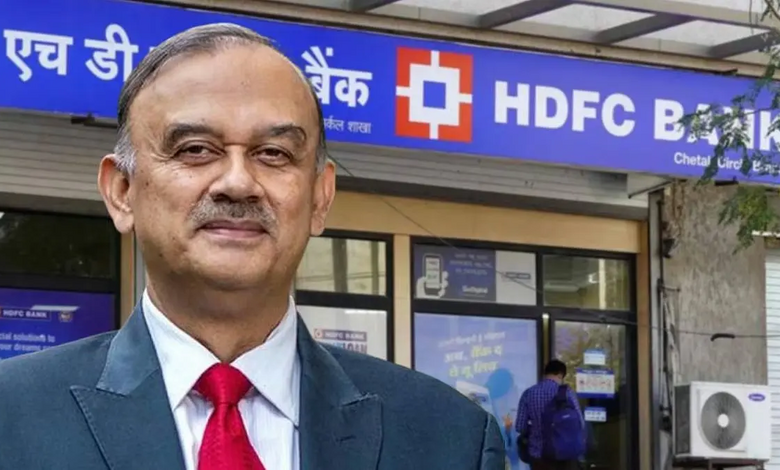
The third quarter was perhaps the explosion. On March 18, 2026, part-time chairman Atanu Chakraborty resigned with a letter citing “certain happenings and practices within the bank that I have observed over the last two years” as inconsistent with his personal values and ethics. He refused to be more specific. He refused to remove the lines despite board pressure. He chose reputational exit over continued association.
Foreign investors who understood what it means for a board-level insider with full fiduciary access to walk away without being able to publicly explain why, because the reasons were either legally sensitive, still under internal investigation, or sufficiently serious as to require careful legal handling. By March 19, the day after the resignation, HDFC Bank’s stock had fallen close to 9% intraday. FIIs sold ₹70,990 crore worth of Indian equities from March 1–17 alone, with HDFC Bank as the dominant target.

This is not the first time such a thing happened, because there is a Historical Playbook, where FII Money Left Before the Public Knew
Across Indian and global financial history, the pattern of sustained FII or institutional investor exit preceding the revelation of deep institutional problems is not a coincidence, but it is a pattern.
Satyam Computer Services: The Six-Year Warning (2003–2009)
The Satyam scandal, India’s own Enron, as analysts uniformly described it, offers perhaps the most arresting precedent for understanding what sustained insider and institutional selling looks like when fraud is being actively concealed. Satyam founder B. Ramalinga Raju began selling shares as early as 2003. Between 2003 and 2008, he reduced his family’s holdings by approximately 30 million shares, with the promoter stake falling from around 25% to less than 5% over the period. That reduction in the promoter stake, from 25.6% in 2001 to 8.74% in 2008, was, in hindsight, the single most legible signal of the fraud’s existence. Every quarter that Raju’s family sold, the fraud deepened.
The confession came in January 2009, revealing that by Q2 FY 2008–09, Satyam had overstated quarterly revenues by 75% and operating profits by 97%, with ₹5,040 crore in non-existent cash out of reported balances of ₹5,361 crore. The signal was available for six years. The investors who read the ownership reduction pattern and exited preserved their capital. Those who listened to the Golden Peacock Award for Corporate Governance that Satyam received just months before the confession lost everything.
Then Comes The Yes Bank: The Banking Sector’s Mirror (2017–2020)
Yes Bank is the most direct and structurally similar parallel to the HDFC Bank situation today. It is a large Indian private sector bank, presented as a high-growth, governance-conscious institution, whose institutional investor confidence eroded across multiple consecutive quarters before the public discovered the scale of the problem.
Yes Bank’s stock peaked at ₹370 in 2018. By December 2019, it had fallen to ₹42. That nine-month sustained decline was not a crash, but it was a quarterly verdict, delivered again and again by investors who had read the RBI’s Asset Quality Review divergence notices, understood the true state of the loan book, and were reducing exposure while Yes Bank’s CEO Rana Kapoor was presenting clean numbers and making reassuring statements to analysts.
The RBI had reportedly identified warning signs as early as 2015–2016, but the institution continued operating, raising capital, and presenting a healthy face to the market for four more years before the March 2020 moratorium. By the time the crisis became public, deposits had fallen 40% from FY 2018 levels to ₹1.37 trillion, and a ₹10,000 crore SBI-led bailout was required to stabilise the bank. During those years of FII selling, Yes Bank’s management was consistently reassuring investors, meeting analysts, and presenting quarterly numbers that appeared acceptable. The parallel to current public discourse around HDFC Bank requires no elaboration.
IL&FS: The AAA-Rated Catastrophe (2016–2018)
Infrastructure Leasing & Financial Services is the case that taught India’s financial system something deeply uncomfortable about the gap between rating agency verdicts and institutional reality. IL&FS carried top ratings, like AAA and AA+, right up to the moment it defaulted on its debt obligations in September 2018, revealing ₹91,000 crore in debt across 300+ subsidiaries with catastrophically misrepresented financial positions.
Despite early signs of trouble, regulators did not act swiftly enough, and it wasn’t until the company defaulted that intervention occurred. The institutional exits that preceded the default were muted precisely because the AAA rating provided false cover. The lesson for HDFC is that governance failure and financial opacity can coexist with superficially acceptable numbers for extended periods, and that when sophisticated foreign investors reduce stakes despite clean-looking official metrics, the question is not whether they are overreacting. The question is what they are seeing that the public cannot yet access.
PMC Bank: The Regulatory Audit That Missed the Truth (2019)
Punjab and Maharashtra Co-operative Bank concealed loans worth ₹6,500 crore to a single defaulting real estate company, HDIL, by creating thousands of fictitious accounts, falsifying records to present a healthier financial picture to regulators who had conducted audits and found nothing. The bank’s failure in September 2019 revealed that the primary safeguard, the regulatory audit, had been systematically deceived. The warning signal in PMC Bank was not FII selling but a pattern of management opacity with auditors that is directly analogous to the behaviour critics are now alleging about HDFC’s handling of the AT-1 bond misselling disclosure and the Dubai branch compliance failures, characterising them publicly as “technical gaps” rather than systemic breaches.
Global Trust Bank: The Evergreened Exit (2003–2004)
Global Trust Bank, forced into a merger with Oriental Bank of Commerce in 2004, had been aggressively lending to stock market operators who defaulted after the 2001 market crash. The bank concealed the true scale of those defaults through “evergreening”, rolling over bad loans to prevent them from appearing as NPAs. Institutional investors, both domestic and foreign, had been reducing their stakes across multiple quarters before the forced merger revealed the reality. The consecutive quarterly reduction in institutional holdings was the canary in the coal mine, singing months before the merge unveiled the scale of the concealment.
Enron: The Global Benchmark (1999–2001)
No investigation into this pattern is complete without Enron; because Enron established the global playbook for understanding what sustained institutional exit looks like when something fundamental is wrong. Between mid-2000 and late 2001, major institutional holders were quietly reducing their Enron positions after noticing specific irregularities: unusual related-party transactions, circular cash flows between subsidiaries, and a persistent inability to generate actual operating cash despite reported profits.
Enron’s management attacked the skeptical analysts publicly, called them incompetent, and assured investors the company was sound. The selling by those who had done proper diligence continued regardless. When Enron collapsed in December 2001, then the largest bankruptcy in American history, the revelation was the scale: over $74 billion in off-balance-sheet debt, fraudulent Special Purpose Entities created specifically to misrepresent financial health, and a board that had either failed its oversight duty or actively participated. The process, smart money selling quietly while management reassures loudly, is universal.
The ICICI Counter-Example: Why This Is Not Automatically Catastrophic
Any honest treatment of this question must include the case where the FII exit was temporary and the institution recovered. When Chanda Kochhar faced conflict-of-interest allegations in 2018 relating to loans to the Videocon Group, FIIs reduced their ICICI Bank holdings across two quarters.
The reduction was shallower than what HDFC is experiencing now, the bank’s fundamental asset quality was genuinely stronger than Yes Bank’s had ever been, and the resolution, Kochhar’s exit, the appointment of Sandeep Bakhshi, and a credible loan book clean-up, restored confidence. FIIs returned, and ICICI Bank has dramatically outperformed peers in the years since. The critical variable that distinguished ICICI from Yes Bank was that, the governance failure in ICICI was contained to specific individuals, while in Yes Bank, Rana Kapoor’s governance failure had infected the entire loan book.
The question that applies to HDFC Bank today is which category its problems ultimately fall into. Although FIIs reduced their holdings during the peak of the controversy, the share price subsequently recovered, and FII confidence returned later, particularly after the bank changed its top management. So can we expect the same from HDFC case, only time will tell?
The DII Divergence: A Pattern Worth Reading Carefully
One of the most frequently cited arguments for calm in the HDFC Bank situation is the domestic institutional response. Mutual funds raised their stake for the fifth consecutive quarter to 29.54% from 26.66%, buying approximately ₹28,293 crore worth of shares during Q4 FY26. Provident funds bought shares worth ₹2,239 crore, insurance companies added around ₹256 crore. This DII buying, so the argument goes, proves that the bank is fundamentally sound and the FII selling is external and macro-driven.
This argument is not wrong. But it is incomplete. The divergence between FII selling and DII buying is itself a historically familiar pattern. It was observed in Yes Bank in 2019, where LIC and other public institutions kept buying as foreign investors exited. It was observed in Satyam, where domestic retail investors kept buying on management assurances while international holders quietly reduced.
The interpretive challenge with DII buying is that it conflates two very different types of buyers, genuine conviction buyers who see value, and mandated, inflow-driven buyers who cannot exit freely. Indian mutual funds receive continuous SIP inflows from retail investors and must deploy capital. Pension and provident funds have fiduciary mandates to hold large-cap positions. They do not have the same freedom to liquidate that a foreign hedge fund or sovereign wealth fund does. When FIIs sell to DIIs, the DII buying does not necessarily validate the institutional thesis, but it may simply reflect the structural captivity of domestic capital.
What Three Quarters of Selling Is Actually Saying?
The three-quarter FII reduction from HDFC Bank, read as a sequence, tells a specific story. One quarter triggered by the DFSA Dubai action and executive departures denotes, this bank’s overseas compliance culture is compromised. Another quarter, compounded by the AT-1 bond FIRs, the Lilavati bribery allegation, and the judicial recusal cascade that followed denotes that this bank’s governance culture is contested at the highest level, and the legal system is having difficulty even finding judges willing to hear the case.
The last quarter punctuated by the Chakraborty resignation, the appointment of three external law firms to review concerns, and the extraordinary market reaction denotes a board insider has seen something sufficiently serious to end his professional association with the institution rather than continue endorsing it.
Foreign investors, with access to proprietary intelligence networks, to DFSA regulatory communications, to global AT-1 bond market consequences, and to the pattern-recognition advantage of having watched Yes Bank, IL&FS, and Satyam unfold before them, have rendered their preliminary verdict across three quarters. Their verdict is that they do not yet have enough information to trust that what is publicly known is the complete picture. And in financial markets, the uncertainty premium, the price of not knowing can be just as devastating as certainty of collapse.
History, across Satyam, Yes Bank, IL&FS, PMC Bank, Global Trust Bank, and Enron, teaches one lesson above all others about this moment, that the institutions that eventually proved to have cracks in their foundations did not announce those cracks. They denied them, explained them away, called the questions baseless, and pointed to their fundamentals. The market’s verdict, expressed through sustained institutional selling, was delivered before the denial could hold.
The question that HDFC Bank must now answer, not to its critics, but to the 2,529 foreign institutional investors who still hold its shares and are watching, is not whether it is strong. The question is whether it is transparent. Because in the history of financial institutions that lost the confidence of sophisticated global capital, it was never the strength that was in doubt first. It was always the honesty.