How BPTP & Kabul Chawla Collude With Major Banks Like HDFC & Kotak To Defraud The Innocent Home Buyers. Read Details Of Recent CBI Raids At BPTP & What Scam Is Under Supreme Court Scrutiny

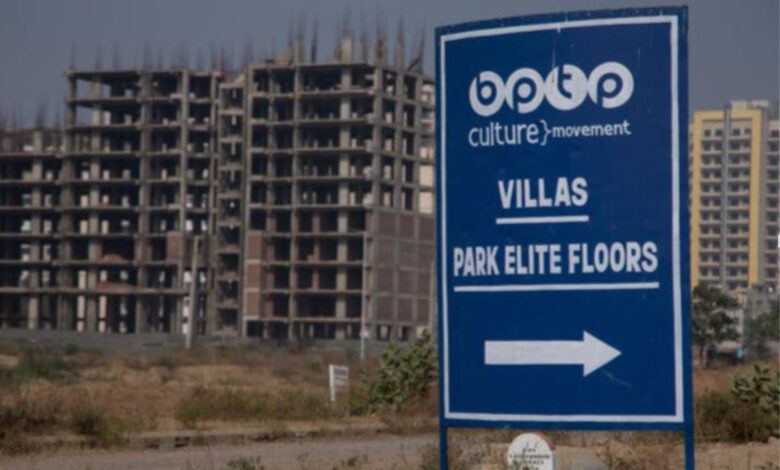
In one of the largest coordinated enforcement actions ever mounted against India’s real estate sector, the Central Bureau of Investigation (CBI) on Tuesday descended on 77 locations across 8 states and Union Territories, including a marathon 10-hour search at the corporate office of BPTP Limited in Sector-76, Faridabad. The operation, conducted under the direct supervision of the Supreme Court of India, marks a decisive escalation in what the apex court itself has described as an “unholy nexus” between leading real estate developers and some of India’s biggest banks and housing finance companies — a syndicate that has left over 1,200 documented homebuyers, and tens of thousands more unheard, financially crippled and emotionally broken.
The Faridabad Raid: Ten Hours, a Paper Trail, and a Builder Under the Scanner
A four-member CBI team from Delhi arrived at the BPTP Group’s Sector-76 office around 7 AM on Tuesday and did not leave until nearly 5 PM. For close to ten hours, officers combed through bank records, loan sanction files, tripartite subvention agreements, digital data on internal servers, and the paperwork tied to flats sold to thousands of homebuyers across BPTP’s projects in the National Capital Region.
Investigators are understood to have:
- Examined bank-related documents and fund-flow records
- Scrutinised property sale agreements and buyer-linked files
- Reviewed digital records and internal company communications
- Noted down names and account details linked to specific bank accounts
- Seized a tranche of “essential documents” that were carried back to Delhi for forensic analysis
Company employees, according to multiple reports, cooperated fully and promptly handed over every document requested. BPTP has not issued a detailed public statement on the raid.
The Faridabad search, however, was only one node in a much larger web.
The Bigger Picture: 77 Locations, 8 States, 50 Cases
According to an official CBI press note issued on Tuesday, the agency carried out simultaneous searches at 77 locations across eight states and Union Territories. The raids span the country’s biggest property markets, Delhi, Noida, Greater Noida, Gurugram, Faridabad, Mumbai, Bengaluru, Chennai, Kolkata, Mohali, Prayagraj, and Puducherry, and target builders, promoters, and officials of financial institutions alleged to have colluded to defraud homebuyers.
The agency has registered 22 fresh FIRs in this round. Added to the 28 cases already registered in 2025, the total number of CBI cases under the Supreme Court–monitored probe now stands at 50. A CBI spokesperson described the operation as “part of a nationwide crackdown” aimed at “gathering crucial evidence to unravel the larger conspiracy involving alleged diversion of funds, financial irregularities, and fraudulent practices in the housing real estate sector.”
Loans worth an estimated ₹5,000 crore in NCR projects alone are under active scrutiny.
The Supreme Court’s Role: From Homebuyer Petitions to an Unholy Nexus
None of this would have happened without the Supreme Court.
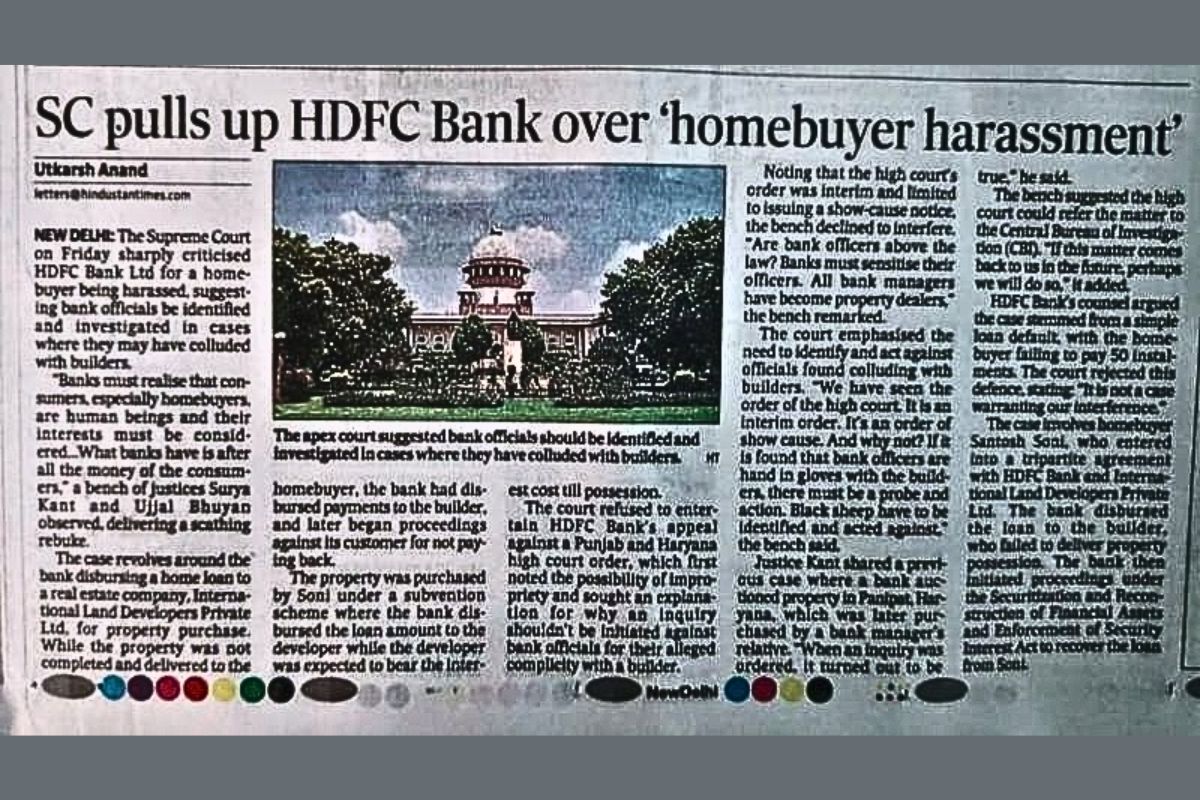
The probe traces its roots to over 170 petitions filed by more than 1,200 homebuyers, most of whom had booked flats in Noida, Greater Noida, and Gurugram under so-called “subvention schemes.” In early 2025, a three-judge bench led by Justice Surya Kant took sharp notice of the fact that banks were disbursing 70%–80% of sanctioned loan amounts directly to builders without verifying construction progress, in apparent violation of the Reserve Bank of India’s 2013 guidelines.
The Court observed that homebuyers were being held “to ransom” and explicitly flagged an “unholy nexus” between banks and developers. After directing around 40 builders and 30 banks to file compliance affidavits, of which only five developers and nine banks complied — the Court ordered the CBI to step in.
On July 22, 2025, the bench permitted the CBI to register 22 cases for NCR projects. In September 2025, it allowed six more FIRs for projects in Mumbai, Bengaluru, Kolkata, Mohali and Prayagraj after preliminary enquiries revealed cognizable offences. The current wave of 22 new FIRs and 77 raids is the direct operational consequence of that judicial push. The Court has also restrained banks from executing recovery certificates against homebuyers until further orders.
The Anatomy of the Scam: How the Subvention Scheme Became a Trap
At the heart of the investigation lies a financial product that was marketed to middle-class India as a dream and weaponised into a trap: the tripartite subvention scheme, involving the homebuyer, the builder, and the bank.
Here is how the fraud worked, stage by stage, according to the CBI’s preliminary findings, the Supreme Court’s observations, and hundreds of homebuyer petitions:
Stage 1: The Seduction
Builders advertised glossy projects with slogans like “No EMI till possession” or “Pay 10%, sit back, move in.” Buyers, often salaried professionals stretching every rupee were told they would pay only 5% to 20% upfront. The builder would service the interest on the loan until the flat was handed over, usually promised within 6 months to 1 year, or at most 2 to 3 years.
Stage 2: The Bank’s Blind Eye
Banks and housing finance companies, the very gatekeepers meant to protect depositors and borrowers, allegedly approved these projects and sanctioned loans without genuine due diligence. Rather than releasing funds in construction-linked stages as RBI norms require, they disbursed the bulk of the loan (70–80% or more) directly to the builder upfront.
No verification of construction milestones. No serious scrutiny of project viability. No insistence on end-use monitoring.
Stage 3: The Diversion
With hundreds of crores of buyer-guaranteed money in their accounts, many builders did what the regulators had feared for years: they diverted the funds. Money meant for Tower B went to buying land for a new project. Money meant for concrete went to personal accounts, related-party transactions, or entirely different cities. Construction slowed. Then stalled. Then, in many cases, stopped altogether around 2018–19.
Stage 4: The Broken Promise
The promised possession in “6 months” became a year. Then two. Then five. Many projects remain unfinished to this day. Some were never built beyond the marketing brochure. Supertech Ltd alone, according to the amicus curiae before the Supreme Court, had borrowed ₹5,157 crore since 1998 across its projects.
Stage 5: The Bank Turns on the Buyer
Once builders began defaulting on their EMI obligations to the banks, the banks did not go after the builders who had received the money. They went after the homebuyers, demanding full EMI payments on loans for flats the buyers had never received, never seen, and in some cases did not legally exist.
Stage 6: The Double Burden
And so the innocent homebuyer, a schoolteacher in Noida, a software engineer in Gurugram, a small businessman in Greater Noida — was left:
- Paying EMIs to the bank on a home they did not possess
- Paying rent to a landlord for a roof over their family’s head
- Watching interest accumulate on the principal year after year
- Owning nothing, receiving nothing, and being legally pursued by the very bank that had enabled the fraud
Builders cashed out. Banks recovered their interest and principal. The only party bearing every rupee of the loss was the homebuyer.
A Deep Conspiracy: Why This Is a Syndicate, Not a Coincidence
The pattern, repeated across hundreds of projects, dozens of builders, and at least a half-dozen major lenders, is too consistent to be written off as an industry-wide accident. What the CBI is now investigating, and what the Supreme Court has already called out, is a structural conspiracy:
- Banks approved projects without due diligence, knowing that stage-wise verification was a regulatory requirement and choosing to waive it.
- Banks disbursed full loan amounts to builders in defiance of RBI’s 2013 circular, effectively handing over depositor-backed public money without safeguards.
- Builders offered fake timelines — possession in six months, possession in one year — with no intention or ability to deliver.
- Possession was never given in a significant number of projects, while flats were often double- or triple-sold on paper.
- Banks continued charging interest on the full sanctioned amount and, when builders defaulted, turned coercive recovery mechanisms on homebuyers rather than on the developers who had pocketed the money.
- Both builders and bank officials profited — through upfront fees, commissions, inflated valuations, and in some cases, alleged kickbacks — while homebuyers were left with ruined finances and indefinite waits.
This is not a market failure. It is, as the Supreme Court has indicated, a potential criminal conspiracy — a syndicate that converted the aspirations of middle-class India into a revenue stream for a narrow circle of developers and financiers.
The Banks Named: India’s Biggest Lenders Under the CBI Lens
In a development that has shaken the Indian financial sector, several of India’s most prominent banks and housing finance companies have been named in the CBI FIRs registered under the Supreme Court’s directions.
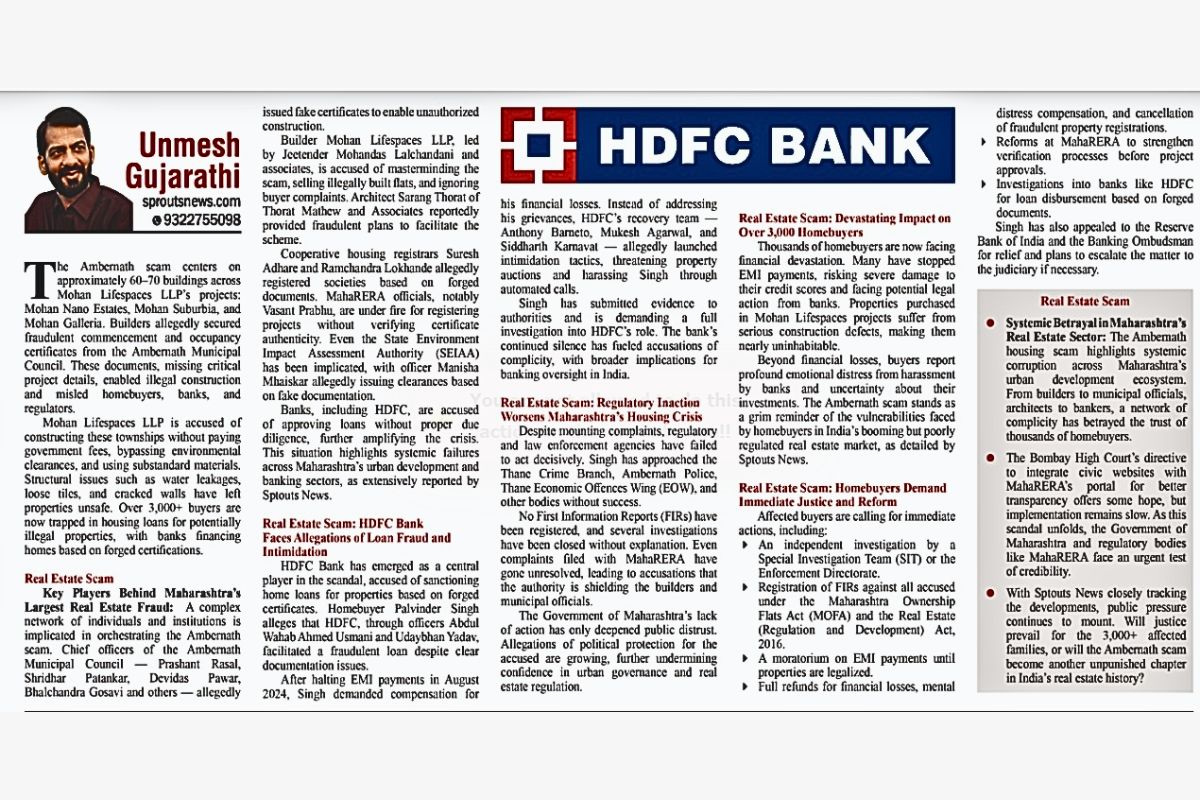
According to reporting by The Statesman, Moneylife, The Tribune, and Outlook, the lenders and housing financiers named in the FIRs registered by the CBI’s Economic Offences Unit include:
- HDFC Bank
- ICICI Bank
- State Bank of India
- PNB Housing Finance Ltd
- Indiabulls Housing Finance Ltd
- Piramal Finance
- Tata Capital Housing Finance
- Corporation Bank (which alone advanced more than ₹2,700 crore to builders under subvention schemes, per the amicus curiae’s submission)
Separately, investigative reporting by Inventiva has named Kotak Mahindra Bank in connection with the subvention scheme controversy and the Ambernath (Maharashtra) housing scam, where the outlet alleges the bank extended loans without adequate verification as part of a builder-bank syndicate.
These are not fringe NBFCs. They are systemically important financial institutions that millions of Indians trust with their salaries, their savings, and their retirement. That several of them are now named accused in a Supreme Court–monitored CBI investigation into organised homebuyer fraud marks an inflection point for Indian banking regulation.
The Human Cost: Lives on the Edge
Behind every FIR is a family. The Supreme Court has before it petitioners who have been paying EMIs for seven, eight, even ten years without ever setting foot in the flat they supposedly own. Many have liquidated provident funds, borrowed from relatives, and taken on personal loans just to stay afloat under the combined weight of EMI and rent.
Homebuyer association representatives have repeatedly testified — before consumer forums, before the NCLT, and in media interviews — that members of their communities have suffered severe mental health crises, marital breakdowns, and, in deeply tragic cases documented across Indian media over the past decade, have been driven to the brink by financial despair, with some taking their own lives.
This is no longer an accounting dispute between a builder and a bank. It is a humanitarian failure of the financial system; one where ordinary citizens, doing everything the system asked of them, were crushed between two powerful parties who had quietly agreed, whether by design or by negligence, to offload every risk onto the smallest player in the chain.
The ED, The RBI, and What Comes Next
The CBI is not acting alone. The Enforcement Directorate has opened a parallel probe under the Prevention of Money Laundering Act (PMLA) and is expected to widen its scope to the new 22 cases. The Reserve Bank of India and the Housing Ministry are coordinating with investigators. Several of the named developers — including Supertech, Vatika, and Jaypee-linked entities booked earlier, are already in corporate insolvency resolution proceedings under the IBC, which complicates asset recovery but also opens additional avenues of investigation into fund diversion.
In the weeks ahead, investigators are expected to:
- Conduct forensic audits of loan sanction files and disbursal patterns
- Reconstruct the fund-flow trail from banks to builders to diverted destinations
- Examine internal bank communications and credit committee approvals
- Identify specific bank officials whose sign-offs bypassed RBI norms
- Pursue asset attachments against accused builders
- File chargesheets in the first batch of 28 cases, whose investigation is reportedly nearing completion
Expect arrests. Expect named officials. Expect, in the apex court’s own words, an attempt to finally answer the question the homebuyers have been asking for a decade: who is responsible, and who will pay?
The Bottom Line
For close to fifteen years, a structured, repeatable, and remarkably profitable fraud model operated in plain sight of every regulator in India. Builders promised homes they had no intention of delivering on time. Banks funded them without checking. Homebuyers paid, and paid, and paid, for an asset that existed only on a brochure.
Now, with 77 raids in a single day, 50 FIRs under an apex-court-monitored probe, some of India’s largest banks named as accused, and the Central Bureau of Investigation physically seizing files from corporate offices from Faridabad to Bengaluru, the reckoning has finally begun.

Whether it will be enough to return the keys of a home to a middle-class family that has been waiting since 2014 — or whether it will, like so many Indian financial scandals, end in a whimper of bureaucratic delay — is the question the country will watch being answered, one raid, one chargesheet, and one verdict at a time.