Mamaearth IPO: The Ultimate Indian D2C Scam – How Founders Ghazal and Varun Alagh Used Motherhood Emotions, White-Labeled Products, and Massive Marketing Burn to Exit at Peak While Retail Investors Hold the Bag

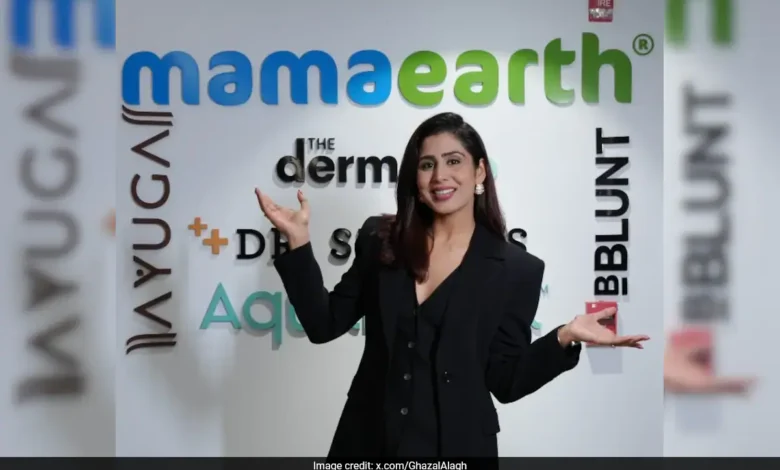
In November 2023, Honasa Consumer Ltd (parent of Mamaearth) listed at a staggering ₹10,500 crore valuation – one of the most aggressive new-age/D2C IPOs in India. The pitch was classic startup playbook: “toxin-free” beauty and baby care born from a mother’s love, explosive growth, and a mission to disrupt legacy FMCG giants. Fast forward to May 2026: the company has finally turned profitable (Q4 FY26 PAT ₹69.4 crore, FY26 ₹200 crore), declared a maiden ₹3/share dividend, and is behaving like a mature FMCG player. But scratch the surface, and Mamaearth/Honasa is the textbook case of everything wrong with loss-making startup IPOs in India.
This is the standard pattern: launch a loss-making company at extreme valuation, burn cash on hyper-emotional marketing, re-package third-party products with fancy “clean” labels, cash out via IPO, and leave public shareholders with diluted economics and questionable moats. Founders Ghazal Alagh and Varun Alagh have made their money. Retail investors who bought the hype are still waiting for real value creation.
1. Standard Loss-Making Company Launching IPO – The Classic Exit Playbook
Honasa followed the exact 2021–22 startup IPO template that destroyed wealth in Paytm, Nykaa, Policybazaar, and Delhivery. At the time of IPO, the company had posted a net loss of ₹151 crore in FY23 (after a tiny ₹14.44 crore profit in FY22 and massive losses earlier). Revenue growth was touted, but the business was still deeply unprofitable and dependent on continuous capital.
The IPO was heavily weighted toward Offer for Sale (OFS) – allowing early investors, promoters, and insiders to cash out while the company received only limited fresh capital. Critics immediately called it a liquidity event disguised as growth funding. Post-listing, the stock crashed as much as 64% from its highs, trading below issue price for extended periods. Even after a partial recovery in 2025–26 driven by cost-cutting and profitability, the pattern holds: list at peak private valuation while the core model remains fragile. By the time Honasa started paying dividends in 2026, many retail investors had already suffered steep mark-to-market losses.
2. Standard Pattern of Extreme High Valuation Despite Heavy Losses
Honasa was valued at ~₹10,500 crore at IPO – roughly 1,200 times earnings in some analyst critiques, despite thin profitability and negative contribution margins in earlier years. This was pure private-market fantasy math: hype around D2C disruption, “clean beauty,” and emotional storytelling, not sustainable earnings.
The valuation ignored the red flags – high cash burn, dependence on performance marketing, and zero durable moat. Legacy FMCG giants like HUL and Dabur spend 10–12% of revenue on ads; Honasa was burning 35–40%+ just to acquire and retain customers. Even in Q1 FY26, the company spent ₹206 crore on advertising and promotions – a staggering number for a company that had just listed. This is not efficient growth; it is subsidised hype. The moment marketing efficiency dipped (as seen in distribution write-offs of ₹65 crore in earlier quarters), the cracks showed. High valuation was never backed by unit economics – it was backed by narrative.
3. Standard Pattern of Extreme Losses and Sky-High Marketing Costs
Pre-IPO and early post-IPO, Honasa’s losses were accelerating while marketing spend remained obscene. Of every ₹100 earned, over ₹40 went into ads, influencer deals, and promotions. This is the classic D2C trap: growth looks spectacular on topline until you realise every new customer is bought at a loss.
Even after turning profitable in FY26 (helped by distribution resets and some cost discipline), the company’s history reveals the truth. It relied on heavy discounting, celebrity endorsements, and performance marketing to drive sales. When growth slowed, brands in the portfolio (Ayuga, Momspresso) were quietly discontinued due to lack of traction. The “highest-ever” EBITDA and PAT in Q4 FY26 came after years of burning investor capital. This is not proof of a sustainable model – it is proof that the IPO window allowed founders to pivot from growth-at-all-cost to “mature FMCG” just in time to declare a dividend while early backers had already exited.
4. No Invention, No New Products – Just Third-Party Manufacturing, Re-Packaging, and “Toxin-Free” Hype
Here is the most damning reality that Mamaearth critics have repeatedly exposed: Mamaearth does not manufacture its own products. Almost everything is contract-manufactured by third-party factories using standard formulations available in the market. The “innovation” is nothing more than new packaging, “clean” labels, and toxin-free claims slapped on existing bulk products.
Social media and investor discussions have repeatedly called this out: “relabel the product and call it innovation,” “white-labelling at premium prices,” and “no real R&D or IP.” The company’s own responses (Ghazal defending on podcasts) admit the asset-light model but fail to explain meaningful differentiation. Competitors and consumers point out that many formulations are me-too copies of existing market products, just marketed better. Portfolio brands were launched and killed (Ayuga discontinued in 2024) when they failed to gain traction. There is zero proprietary technology, no patents, and no moat beyond marketing spend. This is not disruption – it is re-packaging and emotional upselling.
5. Using Emotions and the “Mother-Kids” Story to Fool Indians – Ghazal Alagh’s Personal Narrative as the Ultimate Marketing Weapon
The entire Mamaearth empire was built on one powerful emotional hook: Ghazal Alagh’s story as a struggling new mother who couldn’t find safe, toxin-free products for her baby and therefore started the brand out of love and desperation. “Am I failing my baby?” – this line, repeated in countless interviews, campaigns, pregnancy photoshoots, and social media posts, became the core selling proposition.
Ghazal openly shared her motherhood guilt, self-doubt, and “middle-class” struggles to connect with Indian mothers. The tagline “Made Safe for Baby” and constant motherhood imagery were weaponised to create massive brand loyalty through emotion rather than product efficacy. Critics have called this out bluntly: “This brand fooled Indian mothers,” “sold its products to Indian moms emotionally and they didn’t even realise it,” and “cashing in on trust while products are ineffective.”
The strategy worked brilliantly for early hype and valuation but drew backlash. Viral customer complaints (e.g., a woman’s “throw Mamaearth in the dustbin” post) were met with defensive responses from Ghazal (“You woke up with a lot of hate… Quality is my personal guarantee”). Pregnancy photoshoot controversies and accusations of prioritising branding over substance only amplified the perception that the founders were selling sentiment, not superior products. This emotional manipulation created short-term hype but left a trust deficit when real-world efficacy and value-for-money questions arose.
6. The Major Disputes and Controversies – Highlighting Founder Missteps
The most high-profile dispute erupted in April 2025: a full-blown legal war with Hindustan Unilever (HUL) over sunscreen advertising claims. Ghazal Alagh publicly accused HUL’s Lakmé of “blatantly copying” Mamaearth and The Derma Co. products – names, packaging, formulations – and posted side-by-side “OG vs Copy” comparisons on LinkedIn. She criticised legacy players for complacency and pushed billboards calling out Lakmé’s SPF claims.
Honasa filed a Delhi High Court suit alleging disparagement via Lakmé’s “SPF Lie Detector Test” campaign (which targeted “online bestseller sunscreens” without naming brands but used visual cues matching Mamaearth products). The dispute escalated with counter-claims, social media wars, and courtroom drama. Ghazal eventually backtracked and deleted posts; the companies reached an amicable settlement with Honasa withdrawing some content. Netizens widely mocked the episode, pointing out that Mamaearth itself was not as “original” as claimed.
Additional controversies include repeated product-quality complaints (chemical content, inefficacy), channel-stuffing allegations during IPO preparation, and internal portfolio failures. These are not isolated incidents – they reveal a pattern of aggressive marketing and founder-led narrative control that crumbles under scrutiny.
Only Founders and Insiders Are Making Money – Retail Investors Left Holding Losses
The ultimate irony: while Ghazal and Varun Alagh built personal brands, secured massive wealth through the high IPO valuation and partial exits, and now enjoy dividend payouts as the company matures, retail investors who bought the emotional story have largely lost. The stock’s post-IPO crash, tepid long-term returns, and reliance on continued marketing spend mean the “disruption” narrative delivered riches primarily to promoters and early backers.
This is the standard outcome of loss-making startup IPOs: founders cash out at peak, the company pivots to “sustainable” mode (dividends, cost-cutting), and public shareholders fund the entire experiment only to see value erode when the hype fades.
Bottom line: Mamaearth was never a revolutionary product company. It was an expertly executed emotional marketing machine built on third-party manufacturing, sky-high ad spends, and a founder’s motherhood story. The IPO allowed insiders to exit at inflated valuations while the underlying business followed the predictable path of every overhyped D2C loss-maker. Even the 2026 profitability and dividend feel like a victory lap for founders, not vindication for investors.
Indian consumers and retail investors deserve better than emotion-driven white-label products sold at premium prices. The Mamaearth story is now a cautionary tale – another reminder that in the startup IPO game, the founders win, the narrative wins, but the public often loses. Proceed with extreme caution, or better yet, stay away. The “mother’s love” sold you the dream; the numbers reveal the reality.