The House Of Brands Trap: Is Honasa Consumer Walking The Same Tightrope That Collapsed Good Glamm?

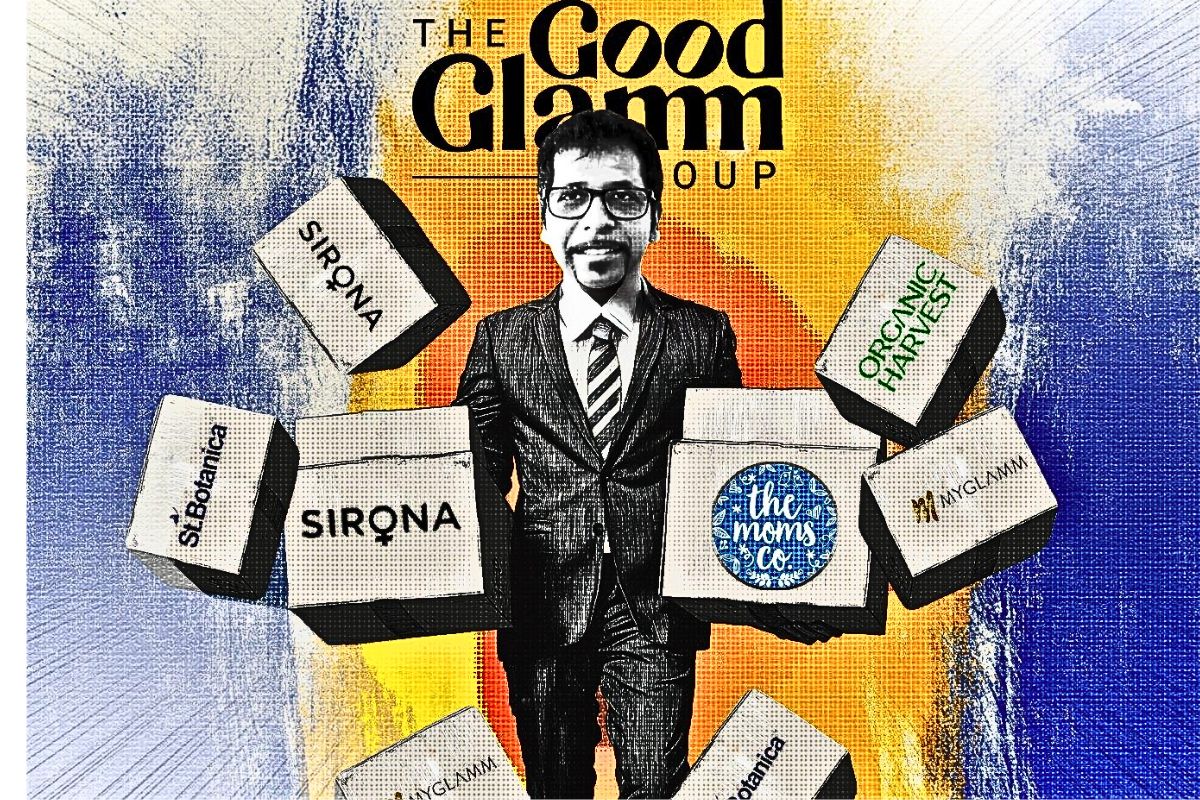
In July 2025, Darpan Sanghvi, CEO of the Good Glamm Group, once India’s most celebrated beauty unicorn, wrote a public obituary on LinkedIn for his own company. “Momentum is intoxicating,” he wrote. “Until you drown in it.” The company he had built to a $1.25 billion valuation, backed by Warburg Pincus, Prosus, Bessemer Venture Partners, and Amazon, was being dismantled brand by brand by its own lenders. ScoopWhoop, acquired for ₹100 crore, went for ₹20 crore. Sirona, acquired for ₹450 crore, went back to its founders for ₹150 crore. MissMalini, once a marquee media asset, sold for ₹4 crore. The valuation had collapsed approximately 90%.
Across the table, in Gurugram, sat Honasa Consumer, publicly listed, still operational, posting its highest-ever quarterly revenue of ₹657 crore in Q4 FY26 and a PAT of ₹69 crore. On the surface, the two stories look nothing alike.
But strip away the recent quarterly recovery, and a structural question emerges that is worth asking with precision: Does Honasa Consumer carry the architectural DNA of the same trap that swallowed Good Glamm, and if so, which parts of the blueprint have been dismantled, and which parts remain?
To answer this, you first need to understand exactly how Good Glamm collapsed; not the surface narrative of “spending too much,” but the precise mechanical failure at the structural level.
Good Glamm’s model, borrowed from the US-based Thrasio playbook, was built on a simple premise: acquire digitally native brands at relatively cheap valuations, inject centralised marketing and distribution infrastructure, and watch each brand scale faster than it could alone. Acquire enough of them, and the combined entity achieves platform economics, involving shared logistics, shared customer data, shared influencer networks, shared content infrastructure, that make the sum worth far more than its parts.
The Good Glamm acquired 11 companies in rapid succession. The Moms Co., Sirona, Organic Harvest, St. Botanica, POPxo, ScoopWhoop, BulBul, MissMalini, Tweak India, which includes everything like beauty brands, wellness brands, media platforms, influencer networks. The logic was that the content platforms would drive traffic to the D2C brands at near-zero customer acquisition cost, creating a flywheel that traditional FMCG competitors couldn’t replicate.
By FY23, revenue had grown to ₹600 crore, a 10x increase in two years. The losses had ballooned to ₹917 crore in the same period, with roughly ₹2,200 crore spent, mostly on acquisitions. The content flywheel never truly activated; traffic from POPxo and ScoopWhoop didn’t convert to MyGlamm sales at the expected rate. The centralised leadership model created inefficiencies rather than synergies. Brands that had operated nimbly as independent entities lost their founder energy and market focus under corporate centralisation. Leadership began exiting. Investors stopped writing cheques. Salaries went unpaid. The lenders arrived.
The diagnostic is precise: the model failed because acquisition velocity outpaced integration capability, advertising costs multiplied with every new brand added, and no single brand reached self-sustaining scale before the next acquisition demanded attention and capital.
What we could see is Honasa’s Version of the Same Architecture
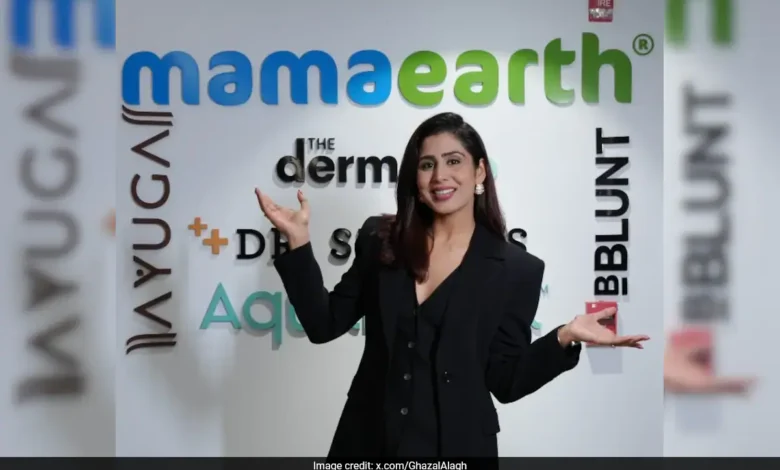
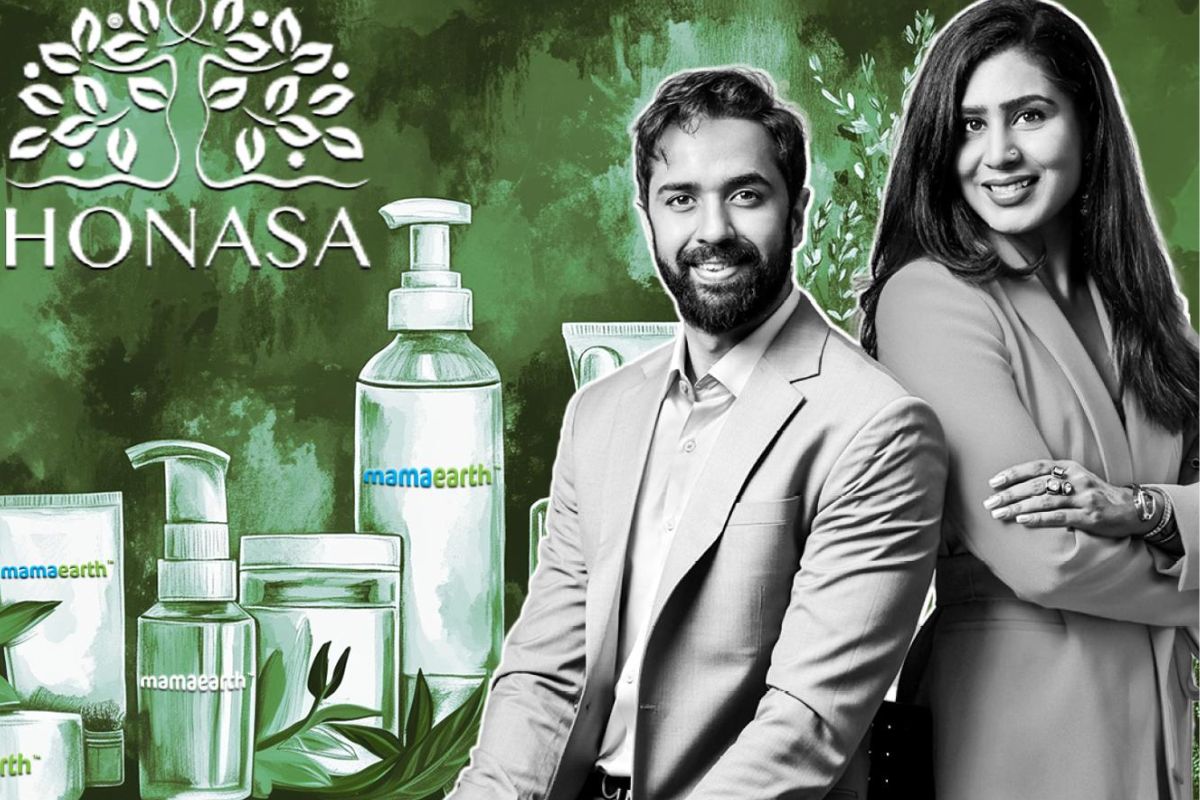
Now look at Honasa Consumer’s portfolio: Mamaearth (flagship), The Derma Co., Aqualogica, BBlunt, Dr. Sheth’s, Staze, and most recently Reginald Men. 7 brands. Plus the now-shut Momspresso (acquired for ₹167.9 crore, written off for ₹136 crore in goodwill impairment alone), and the discontinued Ayuga (launched in 2021 in collaboration with Shilpa Shetty, relaunched in December 2023, shut down in June 2024 for failure to establish product-market fit).
That is 9 brands attempted. Two already removed from the portfolio. 7 currently active. And in FY25, the total advertising spend across the portfolio: ₹743.65 crore — 36% of revenue.
The sub-brand advertising picture is where the parallel becomes most direct. Honasa invested heavily in advertising for its younger brands, like The Derma Co., Aqualogica, Dr. Sheth’s, BBlunt, and Staze. Against combined revenues of approximately ₹260 crore from these brands at the time, the advertising allocated to them was approximately ₹162 crore — a 62% marketing-to-revenue ratio for the sub-brands alone.
The question that should unsettle every Honasa shareholder is not whether this is bad now. It is: at what point does the sub-brand advertising burden stop being an investment and start being a structural drag? Good Glamm’s answer, arrived at too late, was: when the portfolio grows faster than your ability to monetise each brand within it. Well, The Good Glamm is not the only one; we have a mate from edtech as well, The Great Byju’s, which acquired faster than it could grow!!!
The Momspresso and Ayuga Precedent: Warning Signs Already in the Record
Before examining whether Honasa is different from Good Glamm, it is important to acknowledge that Honasa has already lived through its own version of brand failure, twice.
Momspresso was Honasa’s first acquisition, in December 2021, for ₹167.9 crore. It was a female-oriented content platform — the equivalent of Honasa’s attempt at its own content-to-commerce flywheel, a move that mirrored Good Glamm’s entire strategic thesis almost exactly. The platform was supposed to provide Mamaearth with influencer access and organic consumer content at scale.
By FY23, Momspresso had generated ₹21 crore in losses. Honasa took a goodwill impairment charge of ₹136 crore, contributing significantly to a ₹151 crore net loss for the year. Before its IPO, the website was quietly taken offline. The entity was later merged into Honasa Consumer to eliminate the subsidiary structure. The content flywheel never activated. The acquisition, in hindsight, was a direct replica of the same thesis that destroyed Good Glamm — and it failed for the same reason: content traffic doesn’t automatically convert to product sales, and paying ₹152 crore for a platform with ₹16 crore intrinsic value is not a strategy. It’s speculation.
Ayuga was different; it was an internally built brand launched with the backing of investor Shilpa Shetty in 2021, targeting the ayurvedic beauty space. Relaunched in December 2023. Discontinued in June 2024. The official reason: “failure to establish product-market fit.” The market context: in a country with Patanjali, Forest Essentials, Himalaya, Biotique, and dozens of regional ayurvedic brands with decades of consumer trust, Honasa’s nine-month-old rebranded ayurvedic play had no genuine differentiation. No formula IP. No heritage. No reason for a consumer to choose it over the category incumbents.
These two failures are not footnotes. They are evidence that the House of Brands model carries an inherent attrition risk, that even a disciplined company with Honasa’s operational sophistication will accumulate brands that fail to reach self-sustaining scale, and that the cost of each failure is not just the acquisition price but the years of advertising investment that preceded the discontinuation decision.
Where Honasa Is Structurally Different from Good Glamm
With the structural similarities established, intellectual honesty requires stating clearly where the two companies diverge and why Honasa’s trajectory is not predetermined to replicate Good Glamm’s outcome.
First: public accountability. Honasa is a listed company subject to quarterly earnings scrutiny, SEBI oversight, and public disclosure requirements. Good Glamm operated as a private entity and did not file audited financials for its final two years of operation. When you cannot see the numbers, the deterioration is invisible until it is catastrophic. Honasa’s investors, whatever their frustrations, can see exactly what is happening, and the market has already extracted accountability. The stock fell 40% from its highs in 2024 before the recovery began. That correction, painful as it was, is a functioning market mechanism. Good Glamm had no such correction signal until it was too late.
Second: acquisition discipline. Honasa’s acquisition spend has been materially more restrained. Honasa’s largest acquisition to date is Reginald Men at ₹195 crore, a brand generating ₹70 crore in revenue with 25% EBITDA margins. The acquisition multiple, at 2.6x revenue and 10.9x EBITDA, is financially defensible. Good Glamm paid ₹450 crore for Sirona, which was sold back for ₹150 crore. Honasa paid ₹152 crore for Momspresso, which had an intrinsic value of ₹16 crore. Both companies made expensive early mistakes. But Honasa’s subsequent acquisitions have shown demonstrably better price discipline.
Third: the anchor brand’s genuine scale. Mamaearth generates over ₹1,400 crore in revenue, has reached offline parity with online sales, commands the No. 3 position in face wash offline per Kantar’s Brand Health Track, and generates approximately 70% gross margins. This is a real business with real distribution. Good Glamm’s MyGlamm, which was the equivalent anchor, never achieved comparable scale or offline penetration before the acquisition spree began. Building a House of Brands on top of a ₹1,400-crore anchor is structurally different from building one on top of a ₹200-crore anchor.
Fourth: course correction demonstrated. Both Momspresso and Ayuga were shut down. The sub-brand portfolio has been rationalised. Under “Project Neev,” Honasa rebuilt its offline distribution from scratch, accepting short-term revenue pain for long-term structural health. Q4 FY26 saw EBITDA margins reach 11.7%, the highest in the company’s public life, and FY26 full-year profit after tax reached ₹200 crore, up 175% from FY25. The advertising-to-revenue ratio declined to 32.9% in Q4 FY26 from 34.4% a year earlier. These are not dramatic improvements, but they are directionally correct for the first time in the company’s public history.
The Questions That Still Don’t Have Answers
And yet, and this is where the House of Brands question remains alive, several structural risks that Good Glamm embodied have not been resolved at Honasa.
The sub-brand dependency problem persists. The Derma Co. is tracking toward ₹750 crore ARR, which is genuinely strong. But without The Derma Co., the rest of the non-Mamaearth portfolio — Aqualogica, BBlunt, Dr. Sheth’s, Staze, Reginald Men — collectively requires enormous advertising investment before any of them generates the kind of self-sustaining scale that reduces the overall group’s marketing dependency. The 62% marketing-to-revenue ratio for sub-brands was not an FY26 solved problem. It was an FY25 data point that the company has not yet publicly revised with disaggregated brand-level disclosure.
The acquisition impulse has not stopped. Honasa acquired CosmoGenesis Labs in May 2024 and Reginald Men in December 2025. It took a 25% stake in Fang Oral Care in late 2025. The ambition is explicit: management has stated it expects to build “one more ₹1,000 crore brand and two additional ₹500 crore brands” within the portfolio. That goal requires either organic growth from existing brands — which depends on the advertising drip sustaining — or further acquisitions. Every new acquisition is a new mouth to feed before it earns its oxygen.
The marketing-to-revenue ratio, while declining marginally, has not broken structurally. At 32.9% in Q4 FY26, the ratio is still more than twice the level of HUL. The management has been guiding toward normalisation “in the longer term” across multiple earnings cycles. Until the ratio breaks below 25% while revenues continue growing — proving that organic pull has replaced the induced demand engine — the House of Brands model remains dependent on the advertising drip to sustain demand across its entire portfolio simultaneously.
The Verdict: Similar Tightrope, Different Walker
The honest answer to whether Honasa Consumer is walking the same tightrope that collapsed Good Glamm is: possibly inclined, it is on the tightrope. No, it is not the same walker, and it has not yet fallen.
The tightrope, a multi-brand portfolio where each brand requires independent advertising investment before reaching self-sustaining scale, in a category where product differentiation is thin and switching costs are low is identical. The physics of that tightrope are unchanged by who is walking it.
What is different is the walker’s preparation. Honasa has better anchor economics, greater public accountability, more defensible acquisition pricing (post-Momspresso), and the demonstrated capacity for painful self-correction. The FY26 recovery, ₹2,392 crore in revenue, ₹231 crore in EBITDA, ₹200 crore in PAT, and the company’s maiden dividend suggests that the scaffolding is, slowly and with considerable effort, beginning to convert into load-bearing walls.
But the tightrope metaphor is deliberately chosen because it captures the conditional nature of the outcome. Good Glamm proved that the India House of Brands model can collapse even when the founder is visionary, the investors are marquee, and the revenue trajectory is impressive. What kills you is not the point at which you stop growing. It is the point at which the cost of maintaining multiple brands simultaneously exceeds the group’s ability to generate returns from any single one of them.
Honasa Consumer has bought itself time. The question, the only question that matters for the next three years is whether it uses that time to reduce the advertising oxygen each brand in its portfolio requires to survive, or whether it continues adding brands before the existing ones have learned to breathe on their own.
Good Glamm’s founder, in his LinkedIn update, described the problem as doing “too much, too fast, too big.” Honasa’s management describes its strategy as “disciplined execution” and a “barbell approach.” The words are different. The architecture has more in common than the language suggests. And in the beauty and personal care business in India, architecture is fate.