Singapore Court Sentences Byju Raveendran; Is This The Final Collapse Of India’s Biggest Edtech Dream?
Once hailed as the future of Indian education and a symbol of the country’s startup ambitions, Byju’s today finds itself battling insolvency proceedings, global lawsuits and a deepening credibility crisis. The latest blow came from Singapore, where a court sentenced founder Byju Raveendran to jail, raising fresh questions over what lies ahead for India’s fallen edtech giant.

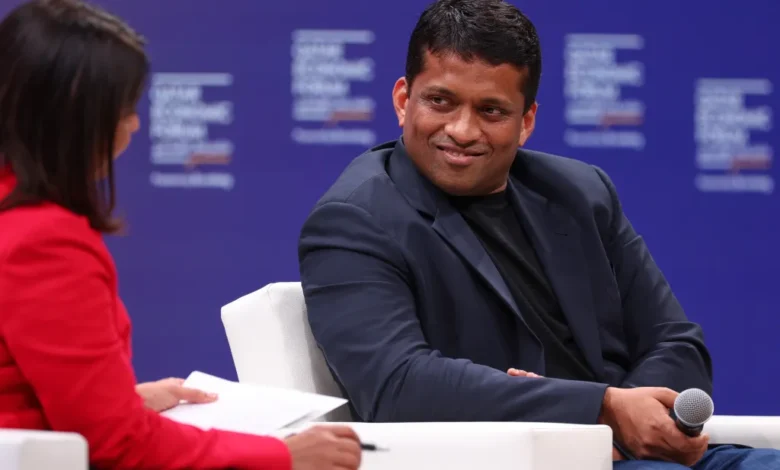
There was a time when Byju’s was not merely India’s biggest edtech startup but a symbol of a rapidly changing India itself. Millions of parents saw it as a gateway to a better future for their children, students thronged to its online classes during the pandemic years and global investors hailed it as proof that India could build technology giants capable of competing on the world stage.
At its peak, the company’s valuation soared to nearly $22 billion, its logo adorned the Indian cricket team’s jersey and founder Byju Raveendran became one of the most celebrated faces of India’s startup revolution.
Today, that story has taken a stunning turn. In the latest blow to the embattled company, a Singapore court sentenced Byju Raveendran to six months in jail for contempt over allegedly failing to comply with multiple court orders tied to his assets and ownership disclosures. The ruling marks yet another dramatic chapter in what has now become one of the biggest corporate collapses in India’s startup history, a downfall that has seen Byju’s spiral from investor darling to insolvency battles, global lawsuits, allegations of hidden funds, unpaid salaries and a desperate fight for survival across multiple courts and countries.

The Rise Of India’s Biggest Edtech Dream
Founded in 2011 as Think & Learn Pvt Ltd, Byju’s emerged at a time when India’s digital economy was beginning to expand rapidly and parents were increasingly willing to spend heavily on education. The company positioned itself as a technology-driven learning platform capable of transforming how Indian students prepared for school exams and highly competitive entrance tests.
The timing proved almost perfect. As smartphone penetration surged and internet access spread deeper across the country, online education began gaining mainstream acceptance. Then came the Covid-19 pandemic, a period that fundamentally changed how millions of students learned. Schools shut down overnight, classrooms moved online and demand for digital education exploded across India. Byju’s quickly became one of the biggest beneficiaries of that shift.
The company marketed itself aggressively, promising highly engaging learning experiences backed by technology and personalised education tools. Celebrity endorsements, large-scale advertising campaigns and high-profile sponsorships helped Byju’s become a household name. Its association with the Indian cricket team further elevated the brand, giving it enormous visibility and credibility among middle-class families.
Global investors rushed in as well. Some of the world’s biggest investment firms backed the company as Byju’s embarked on a rapid expansion spree across India and overseas markets. The startup acquired several companies at breakneck speed, including Aakash Educational Services, Great Learning and Epic, spending billions of dollars to strengthen its presence across the education ecosystem.
At the height of the startup boom, Byju’s was widely projected as the crown jewel of India’s emerging tech economy – a company that appeared unstoppable, ambitious and perfectly positioned for the future. But beneath the rapid growth, cracks had already begun to emerge.
The Billion-Dollar Expansion That Changed Everything
The turning point in Byju’s story arrived in 2021, when the company secured a massive $1.2 billion term loan from overseas lenders, one of the largest foreign loans ever raised by an Indian startup at the time. The deal was celebrated as another sign that India’s startup ecosystem had finally arrived on the global stage.
Flush with investor money and fresh debt, Byju’s accelerated its expansion plans even further. The company went on a high-speed acquisition spree, spending billions of dollars to buy firms across India and overseas markets. Aakash Educational Services, Great Learning and US-based reading platform Epic became some of its biggest purchases as Byju’s attempted to rapidly build a global education empire spanning test preparation, higher education and online learning.
But the aggressive growth came at a cost.
The company was expanding at a pace that increasingly appeared difficult to sustain, especially as the post-pandemic world began changing consumer behaviour. As schools reopened and students gradually returned to offline classrooms, the explosive demand that had once powered the edtech sector started slowing sharply.
At the same time, concerns over Byju’s financial health slowly began surfacing. Questions emerged around delayed financial filings, mounting losses and the company’s ability to manage its rapidly expanding operations. When Byju’s finally reported its FY21 numbers after repeated delays, the scale of the losses shocked many investors and analysts, with losses ballooning to nearly Rs 4,588 crore.
What once looked like aggressive ambition was now beginning to look like unchecked expansion. And for the first time, serious doubts started emerging over whether Byju’s growth story was sustainable at all.

Auditors Quit, Investors Panic And The Cracks Become Impossible To Ignore
As scrutiny around Byju’s finances intensified, the company soon faced one of the biggest warning signs any large corporation can encounter — the exit of its auditors and key board members.
In 2023, Deloitte resigned as the company’s auditor, reportedly citing delays in receiving financial statements and a lack of effective communication from management. Soon after, several independent board members also stepped down, deepening concerns around governance and transparency inside the company.
The exits triggered alarm bells across India’s startup ecosystem. For investors and lenders, the resignations were not merely administrative developments but signals that confidence in the company’s internal functioning was beginning to erode rapidly.
The situation worsened further when BDO Global’s India affiliate, which had replaced Deloitte, also reportedly resigned later amid continuing concerns surrounding the company’s financial reporting processes.
At the same time, Byju’s delayed financial disclosures continued attracting attention from regulators and investors alike. Questions began mounting over revenue recognition practices, cash flows and whether the company had expanded far beyond its financial capacity.
The market reaction was brutal.
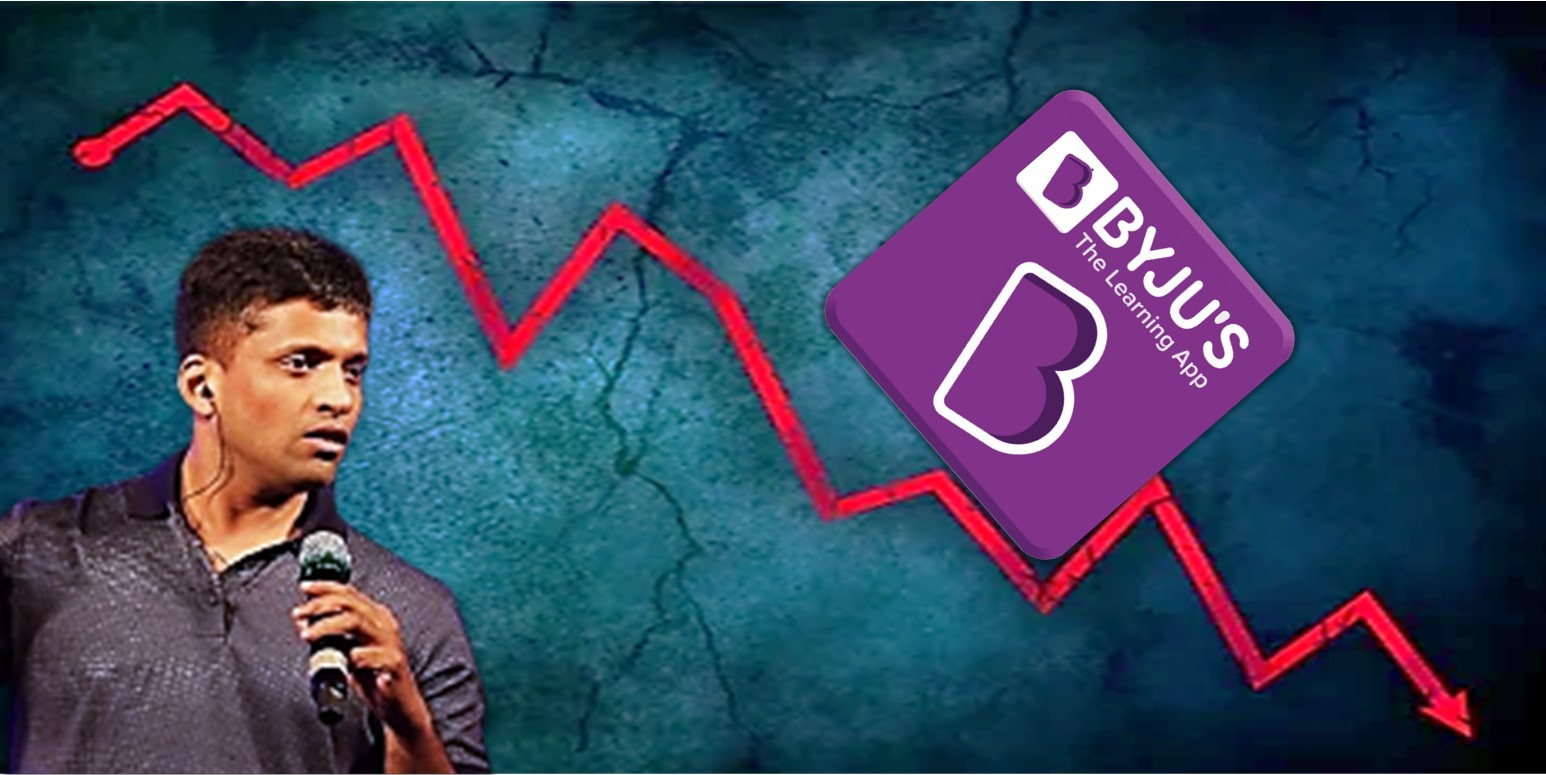
Investors who had once aggressively backed the company started sharply marking down its valuation. From a peak valuation of nearly $22 billion, Byju’s valuation began collapsing at extraordinary speed, with some estimates later placing it below $1 billion. Founder Byju Raveendran, once celebrated as one of India’s richest startup founders, eventually saw his net worth slashed dramatically.
The company that had once symbolised the confidence and ambition of India’s startup boom was now increasingly becoming a cautionary tale about what can happen when rapid expansion overtakes financial discipline and governance.
The Missing Money Allegations And The Global Legal Battle
By late 2022 and early 2023, relations between Byju’s and its lenders had deteriorated sharply. What had initially begun as disagreements over loan terms and restructuring discussions soon escalated into a sprawling international legal conflict involving courts in the United States, India and Singapore.
At the centre of the battle was the company’s massive $1.2 billion term loan, which lenders claimed had become increasingly difficult to track amid growing concerns around transparency and governance. The situation exploded after allegations emerged that nearly $533 million linked to the loan had allegedly been moved without proper disclosure.
Lenders accused the company of concealing assets and shifting funds through multiple offshore entities, allegations that Byju’s strongly denied. The dispute soon spilled into American courts, where creditors sought greater control over Byju’s US-based subsidiary, Byju’s Alpha.
Court filings later introduced even more damaging allegations. According to reports, lenders claimed that a UK-based logistics company named OCI Limited had allegedly been used in transactions involving more than $500 million tied to the disputed loan funds. The accusations further intensified concerns that the company’s financial structure had become increasingly opaque and difficult to monitor.
As the legal battles spread internationally, Singapore also emerged as a major front in the crisis. A subsidiary linked to the Qatar Investment Authority reportedly initiated proceedings connected to financing arrangements and asset disclosures involving entities tied to Byju Raveendran.
Singapore courts subsequently issued multiple orders related to ownership disclosures and company-linked assets. According to reports, the court later found that Raveendran had failed to comply with several of these directions dating back to April 2024.
That ultimately culminated in the latest and perhaps most dramatic development yet — a Singapore court sentencing the Byju’s founder to six months in jail for contempt. The court also reportedly directed him to surrender to authorities, pay legal costs and provide documents linked to the ownership of Beeaar Investco Pte, an entity connected to the dispute.
What had once been viewed as a fast-growing startup facing operational challenges had now transformed into a full-scale global legal crisis.

Insolvency Proceedings And The Battle For Aakash
As Byju’s legal troubles intensified globally, the crisis back home in India was also spiralling rapidly. In July 2024, the Bengaluru bench of the National Company Law Tribunal admitted insolvency proceedings against Think & Learn Pvt Ltd, the parent company of Byju’s, after a dispute over unpaid dues owed to the Board of Control for Cricket in India (BCCI).
The irony was difficult to miss. The same cricket sponsorships that had once symbolised Byju’s rise and dominance were now tied to one of the triggers pushing the company toward insolvency proceedings.
Although the unpaid amount was relatively small compared to the company’s larger liabilities, the insolvency admission dramatically worsened the crisis surrounding the startup. Multiple stakeholders, lenders and legal entities soon became involved in a larger battle over who effectively controlled the company and its assets.
At the centre of that fight stood Aakash Educational Services, widely considered one of Byju’s most valuable acquisitions. Byju’s had acquired Aakash in 2021 for nearly $1 billion as part of its ambitious expansion strategy aimed at creating a hybrid online-offline education empire.
But as the insolvency proceedings unfolded, Aakash itself became another major flashpoint.
The company proposed a rights issue to raise fresh capital, a move that Byju’s strongly opposed. According to reports, Think & Learn argued that because it was undergoing insolvency proceedings, it would not be able to participate properly in the rights issue, potentially resulting in a massive dilution of its stake in Aakash.
Byju’s reportedly warned that its holding could fall sharply from nearly 25.75 per cent to below 5 per cent if the dilution proceeded fully. Tribunals, however, declined to halt the process, dealing yet another setback to the embattled edtech firm.
The stakes around Aakash are enormous for Byju’s. At a time when several of the company’s businesses have lost value and legal troubles continue mounting across jurisdictions, Aakash remains one of the few major assets still viewed as strategically and financially significant.
For many observers, the battle over Aakash is no longer merely a corporate dispute but a fight over whether Byju’s can retain any meaningful control over the remnants of the empire it once built.
/entrackr/media/post_attachments/wp-content/uploads/2024/01/Byjus-image-1.jpg)
Employees Unpaid, Investors Furious And The Empire Begins To Shrink
While Byju’s fought mounting legal battles across multiple countries, the damage inside the company was becoming impossible to hide. Employees began reporting delayed salaries, large-scale layoffs swept across departments and operational uncertainty started spreading rapidly through the organisation.
Thousands of workers were affected as the company attempted to cut costs and preserve cash amid growing financial pressure. Several offices were downsized, teams were restructured and morale within the once high-flying startup reportedly deteriorated sharply.
At the same time, investor confidence collapsed further.
Some of Byju’s most prominent backers openly questioned the company’s governance standards and management decisions. Tensions between investors and founder Byju Raveendran escalated as concerns mounted over transparency, debt obligations and the handling of the company’s finances.
The company’s valuation, once among the highest in India’s startup ecosystem, witnessed a staggering decline. The fall was equally dramatic for founder Byju Raveendran himself. Once projected as one of the faces of India’s startup revolution, his financial standing deteriorated rapidly as the company’s troubles deepened.
Forbes eventually slashed his net worth to zero, symbolising the extraordinary collapse of a founder who had once represented the confidence and ambition of India’s new-age startup economy.
What made the crisis even more striking was the speed of the decline. Just a few years earlier, Byju’s had been celebrated as one of India’s greatest startup success stories, backed by elite investors and projected as the future of education technology. But as layoffs mounted, investors revolted and legal battles multiplied, the carefully constructed image of an unstoppable edtech empire began falling apart in full public view.
Byju Raveendran Fights Back As The Crisis Deepens
Even as legal troubles and insolvency proceedings mounted around the company, Byju Raveendran continued pushing back aggressively against lenders, insolvency professionals and several parties involved in the restructuring process.
In public statements and social media posts, the Byju’s founder alleged that there had been collusion between certain entities linked to the insolvency proceedings and accused some stakeholders of attempting to unfairly seize control of the company’s assets. Raveendran also claimed that whistleblower documents pointed toward improper coordination between individuals connected to the restructuring process.
At the same time, Byju’s repeatedly maintained that lenders had acted aggressively during negotiations surrounding the company’s massive overseas loan. The company argued that it had been attempting to resolve disputes while also protecting the business from what it viewed as excessive pressure from creditors.
However, the growing number of court cases across multiple jurisdictions continued complicating the company’s position. In the United States, legal proceedings linked to Byju’s Alpha and disputed fund transfers gathered momentum, while courts reportedly issued severe observations related to transactions involving hundreds of millions of dollars.
Back in India, insolvency proceedings and disputes surrounding Aakash Educational Services continued placing further pressure on the company’s already fragile financial position.
What Happens To Byju Raveendran Now?
The Singapore court’s order sentencing Byju Raveendran to six months in jail marks one of the most dramatic falls ever witnessed in India’s startup ecosystem.
According to reports, the court found Raveendran guilty of contempt for allegedly failing to comply with multiple court orders linked to asset disclosures and ownership-related documents tied to entities connected with the dispute. The ruling reportedly directed him to surrender himself to authorities while also imposing financial penalties and additional disclosure requirements.
The immediate question now is whether Raveendran chooses to challenge the order through legal appeals or attempts to negotiate relief through Singapore’s judicial process. Given the scale of the ongoing disputes surrounding Byju’s, legal experts are likely to closely watch whether the founder can delay, overturn or mitigate the sentence in the coming months.
However, regardless of the eventual legal outcome, the reputational impact of the order is likely to be severe. The Singapore court ruling therefore does not merely affect the founder personally, but also further damages the credibility of a company already struggling with insolvency proceedings, investor disputes and allegations tied to financial governance.
The development also raises larger questions about leadership and control within the company going forward. As legal pressure mounts across countries and lenders continue pursuing claims linked to disputed funds and assets, uncertainty is growing over how effectively Byju Raveendran can continue steering the company through one of the most serious crises ever faced by an Indian startup founder.
The Last Bit, The Fall Of India’s Edtech Poster Boy
Byju’s collapse is now being viewed as far more than the downfall of a single startup. For many, it has become one of the clearest warnings yet about the dangers of unchecked expansion, debt-fuelled growth and the culture of prioritising sky-high valuations over sustainable business fundamentals.
The company grew at extraordinary speed during a period when global liquidity was abundant, investors were aggressively chasing growth and India’s startup ecosystem was being celebrated as the next major frontier for technology businesses. But as funding conditions tightened after the pandemic and scrutiny around governance intensified globally, the cracks inside several high-growth startups began surfacing rapidly.
Whether Byju’s ultimately survives through restructuring, asset sales or legal settlements remains uncertain. What makes the moment particularly striking is the sheer contrast between Byju’s rise and its present reality.
A founder once celebrated as a symbol of India’s entrepreneurial ambitions is now confronting the possibility of jail time amid a widening global legal battle — a stunning reversal for a company that once appeared destined to dominate the future of education technology.