The Delhi Gymkhana Club Controversy Is About More Than Land, It Is Also About What India Chooses To Preserve
The Delhi Gymkhana Club, for decades, stood as one of Delhi’s most exclusive institutions, symbolising both colonial-era legacy and post-Independence elite culture. But the Centre’s move to reclaim its sprawling premises has transformed the controversy into something far bigger. A debate around privilege, heritage, public land and what modern India chooses to preserve.

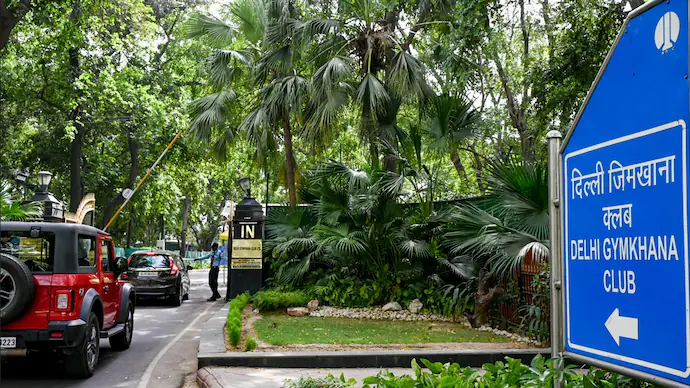
For generations, the Delhi Gymkhana Club existed as one of the most recognisable symbols of power, privilege and old-world influence in the national capital. Hidden behind sprawling greens and colonial architecture in the heart of Lutyens’ Delhi, the club represented far more than a recreational institution. It reflected a certain idea of India’s establishment itself – exclusive, influential and deeply intertwined with the country’s bureaucratic and administrative elite.
Now, that legacy stands at the centre of an extraordinary confrontation. The Union government’s decision to reclaim the club’s 27.3-acre premises near the Prime Minister’s residence for what it describes as “public purpose” and defence-related infrastructure has triggered legal challenges, political debate and intense public reaction.
Supporters of the move see it as a long-overdue challenge to an institution widely viewed as elitist and inaccessible. Critics, however, argue that the issue is not merely about privilege or land, but also about heritage, institutional memory and the growing tendency to erase rather than reform legacy spaces.
But perhaps the Delhi Gymkhana controversy is ultimately about something much larger than a club alone.
— It raises uncomfortable questions about who gets access to public space in modern India.
–What happens to colonial-era institutions in a rapidly changing society, and
–Whether India is dismantling old centres of influence only to replace them with new ones.
The Club That Came To Symbolise Lutyens-Era Privilege
The origins of the Delhi Gymkhana Club stretch back to the early decades of the twentieth century, shortly after the British shifted the capital of India from Kolkata to Delhi in 1911.
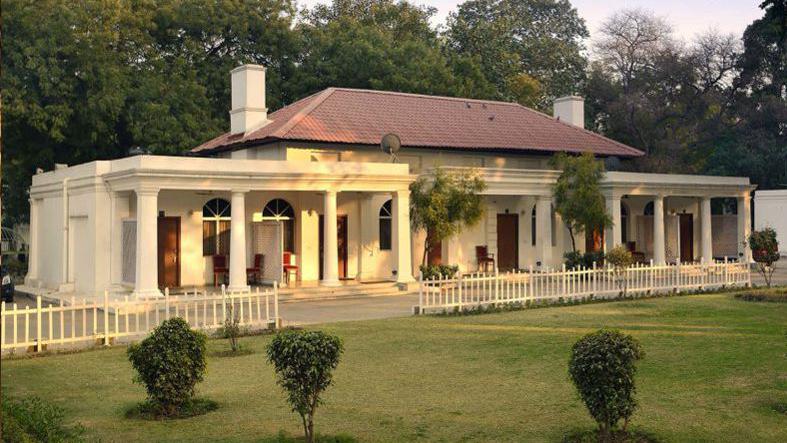
The land was formally leased in 1928 to what was then known as the Imperial Delhi Gymkhana Club, with much of the structure taking shape during the 1930s. Designed by architect Robert T Russell – the man also associated with Connaught Place and Teen Murti House – the institution gradually evolved into one of the capital’s most influential social spaces.
Following Independence, the club transformed from a colonial enclave for British officials into an elite institution frequented by India’s senior bureaucrats, military officers, judges, diplomats and political insiders. Over time, membership itself acquired an aura of exclusivity. Waiting periods reportedly stretched into decades, recommendations and social standing carried enormous weight, and for many Indians the club increasingly came to symbolise a closed world accessible only to a privileged few.
That perception has become central to the current public debate.
To critics, the Delhi Gymkhana represented a lingering relic of post-colonial elitism — an institution occupying nearly 27 acres of prime public land while functioning as an exclusive preserve for a narrow section of society.
The fact that the land was leased at highly subsidised rates only sharpened those arguments. On social media and across political discussions, many have openly questioned whether such institutions should continue to enjoy extraordinary access to public resources in a country where urban land remains scarce and unequal access to public spaces is already a major issue.
Yet the story is not entirely one-dimensional.
For over a century, the club also evolved into a part of Delhi’s architectural and institutional memory. Beyond its exclusivity, it housed sporting infrastructure, landscaped open spaces and heritage structures that have increasingly disappeared from modern Indian cities consumed by congestion and concrete expansion.
To many long-time members and observers, the Gymkhana was not merely an elite social club, but also a historical institution carrying traces of both colonial Delhi and post-Independence India’s governing culture.
It is precisely this contradiction that makes the controversy so politically and emotionally charged. The Delhi Gymkhana Club today stands at the intersection of two competing ideas — one that sees it as an outdated symbol of inherited privilege, and another that views it as a heritage institution that should perhaps be reformed rather than erased altogether.

Why The Government Wants The Land Back
The current controversy surrounding the Delhi Gymkhana Club began after the Union government, through the Land and Development Office (L&DO), issued a notice asking the club to vacate its sprawling 27.3-acre premises on Safdarjung Road by June 5. The government argued that the land, located close to the Prime Minister’s residence and within one of Delhi’s most sensitive administrative zones, was now required for “public purpose”, particularly for strengthening defence and security-related infrastructure.
At the centre of the dispute lies Clause 4 of the original lease agreement, which reportedly grants the government the authority to “re-enter” the property if the land is required for a public purpose. Invoking that provision, the Centre stated that the premises were essential for urgent institutional and governance-related needs, especially in view of the strategic importance of the surrounding area.
The issue has since moved to the Delhi High Court, where members and employees associated with the club challenged the decision. However, the court did not immediately stay the government’s move. Instead, the Centre assured the court that no forcible eviction would take place without due legal procedure being followed.
Legally therefore, the government does appear to possess significant powers under the lease structure governing the land. But while the matter may involve contractual clauses and administrative authority on paper, the public reaction surrounding the controversy suggests that the debate has moved far beyond legal technicalities alone.
The proposed takeover has inevitably triggered wider speculation about whether the move is purely about security requirements or also part of a broader reshaping of power spaces within Lutyens’ Delhi. The fact that adjoining areas around the club are also reportedly witnessing clearance and redevelopment activity has only intensified those conversations.
And perhaps that is why the Gymkhana controversy has resonated so strongly in public discourse. For some, it represents a long-overdue challenge to institutions associated with inherited privilege and exclusivity. For others, it raises concerns about how quickly heritage spaces can be dismantled in the name of administrative necessity and public purpose.
Is This Really Just About Security And Public Purpose?
While the government has justified the move on grounds of defence infrastructure and administrative necessity, the controversy surrounding the Delhi Gymkhana Club has inevitably acquired a much larger political and symbolic dimension.
For decades, institutions like the Gymkhana have been closely associated with what is often described as “Lutyens Delhi” — an ecosystem of bureaucratic influence, political access, old networks and inherited social capital that many governments, particularly in recent years, have publicly positioned themselves against. In that context, the move against one of the capital’s most exclusive clubs was always likely to be viewed through a broader political lens rather than merely as an administrative exercise.
That perception has been amplified by public sentiment itself. Large sections of social media users appeared unsympathetic toward the club, portraying it as a relic of elitism that had long remained insulated from the realities faced by ordinary citizens. The club’s reputation for decades-long waiting lists, highly selective membership culture and access limited largely to the powerful and well-connected strengthened that narrative further.
Yet the debate also exposes a deeper contradiction within modern Indian politics and society.
Even as old elite institutions increasingly come under public scrutiny, critics often argue that newer concentrations of wealth, influence and access have simultaneously emerged elsewhere within the system. In other words, the controversy has triggered a broader question – is India genuinely dismantling entrenched privilege, or merely witnessing a transition from one form of elite power to another?
That may partly explain why the Delhi Gymkhana issue has generated such unusual fascination. At one level, it is about land and legality. At another, it has become a symbolic confrontation between old institutional privilege and a changing political order eager to redefine who controls influence, access and space in the national capital.
And perhaps that is precisely why reactions to the controversy have been so sharply divided. To some, reclaiming the land represents a corrective against exclusivity and inherited privilege. To others, it reflects the growing ease with which long-standing institutions and heritage spaces can be politically and administratively reconfigured in the name of public interest.

The Bigger Question Of Public Land And Public Access
Beyond the politics and symbolism, the controversy has also reopened an uncomfortable but important debate around how public land in India should be utilised, especially in cities where space itself has become one of the most unequal commodities.
At the heart of the criticism against the Delhi Gymkhana Club lies a simple argument – should nearly 27 acres of prime land in the centre of the national capital continue to serve a relatively small and highly exclusive institution, particularly when the land itself belongs to the state?
For many critics, the answer is increasingly no.
The issue becomes even more contentious because the club’s land arrangement reportedly involved highly subsidised lease terms that dated back to another era altogether. In a rapidly expanding city where public infrastructure, recreational spaces and affordable urban land remain under enormous pressure, institutions like the Gymkhana inevitably attract scrutiny over whether such arrangements still remain justifiable in modern India.
Yet the matter is not entirely black and white either.
Heritage institutions often occupy a complicated space within urban societies. Across the world, cities preserve old clubs, libraries, universities and cultural spaces not merely because of who uses them, but because such institutions become woven into the historical and architectural identity of the city itself.
The Delhi Gymkhana too, despite its exclusivity, represents a certain continuity of Delhi’s institutional history stretching from the colonial period into post-Independence India. This is where the debate becomes far more nuanced than a simple battle between privilege and public interest.
Should institutions associated with exclusivity automatically lose their place in modern India? Or should the focus instead be on reforming them, expanding access and redefining their role within society? Can heritage and public accountability coexist together, or must one inevitably give way to the other?
Those are questions that extend well beyond the fate of one club alone.
Because ultimately, the Gymkhana controversy is forcing India to confront a larger dilemma facing many rapidly changing societies — how to balance heritage with accessibility, legacy with public interest, and preservation with the demands of a very different modern urban reality.

The Last Bit, Should Institutions Like Delhi Gymkhana Club Be Reformed Rather Than Erased?
For all the criticism directed at the Delhi Gymkhana Club, the controversy also raises a difficult question that cannot be dismissed entirely – does every institution associated with privilege necessarily deserve to disappear?
There is little doubt that the Gymkhana increasingly came to symbolise exclusivity. Its reputation for highly selective membership, decades-long waiting periods and access shaped heavily by social networks made it appear distant from the realities of ordinary urban India. In many ways, it reflected an older power structure that modern India appears increasingly impatient with.
Yet reducing the institution solely to an “elite playground” may also oversimplify what places like the Gymkhana represent.
Over more than a century, the club evolved into part of Delhi’s architectural and institutional memory. Its sporting facilities, open greens and heritage structures belong to a style of urban space that has steadily disappeared from Indian cities consumed by congestion, vertical expansion and shrinking public breathing room. Long before the current controversy erupted, the club had become intertwined with a certain historical identity of the capital itself.
That is why the debate surrounding its future feels larger than a routine eviction dispute.
Democracies are often judged not merely by what they choose to build, but also by what they choose to preserve, reform and adapt for future generations. Heritage institutions across the world have frequently faced pressure to evolve with changing social realities rather than remain frozen in exclusivity. Many have opened access, modernised governance structures and attempted to balance legacy with wider public engagement.
Perhaps that is the larger question India now faces with institutions like the Delhi Gymkhana.
Should such spaces continue unchanged under inherited systems of privilege? Certainly not. But must reform necessarily come through erasure and displacement alone? That answer may not be as straightforward as the current political atmosphere sometimes makes it appear.
Because ultimately, the Delhi Gymkhana controversy is about far more than one club or one parcel of land in Lutyens’ Delhi. It is about how a changing India chooses to negotiate the uneasy relationship between heritage and equality, memory and modernisation, preservation and public purpose.