Zepto IPO: India’s Next Textbook Case of Startup Hype, Hidden Losses, and Insider Exit – Why This Could Be Another Paytm-Style Wealth Destroyer

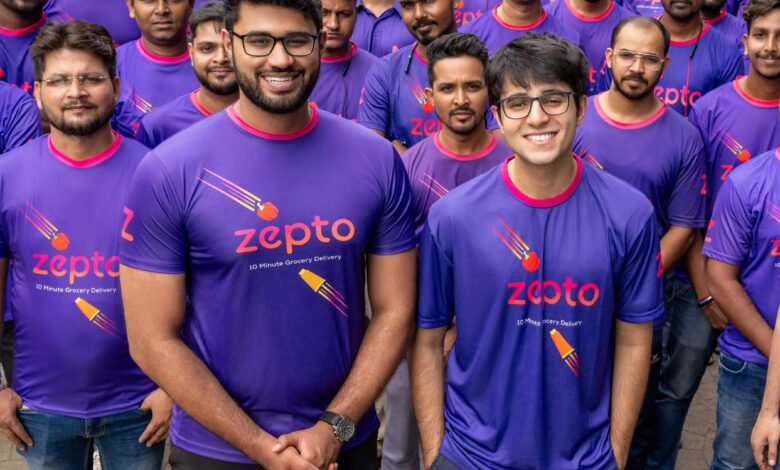
In the modern Indian startup ecosystem, the IPO has evolved from a growth-financing tool into the ultimate liquidity event for founders, VCs, and early employees. The company itself often receives only a fraction of the money raised (if the Offer for Sale component is large), while early backers who entered at pennies cash out at billions. The public is left holding the bag of a still-loss-making business that was never built for sustainable profits.
Zepto fits this playbook perfectly. Its last private round valued it at $7 billion (October 2025). The IPO is expected to include a mix of fresh issue + some secondary sales (OFS) by existing investors. If the OFS portion is significant — as multiple reports have hinted — the IPO becomes primarily an exit ramp for VCs and promoters rather than capital for genuine expansion. This is exactly what happened with Paytm (massive OFS, listed at discount, then crashed >75–80%), Nykaa, Policybazaar, and Delhivery. The company keeps burning cash; the insiders get rich; retail investors fund the exit.
Founders Palicha and Vohra, along with their board and early backers (including Nexus Venture Partners, which has faced past allegations in Zepto’s equity disputes), are now in the classic “cash-out” phase. The young founders’ narrative of “building for the long term” rings hollow when the unlisted market is already pricing in a reality check.
2. More Than 98% of Loss-Making Startups Launch IPOs While Keeping Book Value High but Hiding Their Real Losses
Here is the uncomfortable truth: over 98% of loss-making Indian startups that go public do not fix their economics first — they simply repackage the losses. They highlight topline growth, daily orders, and “adjusted” metrics while burying the accelerating cash burn, negative contribution margins, and dependence on continuous capital infusion in the footnotes.
Zepto’s FY25 audited numbers are damning: revenue of ₹9,669 crore (up 129% YoY), but net loss of ₹3,367 crore (up 177% YoY). Losses now eat up roughly 35% of turnover — worse than the previous year. In other words, the faster Zepto grows, the more money it loses. This is not “investing in the future.” This is a business model that scales losses.
The company still holds only ₹6,000–7,000 crore in cash and targets post-tax profitability only by FY29 — three years after listing. Unit economics remain negative at scale. Every new dark store, every discounted order, every free delivery adds to the burn. The DRHP will likely dress this up with “path to EBITDA positivity” language, but the audited numbers don’t lie: growth is not fixing the core problem. It is making it worse.
3. 98% of Loss-Making Startups Show Highly Inflated Valuations Despite Heavy Losses
Zepto’s valuation story is the same fantasy math that destroyed value in 2021. Even after the 25–30% unlisted correction, the implied valuation remains disconnected from reality: a company losing ₹3,367 crore annually on ₹9,669 crore revenue is still being valued in the $5.5–7 billion range.
Compare this to the 2021 cohort:
- Paytm: heavy losses → crashed >75–80%.
- Zomato: loss-making → fell >60% before partial recovery.
- Nykaa, Policybazaar, Delhivery, CarTrade: all listed at aggressive multiples despite weak or negative profitability → 50–70%+ drawdowns.
Zepto’s quick-commerce peers (Blinkit under Zomato, Instamart under Swiggy) have already shown that the model is brutally competitive and margin-destructive. There are no meaningful entry barriers — no proprietary technology, no network effects that can’t be copied. Growth is driven by subsidies, not sustainable customer loyalty. When the discounts stop, the orders slow. Public markets eventually price this reality in.
4. Why Investors Must Be Extremely Alert – The Red Flags Are Blinding
Every major red flag from the loss-making startup IPO checklist is flashing for Zepto:
- Unsustainable customer acquisition and poor unit economics: Heavy discounting, free deliveries, and marketing spend are propping up the 2.4–2.5 million daily orders. CEO Aadit Palicha himself admitted the company used “dark patterns” in the app (hidden fees, drip pricing, auto-added items) and called it a “mistake” after massive backlash. Customers are being trained on subsidies, not value.
- Regulatory and operational scandals: Zepto has faced repeated hygiene and food safety violations — including suspensions of dark stores for expired stock, poor storage, and hygiene lapses in 2025. These are not minor; they point to governance and operational weaknesses in a business that promises 10-minute delivery of perishables.
- Toxic work culture allegations: Palicha has been criticised for promoting 2 a.m. meetings, extreme hours, and high-pressure environments. Senior executives have exited in droves ahead of the IPO (CHRO, CXOs, VPs of operations and strategy between Sep 2025–Jan 2026), raising questions about internal stability.
- Old but revealing founder dispute: In 2021–22, co-founder-level disputes surfaced when early associate Ansh Nanda filed an FIR against Palicha, Vohra, the board, and Nexus Venture Partners, alleging threats, false equity promises, and being squeezed out. While resolved long ago, it highlights the aggressive, high-stakes culture that prioritises control and valuation over fair dealing.
- OFS misalignment: Any significant Offer for Sale turns this IPO into an exit event. If insiders (founders, VCs) sell heavily while the company is still deeply unprofitable, it signals they believe the current valuation is as good as it gets.
The quick-commerce sector has no durable moat. It is a capital-intensive, low-margin war of attrition. Blinkit is already closer to breakeven. Zepto is still in aggressive scaling mode with widening losses.
Can Zepto Wipe Out Investors’ Money?
Yes — it is a very real and high-probability risk.
If Zepto lists near current unlisted levels (~$5.5–6 billion) or even a modest premium, any of the following (all highly plausible) could trigger a 50–80% crash post-listing, exactly like the 2021 disasters:
- Failure to narrow losses meaningfully in the first 2–3 quarters.
- Slowing order growth once discounts are rationalised.
- Post-lock-in selling by VCs and early investors.
- Continued regulatory scrutiny or further hygiene/consumer complaints.
- Broader market shift away from “growth-at-all-cost” stories.
With ₹3,367 crore annual losses already on the books and a distant FY29 profitability target, the IPO proceeds may simply fund more marketing wars and dark-store expansion rather than create real shareholder value. History shows that when the narrative shifts from “disruption” to “show me profits,” these stocks collapse. Zepto has all the ingredients: inflated private valuation, accelerating losses, insider exit signals, low moats, and admitted operational missteps.
Bottom line: Zepto is not a business ready for public markets — it is a venture-funded delivery experiment that has yet to prove it can make money without constant cash infusions. The 25–30% pre-IPO unlisted crash is the warning. Retail investors who chase the listing pop because “quick commerce is the future” are repeating the exact mistakes of 2021.
The pattern is clear. The red flags are documented. The historical precedents (Paytm, Nykaa, Policybazaar) are painful reminders. Unless the final DRHP reveals a dramatic turnaround in unit economics and a credible near-term profitability path — which current numbers strongly contradict — Zepto’s IPO risks becoming yet another case study in how startup hype destroys public shareholder wealth.
Investors: read the DRHP line by line, stress-test the unit economics, and ask the only question that matters — if the subsidies stop tomorrow, does this business survive? The answer today is no. Proceed with extreme caution — or better yet, stay away.