As SpaceX Touches A $1.75 Trillion Valuation, Are Investors Buying A Space Company Or Elon Musk’s Vision Of The Future?
When Elon Musk's SpaceX launched what could become the largest IPO in history, investors rushed in with more than $250 billion in orders, valuing the company at an eye-watering $1.75 trillion. But beneath the enthusiasm - are investors buying the world's most successful space company, or betting on industries that have yet to be built?

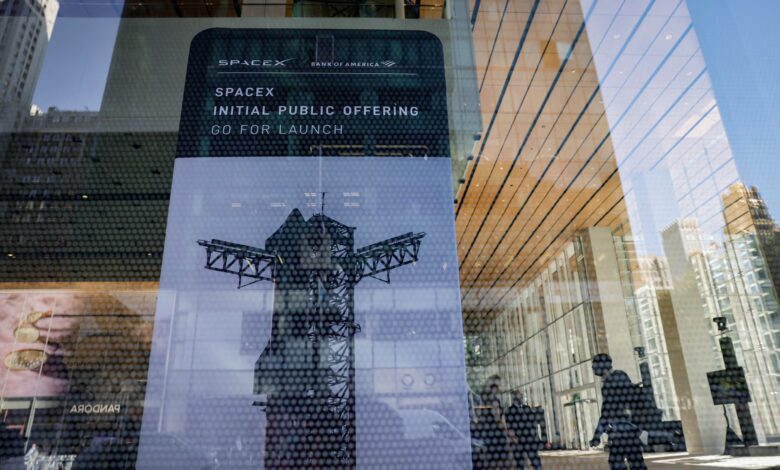
Even before SpaceX completed its first full day of public trading, the company had already secured a place in financial history. The Elon Musk-led space giant priced its initial public offering at $135 per share, seeking to raise approximately $75 billion and commanding a valuation of around $1.75 trillion, making it the largest IPO ever attempted.
Investor demand was nothing short of extraordinary. Early indications suggested the offering was roughly twice oversubscribed, implying orders worth around $150 billion. As the marketing process progressed, interest reportedly surged even further, with investor demand crossing $250 billion and oversubscription levels reaching between 3.5 and four times the size of the offering.
The scale of the enthusiasm is remarkable given the broader market backdrop. Global equity markets have experienced heightened volatility in recent months, technology valuations have come under greater scrutiny, and investors have become far more selective about companies promising growth far into the future. Yet SpaceX appears to have cut through those concerns with ease.
From a fundraising perspective, the company has already achieved a resounding success. However, attracting capital is only one measure of an IPO’s performance. Investors typically judge public offerings on three fronts: the ability to raise money, the stock’s performance once trading begins, and whether the business can ultimately justify its valuation over the years that follow.
On the first count, SpaceX has already won. The more important question is whether investors are valuing the company for what it is today – a dominant force in launch services and satellite communications – or for what Elon Musk believes it could become tomorrow.
Why Investors Cannot Ignore SpaceX’s Real Business
Unlike many highly anticipated technology IPOs that arrive in public markets armed primarily with promises of future growth, SpaceX enters the market with something far more valuable – a business that has already transformed an industry.
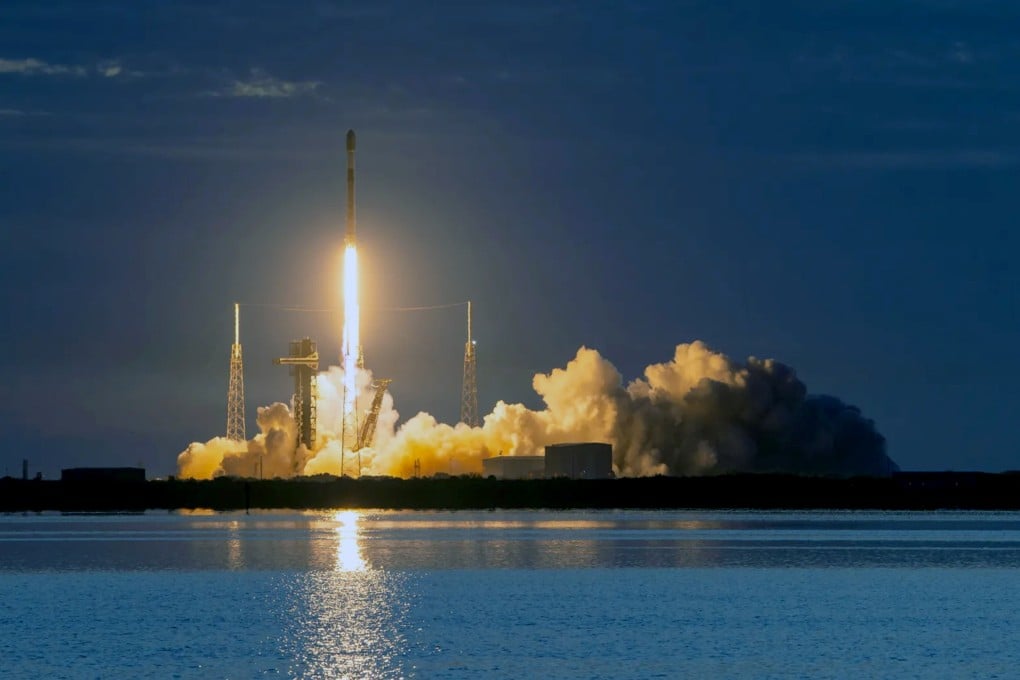
Over the past decade, the company has fundamentally altered the economics of spaceflight through the development of reusable rockets, a breakthrough that significantly reduced launch costs and enabled launch frequencies that competitors have struggled to match. Today, SpaceX accounts for the majority of commercial launches worldwide and has become the preferred launch partner for governments, businesses, research institutions and satellite operators alike.
Its dominance extends beyond rockets. Through Starlink, the company has built one of the world’s largest satellite internet networks, providing connectivity to millions of users across remote and underserved regions. What began as an ambitious side project has evolved into a substantial business in its own right, generating recurring revenue and giving SpaceX exposure to one of the fastest-growing segments of the communications industry.
The scale of these achievements matters because they distinguish SpaceX from many companies that have commanded lofty valuations in the past. Investors are not being asked to fund a concept, a prototype or an untested technology. They are buying into a company that has already established leadership in launch services, built a global communications network and created barriers to entry that few rivals appear capable of overcoming.
This is one reason why enthusiasm surrounding the IPO has been so intense. Investors can point to tangible assets, established revenue streams and proven technological capabilities. In other words, there is a real and growing business underpinning the story.
Yet this reality also raises an uncomfortable question. If SpaceX is already one of the most successful aerospace and communications companies in history, how much of its $1.75 trillion valuation can be explained by the business that exists today, and how much reflects expectations about businesses that may not emerge until years or even decades from now?

The $1.75 Trillion Question – What Exactly Are Investors Paying For?
The excitement surrounding the SpaceX IPO is easy to understand. The company dominates commercial space launches, operates a rapidly expanding satellite internet network and has repeatedly demonstrated an ability to achieve what many experts once considered impossible. Yet the sheer size of its valuation raises a fundamental question: what exactly are investors paying for?
Any IPO can be judged in three ways. The first is its ability to attract capital. By that measure, SpaceX has already delivered a historic success. The second is how the stock performs once trading begins. The third, and arguably the most important, is whether the company can generate enough growth and profits over time to justify the price investors are willing to pay today.
It is this final measure that has sparked intense debate. A valuation of roughly $1.75 trillion places SpaceX among the most valuable companies on the planet, alongside firms that have spent decades building global businesses and generating enormous cash flows.
For investors to earn attractive long-term returns, SpaceX cannot simply continue doing what it does today. It must become significantly larger, more profitable and more influential than it already is.
That reality suggests investors may be valuing more than the company’s existing operations. The launch business, despite its dominance, remains relatively small compared with the valuation being assigned to it. Even Starlink, which has emerged as one of the company’s biggest growth engines, struggles on its own to explain such a lofty market capitalisation.
The implication is clear. Investors appear to be assigning considerable value to opportunities that extend far beyond rockets and satellite broadband. They are betting on businesses that are still developing, markets that are only beginning to emerge and technologies whose commercial potential remains uncertain.
In many ways, the SpaceX IPO is not merely a test of investor confidence in a company. It is a test of investor confidence in a future that Elon Musk believes is coming. The next question, therefore, is whether the market’s optimism is justified or whether it has become captivated by possibilities that remain far from reality.
The Bull Case; Why Investors Believe SpaceX Could Become Much Bigger Than A Space Company
To understand why investors were willing to place more than $250 billion in orders for the IPO, it is necessary to look beyond SpaceX’s current operations and examine the future the company is attempting to build.
Supporters of the valuation argue that SpaceX is no longer simply a rocket company. While launch services and Starlink remain the foundation of the business, they view these as stepping stones toward much larger opportunities that could emerge over the coming decades.
One of the biggest drivers of optimism is Starlink itself. What began as an effort to provide internet access to remote regions has evolved into a global communications network with millions of users. If satellite broadband continues to expand and capture customers in areas underserved by traditional telecom infrastructure, Starlink could become one of the world’s most important connectivity platforms.
Beyond communications lies an even bigger opportunity: artificial intelligence. In its IPO materials, SpaceX highlighted what it believes could be a $23 trillion market opportunity tied to AI and computing infrastructure. The company argues that future growth in AI may be constrained not by demand but by the availability of power, land and computing capacity.
According to SpaceX, dramatically lowering the cost of access to space could eventually allow data centres and other computing infrastructure to be deployed beyond Earth, overcoming some of the physical limitations faced by terrestrial facilities.
To many investors, this may sound ambitious. Yet supporters point out that SpaceX has built a reputation by pursuing objectives that initially appeared unrealistic. Reusable rockets were once dismissed as impractical. A global satellite internet network was viewed by many as economically unviable. Both eventually became realities.
This history is an important part of the investment thesis. Investors are not simply betting on rockets, satellites or AI infrastructure. They are betting on Elon Musk’s ability to identify industries that do not yet exist, invest aggressively ahead of competitors and create entirely new markets in the process.
Viewed through that lens, the $1.75 trillion valuation becomes easier to understand. Bulls are effectively valuing SpaceX not as an aerospace company, but as a platform that could one day span launch services, communications, artificial intelligence, computing infrastructure and perhaps industries that have yet to be imagined.
The challenge, however, is that extraordinary opportunities often come paired with extraordinary assumptions. And that is precisely where critics believe the SpaceX story begins to unravel.
The Bear Case – Are Investors Buying Promises Instead Of Profits?
Not everyone is convinced that SpaceX’s extraordinary valuation can be justified. While few question the company’s technological achievements, critics argue that the market may be placing too much value on possibilities and too little emphasis on present-day financial realities.
Among the most vocal sceptics is renowned short seller Jim Chanos, who has described the IPO as being driven by “hopes and dreams” rather than fundamentals. Chanos has argued that SpaceX’s targeted valuation of roughly $1.75 trillion is difficult to justify based on reasonable assumptions about the company’s growth over the next several years.
A major concern revolves around valuation multiples. According to Chanos, SpaceX is being valued at roughly 90 times its revenue, a level that leaves little room for disappointment. Such valuations can be sustained when investors believe a company is on the verge of dominating entirely new industries, but they can also unravel quickly if growth falls short of expectations.
Many also point to the nature of the opportunities being used to support the valuation. While Starlink is already generating meaningful revenue and the launch business continues to expand, some of the most exciting elements of the SpaceX narrative remain largely conceptual. Space-based data centres, massive AI infrastructure networks and other futuristic ventures may one day become profitable businesses, but today they exist primarily as long-term ambitions rather than established revenue generators.
The economics of artificial intelligence infrastructure have also attracted scrutiny. Chanos has questioned whether data centres represent the kind of high-margin business that investors often assume. Building and operating AI infrastructure requires enormous capital investments, while technological advances can rapidly make expensive equipment obsolete. In such an environment, even strong demand does not automatically translate into exceptional returns.
There is also a broader historical lesson that investors may want to remember. Financial markets have repeatedly rewarded visionary founders and transformative technologies, but they have also shown a tendency to overestimate how quickly the future arrives. Many revolutionary ideas eventually succeed; the challenge is that investors often pay for that success years before it materialises.
This is why the SpaceX debate has become so polarising. Bulls see a company uniquely positioned to dominate multiple industries over the coming decades. Bears see a valuation that already assumes much of that future success has been achieved.
Yet while Wall Street debates valuation models and revenue multiples, another story is unfolding on the ground in South Texas – one that reveals both the opportunities and the costs associated with Musk’s vision.
Starbase Reveals The Other Side Of The SpaceX Story
While investors and analysts debate whether SpaceX deserves a $1.75 trillion valuation, residents of South Texas are experiencing firsthand what happens when Elon Musk’s ambitions move from PowerPoint presentations to reality.
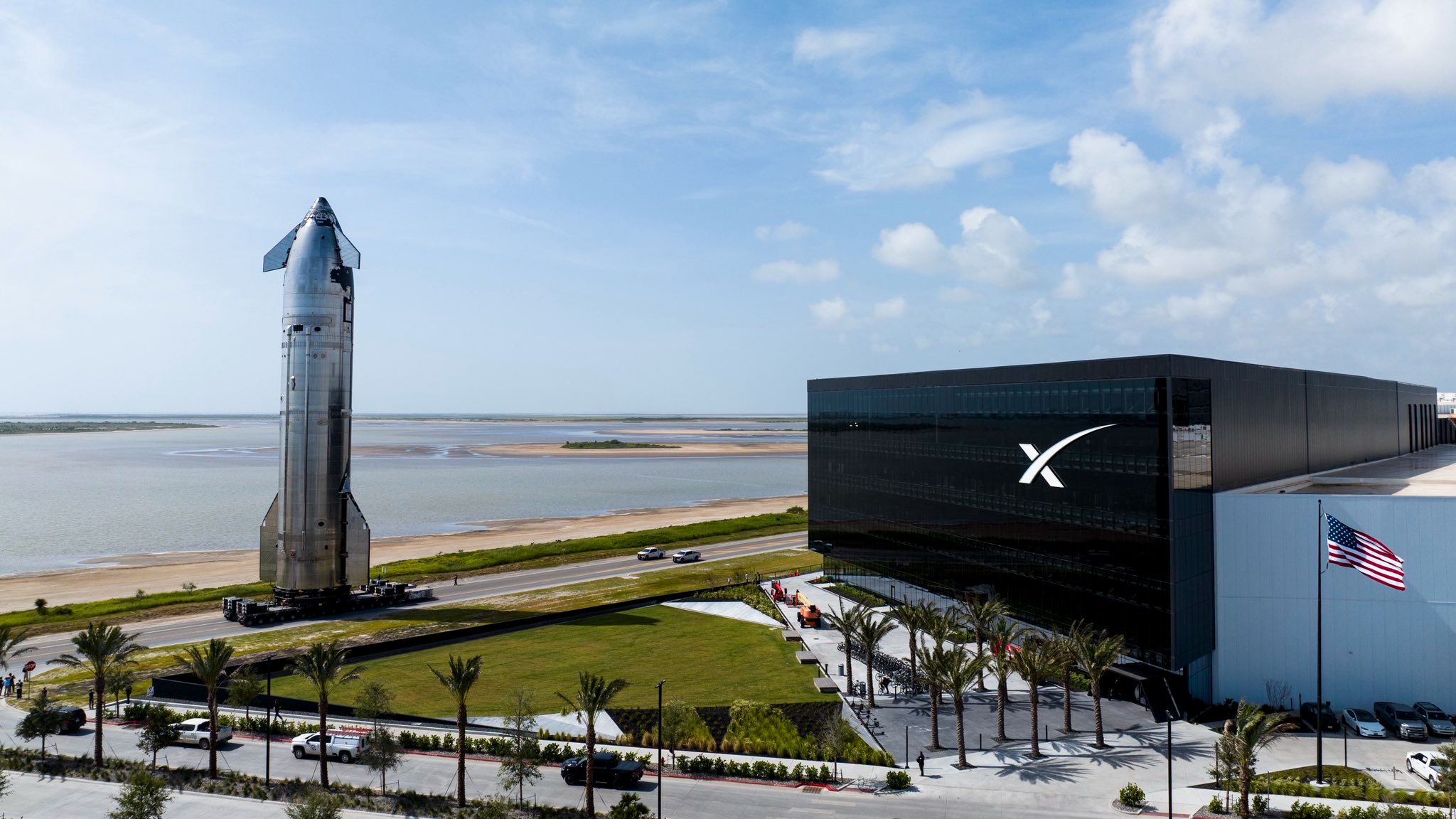
At the centre of that transformation is Starbase, the company town that has emerged around SpaceX’s launch and manufacturing operations near Brownsville, Texas. What was once a relatively quiet coastal region has become one of the most important hubs in the global space industry, attracting engineers, technicians, tourists and businesses eager to participate in the new space economy.
The economic impact has been significant. Local officials credit SpaceX with creating thousands of jobs, boosting tourism and injecting fresh investment into one of America’s poorest regions. New businesses have emerged to serve the growing workforce, property values have risen in some areas and the region now enjoys a level of international attention that would have been unimaginable a decade ago.
For many residents, the company’s arrival has been transformative. Families have found employment opportunities, entrepreneurs have benefited from increased visitor traffic and local governments have welcomed the economic activity generated by the rapidly expanding operation.
Yet not everyone views the changes positively.
As launch frequencies have increased, so too have complaints from some residents living near Starbase. Several homeowners have alleged that rocket launches have caused structural damage to their properties through intense vibrations and shockwaves. Lawsuits have been filed against the company, with plaintiffs claiming that repeated launches have cracked walls, damaged foundations and disrupted daily life.
Environmental concerns have also emerged alongside questions surrounding worker safety. Critics argue that the pace of expansion has at times outstripped the ability of regulators and local communities to fully assess the long-term consequences. Supporters, meanwhile, contend that such disruptions are often unavoidable when building industries capable of reshaping the future.
The contrasting experiences of Starbase offer a glimpse into the broader debate surrounding SpaceX itself. To supporters, the company represents innovation, economic opportunity and technological progress. To critics, it illustrates the risks that arise when immense corporate power and ambitious visions collide with local communities and practical realities.
In many ways, Starbase serves as a real-world case study of the dilemma facing investors. The future Musk is selling is not purely theoretical. It is already being built. The question is whether the benefits ultimately outweigh the costs and whether the same calculation applies to SpaceX’s trillion-dollar valuation.

The AI Wild Card That Could Change Everything
If there is one element of the SpaceX story that has the potential to either justify its extraordinary valuation or expose it as overly optimistic, it is artificial intelligence.
For most of its history, SpaceX was viewed primarily as a space transportation company. Today, however, the company’s IPO materials devote significant attention to AI, computing infrastructure and the role these technologies could play in shaping its future growth. This shift reflects a broader reality: investors are increasingly willing to assign enormous valuations to companies positioned at the centre of the AI revolution.
The challenge is that valuing AI businesses is far more complicated than valuing traditional companies. Investors have long relied on familiar metrics such as revenue, profits and market share. In the AI economy, however, a new metric is gaining prominence – tokens.
Every interaction with an AI model involves tokens, the basic units of text, images, audio or other information that a model processes and generates. Whether a user asks a chatbot a question, generates an image or writes software using AI, tokens are effectively the currency that powers the transaction. As AI adoption accelerates, the volume of tokens processed has become an increasingly important indicator of demand.
Recognising this shift, SpaceX has positioned itself not merely as a consumer of AI infrastructure but as a potential provider of it. Through its AI division and data-centre operations, the company is seeking to establish a presence in one of the fastest-growing segments of the global technology industry. The firm’s vertically integrated strategy—spanning launch capabilities, computing infrastructure and AI development – has led management to describe its approach as moving from “shovels to tokens.”
The company’s argument is straightforward. As artificial intelligence systems become more powerful, demand for computing capacity is expected to rise dramatically. Data centres require enormous amounts of land, electricity and capital, resources that are becoming increasingly constrained in many parts of the world. SpaceX believes that lowering the cost of access to space could eventually unlock entirely new ways of deploying computing infrastructure, including concepts that today sound closer to science fiction than business plans.
This is one reason investors are paying such close attention. If AI demand continues to expand at its current pace and SpaceX succeeds in carving out a meaningful role within that ecosystem, the company’s addressable market could become far larger than anything associated with rockets or satellite internet services alone.
At the same time, the AI story introduces another layer of uncertainty. The sector remains fiercely competitive, with companies such as OpenAI, Anthropic, Google and others investing tens of billions of dollars annually. Success is far from guaranteed, and many of the assumptions underpinning future growth remain untested.
The Last Bit,
The AI opportunity may prove to be the single most important factor in determining whether SpaceX’s valuation appears visionary or excessive. If the company succeeds in translating its technological ambitions into a dominant position within the AI economy, today’s price tag could look remarkably prescient. If not, investors may discover that even the most compelling positives cannot indefinitely outrun financial reality.