When “Defamation” Becomes A Corporate Weapon: How India’s Powerful Silence The Voices That Question Them
India Ranks 157th in Press Freedom. Corporate Lawsuits Are a Big Reason Why.

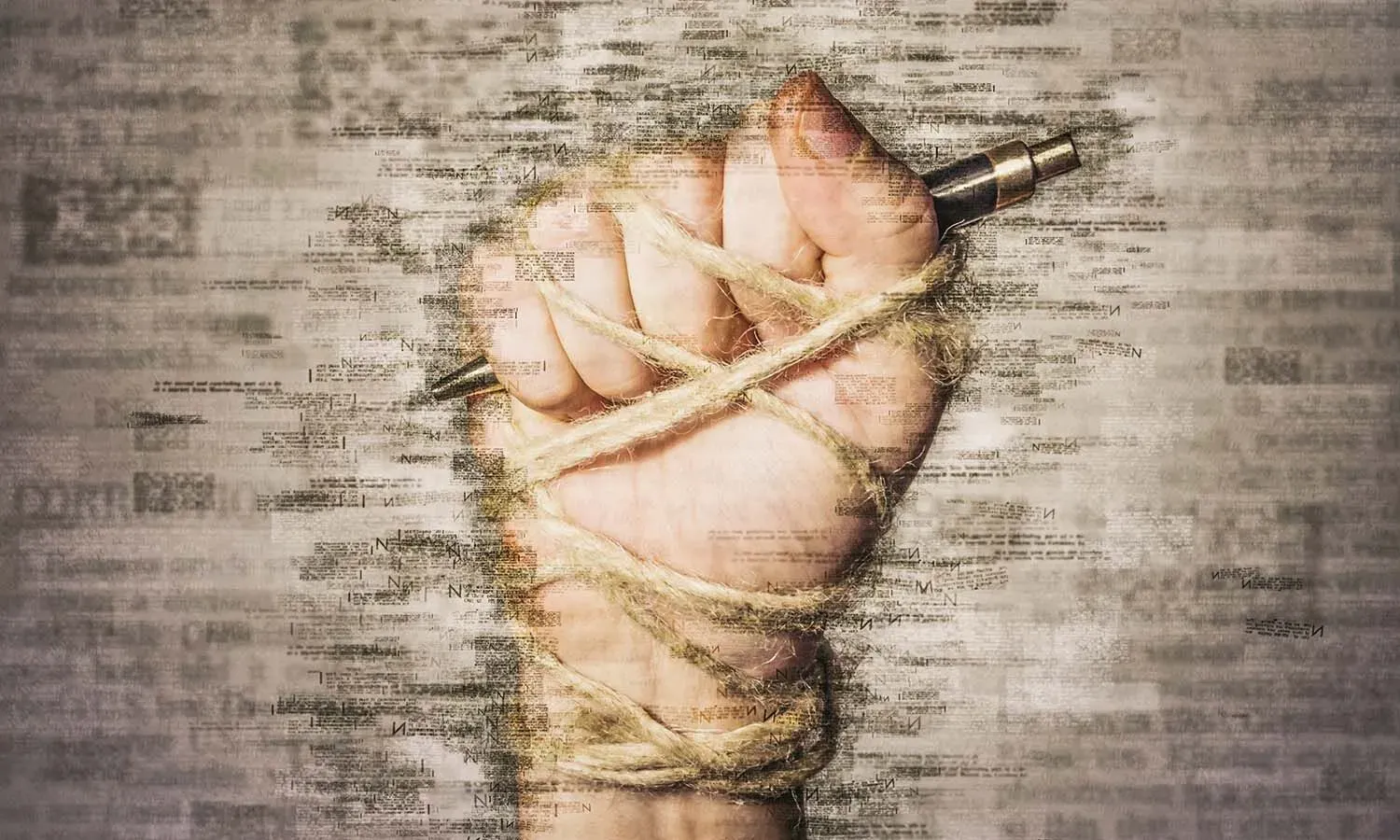
Defamation- The Price of an Opinion
In January 2021, the Bennett Coleman Group, owner of The Times of India, one of India’s largest and most powerful media conglomerates, filed a Rs 100 crore defamation suit against Newslaundry, an independent digital newsroom known for its media criticism. Newslaundry had published a series of critical pieces about Times Now’s journalism. The content was squarely within the tradition of media criticism, uncomfortable, pointed, but directed at a public platform’s editorial choices. The Times Group responded not with a counter-argument or a public rebuttal, but with a civil lawsuit seeking damages that could have ended a small independent outlet.
The Committee to Protect Journalists called it “a stark misuse of civil law and a dangerous attack on free expression.” Newslaundry’s co-founder Abhinandan Sekhri described it more bluntly: when organisations considered “the high priests of independent news, free speech and freedom of the press” resort to a lawsuit this “frivolous,” he said, journalism is in serious trouble.
That case, a media giant suing a watchdog for watching, captures the central paradox of corporate India’s relationship with critique in 2026. Companies that built their brands on the claim of public trust are increasingly using the law not to seek justice, but to impose silence.
But What We See Is Not A New Case, But An Old Pattern…
The latest iteration of this pattern arrives from the Bombay High Court, where the Lilavati Kirtilal Mehta Trust, associated with one of Mumbai’s most prominent private hospitals has filed a Rs 1,000 crore defamation suit against HDFC Bank and its CEO Sashidhar Jagdishan.
The dispute is, at its core, a lending matter. HDFC Bank had made statements about dues and pending litigation involving the Trust. The Trust claims these statements “falsely portrayed” it and trustee Prashant Mehta as loan defaulters, damaging its standing in the public domain. In addition to the damages claim, the Trust sought a gag order restraining the bank from making further statements, along with takedown of existing content and a public apology.
Justice Somasekhar Sundaresan of the Bombay High Court refused interim relief. His reasoning is worth noting carefully; the court found that HDFC Bank’s statements were “based on strong material” and constituted a bona fide clarification of its legal position. They could not, the court held, be treated as prima facie defamatory. In other words, a bank stated facts relevant to a lending dispute. A party to that dispute responded by seeking Rs 1,000 crore in damages and a court order preventing the bank from speaking. This is not an aberration. It is a template.
The SLAPP Playbook: Sue First, Win Later (By Never Going to Court)
There is a term for what happens when a powerful entity uses legal action not to seek justice but to impose silence: a Strategic Lawsuit Against Public Participation, or SLAPP. The concept was first named and theorised by Professors George Pring and Penelope Canan in their 1996 book on the phenomenon. But its global reach has expanded dramatically in the three decades since. A database published by First Amendment Watch documented 500 SLAPP cases in the United States alone in 2024. Sixty-nine of those involved the media, defined as news outlets, individual journalists, book publishers, documentary filmmakers, production houses, and social media influencers.
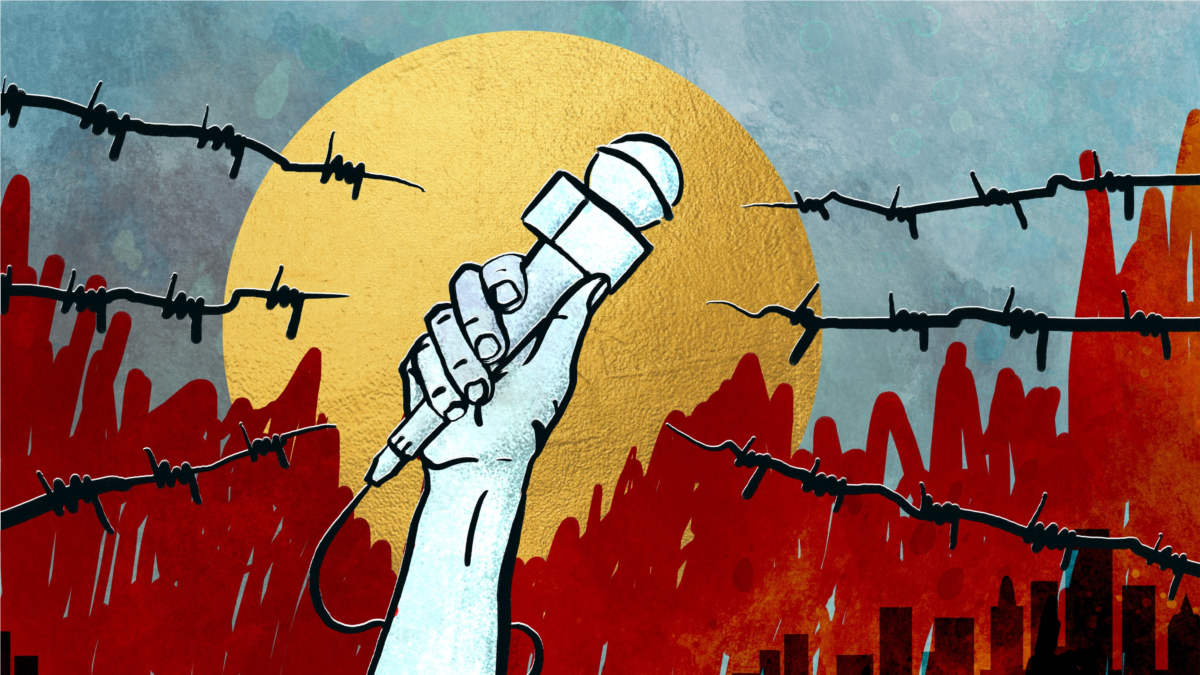
Journalists in India say companies are increasingly using legal notices as part of SLAPP tactics in an effort to intimidate or censor them. The point of the legal notices, reporters have told the Committee to Protect Journalists, is not to take journalists to court, but to serve as an intimidation tactic and a way to harass reporters through legal fees and time spent responding to notices and appearing in courts sometimes hundreds of miles from where their newspapers are based.
The economics of a SLAPP are brutally simple. A corporation with a legal department and deep pockets files a defamation suit against a journalist or independent outlet. The suit may have no merit and is unlikely to ever reach a final verdict. It does not need to. The journalist must now spend months or years responding to notices, appearing in court, paying legal fees, and managing the psychological weight of being sued. Most cannot afford to. Many stop reporting. Some settle and publish apologies. A few simply shut down. The corporation wins without winning a single court ruling. The silence arrives before the verdict.
The Adani Files: A Case Study in Corporate Legal Aggression
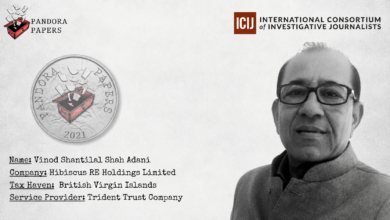
No corporate entity in India has pursued this strategy as systematically and as publicly as the Adani Group. On 6 September 2025, a court in New Delhi issued a provisional order allowing Adani Enterprises Limited to demand the removal of any online content it considered defamatory. The order also included a “John Doe” clause allowing the action to be extended to unidentified third parties. Requests for content removal were sent to Newslaundry, The Wire, and journalist Ravish Kumar.
The initial court order allowed Adani Enterprises Limited to restrict journalists including Ravi Nair, Abir Dasgupta, Ayaskant Das, Ayush Joshi, and Paranjoy Guha Thakurta, among others, from publishing or circulating material about the company, with content removal required within 36 hours. AEL originally filed the defamation case against 10 defendants. Press freedom bodies including the IJU and Editors Guild of India condemned the order as a threat to legitimate reporting and freedom of speech, calling for due process in addressing defamation claims.
The order was eventually set aside. District Judge Ashish Aggarwal of Delhi’s Rohini Courts ruled that the original injunction order was “unsustainable”, stating that it denied the journalists an opportunity for a hearing before its introduction. But the Adani legal offensive did not begin in 2024.
According to Reporters Without Borders, the pattern stretches back years and involves multiple entities across the group filing civil and criminal defamation cases against journalists covering the group’s business practices. A criminal case was brought before a court in Kalol in Gujarat following a programme on rises in the Adani Group’s shares, aired on 11 June 2021 on CNBC TV18. The case was withdrawn in March 2022, after an out-of-court settlement. Two journalists were summoned to appear before a court in Gandhinagar after one posted a YouTube video about land allocation to the group in Assam, and the other reposted articles on social media about the same topic.
Posting links on X. Reporting on land allocation. Discussing stock price movements. These are not extraordinary acts of investigative journalism. They are the baseline functions of journalism in a democracy. They should not require defending in court.
ANI vs Wikipedia: When the Reporter Sues the Encyclopedia
In 2024, ANI Media Private Limited, parent company of news agency Asian News International, filed a Rs 2 crore defamation suit against the Wikimedia Foundation in the Delhi High Court over the description of ANI in the English Wikipedia article about the news agency. ANI is not a private individual protecting their personal reputation. It is a major news agency with national reach, a significant public platform, and the capacity to influence public discourse through its own distribution network. The Wikipedia article it objected to described it in terms that reflected existing journalistic coverage and editorial assessments of its reporting.
A news agency suing an encyclopedia for what it says about the news agency is a statement of priorities that speaks for itself.
The Numbers Tell the Story
The data behind these individual cases reveals a structural problem, not a series of isolated disputes. India ranked 157th out of 180 countries in the 2026 World Press Freedom Index published by Reporters Without Borders, a six-place drop from 151st in 2025 and firmly in the “very serious” category. RSF linked India’s decline to violence against journalists, concentrated media ownership, outlets with increasingly overt political alignment, and judicial harassment of independent media through the use of criminal defamation and national security laws.
The 2026 index noted that the legal environment for journalists worsened most sharply over the past year, with over 60 per cent of countries assessed seeing a decline. India now ranks below neighbours including Pakistan, ranked 153rd, and Bangladesh, ranked 152nd.
In India, a trajectory that deserves attention. In 2014, India stood at approximately 140th on the RSF index. In 2021, it was 142nd. By 2024, it had fallen to 159th. It recovered slightly to 151st in 2025, and has now dropped to 157th in 2026. The direction of travel across a decade is unambiguous. The Supreme Court of India itself, in September 2025, noted that fear of criminal prosecution restricts the exercise of rights under Article 19(1)(a), the constitutional guarantee of free speech and that civil remedies sufficiently address reputational harm. The court hinted at the possibility of decriminalising defamation, describing the colonial-era offence as potentially ill-fitted to a modern democracy.
In Europe, the recognition of the SLAPP problem has moved from academic observation to legislative action. In April 2024, the European Parliament adopted Directive 2024/1069 on protecting persons who engage in public participation from manifestly unfounded claims or abusive court proceedings — the EU’s first Anti-SLAPP Directive. India has no comparable legislation. A journalist targeted by a corporation can be summoned to courts hundreds of miles from home, can face legal fees that exceed their annual income, and can spend years in proceedings that are unlikely to ever reach a final hearing.

The Chilling Effect: What Doesn’t Get Published
The most damaging consequence of corporate legal aggression against journalists is not the case that makes headlines. It is the story that never gets written. Every journalist who watches a colleague face a Rs 1,000 crore defamation suit performs a private calculation. Every editor who receives a legal notice performs a risk assessment. Every newsroom without the resources to sustain a protracted legal battle makes an editorial decision that has nothing to do with the truth of the reporting. The legal system does not even need to produce a verdict. The process itself is the punishment.
The Editors Guild of India has noted that even the process of responding to criminal summons acts as “punishment by process” and suppresses free journalism. A journalist summoned to a court in Gujarat over a YouTube video must travel, must hire local counsel, must appear on scheduled dates, must rearrange their life around proceedings that could stretch for years, all for reporting that may be entirely accurate and entirely in the public interest.
The term for what results from this is “chilling effect.” It is the most precise description of what corporate legal aggression achieves: not silence by force, but silence by cold calculation. Reporters and editors, faced with the realistic prospect of financial ruin through litigation, conclude that certain subjects are too expensive to report on. The powerful are simply not reported on. The accountability function of journalism — the reason a free press exists in a democracy — atrophies.
The Legitimacy Problem: When Critique Becomes “Defamation”
At the heart of every SLAPP is a definitional claim: that criticism is defamation. That scrutiny is reputational harm. That a journalist reporting unflattering but accurate facts about a corporation is, legally, the same as someone spreading malicious lies. Indian law draws a clear distinction between these things. Defamation requires a false statement of fact, published to a third party, that harms a person’s reputation without justification. Truth is a complete defence. Fair comment on matters of public interest is a defence. Responsible reporting on matters of public concern is protected.
But the law as written and the law as experienced are two different things for a journalist or independent outlet without the resources to mount a sustained legal defence. When the Bombay High Court declined to grant HDFC Bank a gag order in the Lilavati Trust case, it applied the law correctly: statements supported by material evidence, made in the context of a legitimate lending dispute, are not prima facie defamatory. That is how the system is supposed to work.
The problem is not always the courts. The problem is the gap between filing a suit and reaching a judicial conclusion; a gap that can span years, drain resources, and achieve the intended silence long before any judge rules on the merits.
What Accountability Actually Requires
There is a simple test for whether a defamation claim reflects genuine reputational harm or strategic use of the legal system to silence scrutiny: does the corporation or individual filing the suit actually want to go to court? Genuine defamation plaintiffs want hearings. They want verdicts. They want the record corrected and their reputation vindicated publicly. SLAPP litigants want withdrawal, apology, and silence. They want the case to end before a court examines whether the underlying reporting was true. They want the journalist to calculate that continuing is not worth the cost.
The Adani gag order was lifted when journalists appeared to contest it. The Times of India’s suit against Newslaundry took years of proceedings and did not produce a ringing vindication of the Times Group’s journalism. The ANI case against Wikipedia put one of the world’s largest media agencies in the position of asking a court to control what an encyclopedia says about it — a posture that illustrates better than any commentary the nature of what is being sought.
What these cases collectively reveal is an expectation that has become common among India’s powerful institutions, corporate and otherwise: that public scrutiny is optional. That critique is something that can be bargained away, bought off with legal fees, or suppressed with a well-timed injunction. That operating in the public domain — running banks, hospitals, news agencies, conglomerates — carries no particular obligation to tolerate the public examination that comes with public power.
This expectation is wrong. It is wrong legally, because Indian courts have repeatedly affirmed the rights of journalists to report on matters of public concern. It is wrong constitutionally, because Article 19(1)(a) protects the freedom of speech and expression precisely so that powerful institutions can be questioned. And it is wrong as a matter of basic democratic logic: accountability without scrutiny is not accountability at all. It is reputation management with legal backing.
The Verdict That Matters Most
The Bombay High Court’s refusal to grant Lilavati Trust a gag order against HDFC Bank is one small data point in a very large pattern. What the court said matters: statements made in the context of a legitimate dispute, supported by evidence, are not defamation. The law protects the right to speak factual inconveniences.
What India needs, urgently, is the broader protection that over 60 countries have enacted in various forms: anti-SLAPP legislation that allows courts to dismiss abusive litigation early, imposes costs on parties who file cases primarily to silence critics, and protects journalists and public interest speakers from the ruinous economics of defending themselves against powerful adversaries.
Until that exists, the effective legal standard for criticism of the powerful in India is not “is it true?” It is “can you afford to prove it?” That is a standard that serves nobody except those who can already afford not to be questioned. The press is free in theory. In practice, it is as free as it can afford to be. In 2026, with India at 157th in the global press freedom index — below Pakistan, below Bangladesh, below a nation in active conflict — that gap between theory and practice is not an academic concern. It is a daily reality for every journalist who covers something a powerful institution would rather not have covered.

Critique is the price of public power. India’s corporations, and some of its media houses, would prefer not to pay it. The courts, to their credit, do not always let them off the bill. But the legal system alone cannot substitute for the cultural and legislative shift that would make the bill arrive automatically — before the SLAPP is filed, before the journalist is summoned, before the silence settles in.