
RERA: The Reason Why A Dream Home Died?
In 2018, Ramesh Kumar, a 52-year-old schoolteacher from Lucknow, pooled together three decades of savings, a provident fund payout, and a loan from his elder brother to book a two-bedroom flat in a residential township on the outskirts of the city. The builder had presented a glossy brochure, promised possession by December 2020, and crucially, waved in his face a RERA registration certificate. “The agent told me RERA means the builder cannot cheat you now,” Ramesh recalled in a 2024 interview with a consumer advocacy group. “I felt safe for the first time buying property.”
By 2026, Ramesh has neither his flat nor his money. The project is listed as “delayed” on the Uttar Pradesh RERA portal. He received a compensation order in his favour in 2022. The builder has not paid. Ramesh has been told to approach the district collector’s office to enforce the recovery warrant. The district collector’s office has no record of the warrant. He continues to pay EMI on a loan for a property he has never seen, while simultaneously paying rent. Ramesh’s story is not exceptional. It is, by the weight of evidence, the norm.
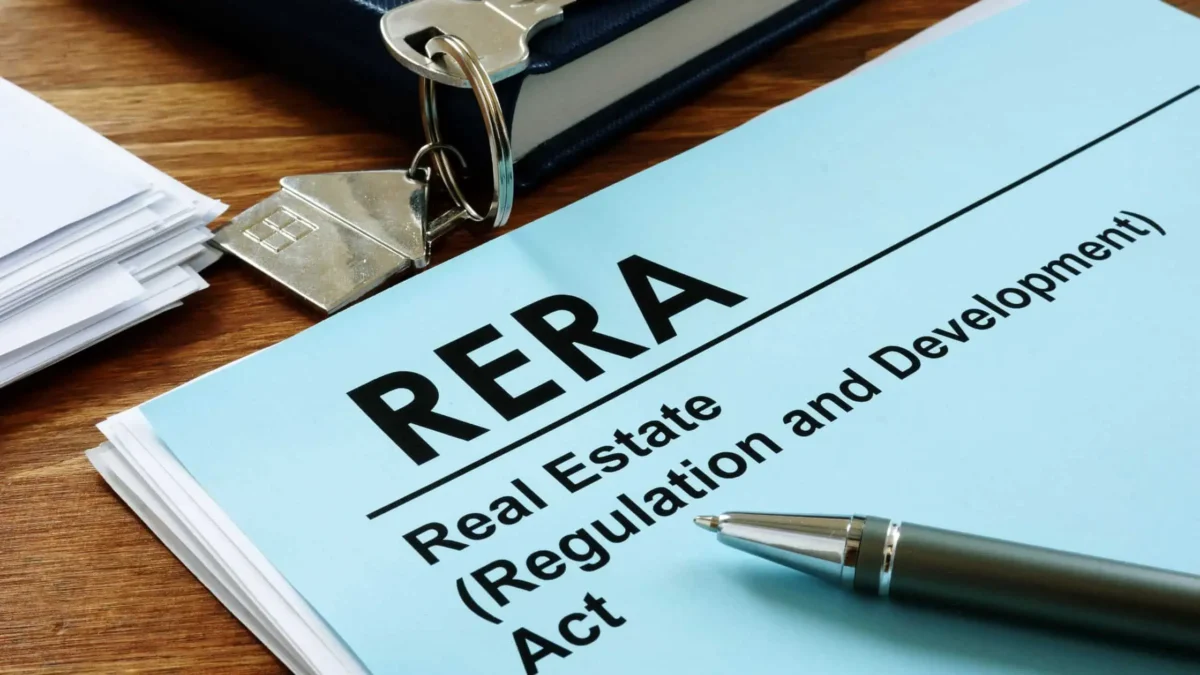
On 2016, India enacted the Real Estate (Regulation and Development) Act, which was supposed to be a landmark piece of consumer protection legislation intended to transform one of the country’s most fraud-prone sectors. The law mandated project registration, escrowed buyer funds, standardised disclosures, and created dedicated regulatory authorities in every state to adjudicate disputes quickly. At the time, it was heralded as the most significant reform in the history of Indian housing. The Ministry of Housing and Urban Affairs described it as “transformative legislation” to ensure “efficient, transparent and accountable development.”
A decade later, the question that demands honest examination is this: Was RERA a revolutionary law that failed in execution rather than in design?
The evidence accumulated across 10 years of implementation is deeply uncomfortable for both those who championed the law and those who wish to see it replaced. RERA has, without question, improved certain structural features of the housing market. But it has also, demonstrably, failed to protect the very people it was designed to serve; not because the law is poorly conceived, but because the political will, institutional capacity, and enforcement infrastructure required to make it work have never been consistently provided. The gap between the text of the statute and the lived experience of India’s homebuyers remains, after ten years, a chasm.
Why RERA Was Introduced — The Crisis That Made a Law Necessary
To understand what RERA was supposed to accomplish, it is necessary to understand the scale of the disorder it was meant to correct.
The decade between 2005 and 2015 was the golden age of Indian real estate fraud. A construction boom fuelled by easy bank credit and a surging urban middle class created tens of thousands of housing projects across the country’s major cities. Developers, large, medium, and fly-by-night, launched projects with minimal regulatory oversight, collected advance payments that often amounted to 80 to 100 per cent of the total purchase price before construction began, and then routinely diverted those funds to other projects, personal accounts, or wholly unrelated businesses.
The structural incentives were catastrophically misaligned. A developer could register a company, acquire land through a combination of bank debt and buyer advances, launch a marketing campaign promising possession in three years, collect crores from ordinary families, and face no binding obligation to actually deliver what was promised. Builder-buyer agreements, drafted entirely by developers, contained one-sided clauses that imposed severe penalties on buyers for late payment while granting developers near-unlimited time extensions.
Civil courts were backlogged for years. Consumer forums lacked technical expertise. There was no dedicated housing regulator anywhere in India. Parliamentary Standing Committee reports from 2013 and 2014 documented rampant fund diversion, misleading advertisements, multiple sales of the same apartment, and the total absence of any accountability mechanism.
The projects that collapsed, like Amrapali, Unitech, Jaypee Infratech, Supertech, and hundreds of smaller developers, were not aberrations. They were the visible peaks of a structural pattern that had played out across Delhi-NCR, the Mumbai Metropolitan Region, Pune, Bengaluru, Hyderabad, and dozens of smaller cities. By the time Parliament began seriously considering reform legislation, estimates of delayed or stalled housing units across India ran into hundreds of thousands. Families that had invested their life savings and borrowed money they could ill afford, and then they all were trapped in an impossible position: they could not get possession, could not get refunds, and could not find effective legal recourse.
The Law Commission, the Parliamentary Standing Committee on Urban Development, and multiple expert committees had all recommended a comprehensive real estate regulatory framework by the time the RERA Bill was introduced in the Rajya Sabha in 2013. The Bill went through substantial revision before finally being passed in 2016, with the central provisions coming into force on May 1, 2017.
The objectives of RERA were clear, specific, and enforceable on paper: to regulate and promote the real estate sector; to ensure sale of plots, apartments, or buildings in an efficient and transparent manner; to protect the interest of consumers; and to establish an adjudicatory mechanism for speedy dispute resolution. For the first time in Indian history, real estate had a dedicated regulatory framework with teeth, or so it appeared.
What RERA Promised — The Architecture of a Reform
RERA’s major provisions, read together, represented a genuinely ambitious attempt to rebalance one of India’s most lopsided commercial relationships.
Mandatory project registration under Section 3 required every developer launching a residential project with more than 500 square metres of land or more than eight apartments to register with the state RERA authority before marketing or selling. Developers had to disclose land title documents, approved building plans, expected completion dates, and details of all promoters. This was revolutionary: for the first time, no project could legally be sold to the public without regulatory clearance and public disclosure.
The 70 per cent escrow requirement under Section 4(2)(l)(D) was the financial heart of the law. Developers were required to deposit 70 per cent of all amounts collected from buyers into a separate, dedicated escrow account for each project, withdrawable only for land and construction expenses of that specific project and only after certification by an architect, engineer, and chartered accountant. This was designed to end the practice of fund diversion that had bankrupted so many projects.
Section 18 was the most powerful provision for buyers: if a developer failed to hand over possession on the committed date, the buyer was entitled either to a full refund with interest at the prevailing State Bank of India marginal cost of lending rate plus two per cent, or to remain in the agreement and receive interest for every month of delay. This transformed delayed possession from a matter of contractual negotiation into a statutory entitlement.
Section 19 codified buyer rights to information: access to documents, the right to know the stage of construction, the right to inspect the project at any time, and the right to claim possession in accordance with the agreement. Section 14 required developers to rectify any structural defects or defects in workmanship, quality, or provision of services within five years of possession at no cost to the buyer.
Sections 59 to 65 created a penalty framework: non-registration could attract penalties of up to ten per cent of the project cost; failure to comply with RERA orders could attract up to five percent of the estimated project cost; and wilful violations could result in imprisonment of up to three years. Section 7 empowered RERA authorities to revoke a developer’s registration entirely, appoint an administrator, and direct completion of the project.
Real estate agent registration under Section 9 was equally important: for the first time, agents could not legally facilitate transactions in unregistered projects and were required to maintain records and be held accountable for misrepresentation. Carpet area standardisation under Section 2(k) ended the practice of selling built-up area or super-built-up area as carpet area, ensuring buyers knew exactly what they were paying for.
The Appellate Tribunal structure created under Section 43 provided a second tier of adjudication, with appeals from RERA authority orders going to the tribunal and from there to the High Court on questions of law. In theory, this created a fast, specialised, multi-tier dispute resolution system that would make both consumer forums and civil courts largely unnecessary for real estate disputes.
The National Real Estate Development Council (NAREDCO) acknowledged, in its assessments of the Act’s first decade, that these provisions, particularly the mandatory escrow rule, had “instilled confidence and trust in buyers” and led to fewer legacy disputes among organised developers. The industry, at least in its well-capitalised segment, adapted to RERA’s disclosure requirements and professionalised its processes. But the question of what was promised is separate from the question of what was delivered.
Has RERA Delivered? A National Assessment
The headline numbers are genuinely impressive in their scale, if not always in their substance. According to Ministry of Housing and Urban Affairs data compiled through 2026, cumulative project registrations under RERA across India crossed 1.6 lakh (160,000) by May 2026, up from approximately 1.43 lakh in early 2025 and from roughly 60,000 in 2019. Real estate agent registrations have similarly grown across most states, with Maharashtra, Uttar Pradesh, and Karnataka leading in absolute numbers.
Complaint data, drawn from the MoHUA RERA tracker, presents a more complicated picture. As of data available through mid-2026, UP RERA has registered approximately 60,021 complaints and disposed of 86.71 per cent of them. Maharashtra RERA has registered approximately 34,485 complaints and cleared 82.03 per cent. RERA Gurugram (Haryana) has disposed of 93.62 per cent of its 17,893 registered complaints — the highest disposal rate nationally — and, as of April 2026, has cleared its entire backlog of cases filed through 2024. Karnataka RERA has achieved an 81.54 per cent disposal rate. Nationally, approximately 1,38,000 complaints have been resolved since RERA’s inception, according to official tracking data as of 2025.
These numbers, on their face, suggest a functioning regulatory system. But they obscure three critical problems.
First, complaint registration is not the same as complaint resolution with enforcement. A “disposed” case may mean the RERA authority issued an order. It does not mean the builder complied with the order, the buyer received compensation, or the project was completed. The distinction is not academic — it is the core of RERA’s failure.
Second, the enforcement gap is enormous. MahaRERA’s own data illustrates this with painful clarity. As of July 2, 2025, Maharashtra RERA had issued 1,221 recovery warrants linked to 460 real estate projects, covering amounts ordered in favour of homebuyers. Of the total amount ordered — approximately Rs. 724 crore — only Rs. 232.03 crore had actually been recovered. Nearly Rs. 492 crore remained unpaid, leaving builders in default on nearly two-thirds of all recovery orders despite formal legal process.
Third, project delay data tells a story RERA’s complaint statistics do not. A project registered with RERA and listed as “under construction” may be years behind its declared completion date without any complaint having been filed, either because buyers are unaware of their rights, cannot afford litigation, or have already given up. Independent assessments of NCR real estate markets suggest that despite RERA, a significant proportion of registered projects remain behind schedule, particularly those launched before 2017 and grandfathered into the system.
The disposal time data from RERA Gurugram is instructive in a different way: even the highest-performing authority in the country targets a disposal time of 6 to 9 months and currently averages 12 to 15 months per case. For a system designed to provide speedy justice, these timelines, while faster than civil courts, fall well short of RERA’s promise of 60-day resolution.
What Is The Biggest Failure — Enforcement!
If there is one word that captures RERA’s fundamental failing after 10 years, it is enforcement. The law gives RERA authorities formidable powers on paper. Authorities can revoke registrations, impose penalties, order refunds, issue recovery warrants recoverable as arrears of land revenue, and, through the adjudicating officer, imprison builders for wilful non-compliance. In practice, almost none of these ultimate powers have been systematically deployed.
A RERA adjudicating officer in Delhi acknowledged publicly, as reported by Hindustan Times in 2024, that he had issued hundreds of arrest warrants against defaulting builders. Not a single builder had actually been arrested. Police, whose cooperation is required to execute such warrants, have been largely unresponsive to RERA-generated warrants, which lack the same institutional priority as criminal court orders.
The recovery warrant mechanism, theoretically the most powerful enforcement tool, has proven deeply ineffective in practice. When a builder does not comply with a RERA compensation order, the authority issues a recovery warrant directing the district collector to recover the amount as arrears of land revenue. This requires active cooperation from state revenue machinery that has no dedicated capacity, no specific mandate, and often no political incentive to prioritise homebuyer cases over other demands on its attention. The result, documented in Maharashtra’s own data, is that recovery warrants produce actual payment in less than a third of cases.
There are structural reasons why enforcement is difficult. Many builders who receive adverse RERA orders are companies, often multiple companies within a corporate group, whose assets are difficult to identify, attach, and liquidate without prolonged legal proceedings. Shell companies, multiple subsidiaries, and asset diversion practices, extensively documented in the Amrapali, Unitech, and Supertech cases by the Supreme Court, mean that even where RERA orders are theoretically enforceable, there may be no accessible assets against which to execute them.
The Supreme Court has been explicit in its frustration. In March 2025, a Supreme Court bench described RERA’s functioning as “disappointing” after advocates argued before it that the Act had “failed in its implementation.” In September 2024, Justices Surya Kant and Bhuyan went further, publicly rebuking state RERA authorities by observing that the system had “become a rehabilitation centre for former bureaucrats who have frustrated the entire scheme of the Act.”
This observation pointed to a structural governance problem, where almost universally across India, RERA authorities are headed by retired IAS or other senior government officers, career administrators who may bring bureaucratic experience but often lack deep expertise in housing law, consumer protection, or regulatory enforcement.
The institutional deficiencies are compounded by resource constraints. Several state RERA authorities operate with skeleton staffs, inadequate IT infrastructure, and budgets that have not grown proportionally with their workloads. Appellate Tribunal positions remain vacant in multiple states. Where vacancies exist at the authority or tribunal level, cases pile up, defeating the Act’s promise of time-bound adjudication.
Political interference has been documented, if rarely admitted. State governments that rely on the real estate sector for tax revenues, employment, and political financing have limited incentive to aggressively enforce orders against large developers. The frequency with which state RERA rules have been amended, sometimes in ways that dilute central provisions, is itself evidence of political calculations overriding consumer protection imperatives.
State-by-State — A Nation Divided by Implementation
RERA’s federal architecture, which grants states the power to frame their own rules under the central Act, has produced dramatically unequal outcomes across India’s major states.
Maharashtra has the most institutionally developed RERA in the country. MahaRERA was among the first authorities to become operational, has maintained the most comprehensive digital portal, and has published regular case data. Its 82 per cent disposal rate and active use of conciliation mechanisms reflect genuine institutional investment. However, its recovery enforcement remains significantly deficient — the Rs. 492 crore gap in recovery warrant execution, as of mid-2025, undermines the practical value of its adjudication record.
Uttar Pradesh has the highest volume of registered complaints, over 60,000 and a respectable 86.71 per cent disposal rate. UP RERA chairman Sanjay Bhoosreddy has pointed to rising project approvals (from 190 per year through 2023 to 308 in 2025) as evidence of strengthening regulatory capacity. However, enforcement in individual cases, particularly against builders who are also entangled in insolvency proceedings has been deeply inconsistent.
Haryana, specifically RERA Gurugram, has achieved the highest disposal efficiency nationally at 93.62 per cent and has cleared its backlog through 2024. The Gurugram authority’s stated goal of reducing disposal time to 6 to 9 months represents a genuine improvement in process efficiency. NCR markets, “once synonymous with stalled projects and buyer distress, have witnessed a significant improvement in credibility and project execution after RERA’s implementation,” according to Savills India’s research director Saurabh Bhutani.
Karnataka has achieved an a decent per cent disposal rate and the Karnataka High Court issued a landmark ruling in 2024-25 mandating that builders obtain an Occupancy Certificate before offering possession — a ruling that significantly strengthens buyer protections against the fraudulent “fit-out possession” practice.
West Bengal presented the most egregious state-level failure: the state initially enacted its own Housing Industry Regulation Act in 2017, explicitly designed to replace RERA, with weaker protections for buyers and greater discretion for builders. The Supreme Court struck this law down in 2021 as “repugnant” to the central Act. The years of delay in bringing West Bengal’s housing market under the RERA framework resulted in buyers in that state being without any effective regulatory protection for nearly four years.
Delhi, Tamil Nadu, Gujarat, Madhya Pradesh, Telangana, and Rajasthan all present varying degrees of institutional under-development. Tribunal vacancies, slow digitisation, inadequate staffing, and inconsistent enforcement characterise most of these jurisdictions. Tamil Nadu’s RERA has been particularly criticised for slow complaint processing and limited transparency in its digital portal.
The contrast between Maharashtra’s relatively robust institutional framework and the near-absence of effective enforcement in several other large states is not merely an administrative footnote, but it is evidence that RERA’s outcomes are largely determined by state government political will rather than by the central law itself.
Case Studies in Catastrophic Failure
The largest individual cases of builder fraud under the RERA era expose both what the law promised and the limits of what it has delivered.
Amrapali Group
Amrapali Group was, by any measure, the most consequential housing fraud in India’s history. The developer, led by Anil Kumar Sharma, collected funds from approximately 42,000 homebuyers across more than 40,000 units in Noida and Greater Noida between 2009 and 2017 — the latter period partially overlapping with RERA’s operation. Investigations ordered by the Supreme Court, conducted by court-appointed forensic auditors, revealed systematic diversion of homebuyer funds to shell companies, personal accounts, luxury purchases, cricket team acquisitions, and entirely unrelated businesses. Not a single key project received a valid Occupancy Certificate within the promised timelines.
In its landmark judgment of July 23, 2019, the Supreme Court cancelled Amrapali’s RERA registration entirely, cancelled all lease deeds with the Noida and Greater Noida Authorities, directed the state-owned National Building Construction Corporation (NBCC) to take over and complete the stalled projects, and sent Anil Kumar Sharma and his directors to prison. As of 2025, tenders for construction had been awarded for 71 of the 81 incomplete residential projects, but actual construction work had begun in only 29. Homebuyers who booked flats in 2008, 2010, and 2012 were still waiting — more than fifteen years after their purchase — for possession.
RERA’s failure in the Amrapali case was not that it failed to detect the fraud — many of Amrapali’s projects were launched before RERA came into force. Its failure was that even after the Supreme Court’s intervention and NBCC’s appointment, the project completion process proceeded at a pace that offered no practical relief to buyers within a reasonable timeframe.
Unitech Limited
Unitech Limited was once India’s second-largest real estate developer by market capitalisation. Between 2006 and 2014, it collected an estimated Rs. 14,270 crore from approximately 29,800 homebuyers across 74 residential projects. Funds were diverted through a complex web of corporate entities, including — as documented in court proceedings — offshore accounts in Cyprus. Projects across Noida, Gurgaon, and other cities stalled.
The Supreme Court placed Unitech under government-supervised management in 2020 and directed that new management complete the stalled projects. As of 2025-26, the case remains in extended judicial supervision. Many buyers remain uncompensated. RERA, as an institution, has been largely sidelined in the Unitech matter, which has been handled directly by the Supreme Court through extraordinary jurisdiction. This pattern, where the apex court stepping in where RERA has proven inadequate, is itself a commentary on the regulatory framework’s limitations.
Jaypee Infratech
Jaypee Infratech’s insolvency, involving approximately 20,000 homebuyers who had booked units in Jaypee’s Wish Town township in Noida, became the first major test of the intersection between RERA and the Insolvency and Bankruptcy Code. When IDBI Bank triggered insolvency proceedings against Jaypee Infratech in 2017, the Section 14 moratorium under IBC froze all RERA proceedings against the company, leaving buyers without recourse under either framework for an extended period.
The Supreme Court intervened in the Chitra Sharma case, allowing homebuyer representatives to participate in the Committee of Creditors. After years of failed resolution plans, Suraksha Realty was ultimately selected as the resolution applicant, with a commitment to complete the stalled projects. As of 2026, construction has resumed on some sections but thousands of buyers remain in limbo after nearly a decade.
Supertech Limited
Supertech Limited, one of NCR’s largest developers, had over 25,000 homebuyers across dozens of projects when it faced insolvency proceedings in 2022. The Supreme Court’s April 2022 judgment in the Supertech case — directing demolition of two illegally constructed towers at the Emerald Court project in Noida — drew global attention but was only one facet of a much larger crisis. The demolition (eventually carried out in August 2022) was itself an illustration of how regulatory failures — including approvals granted by Noida Authority for construction that violated building bylaws — enabled developers to defraud buyers for years.
The insolvency of Supertech’s main entities has left thousands of buyers with uncertain prospects for completion of their units, even as the resolution process under IBC continues.
The MahaRERA Recovery Crisis
Maharashtra’s experience with recovery warrants represents a different kind of case study — not a single developer’s fraud, but a systemic enforcement failure across hundreds of projects. MahaRERA’s data as of July 2025 shows that of Rs. 724 crore in recovery amounts ordered in 1,221 warrants, only Rs. 232 crore has actually been recovered. This 32 per cent recovery rate, for the state with India’s most advanced RERA infrastructure, illustrates the structural gap between legal entitlement and practical enforcement.
The Courts Step In Where RERA Has Not
India’s Supreme Court and High Courts have, over the past decade, built a body of RERA jurisprudence that is often more protective of homebuyers than the regulatory authorities themselves have been.
The foundational Supreme Court precedent on RERA’s jurisdiction is Newtech Promoters & Developers Pvt. Ltd. v. State of UP (2021), in which the Court held that Section 79 of RERA creates a complete bar on civil courts entertaining matters that fall within RERA’s jurisdiction. This ruling confirmed RERA as the exclusive forum for its subject matter, but also placed the burden of effective enforcement squarely on the regulatory authorities — a burden they have often failed to discharge.
Pioneer Urban Land and Infrastructure Ltd. v. Union of India (2019) was the most consequential RERA-adjacent ruling from the Supreme Court’s first decade of engagement with these issues. The Court upheld the 2018 amendment to the IBC that classified homebuyers as financial creditors, holding that they were always covered within that definition and affirming their right to participate in the Committee of Creditors in insolvency proceedings. However, in doing so, the Court also held that when IBC and RERA conflict, IBC prevails. (Source: Supreme Court of India, 2019.) This established a hierarchical relationship that has, in many cases, effectively displaced RERA’s remedies with insolvency proceedings that may be less favourable to buyers’ core interest — obtaining their home.
The Mansi Brar Fernandes v. Shubha Sharma & Anr. judgment (2025) represents a partial course-correction. The Court reaffirmed RERA as the primary forum for homebuyer grievances, designating IBC as a remedy of last resort for genuine insolvency cases, and crucially drew a distinction between genuine homebuyers seeking possession and speculative investors seeking financial returns. The Court observed that the right to shelter flows from Article 21 of the Constitution as a fundamental right. This constitutional grounding for homebuyer protection is significant, but its practical impact depends on RERA authorities being capable of providing that protection — a condition that, as documented above, frequently does not hold.
The Karnataka High Court’s 2024-25 rulings on Occupancy Certificate requirements — holding that a Temporary Occupation Certificate has no legal sanctity for offering possession under RERA — have closed one of the most exploited loopholes in builder practice. The practice of issuing “fit-out possession” letters, inviting buyers to begin interior work and then declaring possession as “offered,” was used by builders across the country to avoid liability under Section 18 of RERA.
Across this body of jurisprudence, a consistent pattern emerges: courts have repeatedly had to step in to enforce, interpret, and sometimes rescue the RERA framework because the regulatory authorities themselves have not done so. This judicial activism, while valuable, is not a substitute for functioning day-to-day enforcement.
Why Builders Continue to Defy RERA Orders?
The structural reasons why builders routinely ignore RERA orders, even after losing on the merits, are worth examining in detail, because understanding them is a prerequisite for designing effective reforms.
Weak recovery mechanisms are the starting point. Recovery warrants issued by RERA authorities are enforceable as arrears of land revenue through the district collector mechanism, but this mechanism was designed for recovering government dues from individuals, not for pursuing complex corporate debtors with multiple entities, limited assets, and access to legal counsel. The practical gap between issuing a warrant and receiving payment can be years, during which builders can contest, delay, appeal, and ultimately frustrate recovery.
IBC shelter has become a standard strategy for financially stressed builders. Once a company is admitted to the Corporate Insolvency Resolution Process under the IBC, Section 14 imposes an automatic moratorium on all proceedings against the corporate debtor, including RERA proceedings. This means a builder facing dozens of RERA complaints and compensation orders can, by filing for or attracting an insolvency application, effectively freeze all RERA enforcement. The “moratorium trap,” as academic commentators have termed it, allows half-built assets to deteriorate while buyers wait indefinitely for a resolution process that may ultimately produce completion by a third party — if at all.
Shell company structures and asset diversion, which are documented extensively in the Amrapali, Unitech, and HDIL cases mean that even where enforcement is theoretically possible, the assets nominally held by the builder entity may have been transferred to related companies, family members, or overseas accounts before enforcement can be executed.
Appeal cascades, RERA authority, Appellate Tribunal, High Court, allow well-funded builders to delay enforcement for years while buyers wait. This is not a problem unique to RERA, but it is particularly damaging in a context where many buyers are simultaneously paying EMIs and rent.
Where State Governments Have Failed?
The architecture of RERA places enormous responsibility on state governments, and the evidence of the past decade is that many states have failed to discharge that responsibility.
Several states took years to establish functional RERA authorities after the central Act came into force. Appellate Tribunal positions remain vacant in multiple states, creating a bottleneck in the second tier of adjudication. Budgetary allocations to RERA authorities have been consistently inadequate relative to the volume of complaints and the complexity of enforcement required.
The dilution of central provisions through state-level rule-making has been a particular concern. Several states have amended their RERA rules in ways that weaken the central Act’s protections — extending registration exemptions, narrowing the definition of projects subject to RERA, or reducing the stringency of escrow requirements. While the Supreme Court held in the West Bengal case that state laws repugnant to RERA are invalid, the practical monitoring of state-level rule-making by the central government has been inconsistent.
Political appointments to RERA authorities, rather than merit-based selection of housing regulation experts, have been widely noted as a source of institutional weakness. As the Supreme Court itself observed in September 2024, the predominance of retired bureaucrats in RERA leadership positions has created a culture of administrative inertia rather than aggressive consumer protection.
Annual reporting by RERA authorities — a requirement under the Act — has been performed inconsistently. The Supreme Court’s expression of concern in 2025 about RERA authorities not filing annual reports reflects a basic accountability deficit: regulators required by statute to report publicly on their performance have not done so regularly, making it impossible for Parliament, the public, or buyers to hold them accountable.
The RERA-IBC Conflict — When Two Reforms Collide
One of the most consequential unintended consequences of India’s 2016 legislative reforms has been the jurisdictional conflict between RERA and the Insolvency and Bankruptcy Code.
Both laws came into force in 2016, and both claimed to protect homebuyers’ interests. RERA offered project-specific protection: registration requirements, escrow rules, compensation for delay, and dedicated dispute resolution. IBC offered systemic protection: a structured resolution process for financially distressed companies, with buyers, after the 2018 amendment, recognised as financial creditors with a seat at the Committee of Creditors table.
In theory, the two frameworks should have been complementary. In practice, their simultaneous application has generated what legal commentators have called “regulatory gridlock.”
The Section 14 moratorium problem is the most acute manifestation. When IBC proceedings are admitted against a builder, all RERA proceedings including pending compensation orders are frozen. Buyers who have waited years for RERA relief find themselves back at the beginning of a new process, this time before the NCLT, where the priorities are commercial rather than consumer-protective. As one legal analysis puts it: “RERA offers a more tailored, possession-focused remedy, but lacks enforceability teeth; IBC, by contrast, provides swifter systemic impact but risks liquidation, which often defeats the homebuyer’s core interest — getting their home.”
The Supreme Court’s 2019 ruling in Pioneer Urban, that when IBC and RERA conflict, IBC prevails, created a perverse incentive for builders to weaponise insolvency proceedings to escape RERA enforcement. The 2025 ruling in Mansi Brar Fernandes has partially addressed this by reaffirming RERA’s primacy for genuine homebuyer disputes and limiting IBC access to cases of genuine financial distress with bona fide buyers rather than speculative investors. But the fundamental tension between the two frameworks remains unresolved at the legislative level.
The IBBI’s development of a Project-Specific CIRP (P-CIRP) framework, initiated following the Mansi Brar ruling, represents a promising evolution, shifting insolvency resolution from the corporate entity level to the individual project level. This approach, if properly implemented, could allow projects to be completed under supervised resolution without the company-wide moratorium freezing all RERA proceedings. But it remains in development, and thousands of buyers are currently trapped in the overlap.
The Human Cost — Stories Behind the Statistics
The failure of RERA enforcement is not an abstraction. Its human consequences are documented in case after case filed before consumer advocacy groups, courts, and regulatory authorities.
Retired families who invested terminal benefits into home purchases have found themselves in their seventies still waiting for possession, still paying interest on home loans, and still fighting in regulatory proceedings. The financial impact — loss of income that was needed for medical care, food security, and basic dignity in retirement — is irreversible.
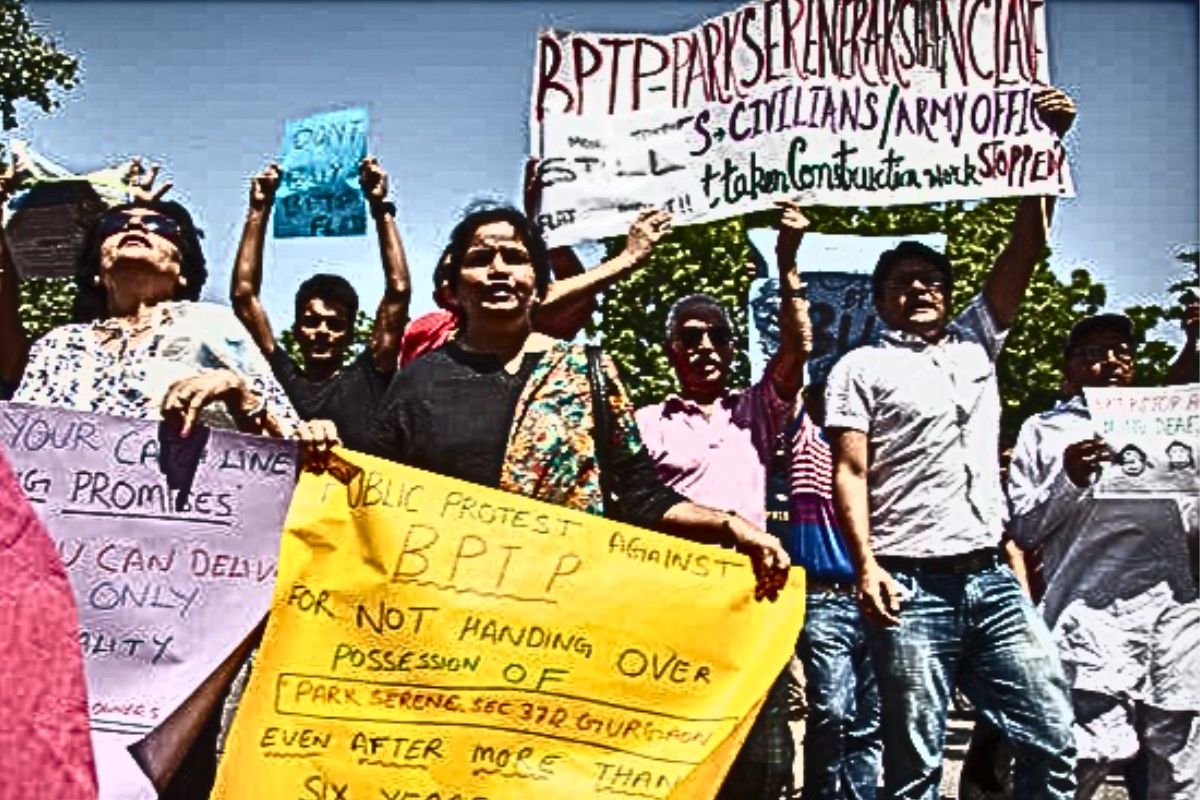
Families paying dual costs — EMI on a home loan for a flat they have never occupied, plus rent for the accommodation in which they actually live — represent one of the most common categories of RERA complainants. For families where both EMI and rent consume a significant share of monthly income, this dual burden creates cascading financial distress: defaults on other loans, withdrawal of children from private schools, deferral of medical treatment.
NRI buyers — who often invested remittances in Indian property as a long-term asset and retirement plan — face additional layers of difficulty. Pursuing RERA complaints from abroad is costly and logistically challenging. The legal processes are paper-intensive, hearings require physical presence or representation through local lawyers, and the enforcement outcomes — even where favourable — rarely translate into actual compensation.
Women homebuyers — particularly widows and single women who purchased flats as financial security — appear disproportionately in consumer advocacy documentation of RERA cases. The power asymmetry between a solo litigant and a corporate builder with institutional legal support is extreme.

The documented mental health consequences of protracted housing litigation — anxiety, depression, marital stress, and in some documented cases, more serious crisis — have been noted by consumer rights organisations but have received inadequate policy attention. A person who invested their life savings and remains in litigation for five, seven, or ten years is not merely a legal statistic. They are a human being whose entire life plan has been disrupted by institutional failure.
International Comparison — What India Could Learn
India’s RERA framework, while ambitious, compares unfavourably in several respects to housing regulatory frameworks in other jurisdictions.
Singapore requires developers to obtain a Sales Licence before marketing any residential unit, and construction must be completed within five years. Developer licences can be revoked for non-compliance. The Housing Developers (Control and Licensing) Act imposes personal criminal liability on directors of companies that fail to complete projects — a standard that India’s RERA, in practice, has almost never applied.
Australia requires mandatory builders’ warranty insurance (known as Home Warranty Insurance or Domestic Building Insurance, varying by state) that protects buyers against incomplete or defective construction even after a builder becomes insolvent. India has no equivalent mandatory insurance requirement.
The United Kingdom operates the New Homes Ombudsman scheme alongside statutory consumer protection rights under the Consumer Rights Act 2015. Developers are required to belong to an industry code, and buyers have access to free, independent dispute resolution. The UK also has mandatory structural defects insurance through the National House Building Council (NHBC), which provides ten-year warranties on new homes.
The United Arab Emirates, specifically Dubai’s Real Estate Regulatory Agency (RERA Dubai), requires developers to maintain project-specific escrow accounts with much stricter monitoring than India’s equivalent provision. Dubai RERA has the power to shut down under-performing projects and refund buyers from the escrow account — an active enforcement power that India’s RERA authorities rarely exercise.
Canada provides provincial New Home Warranty programmes (for example, Tarion in Ontario) that insure buyers against delayed closing, deposit loss, and construction defects. These are mandatory — a home cannot legally be sold without warranty coverage.
Common threads across high-performing housing regulatory frameworks: mandatory construction insurance or warranty protection; personal criminal liability for promoters who divert funds; independent project audits; and escrow accounts with active regulatory monitoring rather than mere declaration requirements. India’s RERA has the architecture for some of these features but has implemented them incompletely and without consistent enforcement.
Has RERA Actually Improved Anything?
Intellectual honesty requires acknowledging what RERA has genuinely achieved, even while documenting its failures.
Structural improvement in transparency is real. Before RERA, a buyer had no right to see a developer’s title documents, building approvals, or financial accounts. Today, RERA-registered projects must disclose this information on public portals. The standardisation of carpet area measurement has eliminated one of the most common forms of retail misrepresentation. Mandatory project registration has reduced — though not eliminated — the marketing of projects without regulatory clearance.
Consumer awareness has measurably increased. The existence of RERA, however imperfectly administered, has altered buyer behaviour: more buyers now check RERA registration before purchasing, more demand disclosure documents, and more are aware that they have legal rights to compensation for delay. This cultural shift has value, even if the enforcement infrastructure does not yet match the legal entitlements.
Organised sector professionalisation is acknowledged even by critics. Large, well-capitalised developers have adapted to RERA’s requirements, maintaining escrow accounts, filing quarterly updates, and complying with disclosure norms. The segment of the market served by institutional developers has become more accountable. The consolidation of the real estate sector — with smaller, less-capitalized developers losing market share to larger players who can manage RERA compliance costs — has reduced (though not eliminated) exposure to the most egregious forms of developer fraud for buyers in that segment.
Project registration growth — from near zero in 2017 to over 1.6 lakh by 2026 — represents a genuine expansion of regulatory coverage, even if enforcement within that coverage remains uneven.
Judicial development of homebuyer rights — accelerated by RERA’s creation of a dedicated legal framework — has produced a growing body of precedent that increasingly interprets RERA liberally in favour of buyers and strictly against developers. As CleverCoins’ 2024-25 RERA judgment analysis notes, the Supreme Court’s core philosophy is that “RERA is a buyer-protective statute and must be interpreted liberally in favour of home buyers and strictly against builders in cases of ambiguity.” This jurisprudential shift has enduring value.
But these achievements must be weighed honestly against the MahaRERA recovery data showing two-thirds of ordered compensation unpaid; against the hundreds of thousands of buyers still awaiting delayed possessions; against the Amrapali families who have been waiting fifteen years; against the Ramesh Kumars of India who hold winning RERA orders that no one will enforce.
The conclusion must be measured but frank: RERA has made India’s real estate sector meaningfully better for buyers in the organised, well-capitalised segment of the market. It has made relatively little difference for buyers in distressed projects — who are precisely the people the law was primarily designed to protect.
Conclusion: A Law That Works on Paper
The Real Estate (Regulation and Development) Act, 2016 is not a poorly designed law. Its core provisions — mandatory registration, escrow accounts, standardised disclosures, statutory compensation rights, dedicated regulatory adjudication — represent a coherent and well-conceived framework for buyer protection. The problem, documented exhaustively across ten years of implementation, is that this framework has been systematically under-resourced, under-enforced, and politically under-prioritised at the state level.
The Supreme Court of India has described RERA’s functioning as “disappointing.” MahaRERA’s own data shows two-thirds of recovery warrants going unpaid. Arrest warrants for defaulting builders sit unexecuted. Thousands of families pay EMI and rent simultaneously, holding winning RERA orders that no one will enforce. Retired citizens wait a decade for homes they paid for in cash. The Amrapali families are still waiting after fifteen years.
This is not a failure of legislative design. It is a failure of political will, institutional capacity, and state-level governance — the three things that transform a law from a promise into a protection.
India’s homebuyers deserve a RERA that works — not just on paper, but in practice. The law exists. The framework exists. The question for the next decade is whether the political will to enforce it will finally materialise, or whether RERA will remain what its critics already call it: a toothless tiger with impressive paperwork and empty orders.