The Battle For India’s 15 Million Kiranas, Why Meesho, Flipkart, Udaan And Walmart Want The Same Retail Network
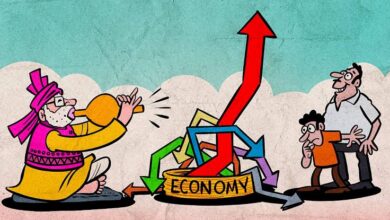
A few years ago, India's biggest ecommerce companies were trying to disrupt kirana stores. Today, they are trying to acquire, partner with and integrate them into their networks. From Meesho and Udaan to Flipkart and Walmart, a growing battle is underway for control of India's 15 million neighbourhood retailers and the real prize may not be retail at all.

For much of India’s ecommerce journey, kirana stores were viewed through a simple lens. They were either customers to digitise, partners to onboard, or competitors that would eventually lose ground to modern retail and online marketplaces. The assumption was that technology would gradually replace many of the functions these neighbourhood stores had traditionally performed.
Recent developments suggest the opposite is happening.
Over the past few months alone, Meesho acquired Kirana Club, Udaan acquired ShopKirana, and Jumbotail doubled down on kirana-focused infrastructure. Flipkart and Walmart are expanding their engagement with neighbourhood retailers as well. On the surface, these moves appear unrelated. Different companies, different business models, and different priorities. Yet all of them are converging on the same asset: India’s vast kirana network.
The reason is simple. Kiranas possess something that even the largest commerce platforms cannot easily build from scratch. They sit at the centre of local consumption. They understand neighbourhood buying patterns, maintain long-standing supplier relationships and enjoy a level of trust that has been built over decades rather than marketing budgets.
Hence, quick commerce may be growing rapidly, but it still reaches only a small fraction of Indian households. For brands and distribution platforms looking to reach the next wave of consumers, kiranas remain one of the most effective channels available. They provide immediate access to markets that would otherwise require years of investment in warehousing, logistics and customer acquisition.
What makes kiranas even more valuable today is that their role is expanding far beyond retail. A neighbourhood store can now function as a fulfilment centre, a local inventory hub, a pickup point and even a last-mile delivery node within a larger commerce ecosystem. Instead of operating at the edge of the retail chain, kiranas are increasingly becoming an integral part of how products are stocked, moved and delivered across the country.
This shift explains why large players are no longer treating kiranas as merchants to serve but as infrastructure to own, partner with or integrate into their networks. The battle unfolding across India’s retail sector is therefore not merely about selling more products. It is about securing access to the country’s most extensive and deeply embedded distribution network before someone else does.

The Real Prize Is Demand Intelligence
If kiranas have become strategic assets, the next question is obvious: what exactly are companies trying to gain access to?
The answer is not shelf space, inventory or even physical stores. It is information.
For decades, a significant portion of Indian consumption flowed through neighbourhood retailers, but very little of that activity was visible in real time. Millions of purchasing decisions were being made every day across the country, yet most of those demand signals remained fragmented, localised and largely inaccessible to brands, distributors and marketplaces. Companies knew what they sold into the supply chain. They rarely knew what consumers were actually buying at the neighbourhood level.
That is now beginning to change.
As kiranas become integrated with digital ordering systems, inventory management platforms and ecommerce networks, they generate something far more valuable than sales. They generate data. Every order placed, every product restocked and every shift in consumer preference creates a demand signal that can be tracked, analysed and acted upon.
This is why the current wave of acquisitions is about much more than retail expansion. Access to kiranas provides companies with visibility into consumption patterns across thousands of local markets. It reveals what products are moving, where demand is rising, which brands are gaining traction and how consumer behaviour changes from one neighbourhood to another.
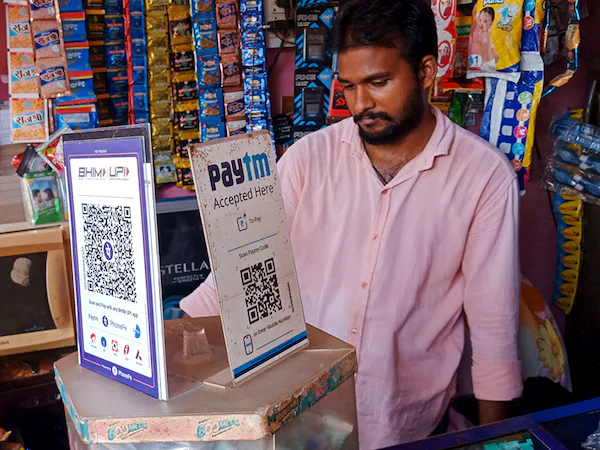
Ashish Jain of Waterbridge Ventures compares this opportunity to what digitisation did for payments. Before UPI, millions of transactions existed but remained disconnected from the broader financial system. Once those transactions moved onto a common digital infrastructure, an entirely new ecosystem of products and services emerged around them. A similar transformation could occur in retail as kirana transactions become increasingly visible and measurable.
The commercial implications are enormous. Demand intelligence can improve inventory planning, reduce stockouts, optimise procurement and make forecasting significantly more accurate. It can also unlock adjacent businesses such as working-capital financing, targeted advertising, automated replenishment and personalised promotions. In other words, the value no longer lies only in selling products through kiranas but in building services around the information generated by those stores.
This is what makes the battle for kiranas fundamentally different from earlier phases of ecommerce. The first generation of digital commerce focused on moving goods. The next generation may be focused on understanding demand. The companies that gain the deepest visibility into how India’s consumers buy, stock and spend could ultimately possess an advantage far greater than warehouses, delivery fleets or even market share. They would possess the intelligence layer that sits beneath the entire retail ecosystem.

India’s Quiet Retail Revolution: From Push To Pull
To understand why kiranas are suddenly attracting so much attention, it is important to understand how India’s retail supply chain traditionally worked.
For decades, the movement of consumer goods followed a rigid structure. Products moved from manufacturers to super stockists, then to distributors, then to retailers and finally to consumers. At every stage, decisions were driven less by data and more by relationships, experience and intuition. A distributor’s salesman would visit a store, recommend products, push inventory and collect orders. The system functioned, but it had a major blind spot: nobody had a clear picture of actual demand.
As a result, retailers frequently found themselves stuck with slow-moving inventory while running out of products consumers genuinely wanted. Manufacturers struggled to forecast demand accurately, distributors relied heavily on guesswork and the entire supply chain operated with limited visibility. In a country with millions of small retailers, inefficiency became an accepted cost of doing business.
The pandemic exposed just how fragile that model was. Sudden shifts in consumer behaviour, supply disruptions and lockdown restrictions created demand patterns that traditional distribution networks struggled to understand and respond to. A system built around periodic human interactions was simply not designed to process rapid changes at scale.
The response has been the emergence of what can be described as a digital pull model.
Instead of products being pushed through the supply chain based on forecasts and distributor incentives, orders are increasingly being generated by actual consumer demand. A kirana owner no longer has to wait for a salesperson’s visit to replenish stock. Through digital platforms, retailers can place orders the moment inventory runs low, creating a real-time demand signal that travels back through the supply chain.
This shift may sound incremental, but its implications are profound. Every digital order provides fresh information about what consumers are buying, where products are moving and how demand is evolving. The supply chain becomes more responsive because it is reacting to real consumption rather than assumptions about future consumption.
Platforms such as Hindustan Unilever’s Shikhar and B2B marketplaces like Udaan have accelerated this transformation. By allowing retailers to order directly through digital channels, they have replaced periodic, relationship-driven ordering with continuous, data-driven replenishment. The result is lower inventory waste, faster stock movement and significantly better visibility across the retail ecosystem.
In many ways, this represents the most important change occurring within India’s retail sector today. The real transformation is not that kiranas are becoming digital. It is that the flow of information around them is becoming digital. Once demand becomes visible in real time, every participant in the supply chain – from manufacturers and distributors to platforms and financial service providers – can make better decisions.
And that is precisely why kiranas have become so valuable. They are no longer just points of sale. They have become the source of the demand signals that increasingly power the entire retail system.
/entrackr/media/post_attachments/wp-content/uploads/2020/03/grocery-store.jpg)
Why The Rest Of The World May End Up Following India’s Playbook
India’s retail ecosystem was often viewed as fragmented, inefficient and overly dependent on small neighbourhood stores. The assumption was that as incomes rose and ecommerce expanded, India would eventually follow the path taken by developed markets, where large retail chains and centralized distribution networks dominate consumer spending.
What is now emerging suggests the opposite may be true.
The very characteristics that once appeared to be weaknesses – a vast network of small retailers, highly localised demand patterns and a fragmented supply chain – have created the foundation for a retail model that is uniquely suited to the digital age. Rather than replacing kiranas, technology is making them smarter, more connected and significantly more efficient.
This is where the concept of reverse innovation becomes relevant. Coined by scholars Vijay Govindarajan and Chris Trimble, reverse innovation describes solutions that emerge in developing markets before spreading to more mature economies.
The digital transformation of kiranas fits that definition remarkably well. Faced with limited working capital, fragmented distribution and highly price-sensitive consumers, Indian retailers were forced to find ways to operate with extraordinary efficiency. Technology did not replace the kirana model; it enhanced it.
The result is a system that combines the strengths of local retail with the advantages of digital infrastructure. Kiranas retain their proximity to consumers and deep understanding of neighbourhood demand, while platforms provide the data, logistics and financial services needed to operate at scale. Few countries possess a retail network of comparable size, but many face similar challenges around fragmented trade and last-mile distribution.
This is why comparable models are beginning to emerge across other developing markets. Platforms in China, Indonesia and parts of Latin America are increasingly connecting small retailers to digital procurement networks, real-time inventory systems and integrated payment platforms. While the execution differs from country to country, the underlying logic remains the same: use technology to strengthen existing retail networks rather than replace them.
Even developed markets may find lessons in this approach. Large-format retail has delivered efficiency, but it has also concentrated inventory, reduced flexibility and increased dependence on centralized logistics systems. The disruptions witnessed during the pandemic exposed some of those vulnerabilities. By contrast, distributed retail networks supported by real-time demand data offer a level of resilience that traditional models often struggle to replicate.
In that sense, India’s kirana transformation is no longer just a local retail story. It is becoming a case study in how technology can modernise fragmented markets without destroying the institutions that already serve them. The bigger question is no longer whether kiranas can survive the digital age. It is whether the model evolving around them could become a blueprint for the future of retail in other parts of the world.

Who Ultimately Controls The Kirana Relationship?
If the first phase of India’s retail transformation was about digitising kiranas and the second phase was about capturing demand signals, the next phase may revolve around a far more important question: who ultimately controls the relationship with the retailer?
For decades, that relationship belonged largely to distributors. Their sales representatives visited stores, influenced purchasing decisions, managed inventory flows and acted as the primary link between brands and retailers. Digital platforms are steadily changing that equation.
Today, a growing number of kiranas place orders directly through apps, access financing through digital channels, receive inventory recommendations generated by algorithms and increasingly rely on platforms for everything from procurement to payments. As more of these functions move online, the platform facilitating those interactions gains influence over the retailer relationship.
This creates a new competitive battleground.
—For ecommerce companies, integrating kiranas into their networks can improve fulfilment speed and expand geographic reach.
—For FMCG brands, direct access to retailers provides better visibility into demand and greater control over distribution.
—For B2B marketplaces, the opportunity lies in becoming the operating system that retailers depend on every day. Each player is pursuing a slightly different objective, but all are competing for the same strategic position within the ecosystem.
The emergence of ONDC could further complicate this battle. By creating an open network that allows buyers and sellers to interact across platforms, ONDC aims to reduce dependence on any single marketplace. In theory, this could prevent a handful of large players from dominating digital commerce in the same way that UPI created an interoperable payments ecosystem. Whether it succeeds in doing so at scale remains one of the most important questions facing India’s retail sector.
Artificial intelligence is likely to accelerate these shifts. The more transaction data platforms collect, the better they become at forecasting demand, recommending inventory, extending credit and optimising logistics. Over time, the advantage may belong not to the company with the largest warehouse network but to the one with the most comprehensive understanding of consumer behaviour.
This creates both opportunity and risk for kiranas. Digital tools can make neighbourhood stores more efficient, profitable and competitive than ever before. At the same time, increased dependence on platforms raises concerns about who controls customer access, pricing decisions and the data generated by those transactions.
That tension may ultimately define the future of India’s retail ecosystem. The kirana is not disappearing. If anything, it is becoming more important than ever. But as neighbourhood stores become increasingly connected to larger commerce networks, the struggle will shift from ownership of stores to ownership of relationships, data and influence. And that battle is only just beginning.
/entrackr/media/media_files/2026/06/12/meesho-2026-06-12-17-05-56.png)
The Last Bit,
The recent rush by Meesho, Udaan, Jumbotail, Flipkart and Walmart towards kiranas is not a coincidence. It reflects a growing recognition that India’s neighbourhood stores are no longer merely retail outlets; they are the foundation of the country’s consumption economy.
What makes kiranas valuable today is not simply their reach, their proximity to consumers or even their role in distribution. It is the intelligence flowing through them. Every purchase, replenishment cycle and consumer preference generates data that can help companies forecast demand, optimise supply chains and build entirely new services around retail.
The battle for India’s 15 million kiranas is therefore about far more than commerce.
It is a battle to control the demand signals that power the country’s largest retail network. The companies that succeed may not necessarily be those with the most inventory, the fastest deliveries or the largest warehouses. They may be the ones that best understand what millions of Indian consumers are buying before anyone else does. And that could make kiranas the most valuable retail asset in the country.