Ankiti Bose: How A Fallen Unicorn CEO Turned The Spotlight On Everyone Except Herself Even As The Public Record Raised More Questions Than Any PR Campaign Could Answer
Ankiti Bose became the face of one of Southeast Asia's biggest startup success stories. She also became the central figure in one of its most contentious corporate disputes - from Zilingo's rise to the legal and regulatory battles that followed.


Few startup collapses have produced as many competing versions of the truth as Zilingo’s. On one side stands Ankiti Bose, the celebrated founder who says she became the target of a coordinated campaign after being removed as CEO. On the other is a public record that includes whistleblower complaints, a forensic investigation, board action, subsequent litigation, and later government proceedings. When those events are placed in chronological order, they reveal a timeline that is far more complicated than the story either side has presented.
The Empire That Made Ankiti Bose. The Collapse That Defined Her.
Zilingo was once celebrated as one of Southeast Asia’s most promising technology startups. Founded in Singapore in 2015 by Ankiti Bose and Dhruv Kapoor, it transformed from an online fashion marketplace into a supply-chain technology platform that attracted hundreds of millions of dollars from prominent investors and approached unicorn status. Bose became the public face of that success – a young founder frequently cited as an example of a new generation of Indian entrepreneurs building global companies.
That trajectory came to an abrupt halt in 2022.
As the company sought fresh funding, whistleblower complaints prompted the board to commission an independent forensic review into aspects of Zilingo’s finances and governance. Within weeks, Bose was suspended and later dismissed “for cause,” a decision she has consistently challenged as unfair and motivated by factors unrelated to financial conduct. Those competing accounts remain central to the dispute.
What followed extended the controversy well beyond the collapse of the company itself. The disagreements over corporate governance evolved into multiple legal proceedings, public accusations, defamation litigation, and later government action. Rather than closing the chapter on Zilingo, each new development added another layer to a story that continues to raise difficult questions about accountability, governance, and the competing perceptions surrounding one of the most closely watched startup failures.

The Story Didn’t Begin In A Courtroom. It Began In A Boardroom.
Long before FIRs, defamation lawsuits, injunctions and competing claims of victimhood dominated headlines, the Zilingo story took a very different turn. The first cracks did not appear inside a police station or a courtroom. They emerged inside the company’s own boardroom, where concerns over financial reporting and corporate governance began to overshadow one of the fastest-growing startups.
By early 2022, Zilingo was no longer just another ambitious fashion-tech company chasing unicorn dreams. It had raised more than US$300 million from marquee global investors and had become one of the region’s most celebrated startup success stories. Ankiti Bose, its charismatic co-founder and CEO, had become the public face of that success – a founder whose journey from spotting an opportunity in Bangkok’s Chatuchak Market to building a company nearing a US$1 billion valuation was widely celebrated across the startup ecosystem.
Behind that public image, however, investors and directors were beginning to ask difficult questions.
As Zilingo entered a fresh fundraising exercise, whistleblower complaints reportedly reached the board, triggering concerns about aspects of the company’s financial reporting and governance. Rather than dismiss those concerns, the board commissioned independent reviews, appointing forensic risk consultancy Kroll to investigate the allegations while Deloitte examined elements of the company’s financial reporting.
The decision itself was extraordinary. Companies do not ordinarily bring in external forensic investigators unless directors believe the issues raised warrant independent scrutiny.
On 31 March 2022, the board suspended Bose from her role as Chief Executive Officer pending the outcome of those investigations. Less than two months later, on 20 May 2022, it terminated her employment “for cause” following the completion of the forensic review.
The board’s actions transformed what had begun as an internal governance exercise into one of the most closely watched corporate disputes in the Asian startup ecosystem.
The issues reportedly examined during the investigation included unexplained vendor payments, questions surrounding revenue recognition, weaknesses in internal financial controls and broader governance practices. Subsequent media reports also referred to concerns over payments made to consultants and service providers, while later reporting spotlighted allegations relating to salary revisions and accounting practices. Bose has consistently denied any financial wrongdoing, disputed the findings surrounding her removal and maintained that she was denied meaningful access to the forensic reports relied upon by the board.
That dispute remains unresolved.
What is beyond dispute, however, is the sequence of events. Before any criminal complaints were filed. Before allegations of harassment entered the public domain. Before defamation suits were launched against investors, former colleagues and media organisations. Before later government proceedings. There had already been whistleblower complaints, an independent forensic investigation, a board suspension and the termination of one of Southeast Asia’s most prominent startup founders.

The Money Trail That Refused To Stay Buried
If Zilingo’s boardroom revolt was the spark, the company’s financial records became the fuel.
Over the months that followed Bose’s suspension and eventual termination, media reports began revealing details of what investigators were allegedly examining inside the company. Individually, each allegation was serious. Taken together, they painted the picture of a startup whose financial controls had allegedly broken down at precisely the moment it was seeking fresh capital from investors.
Among the most widely reported claims were allegations that Bose had approved or overseen millions of dollars in unexplained vendor payments, presented conflicting revenue figures to investors and shareholders, and implemented accounting practices that allegedly inflated the company’s financial performance. Bose has consistently denied any wrongdoing and has maintained that these allegations are either inaccurate or have been taken out of context.
One of the most striking revelations emerged in subsequent media investigations, which alleged that –
—Approximately US$10 million had been paid to various vendors without satisfactory explanations.
—Reports further claimed that nearly US$9 million was paid to entities associated with a law firm for purported technology development and legal services, despite allegations that substantial portions of those services were never delivered.
—Another reported payment of approximately US$944,000 to software company Ebix allegedly proceeded despite the absence of an existing contract. These allegations have been publicly reported, but Bose disputes the broader claims surrounding her conduct.
The scrutiny did not stop there.
Additional reports alleged that Bose increased her own compensation substantially without obtaining board approval. Her representatives categorically rejected that allegation, stating instead that she had accepted a 30 percent salary reduction and that documentation existed to support her position. The competing versions illustrate just how sharply contested nearly every aspect of Zilingo’s collapse has become.
What is notable, however, is not simply the existence of allegations or denials. It is the sheer volume of governance questions that surfaced simultaneously. Revenue recognition. Vendor payments. Internal controls. Executive compensation. Financial reporting. Each became part of the broader controversy surrounding Zilingo’s management at a time when the company was attempting to convince investors to commit fresh capital.
For any startup, one governance concern may be dismissed as an isolated lapse. Multiple questions emerging across different aspects of financial management are considerably harder to ignore. That is precisely why the board chose to commission an independent forensic investigation instead of relying solely on internal explanations.
Years later, none of these issues has entirely disappeared from public discussion. They have instead become the backdrop against which every subsequent legal battle has been fought. That context is impossible to ignore because it fundamentally changes the chronology. The financial scrutiny did not emerge after the legal disputes – it came first. Everything else followed.

Then Came Twenty-Three Months Of Silence
If the boardroom marked the beginning of Zilingo’s collapse, what happened afterwards would fundamentally reshape the public debate.
Following her suspension in March 2022 and eventual termination in May that year, Ankiti Bose forcefully rejected the findings that had led to her removal. She maintained that she had been made a scapegoat, questioned the fairness of the forensic process, and said she had been denied meaningful access to the reports on which the board relied. Those assertions have remained central to her public defence.
What did not happen immediately, however, is equally significant.
For nearly two years after leaving Zilingo, Bose did not file a criminal complaint in either Singapore (where the company was headquartered and where she continued to live) or in India. During this period, she remained professionally active, took up new employment, and publicly challenged the reasons surrounding her exit through interviews and public statements.
Then, on 23 April 2024, the story took an entirely different turn.
Bose travelled to Mumbai and lodged a criminal complaint at Kasturba Marg Police Station against co-founder Dhruv Kapoor and former executive Aadi Vaidya. The FIR contained serious allegations, including sexual harassment, stalking, criminal intimidation, and conspiracy.
Through her legal representatives, Bose stated that she had delayed approaching Indian authorities because her professional commitments in Singapore had prevented her from travelling earlier.
The allegations were serious, and Kapoor and Vaidya have categorically denied them.
What makes this development noteworthy is not the existence of competing claims (those are now common in high-profile corporate disputes) but the chronology in which they emerged.
By the time the FIR was filed, nearly twenty-three months had passed since Bose’s termination. The whistleblower complaints had already been investigated. The forensic review had already been completed. The board had already acted. Zilingo itself had entered liquidation. Public reporting on the company’s governance and finances had circulated widely. Only after those events did the criminal allegations become part of the broader dispute.
The sequence does not answer why the complaint was filed when it was. Nor does it determine the truth or falsity of the allegations contained in it. Those are matters for the legal process.
It does, however, establish an undeniable chronology.
- The financial investigation came first.
- The board’s suspension came next.
- The termination followed.
Only much later did the criminal complaint emerge.
Whether that sequence reflects the practical realities described by Bose, or whether it inevitably invites questions about timing and context, is one of the central issues that has continued to shape public discussion around the case.
It is also the point at which the story ceases to be solely about the collapse of a startup and becomes a far more complicated dispute over competing narratives, legal strategy, and accountability.
Why Singapore Stayed Silent While Mumbai Became The Battleground
The chronology raises another question that has attracted almost as much attention as the allegations themselves: why did the criminal proceedings begin in India nearly two years after Bose’s departure from Zilingo, despite the company being headquartered in Singapore and Bose continuing to live and work there after her termination?
The events at the heart of the corporate dispute unfolded while Zilingo operated from Singapore. Following her removal, Bose remained in the city-state, accepted new professional responsibilities and continued to engage publicly with the controversy surrounding her exit. She was neither out of public view nor disconnected from the events that had transformed her career.
Yet no criminal complaint was publicly filed there during that period.
Instead, the legal battle took a different course.
On 23 April 2024, Bose travelled to Mumbai and filed her complaint with the Kasturba Marg Police Station, setting in motion criminal proceedings against her former colleagues. Through her legal team, she explained that work commitments in Singapore had delayed her ability to travel to India earlier. That explanation forms part of the public record and deserves to be considered alongside the broader chronology.
The timing nevertheless became a subject of public scrutiny because it intersected with an already evolving corporate dispute.
By April 2024, Zilingo had effectively ceased to exist as an operating business. The forensic investigation commissioned by the board had long been completed. Bose had spent months publicly challenging the conclusions drawn from her removal, while media reporting continued to revisit questions surrounding the company’s governance and finances. The criminal complaint therefore entered an already crowded legal and public domain rather than emerging during the immediate aftermath of the alleged events.
Jurisdiction itself is not unusual in complex corporate disputes. Cross-border companies frequently give rise to litigation in multiple countries, particularly when founders, investors and corporate entities operate across different legal systems. But in this case, the sequence of events inevitably became part of the public conversation. Commentators questioned not only the allegations themselves but also why the criminal proceedings began when they did and where they did.
Those questions do not resolve the merits of either side’s case. They simply illustrate why chronology has become so central to understanding the dispute.
By the time the Mumbai FIR was registered, the story was no longer confined to disagreements over corporate governance or a founder’s removal. It had evolved into parallel legal battles spanning criminal complaints, civil litigation and competing public narratives. Every subsequent development would now be viewed through the lens of what had happened before – and when it had happened.
That is what makes the timeline more than a sequence of dates. It has become one of the principal points of contention in the broader debate over the rise and fall of Zilingo, and over the competing accounts advanced by those at the centre of its collapse.

When Every Legal Battle Became A Battle Over The Story
Corporate disputes often spill into courtrooms. What is less common is when the courtroom itself becomes the principal arena in which competing versions of events are fought.
Following her departure from Zilingo, Bose did not confine her legal response to challenging the circumstances surrounding her removal. Over time, the dispute expanded across multiple legal fronts – criminal proceedings, civil litigation and defamation actions – each focusing on a different aspect of the controversy that had engulfed the startup.
Among the most prominent of these was her defamation action against investor Mahesh Murthy after comments published in Outlook Business referred to a female startup founder alleged to have diverted company funds through legal payments. Although Bose was not named in the original article, she subsequently initiated legal proceedings, arguing that the publication was understood to refer to her and had caused serious reputational harm.
Her legal campaign did not stop there.
Over the following months, Bose also pursued legal action against former colleagues and media organisations over reporting connected to her tenure at Zilingo. In some instances, courts granted interim relief directing the removal of certain articles or restraining further publication pending adjudication. Those orders reflected judicial findings at an interim stage rather than final determinations on the underlying allegations, which remain subject to legal proceedings.
Taken individually, each case addresses a separate legal grievance. Collectively, however, they illustrate how the dispute evolved far beyond the boardroom that had first triggered the crisis.
At the same time, the issues that originally led to scrutiny of Zilingo’s governance did not disappear from public discussion. Instead, they continued to surface alongside every new legal development. As a result, two parallel stories emerged. One centred on Bose’s assertion that she had been wrongfully targeted and defamed. The other focused on the unresolved questions surrounding the company’s financial governance and the circumstances that led to her removal.
Neither narrative has yet received a final judicial determination.
That is precisely why the legal drama surrounding Zilingo remains unusually complex. The various proceedings are not all attempting to answer the same question. Some concern alleged criminal conduct. Others concern reputational harm. Others arise from the company’s corporate collapse and regulatory scrutiny. Yet each proceeding inevitably influences public understanding of the others.
Nearly four years after Zilingo’s board suspended its celebrated co-founder, the dispute has become about far more than the fate of a failed startup. It has become a contest over competing versions of the same history – one that will ultimately be shaped not by public relations campaigns or media coverage, but by the outcome of legal processes that are still unfolding.
Then The Government Entered The Picture
For much of the public debate surrounding Zilingo, the dispute was framed as a battle between a founder and the people she claimed had orchestrated her downfall. Supporters viewed it as an example of a startup founder being scapegoated. Critics pointed to the board’s actions and the forensic investigation. Both sides fiercely contested the facts.
Then, in late 2025, the controversy moved beyond the confines of boardrooms, investors and former colleagues.
The Directorate General of GST Intelligence (DGGI), one of India’s principal tax enforcement agencies, filed a criminal complaint before the Chief Metropolitan Magistrate in Mumbai against Ankiti Bose, Zilingo Global Pvt. Ltd. and others under provisions of the Central Goods and Services Tax Act.
The court took cognisance of the complaint and issued summons, marking the first publicly reported criminal proceedings initiated by a government investigative agency arising from issues connected to Zilingo’s financial affairs.
The complaint alleges offences under various provisions of the CGST Act, including allegations relating to invoices issued without corresponding supplies of goods or services, wrongful availment of Input Tax Credit and other offences connected to company records and tax compliance. These remain allegations before the court and have yet to be tested at trial.
The significance of the case lies not in any judicial finding (none has yet been made) but in who initiated it.
Unlike the earlier corporate dispute, this was not litigation commenced by investors, former colleagues or private parties. It was the result of an investigation undertaken by a statutory enforcement agency exercising its own investigative powers. Whether the allegations are ultimately proved remains for the courts to decide. But the very existence of the proceedings demonstrates that questions surrounding Zilingo’s financial affairs did not conclude with Bose’s departure from the company or with the collapse of the startup itself.
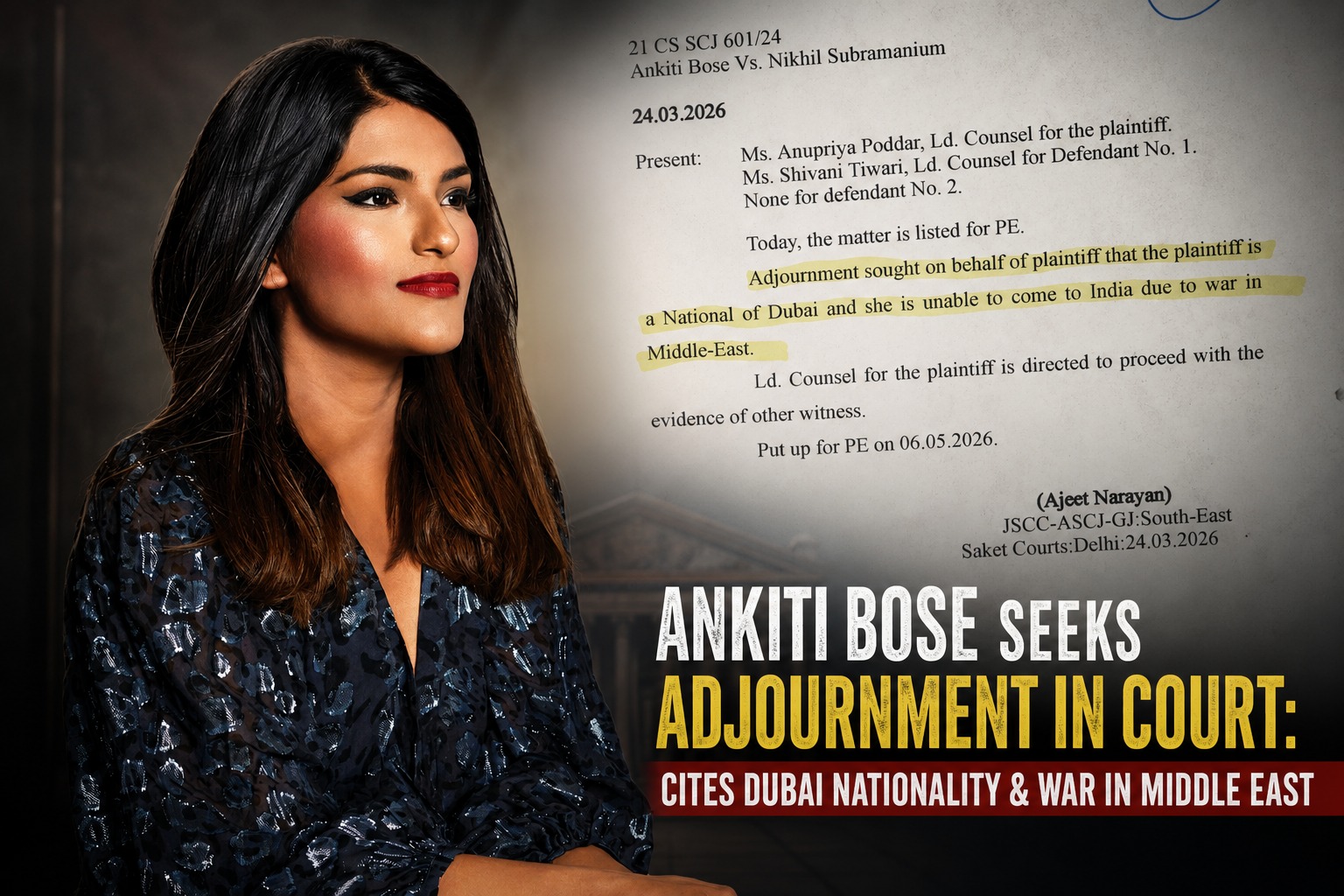
Court records also show that the matter has progressed slowly. Since the complaint was filed, hearings have largely concerned procedural issues, including the service of summons. As of mid-2026, the case remained at a preliminary stage, with no adjudication on the merits of the allegations.
That procedural status is important.
The proceedings neither establish guilt nor exonerate anyone. They simply reflect that the allegations have advanced beyond media reporting into formal judicial proceedings initiated by a government authority. In other words, the questions that first surfaced during Zilingo’s internal governance crisis did not disappear after the company’s collapse. Instead, they entered an entirely different legal forum.
For a founder who has consistently argued that she became the target of an unfair campaign following her removal, the emergence of separate government proceedings inevitably adds more pain to an already painful story. It does not settle the debate – but it does ensure that the questions first raised in 2022 continue to follow the company long after its operations came to an end.

A New Public Image. Old Questions Still Pending.
Corporate history is filled with founders who have rebuilt their careers after failed ventures. Silicon Valley, in particular, has long embraced the idea that entrepreneurial failure is neither permanent nor disqualifying.
Zilingo’s collapse, however, was never simply the story of a startup that ran out of money or lost market share. It unfolded alongside allegations of financial irregularities, a board-commissioned forensic investigation, multiple civil and criminal proceedings, and later regulatory action. That context makes what followed equally noteworthy.
Following her departure from Zilingo, Ankiti Bose gradually re-emerged in the global startup and investment ecosystem. She became associated with Terra-Invest as a Founding Partner and resumed participating in discussions around entrepreneurship, investing, corporate governance and leadership.
Public appearances, interviews and professional engagements reflected an effort to move beyond the events that had defined the final months of her tenure at Zilingo and re-establish herself within the venture capital and startup community.
There is nothing unusual about a founder seeking a second chapter. Nor is there anything inherently inconsistent about continuing to build businesses while legal disputes remain pending. What makes Bose’s trajectory distinctive is that her professional reinvention has unfolded alongside unresolved proceedings arising from the very company that first made her one of the most recognisable faces in startup ecosystem.
As of mid-2026, several aspects of the broader Zilingo controversy remain legally unresolved. The criminal complaint filed by Bose in Mumbai continues through the judicial process. The GST proceedings initiated by the Directorate General of GST Intelligence remain at a preliminary stage. The findings of the forensic investigation that preceded her removal have never been fully disclosed to the public, leaving many of the questions that first surfaced in 2022 without definitive public answers.
That absence of finality has shaped how the Zilingo story continues to be viewed.
The result is that Bose today occupies an unusual position within the startup ecosystem. She is simultaneously a founder building new ventures, a litigant pursuing multiple legal claims, and a former chief executive whose tenure at one of Southeast Asia’s best-funded startups continues to attract regulatory, legal and public scrutiny. Each of those identities exists alongside the others, and none can yet be understood in isolation.

The Timeline That Continues To Shape The Debate
Nearly every major disagreement surrounding the Zilingo controversy ultimately returns to one issue: chronology. The facts and allegations have been fiercely contested, but the sequence in which key events unfolded is largely a matter of public record.
The story began with Zilingo’s rapid rise from a Singapore-based fashion technology startup into one of Southeast Asia’s most closely watched venture-backed companies. It then entered a different phase of investigations. The company itself did not recover. Zilingo ultimately entered liquidation, bringing an end to a business that had once attracted hundreds of millions of dollars in investment and been viewed as one of the region’s most promising startups.
The legal disputes, however, were only beginning.
Each development has added another chapter to a dispute that now spans corporate governance, criminal law, civil litigation and regulatory enforcement. Yet none of those proceedings, individually or collectively, has produced a final judicial determination resolving the broader controversy.
That is why the Zilingo story remains unfinished.
The Last Bit, Questions That Still Await Answers
More than four years after Zilingo’s board suspended one of the most celebrated startup founders, the legal and factual arena remains remarkably unsettled.
There has been no final judicial determination on the allegations that led to Bose’s removal. The findings of the forensic investigation commissioned by Zilingo’s board have never been released in full to the public. The criminal complaint filed by Bose against her former colleagues continues through the legal process, with the allegations strongly disputed. The GST proceedings initiated by the Directorate General of GST Intelligence also remain pending before the courts.
That leaves a series of questions which, despite years of litigation and extensive media coverage, remain unanswered.
–What precisely did the independent forensic investigation conclude, and will those findings ever become public in a form that allows independent scrutiny?
–To what extent did the board rely on those findings when it decided to suspend and later terminate Bose’s employment? Were the governance concerns isolated incidents, or did they reflect broader systemic failures within one of Southeast Asia’s fastest-growing startups?
–Equally significant are the questions surrounding the later legal proceedings. How will the courts assess the criminal allegations made by Bose against her former colleagues? What evidence will ultimately emerge during those proceedings? Will the GST prosecution substantiate the allegations set out in its complaint, or will those claims fail to withstand judicial scrutiny?
The answers to those questions matter well beyond the individuals involved.
Zilingo’s collapse has become a case study in founder accountability, corporate governance and the responsibilities of startup boards when serious concerns are raised about financial reporting. It has also shows how modern corporate disputes increasingly play out simultaneously in boardrooms, courtrooms and the public sphere, where competing narratives often develop long before legal proceedings conclude.
That makes restraint as important as scrutiny. Until the answers emerge, the Zilingo story remains exactly that – a story still being written.
For now, the chronology remains the clearest guide. It is the one part of the story that does not change. And it is that chronology (from boardroom concerns to forensic investigations, from corporate collapse to parallel legal proceedings) that continues to define one of the most consequential governance controversies the startup ecosystem has witnessed.