
How Varun Mishra Is Rethinking Power Efficiency and Automation at LinkedIn’s APAC Data Centres

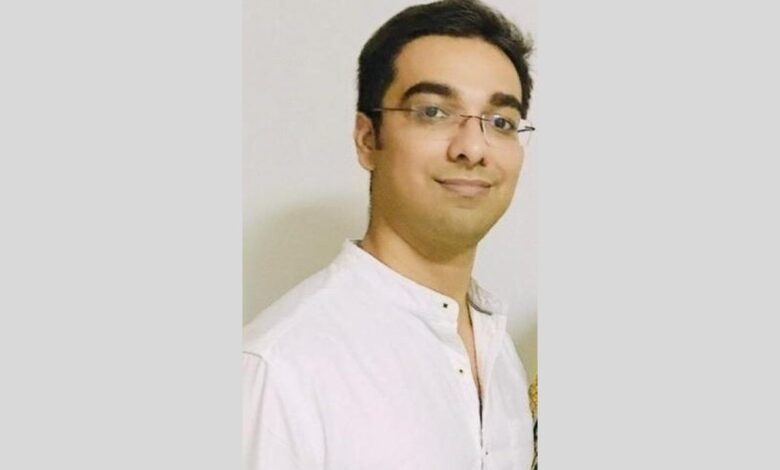
Most people who use LinkedIn to look for a job or scroll through their feed have no idea what is keeping the platform running. The data centres, the power systems, the fibre routes, the monitoring that sends an alert when something starts to fail before it actually does — all of it invisible to the more than 600 million people who use the platform every day. Varun Mishra knows what is keeping it running. He has spent the past four and a half years making sure it does not stop.
Mishra is a Senior Infrastructure Engineer at LinkedIn, where he has been the primary technical authority for the platform’s APAC data centre infrastructure since early 2019. The job is to keep systems operational at a scale that most engineers never work at, and to make that operational reliability look effortless from the outside.
But the story of how he ended up in London managing infrastructure at that scale goes back more than 18 years through some of the most demanding environments in digital technology — and explains why the work he does now looks different from how most infrastructure teams at large platforms approach the same problems.
From Financial Trading to Social Network Scale
He started his career at HCL Technologies, one of the largest enterprise technology services companies in India, where he built the core of his technical approach to infrastructure. The discipline he developed there became the groundwork for what came next: managing colocation infrastructure for stock exchanges at SunGard Global Trading.
Financial trading infrastructure is operated at tolerances that most technology environments are never asked to meet. The systems Mishra ran at SunGard served the Singapore Exchange, Hong Kong Exchanges and Clearing, and the London Stock Exchange. They ran at 90 microsecond latency — meaning the infrastructure had to perform correctly in fractions of a millisecond, every time, without variation. A financial trading floor cannot survive the kind of brief degradation that consumer internet services absorb and recover from routinely. Either the system performs at specification or the exchange is unusable.
“Your baseline for what counts as working is completely different when you have come from financial trading systems,” Mishra said. “The tolerance for ambiguity is zero. That does not go away when you move to a different kind of platform.”
This orientation — building for the worst case before it arrives rather than recovering from it after — became the lens through which he has assessed and solved every infrastructure problem since.
Lazada: Building Ecommerce Infrastructure Across Southeast Asia
From financial trading he moved into consumer technology, joining Lazada, the Southeast Asian ecommerce platform owned by Alibaba Group, first as a Senior Systems Engineer and later as Manager. He spent four years there building automated infrastructure to support Lazada’s operations across Thailand, Malaysia, the Philippines, Indonesia, Vietnam, and Singapore.
The challenge at Lazada was not microsecond precision but operational breadth. Tens of millions of active users, six countries each with different network conditions, a platform growing faster than any manual process could keep pace with. Mishra’s task was to build infrastructure that could serve that geography reliably without placing a full engineering team in each market.
“Lazada taught me what automation actually means when you are running across six countries,” he said. “You cannot have an engineer making a decision at every step. The system has to be intelligent enough to behave correctly in conditions that nobody anticipated when it was built.”
The Alibaba Group context gave him visibility into infrastructure engineering at a level of scale that most organisations cannot offer. Building systems for tens of millions of users across six countries with inconsistent connectivity is a different problem category from most infrastructure work, and that experience was part of what he brought to LinkedIn.
LinkedIn: The Power Problem at Hyperscale
LinkedIn operates at a scale that puts it in a different category from most digital platforms. More than 600 million users across more than 200 countries and territories, served by data centres that run continuously. Mishra joined in early 2019 as Senior Infrastructure Engineer, taking on primary technical authority for APAC data centre infrastructure. He has been there four and a half years.
The most significant programme he has delivered during that time addresses a problem that affects every large data centre estate but that most teams have not built good tooling to solve: the gap between contracted power capacity and actual consumption.
A data centre that contracts power from a facility commits to a capacity ceiling. If actual consumption across the estate sits well below that ceiling, the organisation pays for capacity it is not using — what engineers call overcommitted power costs. Those costs compound across an estate of multiple sites. The difficulty is that understanding the gap requires a live, granular view of consumption across the full estate mapped against contracted commitments at every level. Most large data centre operations do not have that view. They have billing data and physical meter readings, but not a live dashboard that tells an infrastructure team where the gap is and how large it is right now.
He built it. He designed and delivered a custom smart rPDU power monitoring dashboard and an intelligent power matrix for LinkedIn’s APAC estate — a system that ingests live consumption telemetry from every site and maps it against contracted capacity, producing a consolidated view of overcommitted and undercommitted circuits across the whole estate.
The outcome was a 20 percent reduction in overcommitted power costs. LinkedIn recognised the programme with its Certificate of Excellence, the Best Employee Award and the STAR Performance Award.
“The tool does not just show you the numbers,” Mishra said. “It shows you the gap between what you contracted and what you are actually using. Once you can see that gap clearly, the decisions become obvious.”
The relevance of that work in mid 2023 extends beyond LinkedIn’s cost saving. Data centre power consumption is one of the most watched problems in enterprise technology. Regulatory pressure is building across the EU. Sustainability commitments from large cloud operators are hardening from aspirations into obligations. The energy cost environment of the past two years has pushed power visibility to the top of the agenda for infrastructure teams that might previously have treated it as a facilities management problem rather than an engineering one. The monitoring architecture Mishra built represents the kind of work that makes power governance possible at platform scale.
Automation That Outlasts the Person Who Built It
In addition to the power programme, Mishra has rebuilt how LinkedIn’s APAC data centres handle the transition from a new site completing construction to that site being fully operational.
It is where most data centre estates accumulate their early incidents. Coordinating physical infrastructure delivery, configuration, observability integration, and vendor handover — each stage depending on the previous — means that failures at any point generate production problems in the first weeks of a site going live. Done manually with checklists and individual approvals at each handover, the process varies based on who is running it and produces a high rate of early incidents from configuration mismatches and integration gaps.
He built automation frameworks that link each stage programmatically, so that the transition from construction to live follows a defined sequence without requiring manual decisions at every handover point. The frameworks connect physical site delivery to observability and incident response systems from the outset, so that monitoring is active from the moment a site comes live rather than being configured separately after the fact.
The outcome has been roughly 35 percent fewer incidents driven by vendor activity year on year and 40 percent faster mean time to resolve when incidents do occur. The frameworks he built were not retained as tooling tied to one project. They were adopted as the standard approach across the LinkedIn organisation.
“When someone builds a process and then leaves, it usually disappears with them,” he said. “If it gets adopted as the standard, that means it actually solved the underlying problem, not just one instance of it.”
He has also managed LinkedIn’s carrier fibre and circuit interconnect lifecycle across APAC, the physical network connections that underpin data centre operations, cutting circuit activation timelines by around 25 percent through standardisation and governance improvements.
Mentoring has been part of the work throughout. Over his years at LinkedIn, Mishra has mentored more than 30 engineers across APAC and EMEA, building practices in teams that carry those approaches forward independently.
What Infrastructure Engineering Needs Next
His certifications cover Microsoft Azure Solutions Architect Expert, AZ-500 in Azure Security Technologies, AZ-400 in Azure DevOps Solutions, and Red Hat Certified Engineer. The range reflects the same approach that has defined his career — building depth across the infrastructure, security, and platform engineering layers rather than staying within one narrow area.
His view of what infrastructure engineering needs to prioritise over the next few years is shaped by direct experience with the problems large platforms are already grappling with. Power efficiency at scale is no longer primarily a cost problem — it is becoming a structural requirement as regulatory and sustainability pressure intensifies and as the energy demands of modern computing workloads keep rising. Automation is not a productivity improvement but a shift in how infrastructure teams will have to operate as platform scale continues to run ahead of the number of engineers available to manage it manually.
“The platforms that will run well in ten years are the ones where the infrastructure already knows how to manage itself,” he said. “Not waiting for an engineer to notice something is wrong. The system identifies it before it becomes a problem.”
That has been the consistent thread across 18 years of infrastructure work — from stock exchange colocation in Singapore to ecommerce systems serving six countries for Alibaba to the data centres keeping one of the most used professional platforms on the internet running every day. When the infrastructure is working correctly, nobody talks about it. That is the point.
About Varun Mishra
Varun Mishra is Senior Infrastructure Engineer at LinkedIn, where he serves as primary technical authority for APAC data centre infrastructure supporting over 600 million users globally. His career spans more than 18 years across LinkedIn, Lazada (Alibaba Group), SunGard Global Trading, and HCL Technologies, covering infrastructure from submillisecond financial trading environments to consumer ecommerce platforms serving tens of millions of users across Southeast Asia. He holds Microsoft Azure Solutions Architect Expert, AZ-500, AZ-400, and Red Hat Certified Engineer certifications, and is based in London, United Kingdom.




