Why Does Kabul Chawla matter?
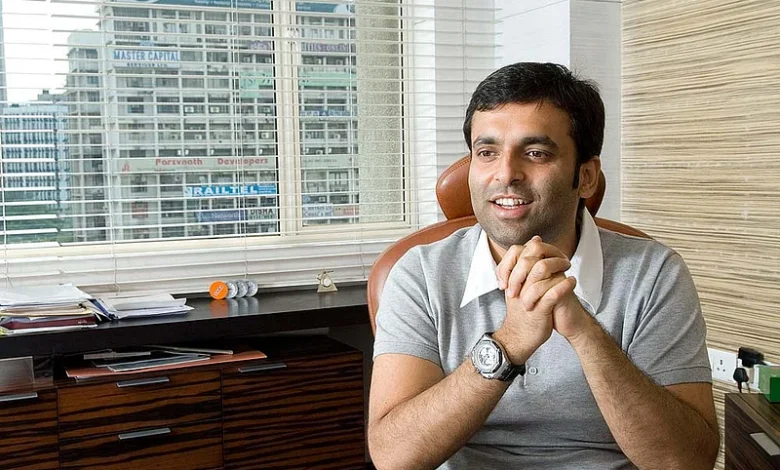
- First generation real estate entrepreneur who first made headlines in 2008, when he was the highest bidder for a Noida property, beating giants DLF
- His company is notorious for non-delivery to thousands of buyers of apartments and plots with delivery dates in 2012
- Has been named in a NYT investigation for owning an iconic Manhattan apartment; also owns a house in Delhi’s upmarket Amrita Shergil Marg
- Was partner of Justice Y.K. Sabharwal’s son during his judgement on the sealing drive and is said to have benefited from the verdict
- Is considered to be close to Congress, particularly former Haryana CM Hooda, during whose tenure he acquired large chunks of land in Haryana
- His company has grown faster than seasoned real estate giants; claims to have 35 residential and commercial projects in hand at present
In the cut-throat world of Indian real estate, few stories encapsulate the toxic cocktail of explosive ambition, political patronage, institutional investor blind spots, and systematic buyer exploitation quite like that of Kabul Chawla and his brainchild, BPTP Ltd. (formerly Business Park Town Planners Pvt. Ltd.). What began in the mid-2000s as a rags-to-riches tale of a first-generation Haryana entrepreneur rapidly scaling to a ₹1,400-crore empire by 2011–12 has, over nearly two decades, devolved into a textbook case of chronic project delays, alleged fund diversion, foreign exchange violations, multiple law enforcement raids, and a mountain of unresolved litigation that has left thousands of middle-class families— including army officers, lawyers, and salaried professionals—financially devastated and emotionally shattered. Despite institutional funding from heavyweights like Blackstone, CPI India (Citigroup), JP Morgan, and Kotak, on-ground reality for BPTP’s buyers has been one of endless wait, broken timelines, and courtroom marathons. This is not mere “development lag”; it is, by all accounts from regulators, courts, and investigators, a pattern of unjust enrichment at the expense of ordinary Indians who dared to dream of a home.
The Meteoric Rise: From Small-Town Ambition to National Spotlight—and First Whispers of Nexus
Kabul Chawla, hailing from Karnal, Haryana, launched BPTP around 2007–08 with a modest team. By aggressively bidding and outmanoeuvring giants like DLF for a prime Noida plot in 2008, he catapulted himself into headlines. The company claimed a land bank exceeding 2,500 acres across Delhi-NCR and Faridabad, boasting 35+ residential and commercial projects. Chawla’s personal wealth was pegged at over ₹2,000 crore by 2011–12, and he lived in Delhi’s ultra-elite Amrita Shergil Marg. Yet even at the peak of this ascent, troubling undercurrents emerged. Allegations surfaced—most notably from activist lawyer Prashant Bhushan—of Chawla’s indirect links to a real-estate firm tied to then-Supreme Court Justice Y.K. Sabharwal’s family, coinciding with the 2007 sealing drive that allegedly benefited BPTP’s mall projects. Proximity to the Congress ecosystem, particularly former Haryana CM Bhupinder Singh Hooda, drew scrutiny: BPTP allegedly secured vast land parcels during the Hooda regime (2005–2014), including controversial CLU licences for over 1,600 acres. Rumours of deeper ties (including to Robert Vadra) were floated and denied by the company, but the pattern of rapid approvals raised legitimate questions about regulatory favouritism in an era when Haryana’s real estate boom often blurred lines between builders and power corridors.
The Core Scandal: Promised Homes, Delivered Nightmares
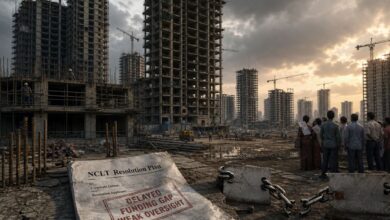
The true scandal, however, lies not in the boardroom glamour but in the broken lives of buyers. BPTP’s flagship projects—Parklands (a purported 2,000-acre Faridabad township marketed to ~22,000 buyers), Park Serene (Gurgaon), Park Terra (Sector 37D, Gurugram), Discovery Park, Park Elite, Princess Park, and others—followed a depressingly familiar script: aggressive marketing, 95–100% collections upfront, promised possession within 2–3 years (as early as 2012), followed by radio silence, stalled construction, and agricultural land masquerading as “ready” townships years later.
Take Supreme Court lawyer D.K. Garg: he paid nearly ₹1 crore plus stamp duty in 2012 for a “ready” plot in Parklands—yet years later, no registration, no development. Hundreds of army officers in Park Serene staged protests in 2014, only to be met with vague assurances of 60–90 day handovers that never materialised. By 2025–26, buyers in projects like Terra and Discovery Park were still fighting decade-old delays. Courts have repeatedly noted “unjust enrichment” by the developer. Haryana RERA and NCDRC have handled hundreds of complaints; over 50 documented cases from 2015–2025 (across RERA, NCDRC, NCLT, and Supreme Court) saw ~70% rulings in favour of consumers, ordering refunds with 9–18% interest, possession, or penalties. Yet enforcement remains patchy, with BPTP appealing, delaying, or settling minimally while launching new projects.
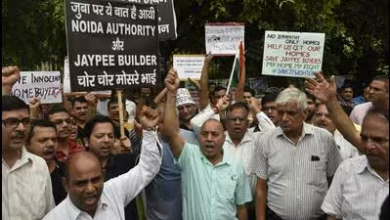
This is not isolated slippage. Multiple FIRs paint a darker picture of alleged cheating, criminal breach of trust, forgery, and conspiracy under IPC Sections 420, 406, 120-B, etc. The first major FIR hit in January 2011 in Faridabad for a “fake” Sector 85 project, accusing BPTP of collecting ~₹400 crore from over 1,000 buyers with no delivery. Non-bailable warrants followed; a 2014 FIR reiterated fraud in Parklands; Delhi High Court directed three more in 2016 for Sector 102 plots. Buyers spoke of Ponzi-like tactics—new sales allegedly funding old shortfalls—while Chawla was accused of diverting funds to unrelated ventures or overseas assets. Protests turned ugly: dharnas in 2014–2022, banners calling out “Kabul Chawla Kaatil Hai,” social media campaigns, and even NCLT insolvency petitions amid operational debt defaults.
The International Facade: Luxury in Manhattan While Buyers Struggle in Faridabad
While homebuyers in NCR paid EMIs on undelivered flats and faced homelessness, Chawla (or entities linked to him) allegedly maintained a lavish overseas lifestyle. The 2015 New York Times exposé highlighted a $19 million, 4,000 sq ft apartment on the 68th floor of Manhattan’s Time Warner Center—reportedly masked through a Delaware shell (NYC Real Estate Opportunities) with Singapore ties. BPTP denied ownership, claiming it belonged to a “cousin.” Yet ED probes later revisited these foreign assets as part of broader money laundering suspicions. Reports persisted of Chawla relocating to the US post-2011 warrant (with a 2018 Interpol Red Corner Notice), managing BPTP remotely while buyers suffered “tarikh pe tarikh.” Conflicting 2025 reports of Chawla receiving awards in India (e.g., IGBC Fellow) suggest either remote control or selective presence, but the optics remain damning: empire built on Indian buyer funds, fruits enjoyed abroad.
Escalating Enforcement: Raids, Probes, and the 2025–2026 Reckoning
Law enforcement has finally turned up the heat—decades late, critics argue.
- CBI Involvement: Probes date to 2013 (buyer complaints of breach of trust/cheating), with headquarters raids in 2015 and 2018 seizing ledgers allegedly showing ₹400 crore diverted from buyer deposits. In April 2026, as part of a Supreme Court-monitored “builder-bank nexus” crackdown (22 new FIRs registered that month), CBI conducted fresh raids on BPTP’s Sector-76 Faridabad office. FIR RC2192026E0001 (8 April 2026) names BPTP, its promoters/directors, and HDFC Bank officials, alleging a nexus enabling cheating of homebuyers through dubious financing. Documents, bank records, and digital evidence were seized. A related Supreme Court writ by BPTP vs CBI (April 2026) underscores ongoing friction.
- ED Raids 2025: The most high-profile recent action came on 26–27 August 2025. ED’s Gurugram unit raided 10+ sites across Delhi-NCR, Noida, and Faridabad—including BPTP offices and the residences of Chawla and director Sudhanshu Tripathi—in a ₹500+ crore FEMA case. Allegations: BPTP routed FDI from Mauritius entities (2007–2008) via impermissible put/swap options while claiming the automatic route, violating rules. Chawla was named beneficial owner of foreign entities; probes extended to anonymous overseas assets (revisiting the NY link), fund diversions to incomplete projects, and multiple Delhi-NCR FIRs. Documents seized, lockers frozen; the case has potential PMLA angles. BPTP claimed “full cooperation” and called issues “historical.”
Supreme Court interventions (e.g., November 2024 Terra Flat Buyers Association case; 2025 Parklands rulings) have repeatedly slammed BPTP for delays and ordered refunds/interest, yet the company’s land bank and new launches (e.g., GAIA Residences, Amstoria Verti-Greens in 2025) continue, even as it eyes an IPO in 2026 amid SEBI scrutiny questions.
A Critical Verdict: Regulatory Capture or Systemic Failure?
BPTP’s saga exposes deeper rot in NCR real estate: aggressive land banking on political goodwill, over-leveraged models reliant on buyer advances rather than execution, weak enforcement of RERA/IBC interplay, and promoters who treat court orders as suggestions while launching fresh projects to raise more capital. Over a thousand families remain trapped in loans for phantom homes; institutional investors exited or restructured with minimal accountability; Chawla’s empire persists (revenues reportedly crossing ₹500 crore recently) despite warrants, notices, and raids.
Critics rightly ask: how does a company with a 14-year trail of FIRs, non-bailable warrants, ED/CBI actions, and Supreme Court strictures still operate, award itself sustainability certifications, and float IPO dreams? The answer lies in delayed justice, political echoes, and a sector where buyer pain is collateral for builder ambition. Until regulators enforce possession timelines, attach promoter assets swiftly, and extradite absconding directors, stories like BPTP will not be anomalies—they will remain the cautionary norm.
Homebuyers deserved homes. Instead, they got headlines, raids, and regret. The question now is whether 2026’s enforcement momentum will finally deliver justice—or merely another chapter in this never-ending saga.