India is facing a water crisis that is simultaneously a public health emergency, an agricultural productivity challenge, and an urban infrastructure problem — all unfolding at the same time, at civilisational scale. The country is home to roughly 18% of the world’s population but holds only 4% of its freshwater resources. Over 600 million Indians face high-to-extreme water stress, and nearly 200,000 people die each year from inadequate access to safe drinking water, according to government and NITI Aayog estimates. Meanwhile, agriculture — which accounts for over 80% of India’s freshwater consumption — continues to rely on flood irrigation methods that waste vast quantities of water on crops that could grow with a fraction of the input.
Into this crisis, a generation of Water Tech startups has stepped in with technology-driven solutions spanning precision irrigation, water quality monitoring, decentralised purification, leak detection in urban networks, and industrial effluent treatment. Backed by a combination of venture capital, government schemes like the Jal Jeevan Mission and AMRUT 2.0, and growing corporate sustainability mandates, these startups are building businesses where the market opportunity and the social imperative are perfectly aligned.
This guide covers the top 10 Water Tech startups operating in India in 2026, evaluated on technology innovation, operational scale, funding credibility, and real-world impact.
1. Swajal
Best for: Last-mile safe drinking water access in rural and semi-urban India through IoT-enabled purification kiosks
Swajal is one of India’s most recognised Water Tech startups, and its model is elegant in its simplicity. The company deploys solar-powered, IoT-connected water ATMs — essentially smart purification kiosks — in villages, schools, tribal areas, and urban slums where centralised water supply either does not reach or is unreliable. Each Swajal unit purifies water locally using a multi-stage process and dispenses it at nominal costs, often between ₹1 and ₹5 per litre, via a prepaid card or mobile payment system.
What makes Swajal’s model technically credible is the IoT connectivity layer embedded in each unit — sensors continuously monitor water quality parameters (TDS, pH, turbidity, microbial contamination), flow rates, and maintenance needs. This data is transmitted to a central dashboard, enabling the company to detect and address problems remotely before a unit fails. Having won multiple government contracts under the Jal Jeevan Mission and recognition from the United Nations, Swajal has established itself as a serious infrastructure player rather than a proof-of-concept startup.
Key Strengths: Solar-powered IoT kiosks, real-time water quality monitoring, government contract experience, rural and tribal area focus, and proven last-mile distribution model.
Limitations: Revenue model depends significantly on government contracts and subsidies; scaling private-sector monetisation in low-income geographies remains challenging.
2. Uravu Labs
Best for: Atmospheric water generation — producing drinking water directly from air humidity in water-scarce regions
Uravu Labs, founded in 2019 and based in Bengaluru, is building technology that sounds almost fantastical until you understand the underlying science: it extracts water directly from atmospheric humidity using solid desiccant materials and a thermally driven desorption cycle, powered ideally by renewable energy. Unlike conventional Atmospheric Water Generators (AWGs) that use energy-intensive refrigeration, Uravu’s desiccant-based approach is significantly more energy-efficient, making it viable in off-grid or energy-constrained environments.

This matters enormously for India’s water-stressed regions — coastal humid zones, certain hill districts, and even urban rooftops — where ambient humidity is substantial but piped water infrastructure is absent or unreliable. Uravu’s technology was selected for several pilot deployments through 2024 and 2025, and the startup has received backing from international climate tech investors. The company is particularly relevant in the context of climate change, which is projected to make traditional groundwater and surface water sources increasingly unreliable while atmospheric humidity remains relatively stable.
Key Strengths: Novel desiccant-based AWG technology with lower energy intensity than conventional AWGs, renewable energy compatibility, off-grid applicability, and strong R&D foundation.
Limitations: Technology is still in the scaling phase and not yet deployed at municipal or industrial volume; cost per litre remains higher than conventional purification at scale.
3. Boson Whitewater
Best for: Industrial wastewater treatment and zero-liquid-discharge solutions for manufacturing and textile sectors
Boson Whitewater, based in Ahmedabad, addresses one of India’s most acute industrial environmental problems — the discharge of untreated or inadequately treated effluent from textile, chemical, pharmaceutical, and food processing industries into rivers, lakes, and groundwater aquifers. India’s textile industry alone — particularly in Gujarat and Tamil Nadu — is responsible for some of the most severe water contamination documented in the country.
Boson Whitewater’s technology platform uses advanced membrane bioreactor (MBR) systems, electrocoagulation, and forward osmosis processes to treat complex industrial wastewater streams and achieve zero-liquid-discharge (ZLD) compliance, which is increasingly mandated by India’s Central Pollution Control Board (CPCB). The company designs, builds, and operates treatment plants as a service — meaning industrial clients pay per kilolitre of water treated rather than owning capital-intensive equipment. This opex model has significantly reduced the adoption barrier for mid-size manufacturers.
Key Strengths: ZLD technology stack, opex-based treatment-as-a-service model, CPCB compliance support, industrial sector specialisation, and strong Gujarat-based client network.
Limitations: Business development cycles are long due to the capital and operational commitments involved; scaling from mid-size to large industrial clients requires significant project financing capability.
4. Jalshakti Technologies
Best for: Real-time water network monitoring and Non-Revenue Water (NRW) reduction for urban utilities
Water loss in India’s urban distribution networks is staggering — it is estimated that between 30% and 50% of treated water is lost before it reaches the consumer, through a combination of physical leaks, metering inaccuracies, and theft. This “Non-Revenue Water” represents an enormous economic and resource loss for already-strained municipal utilities. Jalshakti Technologies builds the sensor, software, and analytics infrastructure that helps urban water utilities find and fix these losses systematically.
The company deploys a network of smart flow meters, pressure sensors, and acoustic leak detectors across water distribution pipes, which feed data into a cloud-based platform that uses machine learning to identify anomalies, locate likely leak points, and prioritise maintenance interventions. Several municipal corporations have piloted or adopted Jalshakti’s platform under the AMRUT 2.0 scheme, which specifically funds smart water management investments in cities. Reducing NRW by even 10-15 percentage points in a large city translates to billions of litres of additional water supply without building a single new reservoir.
Key Strengths: NRW reduction technology, acoustic leak detection, ML-based anomaly identification, AMRUT 2.0 government alignment, and meaningful water and cost savings for municipal utilities.
Limitations: Sales are dependent on municipal procurement cycles, which are notoriously slow and politically complex in India; technology ROI requires multi-year implementation timelines.
5. Sensing Local
Best for: Affordable, hyperlocal water quality monitoring for communities, utilities, and researchers
Sensing Local, founded in Bengaluru, addresses a deceptively simple but critically underserved need: knowing, in real time, whether the water at a specific point in a distribution network or in a natural water body is safe. India has thousands of centralised water testing laboratories that produce reports days or weeks after sampling — a timeline that is useless for preventing a waterborne disease outbreak. Sensing Local builds low-cost IoT water quality sensors that measure parameters like residual chlorine, turbidity, pH, dissolved oxygen, and temperature continuously and transmit the data to a cloud dashboard accessible by operators on a smartphone.
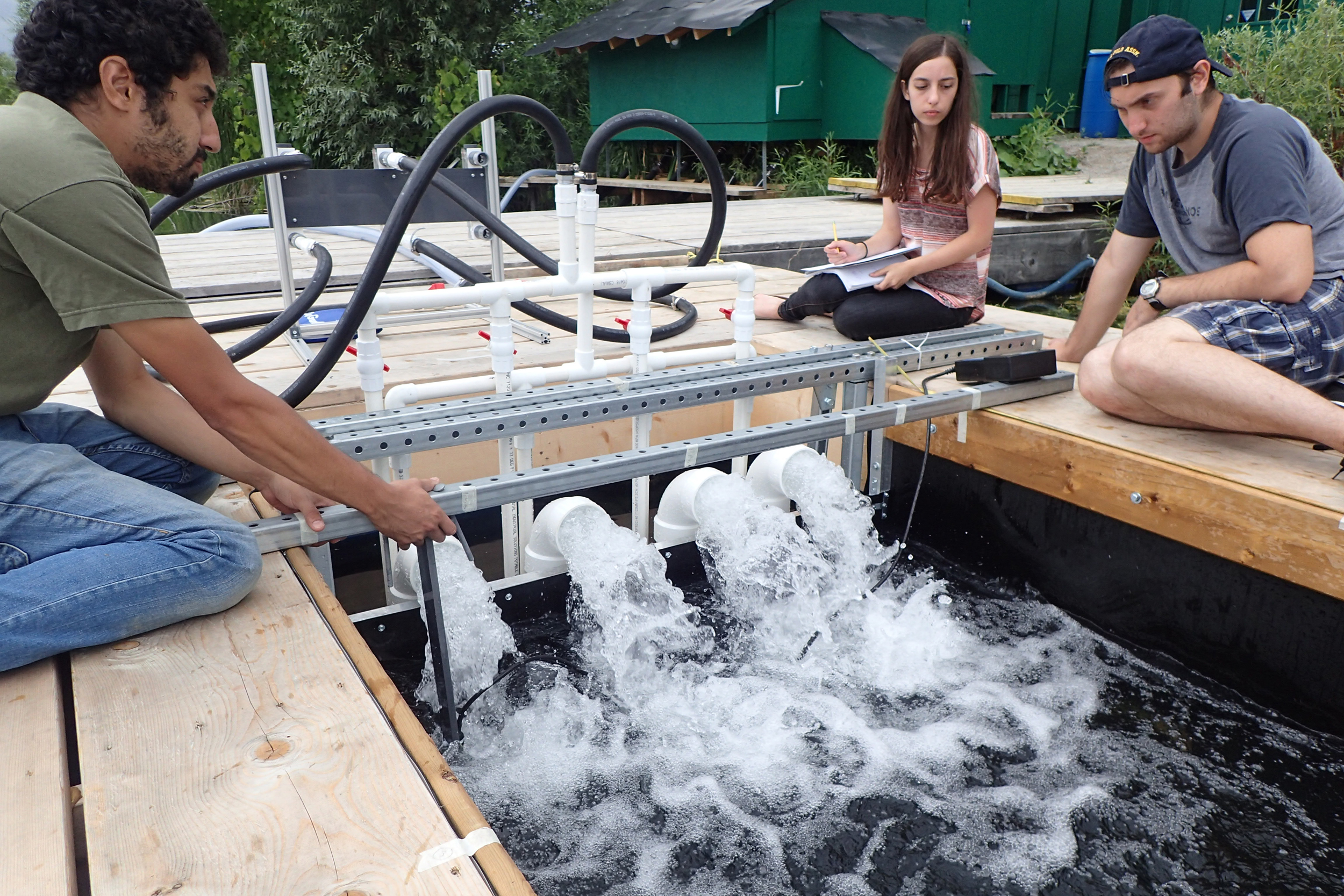
The company’s sensors are designed for Indian field conditions — dusty environments, unstable power, and limited technical maintenance capacity — which makes them meaningfully different from expensive laboratory-grade instruments that require calibration by trained staff. Sensing Local has deployed sensors in water distribution systems, river monitoring programs, and aquaculture farms, demonstrating the versatility of its underlying sensor platform. The startup has received support from accelerators including CIIE.CO and WaterAid.
Key Strengths: Low-cost, field-deployable water quality sensors, real-time IoT monitoring, multi-sector applicability (utilities, rivers, aquaculture), and designed specifically for Indian field conditions.
Limitations: Sensor accuracy at the lower price point involves trade-offs relative to laboratory-grade instruments; customer education is required to interpret and act on continuous water quality data.
6. Majico (formerly WaterOn)
Best for: Smart water metering and demand-side management for residential societies and commercial buildings
Majico operates in the intersection of water management and smart building technology, providing IoT-based water metering, monitoring, and management solutions for residential apartment complexes, commercial buildings, and industrial campuses. The platform replaces conventional mechanical water meters with smart digital meters that measure consumption at the individual flat or unit level in real time, and transmits this data to building managers and residents via a mobile app.
This may sound straightforward, but the implications for water conservation are substantial. When residents in an apartment complex can see their daily and monthly water consumption on a smartphone — and when building managers can identify which floors or units are over-consuming, which pipes may have slow leaks, and how total building consumption compares to benchmark norms — conservation behaviour changes measurably. Majico’s platform also enables automated billing based on actual consumption rather than approximate estimates, which reduces disputes and improves revenue recovery for housing societies.
Key Strengths: Smart metering for residential and commercial buildings, real-time consumption dashboards, automated billing integration, leak detection at the building level, and conservation behaviour nudging.
Limitations: Primary market is urban housing societies and commercial buildings, which limits reach to rural or municipal utility use cases; hardware installation requires coordination with building management.
7. Tessol
Best for: Cold chain water-cooling and phase-change material solutions that indirectly reduce water consumption in refrigeration and logistics
Tessol is a Mumbai-based deep-tech startup that has developed Phase Change Material (PCM)-based thermal storage and cooling solutions for food cold chains, pharmaceutical logistics, and building cooling systems. While Tessol is not a water purification or water supply company in the conventional sense, its technology has a direct and measurable impact on water consumption — because conventional refrigeration and HVAC cooling systems are significant consumers of water through evaporative cooling towers and heat exchange processes.
Tessol’s PCM technology stores cooling energy during off-peak hours and releases it on demand, reducing the compressor runtime and the associated water consumption in cooling systems by significant margins. The company has deployed its solutions with food retailers, dairy companies, and hospitals, and has attracted investment from prominent climate tech funds. As India increasingly grapples with both water scarcity and heat stress, energy-efficient cooling technologies that simultaneously reduce water consumption become strategically important.
Key Strengths: Phase change material innovation, measurable water and energy consumption reduction in cooling systems, food cold chain and pharma sector deployments, and strong climate tech investor backing.
Limitations: The water impact is indirect compared to companies directly addressing water supply or purification; the cold chain market in India, while large, requires significant enterprise sales effort.
8. Ecozen Solutions
Best for: Solar-powered cold storage and water pumping for smallholder farmers, addressing both irrigation efficiency and post-harvest water use
Ecozen Solutions, founded in 2010 by IIT Kharagpur alumni and headquartered in Pune, builds solar-powered agricultural infrastructure — most prominently solar water pumps (Ecofrost pumps) and solar cold storage units (Ecofrost cold rooms). In the context of Water Tech, Ecozen’s solar pumping systems are directly relevant because they enable precise, demand-driven irrigation for smallholder farmers who currently rely on diesel pumps running on fixed schedules, which leads to chronic over-irrigation and groundwater depletion.
By replacing diesel pumps with smart solar pumps equipped with controllers that allow farmers to schedule and measure water application, Ecozen directly addresses India’s agricultural water waste crisis. The company has deployed tens of thousands of solar pumps across several states under India’s PM-KUSUM scheme and has received backing from international development finance institutions. Its dual focus on water efficiency and energy transition makes it one of the most impactful agri-water startups in the country.
Key Strengths: Solar pump deployment at scale under PM-KUSUM, precision irrigation capability, IIT-alumni technical foundation, development finance institution backing, and measurable agricultural water savings.
Limitations: The business is significantly dependent on government subsidy schemes for demand generation; private market adoption among smallholders without subsidy support is challenging.
9. Nexus Water
Best for: Decentralised wastewater recycling and water reuse systems for housing societies, hotels, and small industries
Nexus Water builds modular, decentralised sewage treatment plants (STPs) and greywater recycling systems designed for installation at the building or campus level — rather than relying on centralised municipal sewage treatment infrastructure, which is absent or overwhelmed in most Indian cities. The company’s systems treat domestic wastewater to a standard suitable for toilet flushing, landscape irrigation, and vehicle washing, reducing the potable water demand of a building by 30–50%.
This is particularly valuable in Indian cities where water supply is intermittent, groundwater is being depleted, and municipal sewage treatment capacity is grossly inadequate. Nexus Water’s plug-and-play modular design means installation does not require significant civil construction, and the company operates its systems on a managed-service basis — handling maintenance and performance monitoring so that building owners can focus on their core use case rather than wastewater management. The startup has deployed systems across residential projects, hotel chains, and educational institutions.
Key Strengths: Decentralised STP model, modular plug-and-play installation, managed service operations, 30–50% reduction in potable water demand, and relevance for urban buildings with intermittent supply.
Limitations: Revenue per installation is moderate; scaling requires large numbers of installations to achieve meaningful business size; competition from traditional civil contractors who build conventional STPs is significant.
10. Piramal Sarvajal
Best for: Franchise-based safe drinking water distribution networks serving rural communities at viable commercial economics
Piramal Sarvajal, a social enterprise backed by the Piramal Foundation, has built one of India’s most extensive rural safe water distribution networks using a franchise model — installing and operating purified water dispensing kiosks (“water ATMs”) in villages, partnering with local entrepreneurs who run the kiosks as small businesses, and providing centrally monitored technology to ensure water quality and system uptime. The model is notable because it is commercially structured — kiosk operators earn a livelihood, consumers pay a small fee, and the network is designed to be financially self-sustaining rather than perpetually grant-dependent.
Piramal Sarvajal’s technology platform monitors water quality, sales volumes, and system health in real time across its network, with alerts for quality deviations or equipment failures sent immediately to a centralised operations team. As of 2025, the network spans thousands of villages across Rajasthan, Gujarat, Madhya Pradesh, Odisha, and other states, making it one of the most operationally proven rural safe-water enterprises in India. Its franchise model has been studied as a template for sustainable last-mile water service delivery.
Key Strengths: Operationally proven franchise model, thousands of rural village deployments, real-time centralised monitoring, Piramal Foundation backing, and commercially sustainable unit economics.

Limitations: Expansion into new geographies requires significant franchise recruitment and training investment; water quality consistency across a large distributed network requires continuous operational vigilance.
Understanding What Makes India’s Water Tech Ecosystem Distinctive
It is worth stepping back to appreciate why India’s Water Tech startup landscape looks the way it does — because it is meaningfully different from Water Tech ecosystems in the US, Europe, or Israel, and understanding the difference helps you read the opportunity and the challenge more clearly.
In developed markets, Water Tech is predominantly about industrial efficiency, smart metering, and desalination. In India, the problems are more fundamental and more varied simultaneously — access to safe drinking water at the last mile, treatment of severely contaminated industrial effluent, catastrophic agricultural water waste, and crumbling urban distribution infrastructure that loses half of what it distributes. This means the market for Water Tech solutions in India is broader, more fragmented, and more dependent on government as a customer than in other markets.
The startups that will define India’s Water Tech industry in the decade ahead are those that can navigate the unique challenge of selling to government at scale while maintaining the operational agility of a startup — and those that can build commercially sustainable models in markets where end users are often too poor to pay market rates for water. The companies on this list represent the most credible attempts to solve that challenge as of 2026, combining genuine technological innovation with the distribution and operational pragmatism that India’s water crisis demands.