Zepto Wants ₹8,010 Crore From Public Investors. Should SEBI Ask Harder Questions First?
An IPO is more than a fundraising exercise. It is a request for public trust. That trust becomes harder to earn when a company seeking thousands of crores from investors is simultaneously facing regulatory scrutiny, governance concerns, audit deficiencies and multiple ongoing proceedings. Yet that is exactly where Zepto stands as it prepares to enter India's public markets.


If public market investors were asked to design the ideal startup IPO candidate, Zepto would appear to tick many of the right boxes.
The company operates in one of India’s fastest-growing consumer segments. Quick commerce has transformed from a pandemic-era convenience into a mainstream habit for urban consumers who increasingly expect groceries, household essentials and daily necessities to arrive at their doorstep in minutes rather than hours. As consumer behaviour shifted, Zepto emerged as one of the biggest beneficiaries of that change.
The numbers presented in the company’s updated draft prospectus are certainly impressive. Revenue more than doubled to ₹22,624 crore in FY26, reflecting the breakneck pace at which the company has expanded its operations. Zepto now operates 1,139 dark stores spread across 66 cities and serves approximately 48 million transacting users. For a company launched only in 2021, that level of scale is remarkable by any standard.
Just as important for prospective investors is the company’s claim that its unit economics are improving. The prospectus reads better store productivity, narrowing losses per order and stronger operational efficiencies during the fourth quarter of FY26. These are metrics investors closely watch because they offer clues about whether a business built on rapid expansion can eventually become profitable.
The timing also appears favourable. Public market appetite for technology-led businesses has gradually improved after the turbulence that followed the listings of several new-age companies over the past few years. Investors who were once sceptical about loss-making startups have become more willing to tolerate short-term losses if they see a credible route to long-term market leadership. Zepto’s management is effectively betting that it belongs in that category.
Viewed through this lens, the IPO story almost writes itself. A young company operating in a high-growth sector. Rapidly rising revenues. Expanding customer adoption. Improving operating metrics. A market opportunity that still appears far from saturated.
For many investors, that combination would ordinarily be enough to generate considerable excitement. But public markets are not built on growth alone. Revenue growth can attract investors, but governance earns their trust. And it is when one moves beyond the headline numbers and into the finer details of Zepto’s disclosures that a far more complicated picture begins to emerge.
The Disclosure That Changes Everything – When The Founders Become The Subject
Every IPO has risks. Competition is a risk. Rising costs are a risk. Slowing growth is a risk. However, an Enforcement Directorate summons issued directly to the company’s founders just weeks before a public offering is something else entirely.
Buried within Zepto’s draft prospectus is a disclosure that deserves far more attention than it has received.
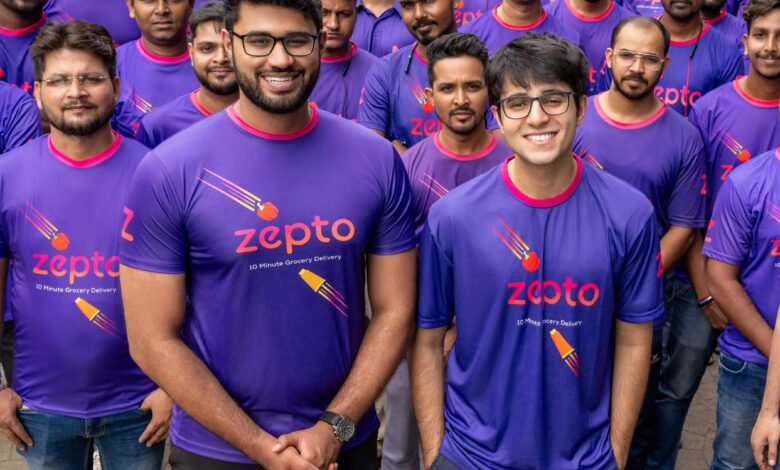
On April 8, 2026, the Enforcement Directorate issued summons to co-founders Aadit Palicha and Kaivalya Vohra under the Foreign Exchange Management Act (FEMA), seeking extensive information relating to foreign investments, corporate structures, financial records, banking arrangements, overseas holdings and the company’s broader business operations.
This was not a request directed at a junior executive or a subsidiary. It was directed at the two individuals who built the company, control its strategic direction and are now asking public investors to place a valuation running into billions of dollars on their enterprise.
The founders have stated that they cooperated fully, appeared before the authorities and provided the information sought. No adverse findings have been reported.
But that is not the point. Public markets do not operate on proven guilt alone. They operate on confidence, and confidence becomes harder to sustain when the very people at the centre of a company’s story are simultaneously responding to questions from one of India’s most powerful enforcement agencies.
The timing only adds to the discomfort. The summons were issued in April. The updated prospectus followed barely weeks later.
Investors are therefore being asked to evaluate the company while a regulatory process involving its promoters remains unresolved. Even Zepto’s own disclosures acknowledge the possibility of future inquiries, investigations, proceedings or penalties.
That raises a simple but important question: why the hurry?
—-If the matter is routine, why not wait for greater clarity?
—-If the issue is immaterial, why does it feature prominently among the company’s risk disclosures?
—-And if regulators themselves are still gathering information, on what basis should retail investors conclude that all material questions have already been answered?
The public investors are not being asked to invest after that uncertainty has been resolved. They are being asked to invest while the uncertainty still exists….that is the fine print!
Because investors are not merely buying into Zepto’s revenues, dark stores or growth projections. They are buying into the judgement, credibility and stewardship of the people running the company. When questions are being asked about those individuals by enforcement authorities, even if no conclusions have been reached, prudent investors are entitled to ask a few questions of their own.

When The Gatekeepers Start Raising Questions
Now, investors can be forgiving. However, what investors struggle to tolerate is uncertainty about the reliability of the information placed before them.
That is why some of the most concerning disclosures in Zepto’s draft prospectus have little to do with revenue, competition or market share. Instead, they come from the people whose job is to verify that the company’s financial reporting systems function as they should – its auditors.
According to the disclosures, auditors identified material weaknesses in the company’s internal controls, including deficiencies in IT access management and operational controls. More significantly, audit trail features within parts of the accounting ecosystem were either not enabled, missing altogether or unavailable during key periods.
At first glance, these may sound like technical issues best left to accountants and compliance professionals.
They are not.
Audit trails exist for a reason. They create a record of who changed what, when it was changed and why. They are among the most basic safeguards against errors, manipulation and unauthorised alterations to financial records. When such safeguards are absent or incomplete, the ability to independently verify information becomes weaker.
For a company processing millions of transactions, managing hundreds of dark stores and handling vast sums of money across multiple entities, these controls are not optional administrative boxes to be ticked. They are the foundation upon which investor confidence is built.
The concern becomes even more pronounced when viewed alongside Zepto’s public market ambitions. The company is not raising a modest amount of capital from sophisticated venture investors who have board representation and direct access to management. It is seeking thousands of crores from retail investors who will largely rely on the accuracy of disclosures and financial statements to make investment decisions.
This is precisely why markets place such importance on governance. Investors rarely lose money because a company misses a growth target by a few percentage points. They lose money when weaknesses in oversight gradually evolve into larger problems that were either overlooked or dismissed as immaterial.
Corporate history offers no shortage of examples. Almost every major governance crisis begins the same way – with concerns that initially appear technical, isolated or insignificant. It is only in hindsight that investors realise those early warnings were signalling something much bigger.
To be fair, Zepto has disclosed these issues and says corrective measures have been implemented. That is undoubtedly better than concealment. But disclosure alone does not eliminate the underlying concern.
The question for investors is not whether these weaknesses existed. The company itself acknowledges that they did. The question is whether public markets should be asked to take management’s word that the problems have been fully addressed, or whether independent verification ought to come first.
For a company preparing one of India’s most closely watched startup listings, that is not an unreasonable standard to expect.

Growth Is Surging. So Are The Losses
The easiest way to defend Zepto is to point to its revenue growth. And to be fair, the numbers are impressive.
Revenue more than doubled to ₹22,624 crore in FY26. Customer adoption continues to rise. Dark stores are multiplying across cities. Operational metrics have improved. By virtually every growth measure that startups like to showcase, Zepto appears to be moving in the right direction.
Yet beneath that impressive top line lies a less flattering number.
The company reported a net loss of ₹5,905 crore in FY26, wider than the ₹4,700 crore loss reported a year earlier.
That distinction matters because revenue growth and value creation are not always the same thing. A business can grow rapidly by spending aggressively, subsidising customers, discounting products and expanding into new markets.
The real test is whether those investments eventually produce a sustainable business model capable of generating profits without continuous injections of capital.
That question remains unanswered.
Despite years of rapid expansion, Zepto has yet to report a profit. Several of its key subsidiaries continue to lose significant amounts of money, with some recording losses running into hundreds or even thousands of crores. Meanwhile, a substantial portion of the IPO proceeds is expected to fund further expansion, including the addition of new dark stores and related infrastructure.
In other words, investors are not being asked to fund profitability. They are being asked to fund the pursuit of profitability. There is an important difference between the two.
The startup ecosystem often celebrates scale as though it is an achievement in itself. But public markets eventually demand something more concrete. Investors may admire growth, but they ultimately expect businesses to generate returns.
This is where Zepto’s investment thesis becomes more complicated.
The company argues that improving unit economics demonstrate a clear path toward profitability. Supporters point to narrowing losses per order and increasing efficiency across operations. They argue that scale itself is the mechanism through which profits will eventually emerge.
Perhaps they are right.But investors have heard similar arguments before.
Over the past decade, global markets have repeatedly embraced fast-growing technology businesses built on the promise that profits would arrive once sufficient scale had been achieved. Sometimes that promise was fulfilled. Other times, profitability remained perpetually just over the horizon, requiring fresh rounds of capital and increasingly optimistic assumptions.
The challenge for investors is determining which category Zepto ultimately belongs to.
That uncertainty becomes even more significant when combined with the governance and regulatory concerns already surrounding the company. A loss-making business with strong governance may still inspire confidence. A profitable business facing temporary regulatory challenges may do the same.
But when significant losses, unresolved regulatory questions and governance concerns begin to converge, investors are no longer evaluating individual risks. They are evaluating the cumulative effect of all of them.
And that is where Zepto’s IPO story begins to look considerably more complex than its headline growth figures suggest.

One Company, Many Regulators; A Pattern That Is Hard To Ignore
A company can find itself in a dispute with a regulator (that happens).
A company can receive a notice, challenge it, appeal an order and continue operating while the matter is resolved (that happens too).
What becomes harder to dismiss is when multiple regulators, operating under entirely different laws and pursuing entirely different objectives, all appear to be asking questions at roughly the same time.
That is where Zepto’s situation begins to stand apart.
Beyond the FEMA-related scrutiny involving the Enforcement Directorate, the company and its subsidiaries have found themselves managing consumer protection proceedings, labour-related disputes, food safety concerns and competition-related inquiries. Individually, each matter may have its own explanation. Collectively, however, they create a picture that investors cannot afford to ignore.
- Consider the consumer protection issues.
Zepto Marketplace received regulatory attention over alleged “dark patterns,” including accusations of basket sneaking and pricing practices that authorities believed could mislead consumers. While the company has challenged certain findings and secured interim relief, the larger issue remains. The business model that helped drive rapid growth has also attracted scrutiny over how that growth was achieved.
- Then there are labour-related concerns.
The quick commerce sector depends heavily on delivery partners operating under intense time pressures and demanding service expectations. Across the industry, regulators have increasingly focused on worker classification, social security obligations and wage-related protections. Zepto has not been immune from those debates, with disputes and proceedings emerging in different jurisdictions.
- Food safety presents another challenge.
The company operates in a business where speed is a competitive advantage, but food safety is a regulatory obligation. Previous actions relating to storage conditions and product handling have inevitably raised questions about whether operational expansion has always kept pace with compliance requirements.
The Competition Commission’s interest in the quick commerce sector adds yet another layer.
At the heart of the inquiry lies a question that has followed many technology-driven businesses around the world: are deep discounts and aggressive pricing strategies legitimate competition, or are they tactics capable of distorting markets and disadvantaging smaller players?
The answer is ultimately for regulators to determine.
But for investors, the more important observation is that these issues originate from entirely different corners of the regulatory ecosystem.
- Consumer authorities are looking at one set of concerns.
- Labour authorities are examining another.
- Competition regulators are focused on something else.
- Food safety officials have their own mandate.
- The Enforcement Directorate is pursuing a separate line of inquiry altogether.
When viewed individually, each issue may appear manageable.
When viewed together, they reveal something more concerning – a company that appears to spend a remarkable amount of time explaining itself to regulators.
This raises a legitimate question.
If regulators across multiple domains continue to identify areas of concern, should public investors simply assume that all of those concerns are temporary growing pains associated with a young company? Or should they consider the possibility that the recurring friction reflects deeper weaknesses in governance, oversight and compliance culture?
For a private company backed by sophisticated venture capital investors, that debate is largely confined to boardrooms. For a company preparing to enter public markets, it becomes everyone’s business. And that is precisely why these issues matter.

What Exactly Is SEBI’s Responsibility Here?
At the centre of the Zepto debate lies a larger question – one that extends far beyond a single company or a single IPO.
What is SEBI actually expected to do?
Supporters of the offering may argue that the regulator’s role is straightforward. Ensure that disclosures are adequate, verify compliance with listing requirements and allow investors to make their own decisions.
Under this view, the market is the ultimate judge.
If investors are comfortable with the risks, they can subscribe. If they are not, they can stay away.
It is a compelling argument. It is also incomplete.
SEBI was not created merely to facilitate capital raising. Its mandate includes protecting investors, maintaining market integrity and ensuring confidence in India’s financial system. Those responsibilities become especially important when retail investors – many of whom lack the resources available to institutional investors – are being asked to evaluate highly complex risks.
The distinction is important because disclosure and investor protection are not always the same thing.
Public markets operate differently from private markets precisely because the participants are different. Venture capital investors have teams of lawyers, accountants and analysts conducting extensive due diligence. Retail investors do not.
The regulator exists, in part, because information asymmetry exists. This is what makes the Zepto case particularly significant.
The company is not dealing with a single isolated issue. Investors are being asked to evaluate a business where regulatory scrutiny, governance concerns, audit observations and significant losses all exist simultaneously. Each risk may be manageable on its own. Together, they create a level of complexity that deserves careful consideration.
SEBI therefore faces a choice.
It can treat the IPO as a standard disclosure exercise and allow the market to decide. Or it can ask whether unresolved questions involving enforcement agencies, internal controls and multiple regulators warrant additional scrutiny before public money is invited into the equation.
What SEBI decides in Zepto’s case will not only affect one company.
It will signal where India intends to draw the line between encouraging ambitious startups and protecting the investors whose money ultimately makes those ambitions possible.

At What Point Do Red Flags Stop Being Isolated Incidents?
Companies make mistakes. Fast-growing startups make even more of them.
That is often the defence offered whenever questions arise around governance, compliance or regulatory scrutiny. The company is young. The sector is evolving. Processes take time to catch up with growth.
Perhaps. But there comes a point when investors must ask whether a series of isolated incidents are truly isolated at all.
Zepto’s supporters may argue that there has been no adverse finding from the Enforcement Directorate. They may point out that audit deficiencies have been disclosed, that corrective measures have been implemented and that regulatory proceedings remain ongoing rather than concluded.
All of that may be true. Yet the concern is not any single issue in isolation. The concern is accumulation.
An ED summons involving the founders. Material weaknesses in internal controls. Missing audit trails. Consumer protection penalties. Labour-related disputes. Food safety concerns. Competition-related inquiries. Continuing losses despite rapid expansion.
These should not be dismissed as routine.
Investors are often told to focus on patterns rather than promises. Patterns reveal how a company behaves when no one is watching. They reveal priorities. They reveal culture.
And the pattern emerging from Zepto’s disclosures is difficult to ignore.
Again and again, the company appears to have pushed ahead aggressively while compliance, governance and regulatory questions struggled to keep pace. That may be the unavoidable consequence of building one of India’s fastest-growing startups. Or it may be a warning sign.
The problem is that public investors are being asked to commit capital before knowing which of those explanations is correct.
That is precisely why the issue extends beyond Zepto itself. The question is not whether the company has risks. Every company does.
The question is whether India’s public markets should be expected to absorb so many unresolved questions simultaneously simply because the underlying growth story is compelling.
The Last Bit, A Test For More Than Just Zepto
The Enforcement Directorate’s inquiries may conclude without consequence. The audit deficiencies may have been fully remediated. The regulatory proceedings may be resolved in the company’s favour. The path to profitability may become clearer with time.
That is entirely possible. But public markets are built on confidence, not possibilities.
Today, investors are being asked to look past an unresolved FEMA inquiry involving the company’s founders, overlook material weaknesses in internal controls, accept multiple ongoing regulatory proceedings and trust that mounting losses will eventually give way to sustainable profits.
But whether India’s public markets should become the venue where so many unresolved questions are transferred from private investors to retail investors. That is ultimately the issue confronting SEBI.
The regulator’s decision will not merely determine the fate of one IPO. It will help define the standards expected of the next generation of startup listings.
If growth alone becomes sufficient to overcome concerns around governance, compliance and regulatory scrutiny, the message to the market will be unmistakable.
For years, India’s startup ecosystem has celebrated the mantra of growth at all costs. Public markets were supposed to be where accountability caught up. The question now is whether that principle still holds.