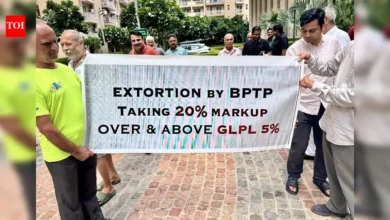
Rajesh Exports Saga: Isn’t It A Case Of SEBI’s Governance Failure?
The Ecosystem Failure: Rajesh Exports, Auditors, Institutions, and How SEBI Arrived Late?


On March 11, 2024, an ordinary email arrived in the inbox of the Securities and Exchange Board of India (SEBI). It did not come from a whistleblower embedded within the company, a forensic accountant running proprietary screens, or a rival firm with a commercial interest. It came from a retail shareholder with a simple, specific concern: trade receivables at Rajesh Exports Limited (REL) had remained outstanding for over two years without being paid.
More than two years later, that email has culminated in one of the most consequential interim orders in the history of Indian capital markets. On June 3, 2026, SEBI issued a 109-page interim order alleging that between FY21 and FY25, five consecutive financial years, Rajesh Exports may have misrepresented revenues amounting to approximately ₹15.15 lakh crore (roughly $1.8 trillion). SEBI has also alleged that fund flows were diverted through promoter-linked entities, forensic auditors were denied access to the company’s enterprise resource planning (ERP) systems and books of accounts, and that subsidiary financial statements were not properly placed in the public domain. SEBI has estimated the resulting shareholder wealth erosion at ₹12,726 crore.
The promoter-chairman Rajesh Mehta was barred from dealing in the company’s securities. Shares fell 5% the following day, closing at ₹104.65 on the BSE — a level representing a 54% decline from the 52-week high of ₹239 reached on December 22, 2025. Mehta has denied all findings. “It is an interim order and nothing in it is true,” he told Moneycontrol. Rajesh Exports described the matter as a “communication gap and confusion” with the regulator and has said it will cooperate with a fresh forensic audit. These are, critically, preliminary findings — not final conclusions. The company and Mehta retain the right to present their full defence.
But the numbers embedded in the SEBI order raise questions that are deeper than the specific legal outcome. If the allegations are even partially accurate, the most important question is not what Rajesh Exports did. The most important question is: why did India’s most powerful capital markets regulator need a shareholder’s email to find it? This write-up is about corporate fraud; but more about regulatory detection. And the financial evidence is devastating.
The Numbers That Should Have Screamed
To understand why detection took so long, one must first understand what the financial statements were reporting during those five years, and why the numbers were, in the plainest analytical sense, extraordinary.
Revenue Without Substance: The Turnover-to-Profit Paradox
Between FY21 and FY25, Rajesh Exports reported consolidated revenues that, according to SEBI, totalled approximately ₹15.45 lakh crore. In FY21 alone, consolidated revenues were approximately ₹2.58 lakh crore. By FY25, they had swelled to ₹4.23 lakh crore. This made Rajesh Exports, by reported revenue, one of the largest companies in India.
Yet the financial ratios tell a radically different story. In FY23, the company’s operating profit margins stood at a mere 0.5%. By FY24, they had collapsed to 0.1%. Net profit margins went from 0.4% in FY23 to 0.1% in FY24, with a 76.6% decline in net profit year-on-year. Return on equity, which had touched 9.7% in FY23, had declined sharply by later years, with Screener.in currently reporting an ROE of just 1.16% averaged over the last three years for the consolidated entity.
This is the most elementary red flag in financial analysis. A company allegedly reporting revenues of multiple lakh crore rupees was generating a fraction of a percent in margins. In Q1 FY26, Rajesh Exports reported a consolidated net loss of ₹9.53 crore on revenues of ₹1,31,541 crore. Revenues surged 117.9% year-on-year. Losses widened. The profit before tax had collapsed 89.9% year-on-year to ₹1.76 crore.
This dissociation between scale and profitability is not merely suspicious; it is analytically incoherent for a commodity trading and refining business at supposed scale. Larger scale should theoretically generate operating leverage. Instead, Rajesh Exports was generating near-zero or negative returns on what, if taken at face value, was one of the largest revenue bases in Indian corporate history.
The Subsidiary Concentration: 97% to 99% of Nothing Verifiable
The heart of SEBI’s interim order lies in one specific finding. Between FY21 and FY25, between 97% and 99% of Rajesh Exports’ consolidated revenues were attributed to overseas subsidiaries, primarily Switzerland-based Valcambi SA, accessed through a chain of holding entities: REL Singapore → Global Gold Refineries AG (GGR, Switzerland) → Valcambi SA.
In FY25, the consolidated entity reported revenues of ₹4,23,099 crore. The standalone Indian parent reported revenues of just ₹7,027 crore. The entire reported revenue edifice, 98.3% of it, rested on subsidiaries that Indian investors could not independently examine through routine BSE/NSE disclosures.
SEBI compared the consolidated figures against Valcambi SA’s own audited standalone accounts. The contrast is startling. For calendar year 2023, Valcambi SA’s standalone accounts reflected revenues of approximately ₹542.68 crore. GGR and Rajesh Exports’ consolidated accounts showed revenues running into several lakh crore rupees for the same period. Rajesh Exports argued that Valcambi’s accounts only reflect processing income and value-addition charges, while GGR recognises the gross value of gold transactions. SEBI found this explanation insufficient without adequate supporting documentation.
SEBI has alleged that approximately ₹15.15 lakh crore out of the ₹15.18 lakh crore attributed to subsidiaries across FY21–FY25 could not be independently verified. That is 99.80% of subsidiary-attributed revenues, allegedly unverifiable.
The Affluence Anomaly: A Business That Did Not Exist
Compounding the overseas revenue question is a domestic anomaly. According to SEBI, Rajesh Exports recorded sales of approximately ₹11,487 crore and purchases of approximately ₹11,488 crore with a company called Affluence Shares and Stocks Private Limited between FY22 and FY24. These transactions reportedly accounted for around 66% of Rajesh Exports’ standalone sales and 67% of its standalone purchases during that period.
When regulators checked with Affluence, the response was definitive. Affluence stated that Rajesh Exports was never its client, and that it dealt only with promoter Rajesh Mehta in his personal capacity. SEBI alleged that the transactions were linked to Mehta’s personal gold derivative trades, which were recorded in Rajesh Exports’ corporate books.
Two financial facts emerge from this. First, the near-perfect symmetry between sales (₹11,487 crore) and purchases (₹11,488 crore) from the same counterparty suggests essentially zero value creation. Second, if Affluence never actually dealt with Rajesh Exports as a corporate entity, these transactions represent a fundamental misrepresentation of the standalone business — and with it, a misrepresentation of the foundation on which the entire consolidated entity was built.
The Cash Flow Signal: Money That Did Not Move
One of the oldest principles in forensic accounting is the divergence between reported income and cash generation. The Enron scandal, the Satyam fraud, and dozens of lesser-known cases have all followed the same template, where profits that live on paper but do not convert to cash.
Rajesh Exports’ own financial profile provides strong signals here. With revenues in the multiple lakh crore range, operating profit margins below 0.5%, and a net profit margin that had dropped to 0.1% by FY24, the arithmetic of cash generation becomes deeply problematic. A company reporting ₹2.8 lakh crore in revenue in FY22 but generating margins of under half a percent has, at most, a few hundred crore rupees of operating profit, even if the revenues were real.
Meanwhile, the outstanding receivables that triggered the initial complaint represent cash that was claimed as earned but never arrived. Long-standing, growing receivables relative to revenues are one of the most well-documented precursors to accounting manipulation. If revenue is recorded but money never collected, the receivables on the balance sheet inflate, and eventually, as in this case, attract questions. The question a financial regulator should have been asking from as early as FY22 is simple: where is the cash?
What SEBI’s Systems Should Have Caught, and When
The Rajesh Exports case did not fail because the warning signs were hidden. It failed, if the allegations hold, because the warning signs were extremely visible, extremely large, and extremely persistent, yet were acted upon only after an external complaint arrived more than a year into the FY21–FY25 period of alleged misrepresentation.
Signal 1: Extraordinary Revenue Relative to Market Capitalisation
At the time of SEBI’s interim order, Rajesh Exports’ market capitalisation, already depressed after years of stock price decline was approximately ₹2,369 crore (Screener.in data). The market had already concluded that Rajesh Exports’ revenues were fictitious. The stock had lost more than 80% of its value over three years. Mutual funds largely avoided the stock. Yet SEBI’s surveillance system, which monitors these exact market signals, did not treat a near-zero P/S ratio as a trigger for investigation.
Signal 2: Revenue Concentration in Unaudited Overseas Subsidiaries
SEBI’s own interim order reveals that it was aware, through the company’s own filings, that 97% to 99% of consolidated revenues were attributed to overseas subsidiaries. This disclosure was available in annual reports that Rajesh Exports filed with the exchanges. It was not hidden. Rajesh Exports was required to file consolidated statements, and the revenue attribution was part of those statements.
A surveillance system that monitors consolidated filings and screens for extreme geographic concentration of revenue, specifically, the concentration of nearly all revenue in overseas subsidiaries that are subject to different audit regimes, reporting calendars, and regulatory frameworks would have flagged this company for enhanced scrutiny years before the complaint arrived.
Signal 3: The Auditor’s Verification Problem
Rajesh Exports allegedly failed to disclose the financial statements of its overseas subsidiaries consistently in the public domain. According to SEBI, many of the regulator’s requests for subsidiary financial statements, customer-wise sales data, and vendor-wise purchase records either went unanswered or were partially addressed. BDO India, appointed as forensic auditor, reported being denied access to the company’s ERP systems and books of accounts, which is an access that is fundamental to any meaningful verification. However, it is important to note that these are allegations and prima facie observations made in an interim order by the regulator, not a final verdict of guilt.
Auditors working on consolidated accounts face a specific challenge when dealing with overseas subsidiaries, they typically rely on component auditors (the local auditors of the subsidiary) for the subsidiary-level numbers. If component auditors for overseas subsidiaries are not subject to the same PCAOB or ICAI review standards, or if their reports are not independently obtained and verified by the principal auditor, gaps can persist without detection. This structural weakness in cross-border audit chains is not unique to Rajesh Exports. It is a systemic vulnerability that regulators globally have identified but not yet fully resolved.
India’s audit oversight body, the National Financial Reporting Authority (NFRA), has been progressively strengthening its oversight since its establishment in 2018. But its remit over component auditors of Indian-listed companies’ overseas subsidiaries remains constrained. This is the gap that allegedly allowed the Rajesh Exports discrepancy to persist for five years.
Signal 4: The Receivables Red Flag
The complaint that triggered the SEBI investigation focused on receivables outstanding for over two years. In accounting, receivables represent money owed to the company for sales already recorded as revenue. When receivables remain unpaid for two or more years, several interpretations are possible, and all of them alarming.
First, the sales may have been made to customers who cannot or will not pay, which raises serious questions about credit risk and provisioning. Second, the sales may have been recorded in anticipation of future collection, which violates revenue recognition standards if the revenue is not sufficiently probable. Third, and most seriously, the sales may not represent real transactions at all, in which case the receivable represents a fictitious asset balancing a fictitious revenue entry.
Growing long-term receivables relative to revenues are one of the most well-documented precursors to accounting manipulation. They appear in the Satyam fraud (2009), in Wirecard (2020), and in dozens of cases globally. That this red flag, which is visible in any balance sheet analysis, was identified by a retail investor rather than a surveillance system is the single most powerful indictment of detection efficiency.
The Institutional Failure — Investors Who Should Have Looked
LIC’s 10.8% Stake: Public Money in an Unverified Entity
Among the company’s largest institutional shareholders is the Life Insurance Corporation of India (LIC), which holds approximately 10.8% of Rajesh Exports, a stake that is ultimately backed by the premiums of hundreds of millions of Indian policyholders.

LIC has been a consistent buyer of Rajesh Exports shares, gradually increasing its stake over the years. SEBI’s estimated shareholder wealth erosion of ₹12,726 crore affects LIC proportionately, at 10.8% of the company, LIC’s exposure to this erosion is significant.
But the critical question is not how LIC acquired the shares. The question is whether LIC’s investment process included due diligence that should have identified the extraordinary revenue concentration in unverified overseas subsidiaries. Institutional investors with significant stakes have both the resources and the obligation to analyse what they are buying. A company where 99% of revenue is attributed to foreign subsidiaries, where margins are below 0.5%, and where receivables remain outstanding for years represents a profile that should attract, at minimum, enhanced scrutiny.
The wider market, too, appears to have arrived at similar scepticism over time. Rajesh Exports’ stock lost more than 80% of its value over three years prior to the SEBI order, and had declined 44.63% over the six months preceding the order. Markets were pricing in serious doubt about the underlying business. Institutional analysis, which has access to far more detailed information than public filings, should have been ahead of market pricing, not behind it.
The Mutual Fund Absence
Zeebiz reporting noted that while LIC had been a consistent holder, mutual funds largely stayed away from Rajesh Exports. This is significant. India’s mutual fund industry employs thousands of analysts who run financial screens and conduct company meetings. Their collective avoidance of Rajesh Exports suggests that financial analysis was identifying concerns that were not translating into regulatory action. This divergence where markets and institutional analysis expressing caution, while the regulatory system continued without enhanced scrutiny represents a fundamental misalignment in the capital markets ecosystem.
SEBI’s Surveillance — A System Being Built While the Damage Accumulated
It would be inaccurate and unfair to characterise SEBI as inactive or indifferent to financial surveillance. The regulator has invested significantly in data infrastructure. SEBI Chairman Tuhin Kanta Pandey has articulated a strategic pivot toward data-driven oversight, describing data infrastructure as the “new plumbing” of the financial system. SEBI and the exchanges are increasingly using XBRL-formatted filings, structured, machine-readable financial data, in their monitoring and risk assessment processes, moving away from static PDFs. SEBI Whole Time Member Sandip Pradhan has highlighted the shift toward automated analysis to detect unusual patterns proactively.
SEBI is also developing AI and machine learning frameworks. A June 2025 Consultation Paper introduced guidelines for responsible AI/ML usage in Indian securities markets, proposing requirements for board-approved governance frameworks, model explainability, and continuous monitoring. These are forward-looking, thoughtful regulatory initiatives.
The Rajesh Exports case, however, hints towards the gap between intent and deployment. A February 2025 IOSCO report on technological challenges to effective market surveillance explicitly underlined concerns about regulators’ inability to perform integrated analysis of order and trade data from multiple venues, and emphasised the need for cross-border surveillance capabilities.
The SEBI Market Surveillance System, built under the FIRE II initiative, has undergone upgrades, but the Rajesh Exports case exposes a specific gap: the system appears better equipped to detect market trading anomalies, price manipulation, insider trading, and wash trades, than to detect accounting anomalies embedded in reported financial statements. Trading surveillance and financial statement surveillance are different disciplines requiring different tools.
The Historical Pattern — A Recurring Critique
Critics of SEBI’s detection speed point to a pattern that predates Rajesh Exports significantly. The critique is not that SEBI fails to act; but it is that action consistently arrives after substantial investor damage has already occurred.
The Karvy Stock Broking case provides one of the clearest illustrations. SEBI’s own orders acknowledged that BSE and NSE were “lax” in early detection of Karvy’s misuse of client securities, which was worth ₹2,300 crore belonging to over 95,000 clients. The exchanges were fined ₹3 crore (BSE) and ₹2 crore (NSE) for this laxity. The precedent matters, even SEBI acknowledged that regulatory actors in the ecosystem failed to detect misconduct in a timely manner.
IL&FS’s collapse in 2018 generated systemic ripple effects across India’s debt markets, affected mutual funds holding IL&FS paper, and triggered a liquidity crisis in NBFCs, all before regulatory intervention arrived with sufficient force. The Satyam Computer Services fraud (2009) is the classic template: the chairman confessed in January 2009 to fabricating accounts over multiple years, accounting for approximately ₹7,136 crore in non-existent assets. Forensic analysis suggested the discrepancies were detectable earlier through cash flow analysis. Dewan Housing Finance Corporation (DHFL) involved one of India’s largest alleged financial frauds in the housing finance sector, with warnings visible in related-party transaction patterns before the crisis crystallised.
The appropriate framing is not that SEBI failed in these cases; regulatory systems globally struggle with sophisticated financial fraud, and SEBI operates under resource constraints and legal procedural requirements that affect investigation timelines. The appropriate framing is that India’s capital markets have now produced multiple high-profile cases where the detection-to-damage ratio has been unfavourable for investors, and where the investigation was triggered by external events rather than proactive screening.
Each case, including Rajesh Exports, reinforces the same structural argument, where India’s regulatory architecture is better at enforcement than at early detection. The Rajesh Exports case adds a specific wrinkle, where the alleged fraud involved extraordinary scale (revenues claimed to be among India’s largest) that was analytically visible for years through elementary financial ratios, yet the detection mechanism that ultimately worked was a private citizen’s email.
The Corporate Governance Framework That Did Not Hold
Rajesh Exports was not a fly-by-night company operating in the shadows. It was a publicly listed Bengaluru-based entity that had been on the BSE since its 1995 IPO. It acquired Valcambi SA, described at the time as the world’s largest gold refinery — in a $400 million all-cash deal in 2015, a transaction that generated significant market attention and positive analyst commentary. The company described itself as one of the largest gold jewellery manufacturers in the world, with exports to numerous countries.
The layers of formal corporate governance around this company were extensive. Statutory auditors providing annual audit opinions, company secretaries ensuring LODR compliance, board members with fiduciary duties to shareholders, independent directors charged with monitoring management, and a regulatory framework requiring quarterly financial disclosure in XBRL format. LIC, which is itself regulated by IRDAI and subject to investment guidelines, held 10.8%. Institutional investors, banks with lending relationships, and credit rating agencies (Brickwork ratings had updated ratings as recently as 2025) all had contact with the company’s financial information.
Every node in this ecosystem, auditors, directors, institutional investors, credit rating agencies, exchanges, and SEBI, had access to information that was analytically anomalous. Yet the system held for five alleged years. The Rajesh Exports case thus represents not just a corporate governance failure; but it represents an ecosystem-level detection failure. Each participant in the governance chain operated within its own silo, without the cross-referencing that would have triggered earlier alarm. The forensic accountant who would eventually be appointed (BDO India) was not commissioned until October 2024. The questions BDO was asked to answer were, in many cases, questions that elementary financial ratio analysis could have framed years earlier.
The Most Damaging Number Is Not ₹15.15 Lakh Crore
The scale of the alleged misrepresentation, ₹15.15 lakh crore is the figure that appears in every headline. But it is not the most damaging number for India’s financial architecture. The most damaging number is five.
Five is the number of consecutive financial years, FY21, FY22, FY23, FY24, and FY25, during which SEBI alleges the misrepresentation occurred. Five annual audit cycles, five sets of consolidated financial statements filed with exchanges, five years of quarterly earnings calls, five years of balance sheets showing receivables growing, five years of margins that did not make sense for a company claiming to be among India’s largest, and five years during which the detection mechanism that ultimately worked was a retail investor’s email.
Between FY21 and FY25, Rajesh Exports’ reported consolidated revenues ranged from approximately ₹2.5 lakh crore (FY21) to ₹4.23 lakh crore (FY25). The compound annual growth in reported revenue was substantial. Net profit margins, meanwhile, collapsed from meaningful levels to near-zero. The P/S ratio, one of the most easily computable metrics available on any financial terminal was effectively zero throughout this period.
This is not a case where the alleged fraud was constructed with extraordinary sophistication or concealed through instruments that require special expertise to understand. The revenue-to-market-cap disconnection and the revenue-to-margin disconnection are visible in any basic financial screen. The fact that these signals persisted for five years without triggering a regulatory review is the core institutional indictment.
SEBI Did Act — But What Can Change?
The analysis above is not an argument that SEBI is incompetent or indifferent. The regulator ultimately issued a detailed 109-page interim order, commissioned BDO India as a forensic auditor, appointed a new forensic auditor when BDO’s access was obstructed, restrained the promoter from securities market dealings, and ordered comprehensive document production. The investigation is ongoing. These are substantive regulatory actions.
The criticism is narrower and more specific, where the detection architecture failed. The system that should have been the first line of defence, automated financial screening, cross-border regulatory cooperation, proactive risk-based surveillance, was not what identified the alleged problem. A retail shareholder was.
Conclusion: The Regulator’s Job Should Not Be Done Last
On June 3, 2026, SEBI issued what may become one of the landmark orders in Indian financial regulatory history. The scale of the alleged misrepresentation, if upheld, is without parallel in modern Indian markets. The shareholder wealth erosion is ₹12,726 crore and counting. LIC, backed by policyholders who have nothing to do with gold refining, holds 10.8%. Ordinary investors who bought a listed, audited, institutionally backed company have seen the stock collapse over three years.
Rajesh Exports has denied every finding. The interim order is preliminary, not final. The company has said it will cooperate with the new forensic audit. The legal process will take its course, and Rajesh Mehta retains the right to present a full defence.
But none of that changes the structural question. If the SEBI order’s allegations are even partially true, if revenues of this scale were misrepresented, if receivables were fictitious, if fund flows were diverted through promoter-linked entities, then those anomalies were visible in the reported financial statements for years. The price-to-sales ratio was essentially zero. The operating margins were a rounding error on claimed revenues of lakh crore. The receivables were long-outstanding. The overseas subsidiary concentration was near-total.
A retail shareholder noticed a receivables anomaly and sent an email in March 2024. SEBI initiated a formal investigation in October 2024. The interim order arrived in June 2026.
In that timeline lies the real story of the Rajesh Exports case: not the alleged fraud, but the detection failure. Not what the company allegedly did, but what the regulatory architecture did not do. Not the villain, but the ecosystem.
And the most powerful question to carry forward from this episode is not about Rajesh Exports.
It is about the next Rajesh Exports, the company currently filing quarterly results that a basic financial screen would flag as extraordinary, whose receivables have been growing for two years, whose overseas subsidiaries generate revenues that do not reconcile with their standalone accounts, and whose price-to-sales ratio implies that the market long ago stopped believing the reported numbers.
Is that company on SEBI’s watchlist? Or is a retail shareholder composing the email that will find it?