
Why a Trillion-Dollar Company Just Admitted It Couldn’t Win India Alone, And Hence, This Admission Gave Birth To Cred- Meta Deal.
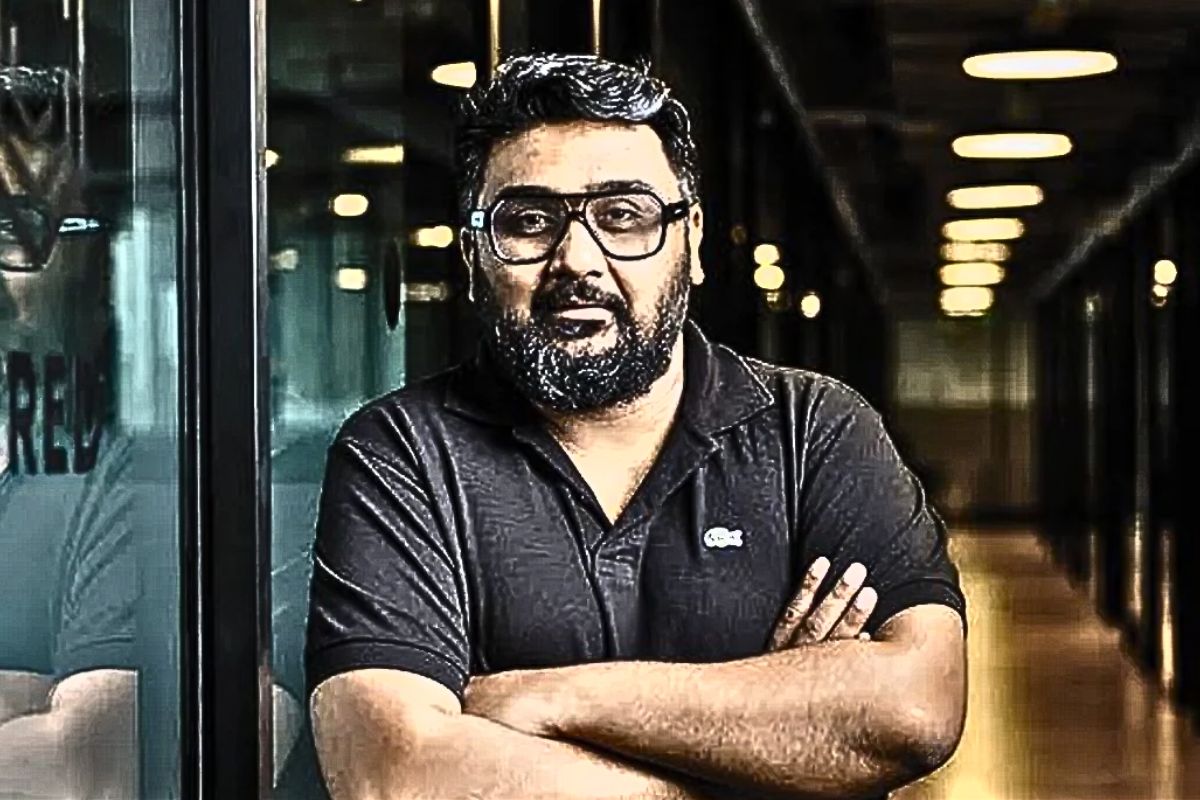
On June 22, 2026, Mark Zuckerberg did something Meta that Indians are proud of. The company announced a $900 million investment in CRED, the Bengaluru-based fintech built by Kunal Shah, valuing it at $4.5 billion. In the same breath, Shah was handed the keys to WhatsApp itself, not as a partner, not as an advisor, but as its next global CEO, replacing Will Cathcart after 7 years at the helm. Miten Sampat, CRED’s head of strategy since 2020, stepped up to run the company Shah is leaving behind.
Dress it up however the press release wants to. Strip away the philosophical Zuckerberg quote about “builder mentality” and “global perspective.” What actually happened here was way more than what media could tell (or hide), depending on which country’s media is reporting!
Meta spent 6 years and, by some industry estimates, more than $6.6 billion trying to win India’s payments market on its own terms, was unsuccessful comprehensively, and has now resorted to renting a winning hand from the one Indian founder who built something it couldn’t.
That is not a strategic masterstroke. That is surrender dressed as acquisition. And it is the most important and pride fintech story of 2026, because it tells you exactly where the global personal finance industry is heading; not just toward apps, but toward data, and not toward payments rails, but toward the messy, intimate, embedded layer of someone’s financial life that sits underneath every transaction they make.
This is an editorial, so let me say plainly what I think: Meta didn’t want CRED. Meta wanted what CRED has, and Meta is willing to spend $900 million and hand over the CEO chair of its most important app outside the United States to get it. The asset in question is not a payments app.
It is behavioural financial data on 17 million of India’s wealthiest, most creditworthy consumers, and the unshakeable conviction, finally arrived at after half a decade of expensive failure, that the future of finance isn’t going to be won by building rails. It’s going to be won by embedding finance so deeply into daily digital life that the consumer never has to choose a financial app again, because the financial app chose them first.
How Meta Tried to Buy India’s Payments Market and Lost
To understand why Meta needed CRED, you have to understand how badly WhatsApp Pay failed. WhatsApp began testing payments in India back in 2018, when the app already had 400 million users in the country and local fintech incumbents genuinely feared disruption. The fear was rational. No company on earth had WhatsApp’s distribution in India. If WhatsApp turned on payments at scale, the thinking went, it could simply absorb the market the way it had absorbed messaging.
It didn’t happen, and the reason it didn’t happen is a story in two parts: regulation, and then, much more damningly, indifference. India’s regulators, wary of a single foreign-owned messaging app dominating the country’s payments infrastructure, capped WhatsApp Pay at one million users almost as soon as it launched, and kept that cap in place, which was gradually loosened, but never removed, for nearly six years, until December 2024. That’s not a rounding error in a fast-moving market; that’s an eternity.
By the time WhatsApp could legally compete for India’s payments users at scale, Google Pay and Walmart-owned PhonePe had already built the two things that actually matter in financial services: habit and trust. Together, they came to control nearly 80% of UPI transaction volume in India’s $3 trillion digital payments market. WhatsApp, despite its 500 million Indian users, became the ninth-largest UPI app in the country by May 2026. Ninth. Behind apps most Indians outside the metros have never heard of.
Here is the part that should genuinely embarrass Meta’s leadership, and the part the regulatory excuse conveniently obscures. Even after the cap was fully lifted in December 2024, WhatsApp did almost nothing with its freedom. Between December 2024 and May 2025, WhatsApp Pay added just over 12 million transactions. In the same window, Google Pay’s transaction volume rose by nearly 700 million, and PhonePe’s by roughly 500 million. This isn’t a company that was held back by regulation and then sprinted once released. This is a company that, once released, jogged at best.
Deepak Abbot, the former Paytm product executive who now runs gold-loan app Indiagold, put it about as bluntly as an industry insider ever puts anything on record: even after the user cap disappeared, WhatsApp made no meaningful product changes — no redesigned interface, no cashback strategy, no merchant outreach campaign, nothing that signaled the company actually wanted to win. It read, in his words, like a team that had lost interest.
Analysts elsewhere echoed the same diagnosis from different angles: WhatsApp lacked the basic feature depth of clean transaction tracking, visible rewards, merchant integration, that rivals had spent years building. And crucially, brand perception worked against it: people don’t instinctively trust a messaging app with their money, no matter how many billion users it has, because trust in financial services is earned through repeated, deliberate interaction with money-specific product design, not borrowed from an adjacent product’s popularity.
Meta’s only real financial bet on India outside WhatsApp Pay itself was its $5.7 billion investment in Reliance Jio in 2022, structured partly to power a WhatsApp-based ordering system for Reliance’s JioMart grocery arm. That bet, too, underdelivered — Reliance Retail’s broader e-commerce ambitions stumbled, and the WhatsApp-Jio payments tie-up never became the commerce engine either company needed it to be.
Outside India, the picture is, if anything, even thinner. WhatsApp Pay exists in a meaningfully limited form only in Brazil, with a more restricted business-only version in Singapore. Plans floated back in 2019 to launch in Mexico and Indonesia have, by 2026, simply never materialized. A company sitting on more than 3 billion global WhatsApp users has built a payments business that works at scale in essentially one country, partially.
We wouldn’t say this wasn’t a failure of capability. Meta has more engineers, more capital, and more distribution than nearly any company in financial technology history. This was a failure of conviction, dressed up afterward as a regulatory excuse. Ankur Bisen of Technopak Advisors said it best, and I think he’s simply correct: the technology — QR codes, clean UI, merchant onboarding — was never the hard part for a company like WhatsApp.
“Whether WhatsApp will want to do it or not, that’s a key question,” he said, and by 2024, the answer to that question had become obvious to everyone except, apparently, Meta’s own leadership. You don’t win a trust-based, habit-based market by treating your payments feature as a checkbox bolted onto a messaging app. You win it by obsessing over it the way PhonePe and Google Pay did for half a decade while WhatsApp was capped, distracted, and underinvested.
Why CRED, and Why Now
So if WhatsApp Pay was Meta’s unsuccessful attempt to win payments organically, the CRED deal is Meta’s admission that organic growth in Indian fintech is no longer available to it, and its decision to buy its way into the one segment of the market that actually matters for what Meta’s business model needs next.
Meta does not actually care about UPI transaction volume. Meta’s core business generated roughly $196 billion in advertising revenue in 2025, about 98% of its total revenue. Payments processing fees are a rounding error to a company built on advertising margins. What Meta actually needs is not a bigger slice of India’s $3 trillion payments pie. It needs financial-behaviour data rich enough to make its $196-billion advertising engine smarter, and it needs a transaction layer embedded close enough to its commerce ambitions on Instagram and WhatsApp that it stops bleeding margin to third parties every time a sale it generated gets paid for somewhere else.
Right now, a brand advertises on Instagram, a consumer clicks through, and a third-party payment processor handles the transaction on the merchant’s site. Meta captures the advertising margin but misses out on the transaction margin; however, contrary to popular belief, Meta does not simply throw away the data exhaust generated by that transaction. Through tools like the Conversions API, Meta aggressively recaptures purchase signals to fuel its AI-driven personalization, which is the entire competitive battlefield for advertising platforms. This data feedback loop ensures that even when a third party handles the checkout, Meta retains the vital information needed to optimize its ad targeting and maintain its dominant market position.
CRED fixes exactly this, and it fixes it with a user base that should make every performance-marketing executive at Meta salivate. CRED doesn’t want everyone, and that’s the entire design philosophy. You need a credit score above 750 to even join. As of FY25, the platform had roughly millions of transacting users who collectively pushed ₹8.5 lakh crore (roughly $100 billion) in payment value through the platform in a single year.
Average revenue per user sits around ₹2,000 annually, and CRED members process roughly 3X the rupee volume of a typical UPI app like BHIM despite comparable user counts, because CRED’s design deliberately filters for people paying rent, EMIs, insurance premiums, and large merchant bills, not splitting a ₹150 lunch bill with a coworker. Around 45% of CRED’s active members already use three or more of its products, like rewards, lending through CRED Cash, payments, wealth, and increasingly insurance and rent payments.

That cross-product engagement number is, in my opinion, the single most underappreciated figure in this entire deal. Multi-product usage is the tell that a platform has moved beyond being a utility and become infrastructure for someone’s financial life.
Whatever else this deal is, it is not Meta overpaying out of desperation. It’s Meta buying a strategic stake in financial-behaviour data at a price lower than CRED commanded during the pandemic funding boom.
And then there’s Kunal Shah himself, which is the part of this story that, frankly, nobody fully explains, and we think deserves a more skeptical read than the breathless “Indian founder conquers Silicon Valley” framing it’s gotten. Meta didn’t just buy data access. It hired away the one person in India who has spent eight years building precisely the kind of premium, trust-based, multi-product financial habit that WhatsApp Pay never managed to create.
Chris Cox, Meta’s Chief Product Officer, called Shah “one of India’s most respected entrepreneurs” in an internal note to staff, and framed the leadership change as a search for someone with “an intuitive grasp” of WhatsApp’s global product opportunity.
The Embedded Finance Thesis, and Why It’s Eating the Old Fintech Playbook
Here is where we want to make the argument that this article is actually about, because the Meta-CRED deal is not really a story about one company buying a stake in another. It’s a leading indicator of how the entire personal finance industry is being restructured, and the restructuring has a name: embedded finance.
The old fintech playbook, the one PhonePe, Google Pay, Paytm, and even early CRED all followed, was about building a destination. You convinced a consumer to download an app, open it specifically when they needed to pay something, and trust that app enough to link a bank account to it. Distribution was the moat. Whoever got the most installs, the most UPI handles registered, the most QR codes on the most chai stalls, won.
Embedded finance inverts this completely. It’s invisible financial infrastructure sitting inside whatever app the consumer is already spending their attention on, whether that’s a messaging app, a social feed, an e-commerce checkout, or a ride-hailing flow. The consumer doesn’t choose to “go do finance.” Finance simply happens, embedded inside something else they were already doing. CRED, ironically, started as the opposite of this model — a destination app, just a very exclusive one. But what Meta is looking for isn’t CRED-the-destination. It’s. perhaps, CRED-the-infrastructure.
This is, in our opinion, the actual reason embedded finance is going to define the next decade of personal finance more than any new payments rail, blockchain experiment, or neobank launch will. Payments rails are now a commodity — UPI itself proved that, by making instant, free, interoperable payments a public utility rather than a competitive advantage any single company can own.
What’s not commoditized, and what every company in this story is actually fighting over, is the data layer sitting on top of those rails: who is creditworthy, who is about to need a loan, who is paying rent on time, who upgrades their insurance every renewal cycle, who is a safe bet for a premium credit product versus who is one missed EMI away from default. That data, generated transaction by transaction, is the actual product now. The app is just the collection mechanism.
And once you see it this way, the Meta-CRED deal stops looking like a fintech investment and starts looking like exactly what Meta’s other major moves have always been: a data acquisition, wrapped in product language, justified by a vague commerce narrative, and timed to a moment when the company has run out of organic options. Meta did this with WhatsApp itself in 2014, when it bought a messaging app, not for messaging revenue, but for the attention and eventual data graph that 450 million users represented. It is doing the same thing here, at a smaller scale, with financial behaviour data instead of message metadata.
The Part Everyone Else Is Underplaying: CRED’s Own Numbers Tell a More Complicated Story
We want to push back, briefly, on the implicit narrative in most of the coverage of this deal, that CRED was simply a prize Meta won. CRED’s own FY25 financials, even on the rosier figures the company has put forward around this announcement, show a company that needed this deal nearly as much as Meta wanted it.
CRED’s operating revenue for FY25 came in at roughly ₹2,735 crore, up 16% year-on-year, solid, but a meaningful deceleration from the breakneck growth rates of its earlier years, when revenue was compounding at well over 80% annually. Operating losses, on the narrower operating basis the company has emphasized, fell to roughly ₹298 crore, down 51% year-on-year — genuinely impressive, and it’s worth being precise that this operating-loss figure is a narrower, more flattering measure than the full net loss figure of roughly ₹1,460 crore that shows up in CRED’s regulatory filings for the same year, once non-operating costs, ESOP charges, and other below-the-line items are included.
Both numbers are real; they’re just measuring different things, and the gap between them — a ₹298 crore operating loss against a ₹1,460 crore net loss — tells you that CRED’s core transaction-and-lending business is improving faster than its overall cost structure, which still carries a heavy non-operating burden.
CRED has raised roughly $1 billion across its lifetime from investors including Tiger Global, DST Global, Peak XV Partners, and Ribbit Capital, and its valuation history is its own cautionary tale about how quickly fintech enthusiasm can evaporate: a $6.4 billion peak during its 2022 Series F, a marked-down $3.5 billion valuation by 2025, and now a $4.5 billion post-money valuation in this Meta-led round — a genuine recovery, but one still meaningfully below the pandemic-era high.
CRED was not in a position of pure strength walking into this deal. It was a company with improving unit economics but a still-substantial net loss, a valuation that had been cut nearly in half from its peak before recovering partway, and a founder whose own public comments around the deal — about CRED achieving its first profitable quarter, about revenue scaling to roughly $325 million annualized — read like a carefully timed highlight reel released at precisely the moment that maximizes the narrative leverage of an exit.
Conclusion: A Trillion-Dollar Confession
Strip away the Zuckerberg quote, the Chris Cox internal memo, the $4.5 billion valuation headline, and the genuinely compelling story of an Indian founder being handed the keys to one of the world’s largest messaging platforms. What’s left is a simple, almost embarrassing admission from one of the most resourced technology companies on the planet: we tried to win India’s payments market by building it ourselves, for six years, with billions of dollars, and we lost so completely that our best option was to buy the company that beat us and put its founder in charge of the very product that failed.
CRED had spent 8 years building exactly that, the hard way, one creditworthy member at a time. Meta, for all its scale, discovered there was no shortcut to building it — only a price to pay for buying it. $900 million, a 20% stake, and the CEO chair of WhatsApp turned out to be that price. Whether it was a bargain or a desperate ransom depends entirely on whether embedded finance turns out to be the future of personal finance, or merely this decade’s most expensive way of admitting you couldn’t win the old one.