Myanmar’s Drug Crisis Is Becoming India’s National Security Challenge
Myanmar's expanding drug economy is no longer just a regional concern - it is rapidly becoming an Indian security challenge. As opium cultivation and synthetic drug production surge across the border, India's northeastern states have emerged as the frontline in an increasingly sophisticated narcotics network that extends far beyond law enforcement.

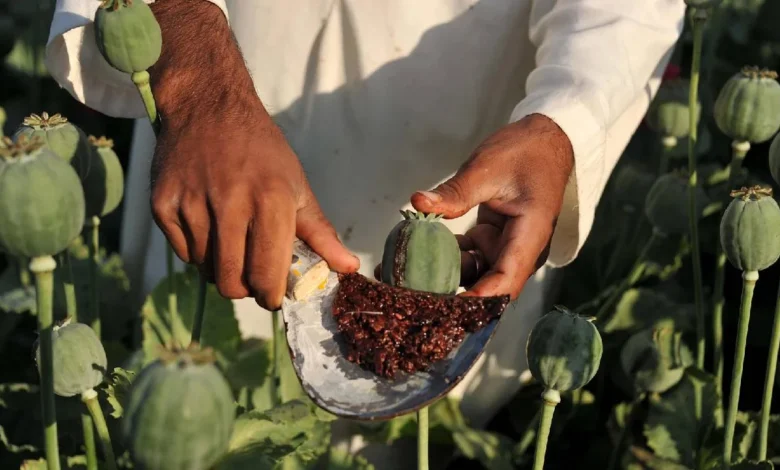
Myanmar has rapidly emerged as the world’s most active narcotics hub, filling the global supply vacuum with both opium and synthetic drugs. For years, India’s anti-narcotics strategy has largely focused on its western frontier, where heroin originating from Afghanistan dominated the security discourse. But a significant shift is underway. As Afghanistan’s opium production has collapsed following the Taliban’s ban, Myanmar has rapidly emerged as the world’s most active narcotics nucleus.
For India, this is no longer a distant regional development. With a long, porous border and an increasingly sophisticated trafficking network operating through the Northeast, Myanmar’s growing drug economy is steadily evolving into a national security challenge that extends far beyond law enforcement.
Why Myanmar Has Become The World’s New Drug Capital
Afghanistan remained the epicentre of illicit opium production, supplying a substantial share of the world’s heroin. However, the Taliban’s 2022 ban on poppy cultivation dramatically altered that equation, reducing Afghan opium production by nearly 93 per cent from its peak. While this was widely viewed as a major breakthrough in the global fight against narcotics, it did not reduce global demand. Instead, it created a lucrative supply gap – one that Myanmar has been quick to fill.
According to the Narcotics Control Bureau’s (NCB) 2025 report, Myanmar’s illicit opium cultivation expanded by more than 50 per cent between 2020 and 2024, with the area under cultivation reaching nearly 45,200 hectares. The United Nations Office on Drugs and Crime (UNODC) estimates that the country produced close to 995 tonnes of opium in 2024, making it the single most important alternative source for global narcotics following Afghanistan’s decline. Far from witnessing a contraction in the drug trade, the world is instead seeing its centre of gravity shift eastwards.
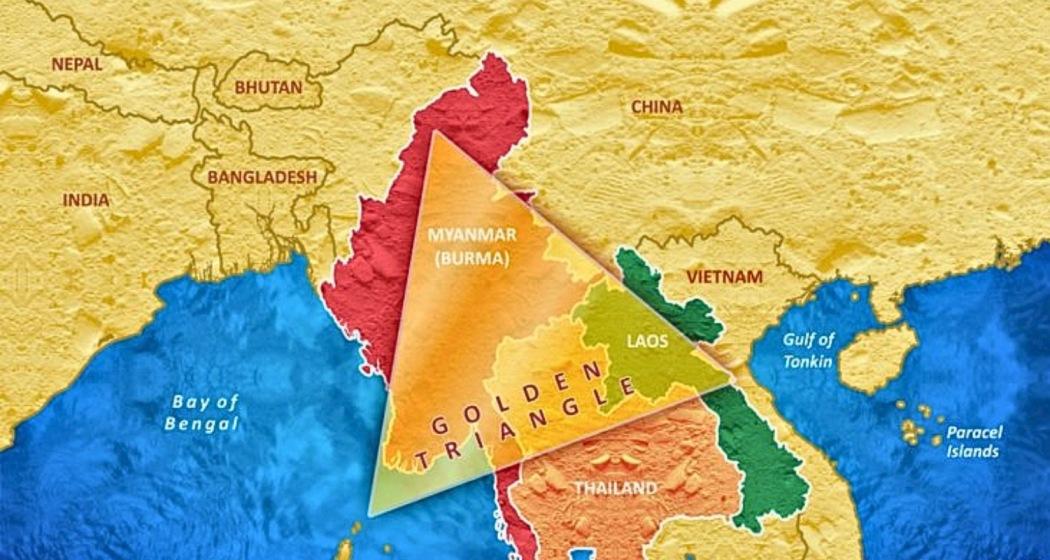
Yet opium tells only part of the story. Myanmar has also established itself as the world’s largest producer of methamphetamine, particularly within the notorious Golden Triangle that spans Myanmar, Laos and Thailand.
Unlike opium, which depends on seasonal cultivation and suitable terrain, methamphetamine can be manufactured year-round inside clandestine laboratories using precursor chemicals. The lower production costs, higher profit margins and relative ease of transportation have made synthetic drugs an increasingly attractive business for organised crime syndicates operating across Southeast Asia.
Much of this expansion has been fuelled by Myanmar’s prolonged political instability. Since the military coup in 2021, large parts of the country have witnessed sustained conflict between the junta and various ethnic armed organisations. Weak governance, shrinking economic opportunities and limited state control have allowed illicit economies to flourish, with drug production becoming an important source of revenue in conflict-affected regions such as Shan and Kachin States.
For many communities struggling with poverty and instability, poppy cultivation has become one of the few viable means of livelihood, while armed groups and criminal networks continue to exploit the chaos to expand production and trafficking.
This changing structure has significant implications for India. The NCB notes that it would be “analytically imprudent” to interpret Afghanistan’s declining production as a reduced threat. Instead, trafficking networks have adapted by diversifying both their routes and products.
As the Golden Triangle regains prominence, Myanmar has emerged not merely as another source of narcotics but as the principal driver of a new phase in regional drug trafficking – one that is increasingly centred on India’s eastern frontier rather than its western border.
How India’s Northeast Became The Frontline
Myanmar’s growing drug economy would have remained a regional concern had it not shared a long and difficult border with India. Stretching over 1,643 kilometres across Arunachal Pradesh, Nagaland, Manipur and Mizoram, the India-Myanmar border cuts through dense forests, rugged mountains and remote tribal settlements. Much of this terrain remains unfenced, making surveillance and enforcement an enormous challenge. For decades, traffickers have exploited these geographical realities, but the scale of the threat has expanded considerably in recent years.
Compounding the challenge was the erstwhile Free Movement Regime (FMR), introduced to facilitate the movement of communities with longstanding ethnic and familial ties across both sides of the border. While the arrangement served important social and cultural objectives, security agencies have repeatedly argued that criminal syndicates and insurgent groups took advantage of these relatively relaxed border norms to move narcotics, arms and contraband with greater ease. Combined with difficult terrain and limited state presence in several stretches, the border has increasingly become a preferred corridor for transnational criminal networks.
The consequences are now visible across India’s northeastern states. The NCB notes that Manipur, Mizoram and Nagaland have transitioned from being peripheral transit points to active staging grounds for the distribution of narcotics into the Indian hinterland.
Rather than merely passing through these states, trafficking networks have established storage facilities, logistical routes and local distribution channels, allowing narcotics to move deeper into the country with greater efficiency. This marks a significant evolution in the way drug syndicates operate along India’s eastern frontier.
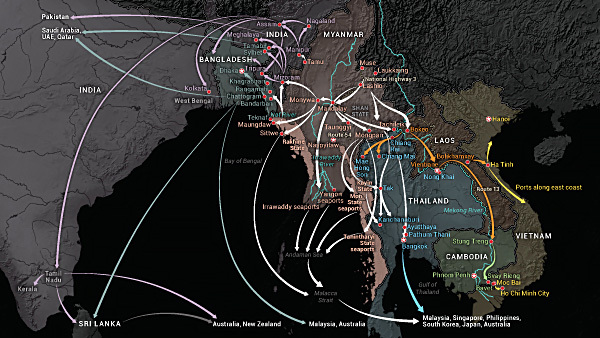
Among these states, Mizoram has emerged as one of the most vulnerable entry points because of its proximity to Myanmar’s Chin State. A major trafficking corridor passes through Champhai before moving towards Aizawl and Silchar in Assam’s Barak Valley. From there, consignments are transported through Meghalaya to Guwahati, which serves as an important distribution hub for shipments heading to different parts of mainland India.
Similar routes originating from Manipur continue to feed illegal drug markets across the region, spotlighting the increasingly organised nature of these trafficking networks.
The impact extends well beyond border security. Drug trafficking has become deeply intertwined with insurgency, organised crime and illegal financial networks operating across the Northeast.
Militant groups have long been accused of facilitating or taxing narcotics shipments to generate revenue, while trafficking syndicates exploit longstanding ethnic linkages, informal trade routes and weak governance in remote areas. This convergence of organised crime and armed violence has transformed the region into one of India’s most sensitive internal security theatres, where narcotics are no longer simply a policing issue but part of a broader geopolitical challenge.

The Routes Fueling India’s Drug Pipeline
The trafficking of narcotics from Myanmar into India is neither random nor opportunistic. Over the years, criminal syndicates have developed well-established routes that exploit difficult terrain, porous borders and existing transport networks to move drugs deep into the country.
Investigations have also revealed a two-way supply chain, where precursor chemicals are smuggled from India into Myanmar, processed in clandestine laboratories and trafficked back as finished narcotics.
Meanwhile, trafficking syndicates continue to refine their methods, using women and children as couriers, concealing drugs in everyday objects such as toys, luggage and fake medical casts, and exploiting commercial transport networks to evade detection.
The NCB also warns that while the eastern frontier has emerged as India’s fastest-growing narcotics corridor, the western border remains vulnerable, with traffickers adapting to Afghanistan’s declining opium production by shifting towards synthetic drugs and increasingly employing technologies such as drones for cross-border deliveries. Together, these developments point to a trafficking ecosystem that is becoming more diversified, technologically enabled and considerably harder to disrupt.
The Statistics
The scale of the challenge is perhaps best reflected in the seizure data. According to the NCB’s 2025 report, India recorded an all-time high of more than 1.48 lakh cases under the Narcotic Drugs and Psychotropic Substances (NDPS) Act during the year. Enforcement agencies seized over 1,200 tonnes of narcotic drugs and psychotropic substances, ranging from traditional plant-based narcotics to synthetic drugs, pharmaceutical diversions and precursor chemicals.
The figures indicate not only the magnitude of trafficking but also the increasingly diverse nature of the illicit drug market confronting Indian authorities.
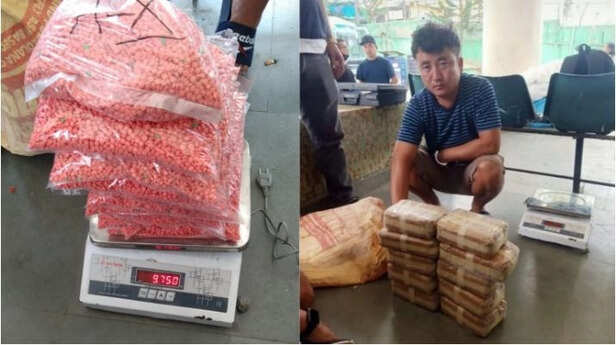
One of the most striking trends has been the sharp rise in Amphetamine-Type Stimulants (ATS), particularly methamphetamine. The NCB notes that ATS seizures increased by nearly 140 per cent between 2020 and 2025, culminating in a record 8.2 tonnes seized in 2024.
This surge closely mirrors Myanmar’s expanding production capacity, reinforcing concerns that India’s eastern frontier has become the principal gateway for synthetic drugs entering the country. Unlike heroin, which has historically dominated trafficking routes, methamphetamine has emerged as the drug of choice for organised crime networks because of its lower production costs, higher profitability and ease of concealment.
The Northeast accounts for a significant share of these seizures. Mizoram alone recorded the seizure of 1,477 kilograms of ATS, representing around 42 per cent of the country’s total ATS seizures. Manipur also reported substantial recoveries, while Assam has witnessed a sustained increase in operations under its “War on Drugs” campaign, leading to the confiscation of narcotics worth thousands of crores over the past few years.
Several large consignments of heroin, yaba tablets and opium have also been intercepted across Tripura and Nagaland, underscoring how the entire northeastern corridor has become vulnerable to the expanding narcotics trade.
The challenge, however, is not confined to land borders. In November 2024, the Indian Coast Guard intercepted a Myanmar-flagged fishing vessel near the Andaman and Nicobar Islands carrying nearly 6,000 kilograms of methamphetamine valued at around ₹36,000 crore. The seizure demonstrated that traffickers are increasingly exploring maritime routes to supplement traditional land corridors, thereby expanding the geographic scope of India’s anti-narcotics operations.
Law enforcement agencies have also intensified efforts to dismantle domestic manufacturing infrastructure. During 2025, the NCB busted 30 clandestine laboratories involved in producing methamphetamine and mephedrone – a figure that exceeded the total number of laboratories dismantled over the previous three years combined.
According to NCB Director General Anurag Garg, the growing diversity of seizures – from synthetic narcotics and pharmaceutical drugs to precursor chemicals – reflects an evolving security challenge that demands a far more integrated enforcement strategy than ever before.
Traffickers Are Adapting Faster Than Enforcement
The challenge confronting India today is not merely the volume of narcotics entering the country, but the rapid evolution of the trafficking ecosystem itself. Traditional smuggling routes are now being complemented by digital platforms, encrypted communication, innovative concealment techniques and sophisticated financial networks. Drug syndicates are becoming increasingly agile, making enforcement far more complex than intercepting consignments at the border.
One of the most significant shifts has been the growing use of encrypted messaging applications. According to the NCB, platforms such as Telegram, WhatsApp and Signal have emerged as important channels for advertising, coordinating and distributing narcotics.
Unlike darknet marketplaces that require specialised knowledge to access, these applications are widely available on smartphones, enabling traffickers to reach larger customer bases while maintaining a degree of anonymity.
Public channels on Telegram, for instance, have reportedly been used to display product catalogues, pricing and delivery mechanisms, reducing the barriers to entry for both suppliers and buyers.
The methods employed to transport drugs have also become more sophisticated. Investigators in Assam have uncovered instances where traffickers used women and children as couriers, banking on the assumption that they would attract less scrutiny during security checks.
Narcotics have been concealed inside toys, luggage, fake medical casts and other everyday objects, making detection considerably more difficult. Such tactics reflect a deliberate attempt by organised crime networks to exploit humanitarian sensitivities and routine passenger movement across the region.
At the same time, traffickers are diversifying both their products and their logistics. The NCB has reported the growing prevalence of hydroponic cannabis, mephedrone and other synthetic drugs, alongside the increasing use of cryptocurrencies and darknet marketplaces to facilitate financial transactions. On the western frontier, drone technology has emerged as another preferred method for delivering narcotics across the India-Pakistan border, illustrating how trafficking networks are increasingly leveraging modern technology to minimise risks while maximising profits.
Perhaps the most worrying trend is the emergence of domestic manufacturing capabilities. The dismantling of 30 clandestine methamphetamine and mephedrone laboratories in 2025 suggests that India is no longer merely a transit or destination country.
Criminal syndicates are attempting to establish production facilities within the country itself, supported by the smuggling of precursor chemicals and access to increasingly sophisticated manufacturing techniques. This blurs the distinction between external and internal threats, requiring law enforcement agencies to simultaneously strengthen border security, cyber surveillance, financial intelligence and domestic policing.

Beyond Narcotics, A Growing National Security Challenge
The implications of Myanmar’s expanding drug economy extend far beyond public health or criminal law.
Increasingly, narcotics trafficking is intersecting with insurgency, organised crime, arms smuggling, money laundering and illegal migration, creating a complex security challenge along India’s eastern frontier. Hence, what was once viewed primarily as a law enforcement issue is now acquiring the characteristics of a broader national security concern.
Several insurgent groups operating in India’s Northeast have long been accused of exploiting cross-border smuggling networks to sustain their activities. Organisations such as the National Socialist Council of Nagaland (NSCN), the United Liberation Front of Assam (ULFA) and other armed groups have reportedly used the same routes that facilitate narcotics trafficking to move personnel, weapons and illicit funds across the India-Myanmar border.
In many cases, drug trafficking serves not only as a source of revenue but also as a mechanism to strengthen transnational criminal alliances that thrive in regions with weak governance and difficult terrain.
Myanmar’s prolonged political instability has further complicated the situation. Since the military coup in 2021, the junta has been locked in conflict with several ethnic armed organisations, leaving large swathes of territory beyond effective state control. These ungoverned spaces have become fertile ground for drug production, illegal mining, arms trafficking and cyber-enabled crimes. Criminal syndicates have capitalised on the vacuum, operating with greater freedom while expanding their regional networks. The result is an increasingly interconnected ecosystem where narcotics, weapons, financial crimes and insurgency reinforce one another.
The financial dimension of the problem is equally significant. Revenues generated through narcotics trafficking are often channelled through money laundering networks and increasingly routed via cryptocurrencies and informal financial systems, making them harder to trace. These funds not only sustain organised criminal enterprises but can also finance activities that undermine regional stability. This convergence of illicit finance and cross-border crime presents fresh challenges for intelligence agencies, financial regulators and law enforcement authorities alike.
Recognising these evolving risks, Indian agencies have increasingly framed drug trafficking as a matter of national security rather than simply crime control. The objective is no longer limited to intercepting narcotics shipments but also to dismantle the broader ecosystem that enables them – from clandestine laboratories and financial networks to cross-border logistics and organised criminal syndicates.
As Myanmar’s internal conflict continues with no immediate resolution in sight, India’s eastern frontier is likely to remain under sustained pressure, demanding a coordinated response that integrates border management, intelligence sharing, financial surveillance and regional diplomacy.
The Last Bit,
India has significantly strengthened its anti-narcotics framework over the past few years, with record seizures, the dismantling of clandestine laboratories and greater coordination among central and state agencies. The government’s “whole-of-government” approach has brought together organisations such as the Narcotics Control Bureau (NCB), Assam Rifles, state police forces, the Directorate of Revenue Intelligence (DRI), Coast Guard and other enforcement agencies to target trafficking networks across land and maritime borders. Yet, the evolving nature of the threat suggests that enforcement alone will not be enough.
Securing the India-Myanmar border remains one of the most immediate priorities. The challenging terrain, long stretches of unfenced border and limited infrastructure continue to constrain surveillance despite increased deployment of security forces. While the government’s decision to review and tighten the Free Movement Regime reflects growing security concerns, effective border management will also require better technology, including drones, satellite surveillance, integrated check posts and real-time intelligence sharing among agencies operating in the region.
Equally important is closer regional cooperation. Drug trafficking is inherently transnational, and disrupting supply chains will require sustained engagement with Myanmar despite its ongoing political instability. Intelligence-sharing mechanisms, coordinated border operations and cooperation on precursor chemical monitoring will be essential to curb the flow of narcotics. At the same time, engaging with neighbouring countries affected by the Golden Triangle’s drug economy could help build a broader regional response against organised crime networks operating across Southeast Asia.
Domestically, the focus must extend beyond seizures to dismantling the financial and technological infrastructure that sustains the drug trade. This includes tracking cryptocurrency transactions, strengthening cyber capabilities to monitor encrypted communication platforms, identifying money laundering channels and targeting the criminal syndicates that finance and coordinate trafficking operations.
Simultaneously, greater investment in de-addiction programmes, community awareness and rehabilitation will remain critical in reducing domestic demand, ensuring that the fight against narcotics is not confined to policing alone.