The Vadapav Republic: How Central Railway Found Time To Fix Samosa Prices While 1.5 Lakh Safety Posts Lay Vacant
Standardised Chutney, Unstandardised Safety: The Governance Paradox at the Heart of Indian Railways

Somewhere in Mumbai’s Central Railway headquarters, a committee sat down, deliberated, circulated a file, and eventually produced a formally approved menu. The vadapav will now cost ₹20, up from ₹13. The samosa will cost ₹20, up from ₹12. The ragda patty moves from ₹20 to ₹25. The soda and juice, in a moment of bureaucratic grace, were spared.
The announcement was made with the quiet satisfaction of a job well done. And it had been done properly, mind you. There was a process. Western Railway had revised its station food prices in 2025, and before that in 2021. Central Railway followed the pattern. The revised menu will also introduce new items: dosa, noodles, soup, slush drinks, cream-filled donuts. The institution had spoken. The snack economy of Mumbai’s railway stations had been brought to order.
Meanwhile, as of March 2024, 1,52,734 safety category posts lay vacant across Indian Railways. That’s over 1.5 lakh positions, where loco pilots, station masters, signal maintainers, track inspectors, pointsmen; the precise human beings responsible for ensuring that two trains do not end up on the same track at the same time. Out of 70,093 sanctioned posts for loco pilots and assistant loco pilots specifically, 14,429 were unfilled as of the same date — a vacancy rate of nearly 14.7%, according to the Railway Ministry’s own RTI response.
The vadapav got a revised price. The vacant cockpit is still waiting for a pilot.

All These is Not a Snack Problem, Not a Railways Problem, But A Prioritisation Problem
The decision to revise food prices at railway stations is not, on its face, unreasonable. Inflation is real. The last Central Railway revision before this came several years ago. Vendors operating on thin margins at station stalls deserve the ability to charge prices that reflect their actual input costs of flour, oil, potatoes, fuel, all of which have risen meaningfully. There is nothing inherently absurd about adjusting a snack menu.
The absurdity lies elsewhere. It lies in the institutional energy, where the meetings, the files, the approvals, the committee deliberations, that this revision required and received, measured against the institutional inertia that surrounds problems of genuinely catastrophic scale. A bureaucracy that can move on a ₹7 samosa increase with procedural elegance, and yet cannot resolve a 1.5-lakh vacancy crisis in safety-critical roles, is not demonstrating efficiency. It is demonstrating what institutional science calls “activity substitution”, aka the tendency of organisations to expend effort on tractable, legible, manageable problems while the intractable, politically difficult, and structurally complex ones quietly worsen. And the structural problems at Indian Railways are as serious as they come.
The Numbers That Actually Matter
The Indian Railways’ operating ratio for FY23 stood at 98.22%. That number means the network spends approximately ₹98 for every ₹100 it earns. After accounting for all revenues, like passenger fares, freight charges, sundry income, the margin available for capital investment, safety expenditure, and debt servicing is wafer thin. The FY24 target was 98.45%, slightly worse. The trend has not been a story of dramatic improvement.
What does this mean in practice? It means Indian Railways is structurally dependent on freight revenue to cross-subsidise a loss-making passenger business. The CAG has flagged that spending on track maintenance fell from 15% of total revenue in 2022-23 to a projected 10% in more recent projections. Track maintenance. The literal physical substrate on which every train in this country travels.
The Kavach anti-collision system, India’s indigenously developed, genuinely promising collision prevention technology, had been deployed on approximately 1,465 route kilometres and 121 locomotives as of mid-2024. The total Indian Railway network spans over 68,000 route kilometres. At the pace of installation that existed as of that reporting, full network coverage would take years and years.
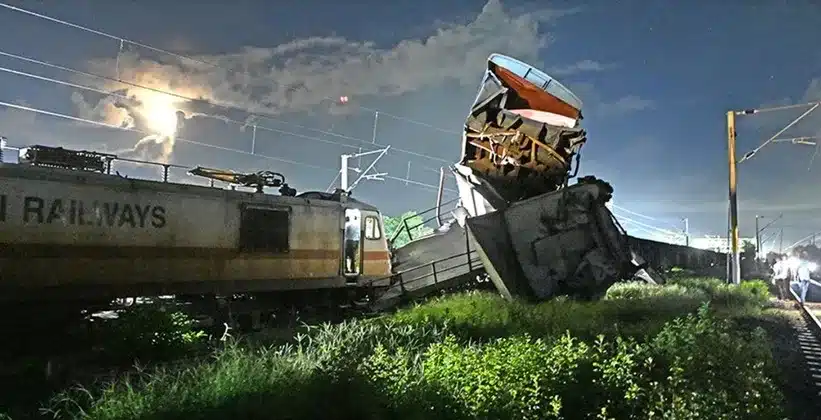
The Kanchanjunga Express accident of June 2024, in which 10 people died after a goods train rammed into a passenger express, produced an investigation finding so sobering it deserves to be quoted directly: the Commissioner of Railway Safety found that most of the loco pilots involved were lacked counselling regarding automatic signal failures. This created widespread confusion across multiple trains in the section, rather than isolated “ignorance.” This was not malicious, not reckless in the usual sense; but they were simply untrained for a situation they encountered with fatal consequences.
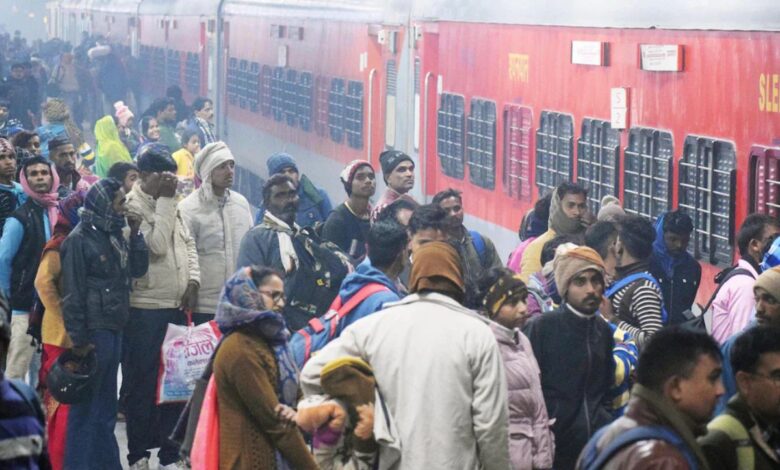
And the All India Loco Running Staff Association, the union representing the actual human beings driving trains has consistently raised alarm about duty hours. Their members are reportedly being forced to work more than 12 hours at a stretch to compensate for vacant posts. Fatigue in a loco pilot is not like fatigue in an office worker. It is a measurable safety risk on a network carrying over 13 million passengers daily. This is the backdrop against which the samosa price revision was announced, filed, approved, and implemented.
The Deeper Question: Why Does This Power Even Exist?
Here is the question that the vadapav episode raises, and that the railway administration will never quite answer publicly: why does a bureaucratic apparatus need to be involved in standardising the price of chutney bhel at a street food counter?
The argument for centralised pricing at railway stations is not without merit in theory. Station vendors operate on licensed premises, in a captive market where passengers have limited alternatives. Without price caps, the samosa vendor at CSMT could theoretically charge ₹80 because the next train is in four minutes and you’re hungry. Price standardisation protects passengers from price gouging in a captive environment. That argument holds. The problem is what surrounds it.
When a public body exercises price-setting authority over station snacks, it occupies bandwidth, which is institutional, administrative, and political, that could theoretically be directed elsewhere. Every committee that convenes to discuss the pav price is a committee that is not convening to discuss, say, the pace of Kavach deployment, or the root cause of track maintenance underspending, or the structural redesign of subvention arrangements that allow freight to indefinitely cross-subsidise passenger services.
This is not a conspiracy theory about corrupt intent. It is a straightforward observation about institutional attention. Organisations, like individuals, have limited time and political capital. The things that get addressed are, by definition, things that someone decided were worth addressing. The things that don’t get addressed exist in a queue that nobody controls in any disciplined way.
The price of a samosa is addressable: it has a number, a process, a precedent, a definable outcome, and a press release at the end. The operating ratio crisis is not addressable this week. The vacancy problem is entangled with the Railway Recruitment Board’s processes, court challenges, budget allocations, and political decisions about permanent versus contractual staffing. Kavach deployment involves procurement, tendering, land rights, and a multi-year implementation timeline. So the samosa gets a file. And the file gets cleared (pun intended)!
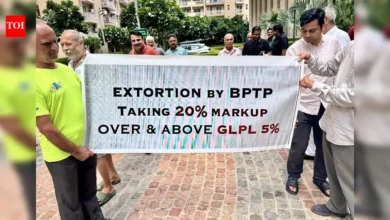
In fairness, the price revision story has a dimension that received less coverage than the headline numbers. A representative of the catering association at Central Railway raised a concern that went beyond the price hike itself. He alleged that both Western Railway earlier and Central Railway now have imposed restrictions on the sale of affordable local loose food products, chana, peanuts, chikki, milkshakes, in favour of branded packaged products, which are often significantly more expensive and may not offer better quantity or quality.
If accurate, this allegation introduces a dimension that shifts the critique from bureaucratic inefficiency into something more pointed: a price revision that simultaneously raises floor prices and steers passengers toward pricier branded options is not primarily about vendor welfare or inflation adjustment. It begins to look like a market restructuring exercise — one that disadvantages the local informal vendor in favour of corporate food brands that can afford station licensing arrangements.
This is unverified at this stage, and deserves independent scrutiny. But it is the kind of detail that gets lost when the headline is “vadapav costs ₹7 more,” and it points to the need for civil society and the press to look beyond the menu price and ask who, structurally, benefits from how railway station food economies are reorganised.
Every institution has two identities: the one stated in its mission documents and the one revealed by what it actually does on an ordinary Tuesday.
Indian Railways’ mission statements speak of safety, modernisation, efficient service delivery, and financial sustainability. The food episode does not contradict those mission statements, as nobody is claiming that revising the price of samosa is antithetical to railway governance. The problem is more subtle and more systemic: it is that the samosa gets standardised while the operating ratio hovers near breakdown, vacancy rosters in safety roles remain filled with zeroes, and a train protection system designed to prevent collisions sits deployed on roughly 2% of the network.
The samosa is easy. The samosa has a process. The samosa has precedent. The samosa produces a tangible output, like a laminated price list, a press release, a sense of institutional completion. However, fixing the operating ratio requires structural decisions about passenger fare rationalisation that are politically toxic. Filling safety vacancies requires budget allocations, recruitment processes, and the courage to tell a workforce-reduction narrative to hold the line. Deploying Kavach at scale requires a decade-long capital programme and a leadership commitment that outlasts electoral cycles. So the file moves on the bhel. And the harder files stay in the pending tray.
None of this is an argument for abandoning price regulation at railway stations. Vendor livelihoods matter. Passenger exploitation matters. A clear, standardised menu is genuinely better than an opaque one where the price depends on how rushed you look.
The argument is about parallel urgency. A governance apparatus capable of moving quickly and decisively on a vadapav revision should, theoretically, be capable of moving quickly on problems of greater consequence; if the institutional will existed and the political cover was available. The question is why it does not, and what would need to change for it to.
The Railways has announced a recruitment push of 50,000 appointments in FY 2025-26, and a further 50,000 in FY 2026-27. That is movement, and it deserves acknowledgment. The Kavach programme is expanding. Safety expenditure has increased in absolute terms. These are not nothing. But the operating ratio is still 98.22%. The safety vacancies still number in the lakhs. The loco pilots are still working 20-hour shifts. And the committee just finished standardising the price of chutney bhel.
Priorities, as always, reveal themselves not in what you say you care about, but in which files get cleared on which mornings. The samosa file has been cleared. The safety file is still pending.