Is Zepto’s Zest Fading Down: What’s Going On In India’s Quick Commerce Poster Boy?
Is Zepto exploiting delivery partners, making regulatory lapses, failing hygiene standards, doing customer deception, and employing flawed monetization tactics—especially in light of its upcoming IPO ambitions. This is what recent financial figures including EBITDA burn, investor data, and regulatory actions tell. Should this not trigger public anger and disillusionment, as if voiced by an ordinary Indian user betrayed by the startup dream.

Half-a-decade ago, Zepto promised instant grocery delivery – not a rotten apple or rotten policies.
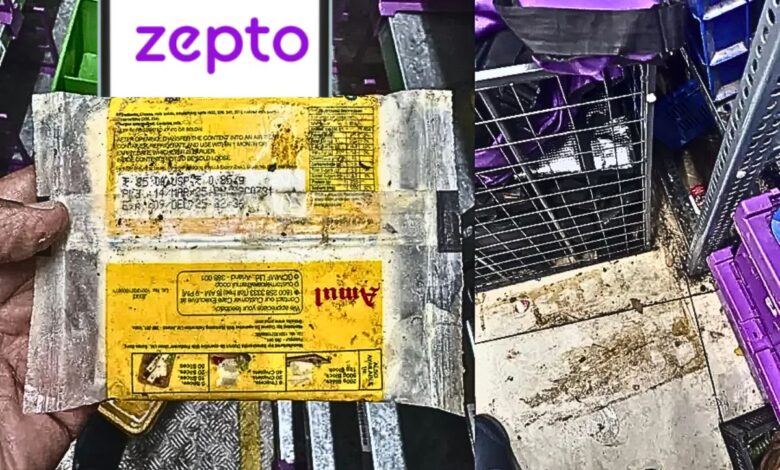
Today, frustrated customers and angry delivery partners are left picking up the pieces of a 10-minute promise gone horribly wrong. Reports show Zepto’s warehouses display signs of neglect: regulators found fungus-covered fruits and expired goods stored on wet, filthy floors. Riders speak of low pay, broken promises, and arbitrary account bans. And angry consumers on social media are screaming that their refund requests disappear into a void while Zepto quietly tacks on hidden fees and plays pricing tricks.
All the while, slick PR spin lauds Zepto as a high-flying unicorn, even as insiders whisper that it burned through huge funding ($1.3 billion raised) and hundreds of crores a month without hitting targets. From unsanitary warehouses to toxic work culture to staggering losses, Zepto’s rapid ascent has become a warning sign: how can we trust a startup that betrayed every promise?
Warehouses in Shambles: FDA Shuts Down Zepto’s Dark Stores
In late May 2025, Maharashtra’s food safety regulators finally pulled the plug on Zepto’s Mumbai dark store in Dharavi. An inspection turned up a food horror show: moldy and expired products everywhere. Official reports list “fungal growth on food items, expired products, and unhygienic storage conditions” as the chief offences.
Inspectors found food crates just feet from stagnant sewage and standing water, with some perishables even lying on wet, dirty floors. Fresh groceries were mixed in with spoiled stock of eggs, dairy, and vegetables long past their prime. One FDA assistant commissioner warned that the warehouse would stay sealed “until Zepto clears all violations and follows proper food safety rules”. It’s a damning scene for a company that built its brand on speed and supposed quality.
In Delhi too, journalistic investigations uncovered horrors at Zepto’s Mayur Vihar dark store. A Republic World ground report found groceries literally inches from open toilets, with riders confirming that spoiled milk and paneer regularly get slipped onto delivery shelves. One rider told reporters, “If a customer raises an issue, the product is marked for return, but their IDs get blocked without explanation”. In other words, workers are blamed if rotten goods ever reach customers, even when the rot likely began in the warehouse. Zepto’s own photos (leaked by the FDA) mirror this chaos: shelving piled haphazardly, cartons on wet floors, and fresh fruits (some already fuzzy with fungus) sitting alongside expired milk cartons.
Meanwhile, Zepto’s corporate response has been typical startup spin. Official statements claim Zepto is “committed to rectifying the lapses” and insists “food safety and hygiene is non-negotiable”. But any savvy customer can see that this PR polish is backpedaling at full speed. Regulator after regulator had to step in before Zepto would lift a finger. As one editorial put it, Zepto now faces a “trust crisis”, after “playing with public health, while passing the buck to those at the bottom of the chain”. How can any Indian consumer trust their groceries to a firm whose core operations are this mismanaged?
Is Zepto Exploiting the Workers As Riders Now Rise Up With Their Voices?
Behind every dashed customer promise is a delivery partner hustling to make a living. But Zepto’s treatment of its riders has sparked open revolt. In Hyderabad and other cities, delivery partners have struck indefinitely under the banner of the Telangana Gig Workers’ Union, demanding “fair pay, social security, reasonable working hours, and basic dignity at work”.
These aren’t idle complaints: one fiery protester explained how Zepto lured workers from villages with promises of ₹30,000 salaries, free food, and accommodation, then had the local vendor steal joining bonuses and cut take-home pay by up to 50%. Another rider described being yelled at daily, then abruptly shuffled out after a strike attempt. Reports confirm Zepto “permanently blocked the app IDs of several workers who participated in the strike or spoke to the media,” a move the union called “unlawful and fabricated” union-busting.
Zepto’s delivery partners paint a picture of scapegoating and intimidation. In May, one rider recounted that when customers complained of spoiled goods, Zepto’s response was not to fix the warehouse; it was to cut off the rider’s access. “Yes, complaints about spoiled milk or paneer happen, but if a customer raises an issue… their IDs get blocked without explanation”. During a recent protest, police even picked up several strikers and Zepto promptly canceled their contracts.
The union says Zepto then tried to bribe other riders with special bonuses to break the strike. This is the alleged reality behind Zepto’s 10-minute ticker: riders report long hours, last-minute shifts, and no support. An industry insider notes the underlying problem: “10 minute delivery has no economics”; meaning riders’ cut can never be enough. But while Zepto touts its speedy heroics, its workforce cries foul at forced underpayment and bullying management. None of this is how a worker-friendly company should behave. Indian consumers may think Zepto is only mismanaging groceries; but it’s clear the company has been mismanaging people as well.
Customers Up in Arms: Rotten Deliveries and Vanishing Refunds
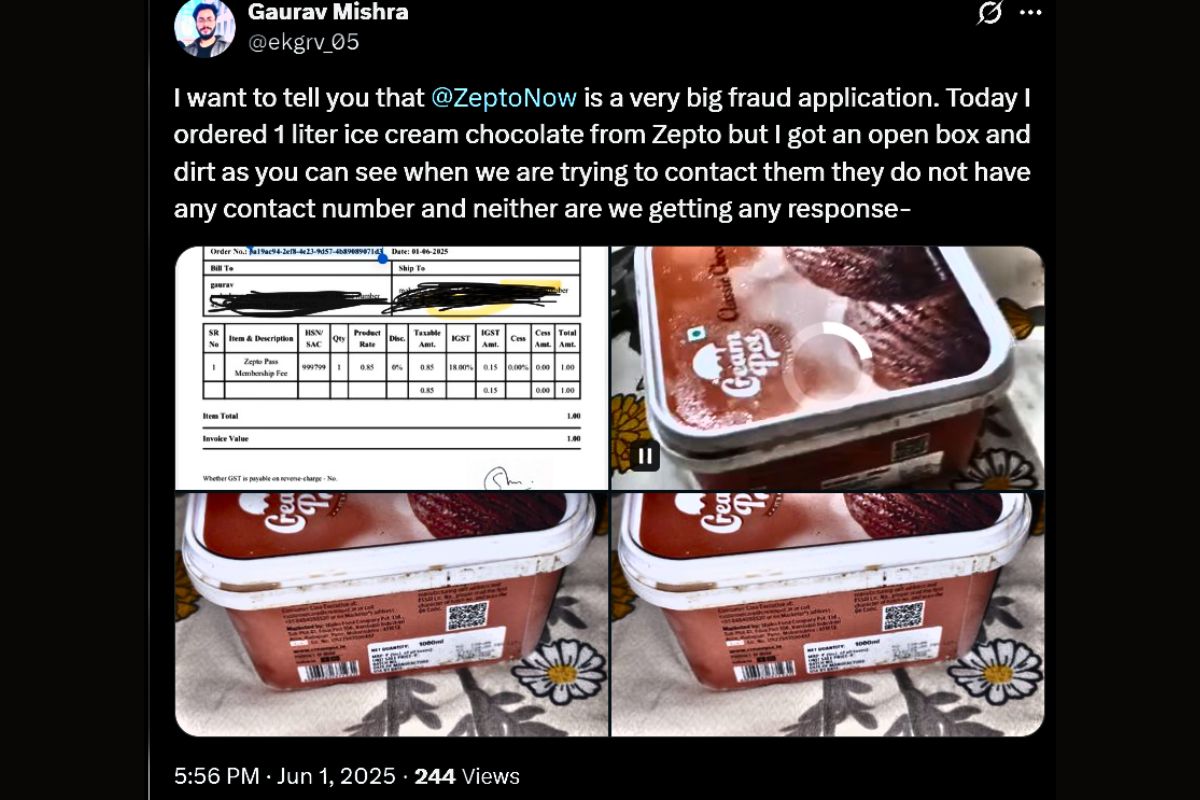
On the customer side, the groans of dismay are deafening. Zepto’s social media is flooded with stories that could fill a horror anthology. One recent tweet captures the mood: a user posted that she ordered a “grape bowl & papaya cuts” only to receive “rotten, smelly, and inedible fruits”. Another customer fumed that Zepto delivered a “rotten mango pack” and then made it “impossible to claim a refund… Cheating is in their DNA”. These aren’t isolated rants.
A Republic World survey of Zepto complaints compiled more horrors: “Two boxes of expired eggs delivered…this is not just bad service, it’s dangerous,” wrote one user, while another noted that “items are either missing or rotten these days” and that Zepto’s support staff only gives “copy-paste replies”.
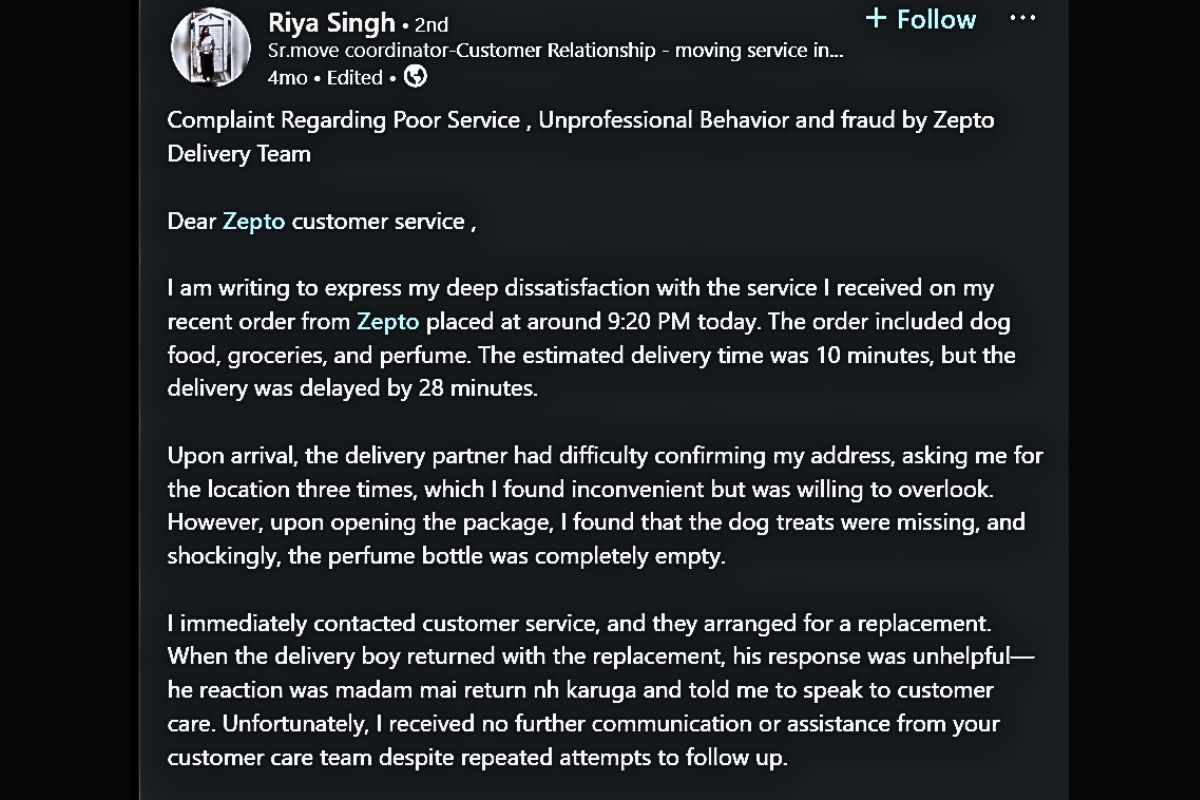
LinkedIn and Twitter posts abound with similar anger. In one viral LinkedIn rant, customer Riya Singh described ordering dog food, groceries, and even perfume – only to get a nearly-empty perfume bottle and zero dog treats, with the 10‑minute delivery arriving 28 minutes late. Customer care arranged a replacement, but when it came back it was refused with the response, “Madam mai return nh karuga,” (I won’t take it back). Then Zepto’s support simply went silent despite her repeated calls. “This experience has been extremely frustrating,” she wrote, vowing never to use Zepto again.
The themes repeat: rotten milk, stale biscuits, moldy vegetables, and then a Kafkaesque battle for a refund. Even requests that should be trivial become battles. Hindustan Times reports that the new “F*** Zepto” Reddit forum (with nearly 10,000 members in just months) is full of tales about “rotten or expired items” and “lack of customer support,” among other issues.
Many customers note that Zepto’s help lines either ghost them or insist the purchase was fine, essentially blaming the buyer. In one viral example from May last year, Zepto told a Delhi man who got a 10kg bag of flour expiring in 8 days: “Eat it within 7 days.” He had to announce a “wheat flour challenge” on social media just to shame them into acting. Are these the “quality of products” Zepto promised?
Another chronic gripe is refunds and balances. Zepto users report “free cash” (promotional ₹100 credits) that mysteriously only discount half the value of an order, and final bills padded with phantom fees. A Redditor famously quipped that Zepto was “allowing delivery partners to mark an order delivered without any customer confirmation,” while another noted Zepto was “earning crores just by rounding up bills”.
Over on the “F*** Zepto” subreddit, members expose every gimmick: hidden “rain fees” and GST add-ons, arbitrary convenience fees, and inflated MRPs that magically shrink at checkout. In short, countless customers feel blatantly cheated. One of the most telling reactions is the subreddit’s bio: it exists solely to “hold Zepto accountable” by exposing “dark patterns, hidden fees, selective pricing, [and] MRP manipulation”. When shoppers are tweeting rotten goods and begging for refunds to deaf customer service, the sense of betrayal runs deep.
The “Hold Zepto Accountable” Movement: Hidden Fees and Dark Patterns
Disillusioned customers have banded together online to document every new trick. The Hindustan Times reports that the “F*** Zepto” Reddit community has rocketed to ~10,000 subscribers in five months. Its members seem obsessed with underhanded app tactics: blogs and social media posts detail issues from unauthorized add-ons to simply missing cash backs. For example, the forum has dozens of posts about Zepto credit not applying in full, and about mysterious charges like “Item Handling Fee,” “Small Cart Fee,” or the dreaded “Rain Fee” that magically appears on bill summaries. One user even shared a screenshot showing GST being tacked onto a “rainfall fee” – on a day with no rain.

Founders of small brands (the D2C companies Zepto sells for) have also joined the fray. When Zepto rolled out its “swap and save” feature, which prompts you at checkout to swap brand-name items for cheaper alternatives, many indie brands publicly protested. They accuse Zepto of stealthily undercutting their products and playing favorites with larger players’ inventory. On LinkedIn and Twitter, angry D2C founders warned that Zepto’s algorithm devalues their carefully built brands; they fear this feature will turn Zepto into little more than a front-end for generic supermarket products. One industry commentator noted privately that this might just be a desperate bid to squeeze merchants and shoppers further, now that Zepto’s own cash burn is so high.
All told, Zepto’s own users feel like they’re constantly swimming in a bait-and-switch. Even otherwise savvy quick-commerce fans now speak of Zepto in hushed tones of contempt, “totally untrustworthy,” one tweet said after finding unexplained packaging charges on his invoice. Another user sneered that a Zepto delivery was the most “outrageously fraudulent” she’s ever seen. The community’s rallying cry is simple: Zepto’s speed means nothing if every order comes with a little pinch (or worse) hidden by dark patterns.
Financial Fireworks: Burn, Missed Targets, and IPO Doubts
Underneath all the operational chaos lies a financial nightmare. Zepto’s PR has touted enormous funding and growth, after all, the startup raised about $1.3 billion from SoftBank, Google, Bain, and others in 2024; but leaked reports show a Zepto desperately burning cash. In one analysis of Q4 FY25, industry insiders pointed out that for the first time in four years Zepto missed its own revenue targets, having already “aggressively spent” half of that massive funding. The burn rate is staggering: earlier reports had Zepto losing “₹250–300 crore” per month even before this quarter, and whispers suggest losses peaked at roughly ₹660 crore in January 2025. In practical terms, Zepto was burning through ₹6–7 billion every month at one point.
To combat this, Zepto has quietly slashed discounts and slowed expansion. Its CEO recently bragged on LinkedIn about cutting the monthly cash burn rate in half, but even that admission highlights how large it was to begin with. (Aadit Palicha’s post cheerily announced 300% GOV growth and halved losses, but did not dispute past reports of hundreds of crores lost every month.) In other words, Zepto’s books look less like a growth engine and more like a burning ember.
Behind the PR spin, the math doesn’t add up. If Zepto raised $1.3B and burned ~$500M of it by March 2025, that leaves precious little runway, especially if monthly losses continue at 300–600 cr. Silicon Valley valuations and IPO ambitions aside, these leaked figures suggest a company on a knife’s edge. Even ardent supporters are asking: if Zepto can’t hit basic financial targets now, how will it survive the scrutiny of public markets? The IPO fever that Zepto is fanning seems wildly premature. As one VC quipped, chasing a 10-minute grocery IPO while losing so much money is a recipe for disaster.
Zepto Café Falters and Brands Revolt
Even Zepto’s satellite experiments are crumbling. Last quarter, Zepto quietly paused Zepto Café (its 10-minute restaurant delivery arm) in dozens of North Indian cities. The startup’s own release confirms about 44 cafeterias have “temporarily shut operations” due to supply-chain headaches. Zepto claims it will be back “end of next quarter,” but right now hundreds of gig workers sit idle. This comes on top of complaints from its partner restaurants: small cafes who joined Zepto’s platform under the “Swap & Save” and “Earn” schemes are accusing the company of defaults and broken promises. It seems the one-million-customer-a-day dream doesn’t extend to eating out.
Meanwhile, the “swap and save” feature has sparked an unexpected backlash from F&B brands (beyond the D2C FMCG complaints noted earlier). Zepto’s playbook here smells of the same dark pattern; enticing customers at checkout to be “smart shoppers” by switching brands, undercutting the very merchants on its platform. It’s no wonder many smaller brands now view Zepto as a hostile platform rather than a partner.
In summary, everything adjacent to Zepto’s core grocery business is showing cracks: expensive promotional cafe projects shuttered mid-launch, and the company’s partners are publicly revolting at unilateral changes. In the trenches, it looks like Zepto is running out of goodwill on every front.
Leadership in Denial: Toxic Culture and Tone-Deaf Tweets
The discord extends to the top floor. Zepto’s CEO Aadit Palicha has himself become a lightning rod for criticism. In December 2024, as anger brewed online about Zepto’s punishing work culture, Palicha took to Twitter with a now-infamous post: “I have nothing against work-life balance. In fact, I recommend it to all our competitors.”
Taken at face value, the flip quotes and emoji made it sound like an endorsement; but in context it was widely read as a tongue-in-cheek snub to anyone who complained about burnout. The timing was brutal: a viral Reddit post had just painted Zepto’s offices as “the most toxic work culture” with 2 AM meetings while the CEO slept in. Caught in the backlash, Palicha later backtracked, calling the tweet “a stupid idea” during a startup podcast.
But the damage was done: employees (and many disillusioned outsiders) say Zepto really is a grueling place. A Reddit “whistleblower” exposed how a junior engineer was shoved into an admin role, then forced to grind six to seven days a week, 9 AM to 8 PM or later, often without lunch breaks or weekends off. He reported managers hurling insults and doing nothing when he fell sick.
Another anonymous post described the offices where “nobody trusts anyone” and morning standups follow all-night coding sprints. In short, Zepto looks awfully like the kind of startup where the workweek is 80 hours and even admitting exhaustion is taboo. Palicha himself has admitted only the “super ambitious” thrive at Zepto, an admission that thinly veils the fact that anyone else is doomed to burn out.
This toxic image undermines Zepto’s carefully manicured image. The founder’s smug grin on CNBC feels jarring next to words like those leaked above. Indian techies have seen tweets like his before: once bitten by startup hype, they know tone-deaf boasts rarely age well. When the CEO publicly laughs off work-life balance, it reinforces a growing narrative that Zepto’s hustle culture is out of step with a younger generation of workers and consumers. As another critic put it, having to “climb 12 flights with 10kg groceries” for ₹15 isn’t just a one-off story; it’s emblematic of a company culture that prioritizes speed and scale over people’s lives.
The IPO Question: Can Zepto Be Trusted?
Taken together, these scandals raise an obvious question: Should Zepto even be talking about an IPO? Its public rhetoric is all about “aggressive expansion” and fear-of-missing-out, but the ground reality is grim. The startup’s own assurance that it is “working closely with authorities” on safety lapses comes after it needed regulators to demand it. Its boast of “halved cash burn” on social media sidesteps the fact that it was burning hundreds of crores per month. And its claim to kill discounts now invites the question: what were those epic deals covering up if not ruinous unit economics?
For Indian consumers and citizens, many of whom voted with their wallets and voices; Zepto’s house of cards is collapsing. We invested our trust when we clicked “checkout” at midnight with our tired kids in mind, expecting fresh essentials fast. Instead, too many got moldy melons and a runaround. The young workers we send our online hopes with are telling us they need a decent wage and a day off. Investors who sent billions in cash are probably wondering where the money went and whether those glossy investor decks hid any of this.
At this point, Zepto’s shiny IPO dream looks hollow. A startup that endangers food safety, mistreats its delivery partners, and fleeces customers isn’t ready for public scrutiny, and certainly not worthy of celebration on Dalal Street. The scariest part is how long it took for these issues to surface. As citizens and consumers, we should ask: do we really want to reward this? Only regulators and hashtags forced Zepto to come clean; without them, the ugliness would have stayed buried under viral tweets. If Zepto ever planned an IPO, it now deserves to be on hold until every question is answered. For the thousands of Indians who saw through the façade, this company’s promises have already gone bad.